 flip
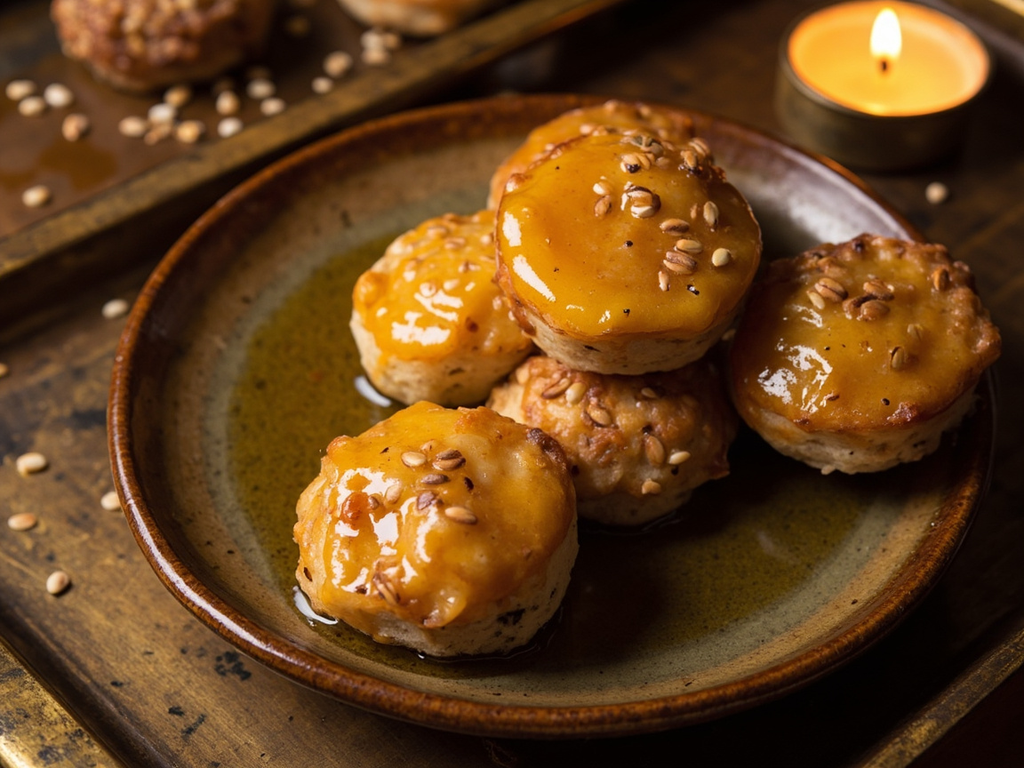
flipHoney and Sesame Cakes (Koptai / Dulcia)
Honey and Sesame Cakes (Koptai / Dulcia)
Why this dish? Byzantine banquets ended with honey sweets. Under Theodosius II, whose sister Pulcheria kept a quasi-monastic court, these honey and sesame pastries — without excess — accompanied religious feasts and ceremonial receptions.
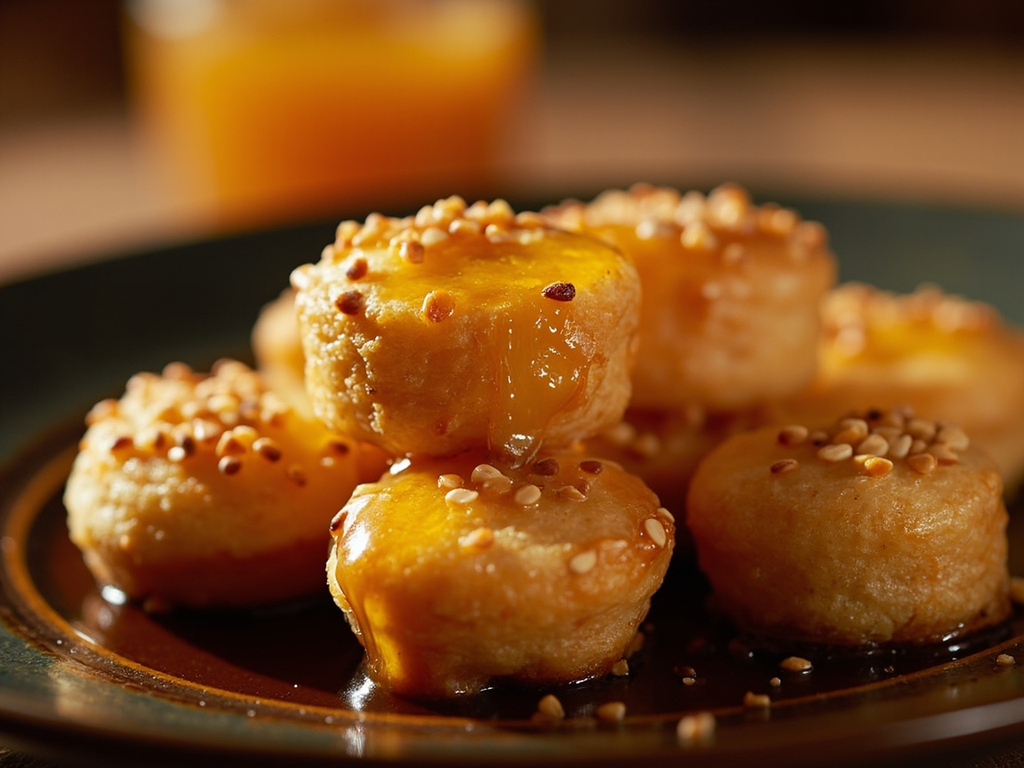
Small crunchy cakes of flour and sesame bound with honey, perfumed with a little cooked wine — direct ancestors of pasteli and baklava, a festive Byzantine sweet.
To close the table, my sister Pulcheria herself, who loves the frugality of consecrated virgins, tolerates these little honey and sesame cakes. Fine flour is kneaded, browned, then drowned in boiling honey perfumed with cooked wine, and sprinkled with toasted sesame. One is enough, you see: sweetness, like the purple, is only valuable if not abused.
- •Wheat flour — one measure (base)
- •Honey — abundantly (sweet binder)
- •Sesame — a handful (crunch and fragrance)
- •Cooked wine (defrutum) — a dash (aroma)
- •Olive oil — a little (fat)
Honey and Sesame Cakes (Koptai / Dulcia)
Small crunchy cakes of flour and sesame bound with honey, perfumed with a little cooked wine — direct ancestors of pasteli and baklava, a festive Byzantine sweet.
Why this dish? Byzantine banquets ended with honey sweets. Under Theodosius II, whose sister Pulcheria kept a quasi-monastic court, these honey and sesame pastries — without excess — accompanied religious feasts and ceremonial receptions.
To close the table, my sister Pulcheria herself, who loves the frugality of consecrated virgins, tolerates these little honey and sesame cakes. Fine flour is kneaded, browned, then drowned in boiling honey perfumed with cooked wine, and sprinkled with toasted sesame. One is enough, you see: sweetness, like the purple, is only valuable if not abused.
Ingredients (period version)
- Wheat flour — one measure (base)
- Honey — abundantly (sweet binder)
- Sesame — a handful (crunch and fragrance)
- Cooked wine (defrutum) — a dash (aroma)
- Olive oil — a little (fat)
Ingredients
- All-purpose flour — 200 g (base)
- Honey — 150 g (sweet binder)
- Sesame seeds — 60 g (crunch and fragrance)
- Reduced grape must or grape syrup — 1 tbsp (aroma)
- Mild olive oil — 2 tbsp (fat)
- Water — about 80 ml (dough hydration)
Method
- Knead flour, oil, and water into a firm dough; shape small thin cakes.
- Brown them dry or with a film of oil in a pan, on both sides.
- Heat honey with grape must until simmering.
- Dip the browned cakes into the hot honey, coat them, drain.
- Immediately roll in toasted sesame and let cool slightly.
How it was made : Roman and Byzantine dulcia were fried or browned fritters or cakes then coated in hot honey and seeds (sesame, poppy, nuts). Sugar did not exist in cooking: honey was the only sweetener, often combined with cooked wine for depth.
The contemporary twist : Stacked and drizzled with saffron honey, they form a 'Tower of Theodosius' golden as a wall of Constantinople.
Sources : Apicius, De re coquinaria, VII (dulcia domestica) · A. Dalby, Flavours of Byzantium (2003)
Theodosius · Charactorium