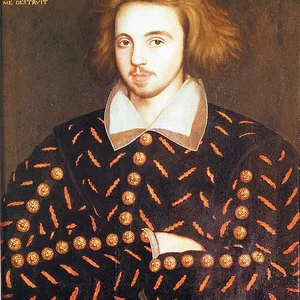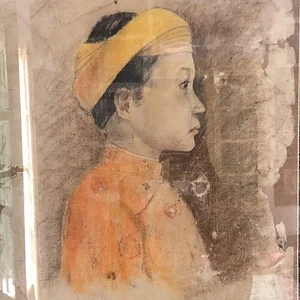

Tu Long (1543-1605) was a Chinese scholar and playwright of the Ming dynasty. Known for his *chuanqi* plays and his essays, he embodies the figure of the scholar-artist of late sixteenth-century China.
Tu Long
Tu Long
dynastie Ming
6 min read
Frequently asked questions
Key Facts
- Born in 1543 under the Ming dynasty, in Yin (present-day Ningbo)
- Having passed the imperial examination (*jinshi*) in 1577, he held official posts before devoting himself to letters
- Author of *chuanqi* plays, including *Tanhua ji* (The Tale of the Sandalwood Flower)
- A prominent figure in the literary and theatrical life of the late Ming
- Died in 1605
Works & Achievements
A chuanqi play about renouncing the world and the quest for enlightenment, illustrating his attraction to Buddhism and Taoism.
A chuanqi drama devoted to the life of the Tang poet Li Bai, a model of the free and inspired creative genius.
A chuanqi play rounding out his dramatic work, blending scholarly themes with spiritual concerns.
A connoisseur's treatise on the refined objects of the scholar's studio (brushes, ink, qin, incense, tea), a major document of late Ming taste.
A collection of his poems and prose essays, attesting to his virtuosity and his prolific output.
A vast compilation of essays and notes on a wide range of subjects, reflecting his encyclopedic erudition and his religious curiosity.
Anecdotes
Tu Long passed the imperial doctoral examination (jinshi) in 1577, then became a district magistrate before being appointed to the Ministry of Rites in Beijing. His official career was nonetheless brief: accused of misconduct by a censor in 1584, he was dismissed from his post and never returned to state service.
After his fall from grace, Tu Long did something rare for a scholar of his rank: he lived by his pen. Private individuals paid him to write prefaces, funeral eulogies, and occasional poems. He is often cited as one of the first “professional” writers of Ming China.
His contemporaries marveled at how fast he wrote. The History of Ming reports that he composed poems and essays with no apparent effort, filling several pages in a single burst. Tradition even claims that he could dictate several different texts almost at the same time.
A passionate lover of theater, Tu Long kept his own private troupe and, it is said, sometimes took to the stage himself to perform his plays. His drama “Tanhua ji” features a hero who renounces the world to seek enlightenment, a reflection of his strong taste for Buddhism and Taoism.
In his “Kaopan yushi,” Tu Long describes in meticulous detail the refined objects of the ideal study: brushes, inkstones, incense, a zither, and tea utensils. This little guide has become a valuable source for understanding the tastes of late Ming scholars.
Primary Sources
Tu Long, whose courtesy name was Changqing, was a native of Yin; from birth he displayed an extraordinary talent, and both his poems and his prose flowed effortlessly, several pages completed in a single sitting.
The work reviews, category by category, paper, ink, the brush, the inkstone, the qin zither, incense, and tea, indicating how the scholar should select and arrange them in his studio.
A chuanqi drama in which a high dignitary renounces worldly honors to undertake a spiritual quest blending Buddhist and Taoist inspirations until his final awakening.
A chuanqi drama devoted to the life of the great Tang poet Li Bai, portraying him as a free and inspired genius, the ideal of the creator freed from official constraints.
A collection of his poems and prose essays, testifying to the brilliant eloquence and abundant output that earned him his reputation among the scholars of Jiangnan.
Key Places
Birthplace and home of Tu Long, a major port and literary hub of Jiangnan where he spent most of his life.
District where Tu Long served as magistrate early in his administrative career, after passing the imperial examination.
The second district he governed as magistrate, in the wealthy Yangtze River delta region.
The Ming capital where Tu Long served as an official in the Ministry of Rites before being dismissed in 1584.
Liens externes & ressources
Références
Œuvres
Tanhua ji (曇花記), « La Fleur d'udumbara »
vers 1598
Caihao ji (綵毫記), « Le Pinceau aux couleurs »
fin du XVIe siècle
Xiuwen ji (修文記)
fin du XVIe siècle
Kaopan yushi (考槃餘事)
vers 1590
Baiyu ji (白榆集)
vers 1590
Hongbao (鴻苞)
début du XVIIe siècle