 flip
flipShorba-yi Nakhud
Shorba-yi Nakhud
Why this dish? Khoja Ahrar advocated sobriety in diet, following the Naqshbandi path. Chickpea and lamb shorba was the daily meal of Central Asian households, the one a Sufi master shared with his disciples in the khanqah (convent). Nourishing yet simple, it embodies the moderation he taught.
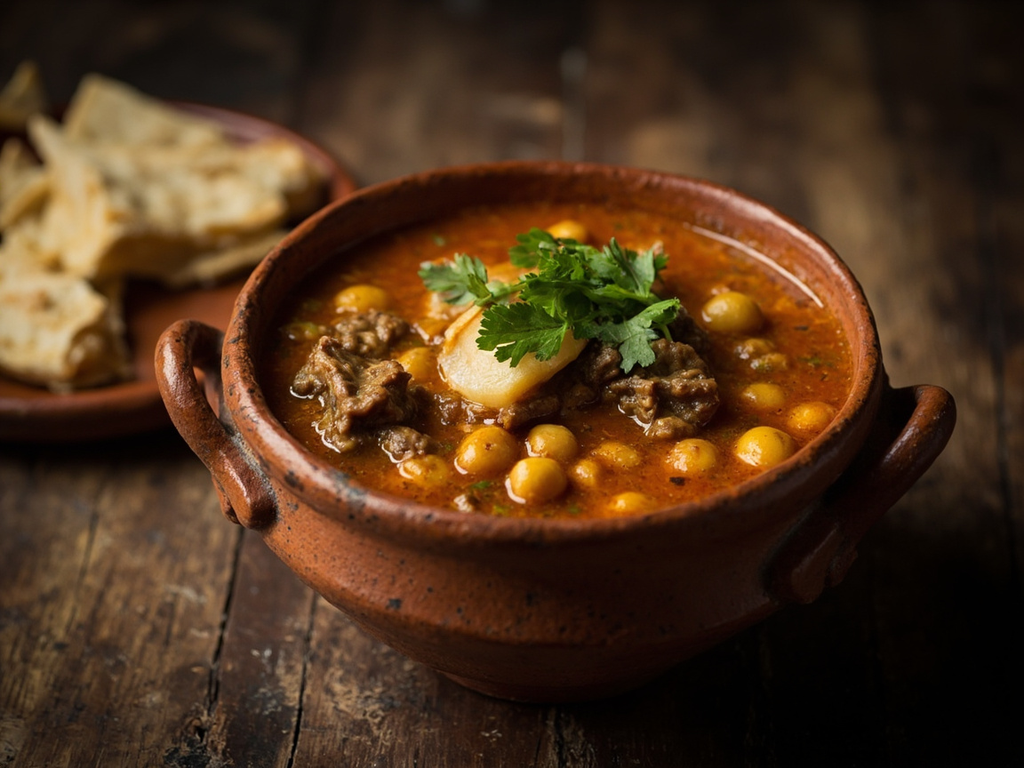
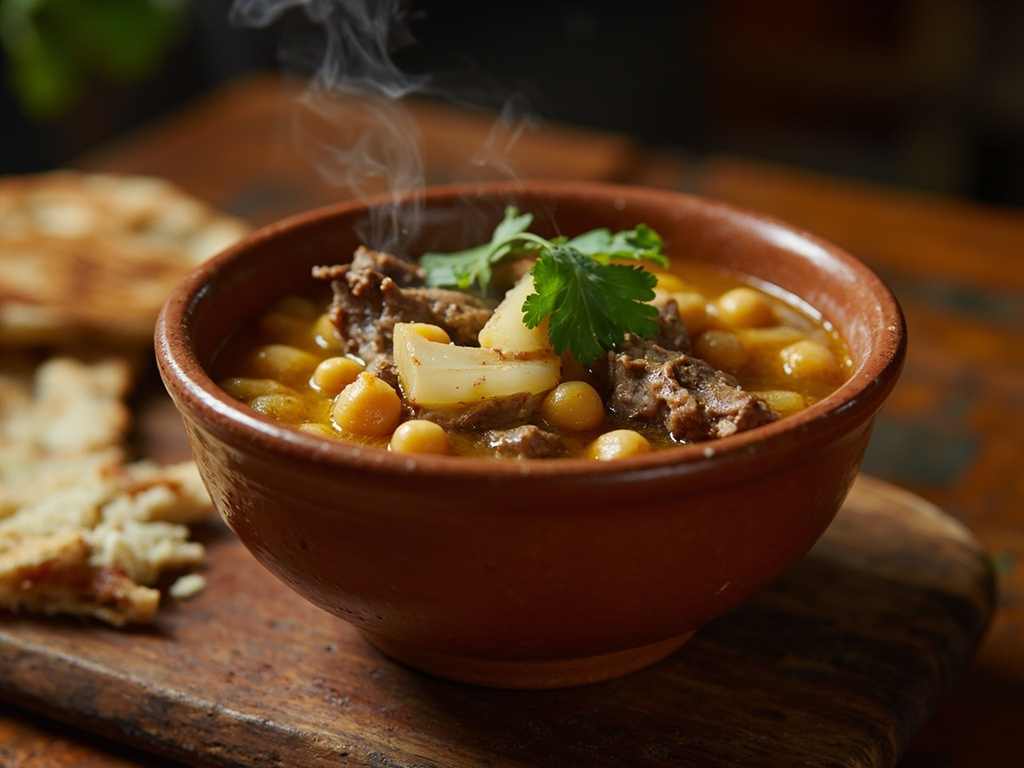
A thick, comforting soup of tender chickpeas, lamb pieces, turnips, and onions, perfumed with cumin and coriander seeds. Served with non (flatbread) for dipping, it is the everyday meal of Timurid Central Asia.
The Prophet — peace be upon him — ate little and with gratitude, and thus we do in our khanqah. This shorba, you see, is the meal of the faqir and the merchant alike. Chickpeas that God grows in our land, a little mutton, a turnip, and the hand of the cook who fears his Lord. My disciples take it in the evening after dhikr, and the body tired from prayer regains its strength. There is no need for rare spices: cumin from the market and praise of the Most High suffice to perfume the world.
- •Mutton (shoulder or neck) — a few pieces with bone (Broth and meat)
- •Soaked chickpeas — two good handfuls (Body of the soup)
- •Turnips — two or three (Root vegetable)
- •Onions — two (Aromatic base)
- •Coriander seeds — a pinch (Aroma)
- •Zira (cumin) — a pinch (Spice)
- •Salt — to taste (Seasoning)
- •Fresh coriander — a bunch (Garnish)
Shorba-yi Nakhud
A thick, comforting soup of tender chickpeas, lamb pieces, turnips, and onions, perfumed with cumin and coriander seeds. Served with non (flatbread) for dipping, it is the everyday meal of Timurid Central Asia.
Why this dish? Khoja Ahrar advocated sobriety in diet, following the Naqshbandi path. Chickpea and lamb shorba was the daily meal of Central Asian households, the one a Sufi master shared with his disciples in the khanqah (convent). Nourishing yet simple, it embodies the moderation he taught.
The Prophet — peace be upon him — ate little and with gratitude, and thus we do in our khanqah. This shorba, you see, is the meal of the faqir and the merchant alike. Chickpeas that God grows in our land, a little mutton, a turnip, and the hand of the cook who fears his Lord. My disciples take it in the evening after dhikr, and the body tired from prayer regains its strength. There is no need for rare spices: cumin from the market and praise of the Most High suffice to perfume the world.
Ingredients (period version)
- Mutton (shoulder or neck) — a few pieces with bone (Broth and meat)
- Soaked chickpeas — two good handfuls (Body of the soup)
- Turnips — two or three (Root vegetable)
- Onions — two (Aromatic base)
- Coriander seeds — a pinch (Aroma)
- Zira (cumin) — a pinch (Spice)
- Salt — to taste (Seasoning)
- Fresh coriander — a bunch (Garnish)
Ingredients
- Lamb neck or shoulder — 400 g (Broth and meat)
- Dried chickpeas (soaked overnight) — 150 g (Body of the soup)
- Turnips — 2 medium (200 g) (Root vegetable)
- Yellow onions — 2 (Aromatic base)
- Coriander seeds — 1 teaspoon (Aroma)
- Cumin seeds — 1 teaspoon (Spice)
- Salt — 1.5 teaspoons (Seasoning)
- Black pepper — 1/2 teaspoon (Mild heat)
- Fresh coriander — a small bunch (Garnish)
- Water — 1.5 liters (Broth)
Method
- In a large pot, place the lamb pieces with cold water. Bring to a boil and skim carefully.
- Add the drained chickpeas, one whole onion studded, cumin and coriander seeds lightly crushed. Reduce heat and simmer for 45 minutes.
- Peel the turnips and cut into large dice. Slice the second onion.
- Remove the cooked whole onion. Add the turnips, sliced onion, and salt. Continue cooking for 20 minutes until the turnips are tender and the chickpeas are soft.
- Taste and adjust seasoning. Serve in bowls with the meat, sprinkled with chopped fresh coriander.
How it was made : Shorba was the daily dish of Central Asian khanqahs (Sufi convents). Naqshbandi hagiographic texts regularly mention shared meals between master and disciples as moments of spiritual communion. The turnip (shalgham) was a fundamental root vegetable of Central Asian cuisine before the arrival of the potato. Chickpeas, cultivated in the region since antiquity, were the main source of plant protein.
The contemporary twist : Serve in a terracotta bowl with a spiral of cumin-infused olive oil drizzled on the surface.
Sources : Aida Girey-Jung, Traditional Dishes of Central Asia, 2014 · Devin DeWeese, "The Mashā'ikh-i Turk and the Khojagān", Journal of the History of Sufism, vol. 3, 2001
Khoja Ahrar · Charactorium