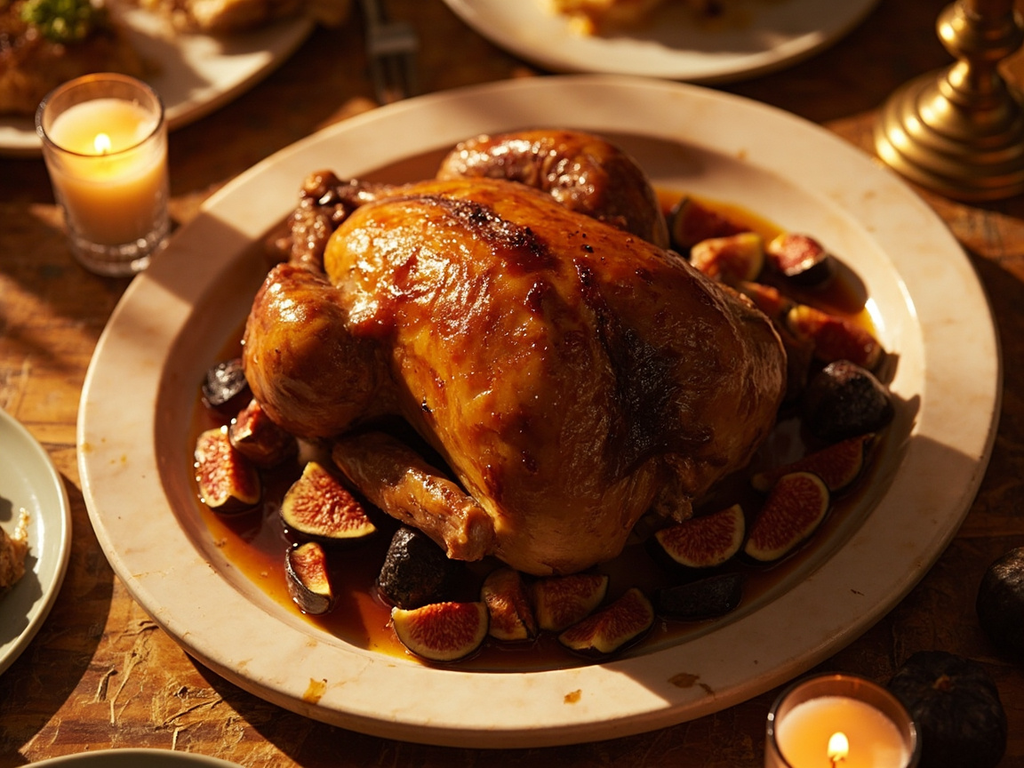
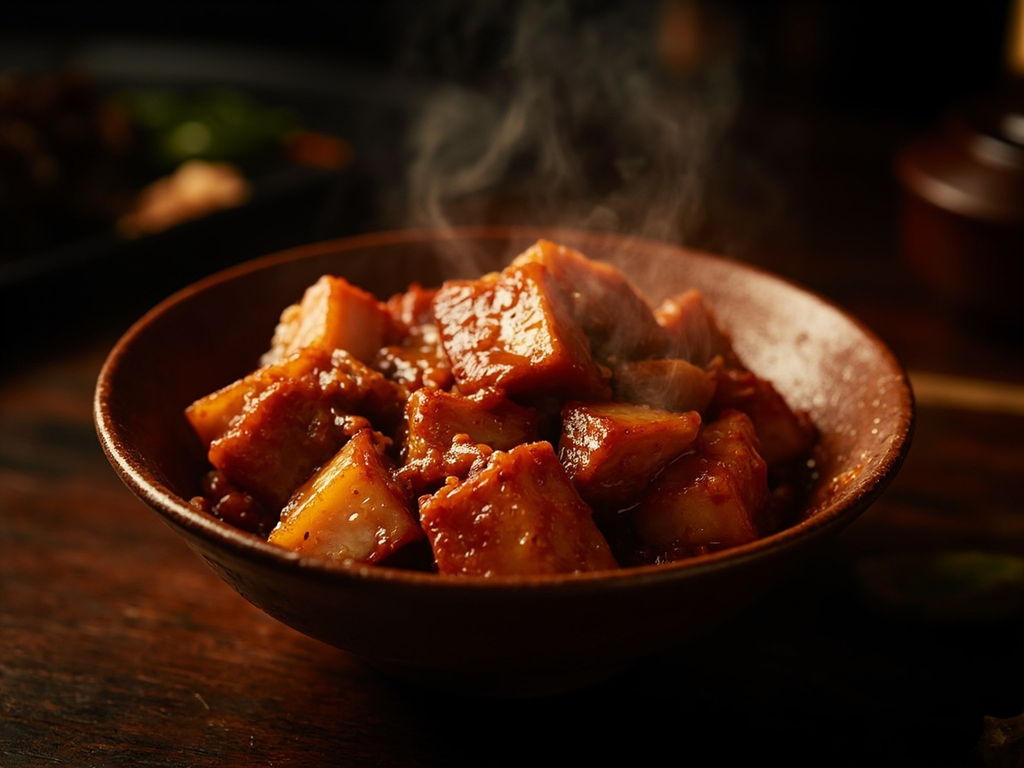
Palov-i shâhi (Royal Pilaf of Samarkand)
Long-grain rice cooked in a sealed pot with mutton, yellow carrots, chickpeas, raisins, and saffron. Timurid palov is distinguished by the layer of meat and vegetables (zirvak) on which the rice cooks slowly, absorbing all the juices. Each grain remains separate, gilded by saffron and cumin.
Long-grain rice cooked in a sealed pot with mutton, yellow carrots, chickpeas, raisins, and saffron. Timurid palov is distinguished by the layer of meat and vegetables (zirvak) on which the rice cooks slowly, absorbing all the juices. Each grain remains separate, gilded by saffron and cumin.
Know, O visitor, that no astronomer can calculate the stars on an empty stomach. When my scholars finish a night of observation at the observatory, I have a palov prepared worthy of their labor — the rice golden like the stars we catalog, the mutton tender as the patience that science demands. My cook places the zirvak at the bottom of the qazan, then the rice on top, and closes the lid: no one must open it before the steam has done its work, just as no one must interrupt a calculation before its conclusion. Thus one serves knowledge and palov: with rigor and generosity.
- •Long-grain rice from Fergana — a large measure (Base of the pilaf)
- •Mutton shoulder — a good piece with bone (Main meat)
- •Yellow carrots — as much as rice (Sweetness and color of zirvak)
- •Onions — two or three large (Aromatic base)
- •Dried chickpeas — a handful, soaked (Texture)
- •Raisins — a handful (Sweet touch)
- •Sesame oil or sheep-tail fat — generously (Cooking fat)
- •Cumin seeds — a pinch (Main spice)
- •Saffron — a few threads (Color and noble fragrance)
- •Salt — to taste (Seasoning)
Palov-i shâhi (Royal Pilaf of Samarkand)
Long-grain rice cooked in a sealed pot with mutton, yellow carrots, chickpeas, raisins, and saffron. Timurid palov is distinguished by the layer of meat and vegetables (zirvak) on which the rice cooks slowly, absorbing all the juices. Each grain remains separate, gilded by saffron and cumin.
Why this dish? Palov is the prestige dish of Samarkand, served at court banquets that Ulugh Beg offered to the scholars and dignitaries gathered in his madrasa. This sumptuous rice pilaf, enriched with mutton, yellow carrots, and dried fruits, embodied the generosity of the astronomer-king toward his guests.
Know, O visitor, that no astronomer can calculate the stars on an empty stomach. When my scholars finish a night of observation at the observatory, I have a palov prepared worthy of their labor — the rice golden like the stars we catalog, the mutton tender as the patience that science demands. My cook places the zirvak at the bottom of the qazan, then the rice on top, and closes the lid: no one must open it before the steam has done its work, just as no one must interrupt a calculation before its conclusion. Thus one serves knowledge and palov: with rigor and generosity.
Ingredients (period version)
- Long-grain rice from Fergana — a large measure (Base of the pilaf)
- Mutton shoulder — a good piece with bone (Main meat)
- Yellow carrots — as much as rice (Sweetness and color of zirvak)
- Onions — two or three large (Aromatic base)
- Dried chickpeas — a handful, soaked (Texture)
- Raisins — a handful (Sweet touch)
- Sesame oil or sheep-tail fat — generously (Cooking fat)
- Cumin seeds — a pinch (Main spice)
- Saffron — a few threads (Color and noble fragrance)
- Salt — to taste (Seasoning)
Ingredients
- Basmati rice — 500 g (Base of the pilaf)
- Lamb shoulder with bone — 600 g (Main meat)
- Carrots (yellow if possible, otherwise orange) — 500 g (Sweetness and color)
- Yellow onions — 2 medium (Aromatic base)
- Dried chickpeas — 80 g (soaked 12h) (Texture)
- Golden raisins — 60 g (Sweet touch)
- Neutral vegetable oil — 100 ml (Cooking fat)
- Cumin seeds — 1 tbsp (Main spice)
- Saffron threads — 1 pinch (infused in 3 tbsp hot water) (Color and fragrance)
- Salt — 2 tsp (Seasoning)
- Water — as needed (Rice cooking)
Method
- Rinse the basmati rice in cold water until the water runs clear, then let it soak for 30 minutes. Drain.
- Cut the lamb into large chunks, the onions into thin half-moons, the carrots into thick batons (5 mm × 5 cm).
- In a large heavy-bottomed pot (or deep wok), heat the oil over high heat. Sear the lamb pieces until well browned on all sides. Set aside.
- In the same oil, sauté the onions until golden, then add the carrots and stir-fry for 5 minutes.
- Return the meat, add the chickpeas, cumin, and salt, and cover with water. Simmer covered for 40 minutes: this is the zirvak.
- Scatter the raisins over the zirvak. Spread the drained rice in an even layer on top, without mixing.
- Gently pour hot water along a spoon so as not to disturb the rice, until 1 cm above the rice. Drizzle with the saffron water.
- Bring to a boil over high heat uncovered, then when the water is absorbed on the surface, mound the rice into a dome, poke a few holes with the handle of a wooden spoon, cover tightly, and reduce to the lowest heat for 30 minutes.
- Serve by inverting the pot onto a large platter: the meat and carrots end up on top, the golden rice underneath.
How it was made : Pilaf is attested in Persian and Central Asian cuisine since at least the 10th century. Timurid chronicles by Clavijo (Castilian ambassador to Tamerlane's court in 1404) describe banquets where rice with mutton held the place of honor. Sheep-tail fat (dumba) was the traditional cooking fat, and the cast-iron qazan the exclusive cooking vessel.
The contemporary twist : Mound the palov in a dome on a hammered copper platter, sprinkle with fresh pomegranate seeds and crushed pistachios to evoke the geometric ornaments of the Registan.
Sources : Ruy González de Clavijo, « Embajada a Tamorlán » (1406), account of Timurid banquets in Samarkand · Charles Perry, « Medieval Arab Cookery » (2001), Prospect Books — pilaf and medieval Persian cuisine
Ulugh Beg · Charactorium