 flip
flipRice Pudding with Cinnamon and Madeira Sugar
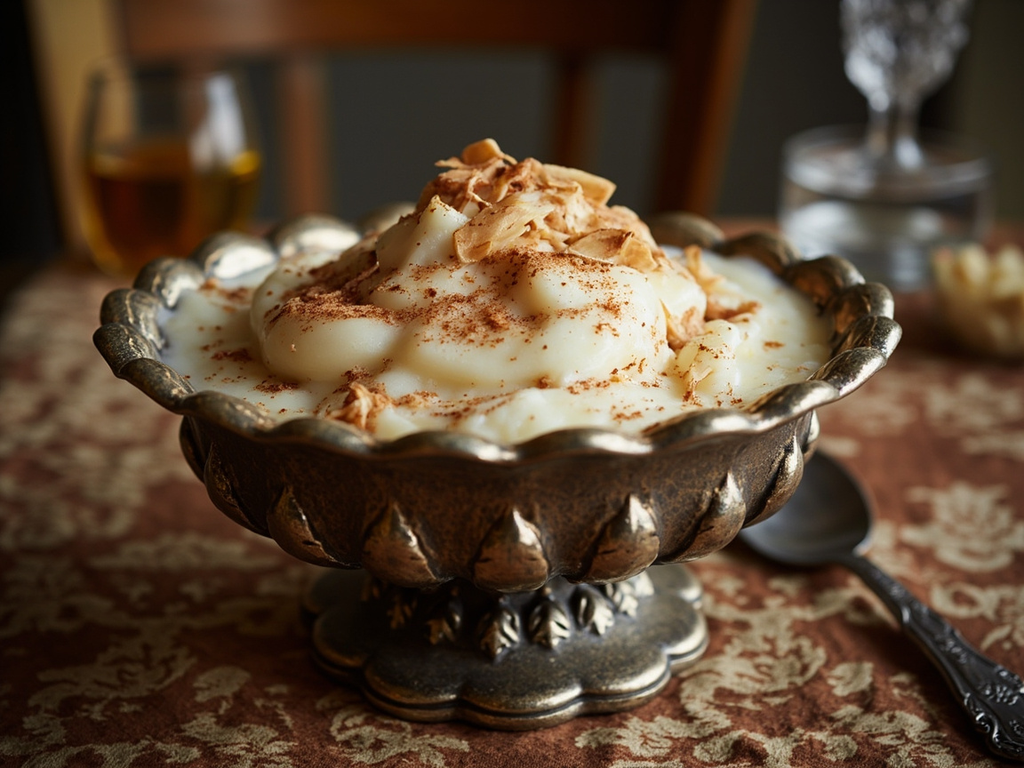
Rice Pudding with Cinnamon and Madeira Sugar
Why this dish? Rice was among the prestige provisions of the captain's table, and cinnamon is precisely the spice Gama went to the Indies to find. This sweet rice celebrates, in a single spoonful, Portuguese Madeira sugar and the spice of Calicut he brought back.
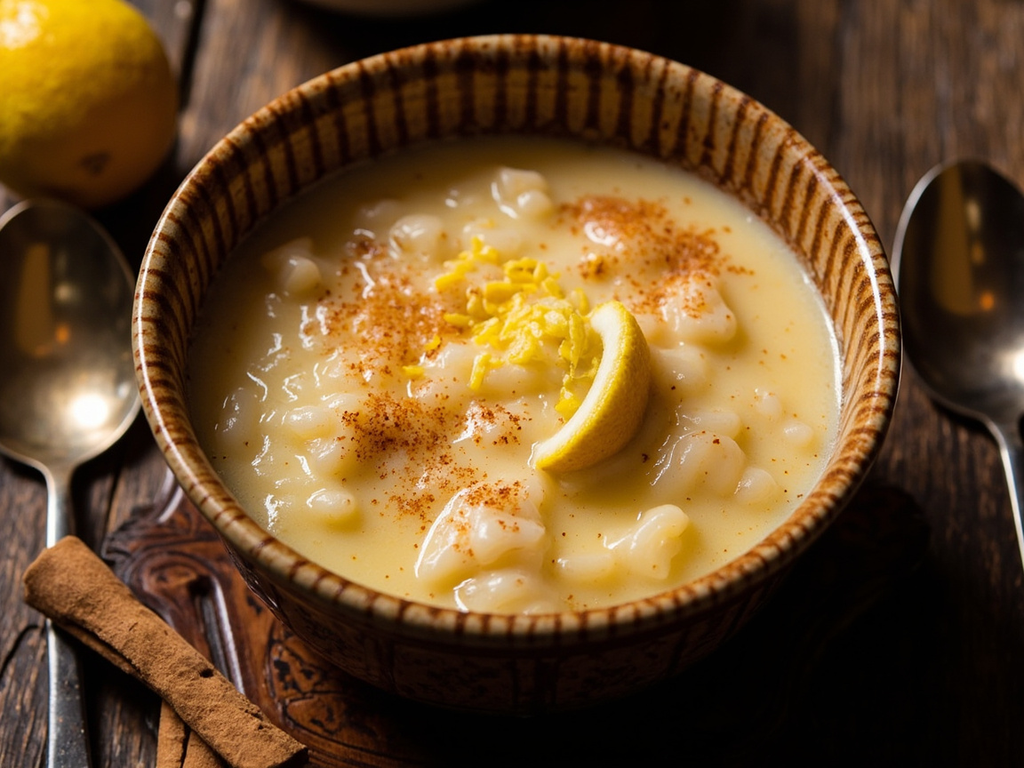
Rice cooked slowly in milk, sweetened with Madeira sugar, perfumed with lemon zest, and crowned with cinnamon. It is the dessert of days of triumph and thanksgiving.
When King Dom Manuel received me upon my return from the Indies, it was no longer the sailors' fare, but the splendor that was fitting. Taste this rice melted in milk, sweetened with that sugar our Madeira islands produce, and topped with the very cinnamon I brought back from the coasts of the East. Each grain tells you the price of my voyage: this fragrance was once worth its weight in gold in Venice, and I set it on the table of Portugal. Eat slowly, and give thanks to God.
- •Rice — one measure (base, prestige provision)
- •Milk — abundant (creamy cooking)
- •Madeira sugar — as desired (sweetness, luxury)
- •Cinnamon — one stick and powder (signature of the Indies)
- •Lemon zest — one (fragrance)
- •Egg yolks — a few (creamy binder)
Rice Pudding with Cinnamon and Madeira Sugar
Rice cooked slowly in milk, sweetened with Madeira sugar, perfumed with lemon zest, and crowned with cinnamon. It is the dessert of days of triumph and thanksgiving.
Why this dish? Rice was among the prestige provisions of the captain's table, and cinnamon is precisely the spice Gama went to the Indies to find. This sweet rice celebrates, in a single spoonful, Portuguese Madeira sugar and the spice of Calicut he brought back.
When King Dom Manuel received me upon my return from the Indies, it was no longer the sailors' fare, but the splendor that was fitting. Taste this rice melted in milk, sweetened with that sugar our Madeira islands produce, and topped with the very cinnamon I brought back from the coasts of the East. Each grain tells you the price of my voyage: this fragrance was once worth its weight in gold in Venice, and I set it on the table of Portugal. Eat slowly, and give thanks to God.
Ingredients (period version)
- Rice — one measure (base, prestige provision)
- Milk — abundant (creamy cooking)
- Madeira sugar — as desired (sweetness, luxury)
- Cinnamon — one stick and powder (signature of the Indies)
- Lemon zest — one (fragrance)
- Egg yolks — a few (creamy binder)
Ingredients
- Short-grain rice — 200 g (base)
- Whole milk — 1 L (cooking)
- Sugar — 150 g (sweetness)
- Cinnamon stick + ground cinnamon — 1 stick + for dusting (signature)
- Lemon zest — 1 lemon (fragrance)
- Egg yolks — 3 (binder)
Method
- Rinse the rice, blanch it for 5 minutes in boiling water, then drain.
- Heat the milk with the cinnamon stick and lemon zest.
- Add the rice and cook over low heat for 25 to 35 minutes, stirring often, until creamy and absorbed.
- Stir in the sugar and cook a few more minutes.
- Off the heat, bind with the beaten egg yolks, without letting it boil.
- Pour into a dish, smooth the surface, and draw bands of ground cinnamon on top. Serve warm or cold.
How it was made : Rice, introduced to the Iberian Peninsula by the Arabs, remained a relatively costly food. Sugar changed status thanks to Portuguese plantations on Madeira, which made it a major producer by the 15th century. Cinnamon, brought back by the sea route Gama opened, gradually ceased to be an inaccessible luxury. *Arroz doce*, dusted with cinnamon, remains to this day the festive dessert of Portugal.
The contemporary twist : Caramelize the surface with a blowtorch as 'arroz doce brûlé', or stencil a cinnamon wind rose in homage to the navigator.
Vasco de Gama · Charactorium