 flip
flipRoasted Wild Boar Leg with Honey and Cumin
Roasted Wild Boar Leg with Honey and Cumin
Why this dish? When the Gaulish tribes gather and seal the alliance against Caesar, it is the wild boar that presides over the hearth. Vercingetorix, chief and host, offers the finest portion to the bravest warrior—an Arverni honor that sometimes led to a duel.
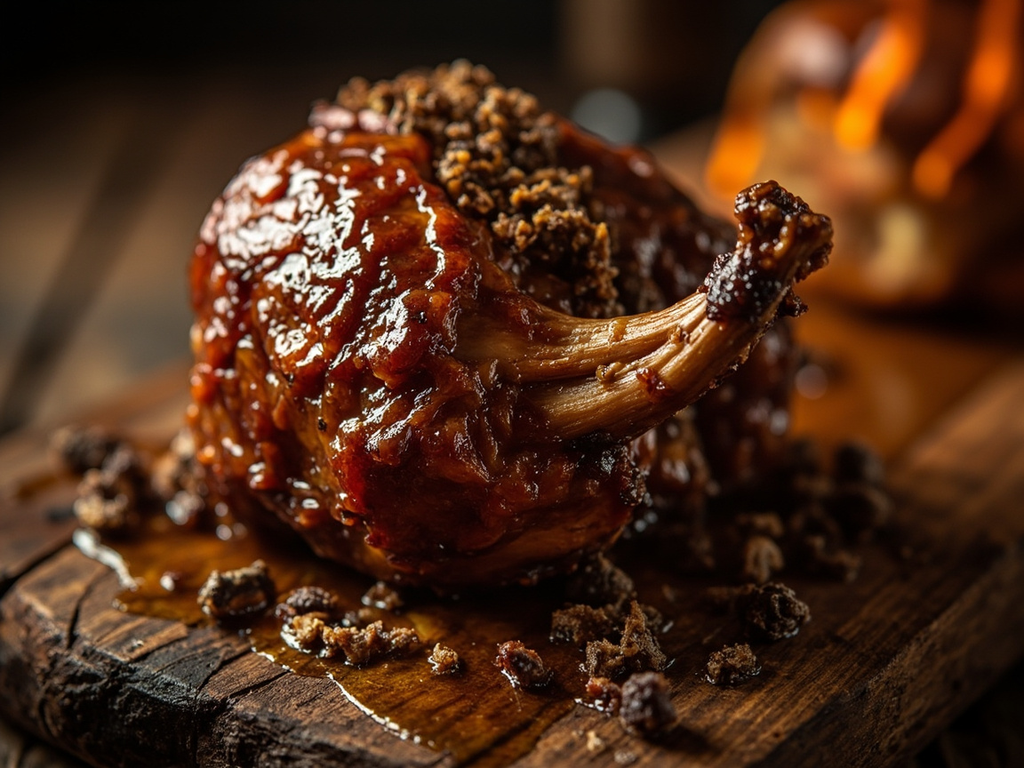
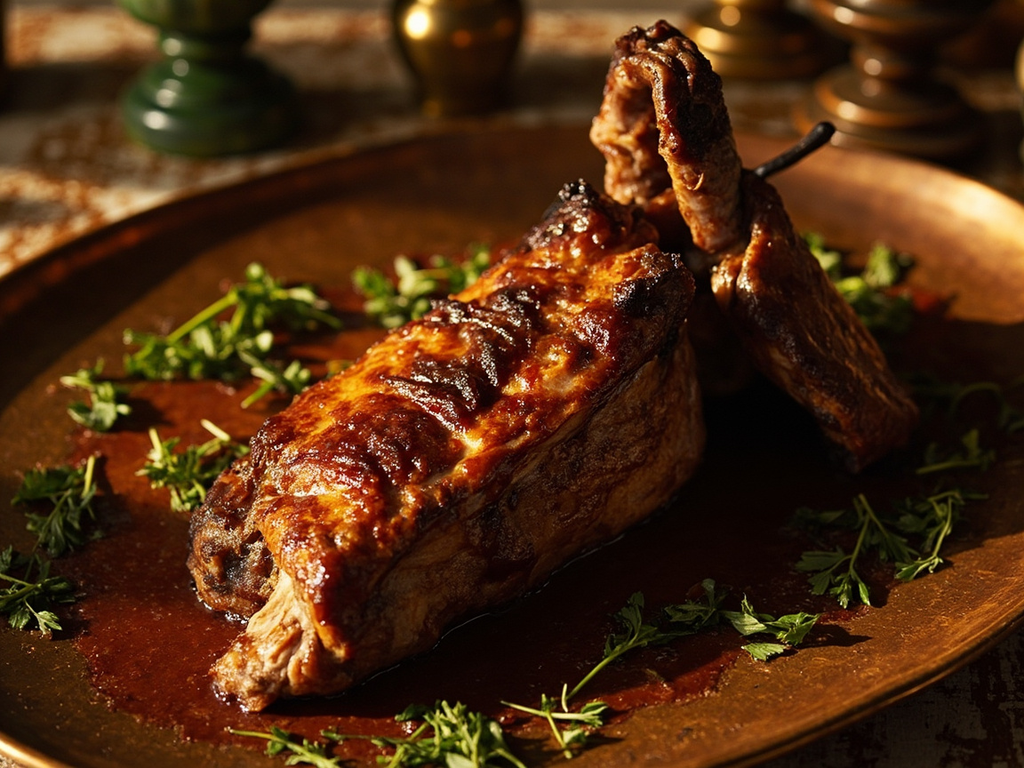
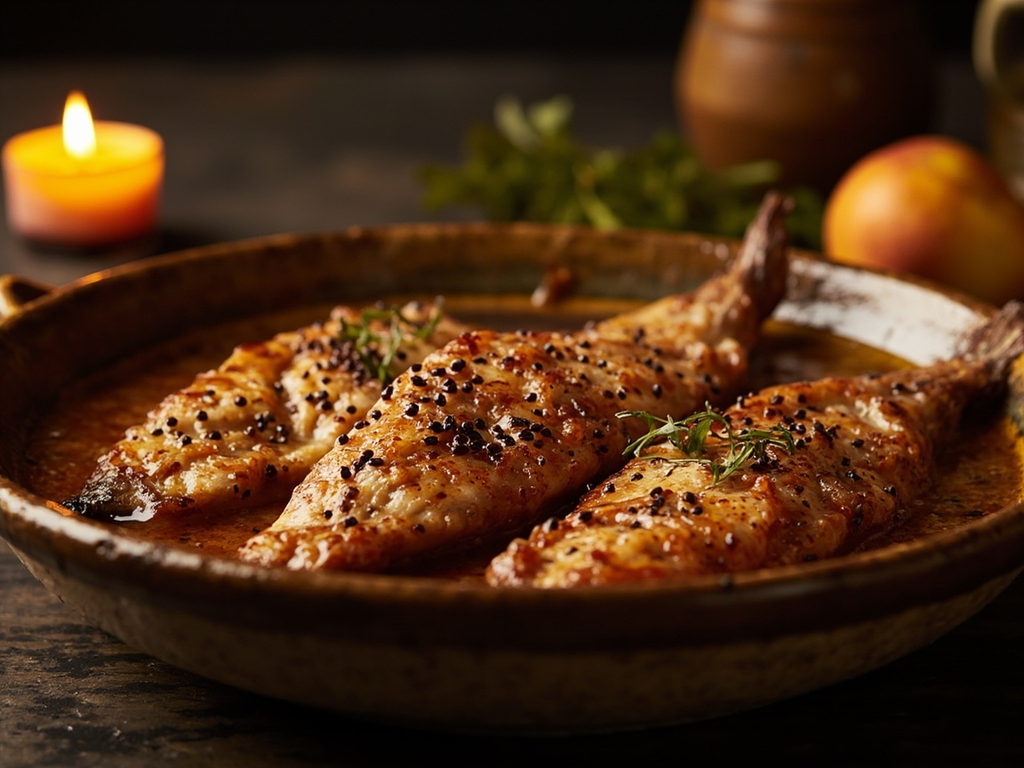
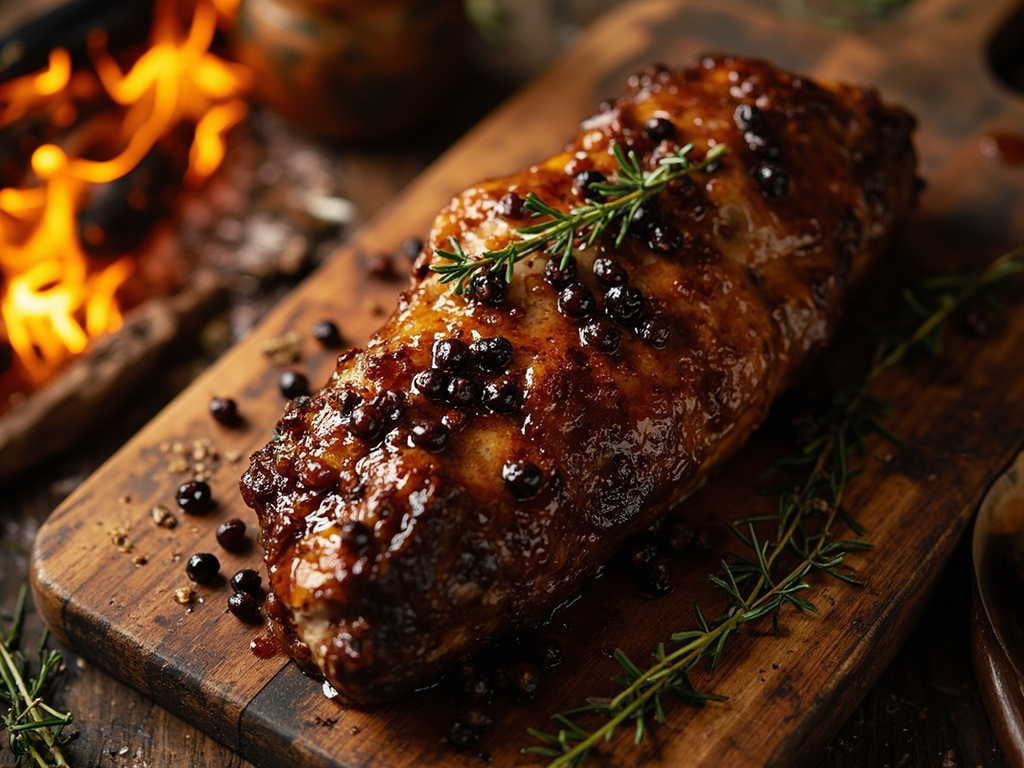
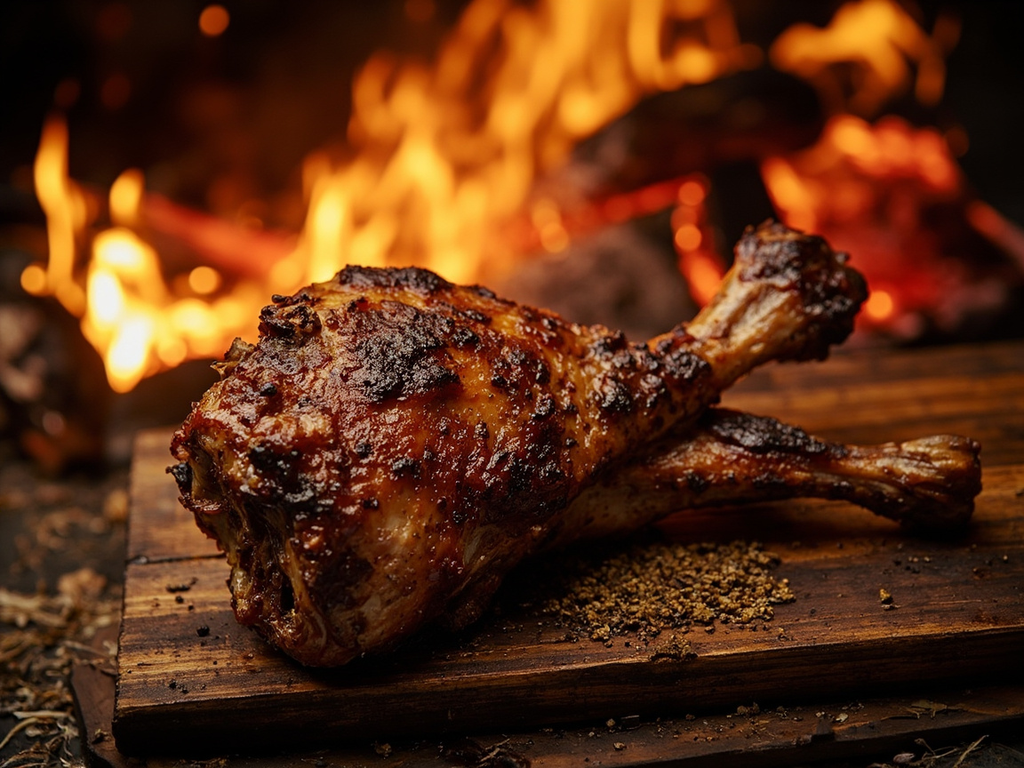
A wild boar leg slowly roasted on a spit, basted with honey and rubbed with cumin and savory. The centerpiece of the feast, crispy and golden, carved with a knife before the assembly.
Today the Gaulish tribes are gathered under my roof, so see what I have set up: a whole boar turned over the embers until its crackling sings. I have it rubbed with our herbs and coated with honey, for a chief does not receive his allies with meager fare. The finest cut, the leg, I give with my own hand to the bravest—and woe to him who contests it, for among us that is settled with the blade. Eat, and remember that a Gaul who shares his boar never betrays his word.
- •Wild boar leg — one whole piece (celebration meat)
- •Honey — as much as needed (glaze)
- •Wild cumin and savory — a handful (spices)
- •Garlic — several heads (aromatic)
- •Salt — generous (rub)
Roasted Wild Boar Leg with Honey and Cumin
A wild boar leg slowly roasted on a spit, basted with honey and rubbed with cumin and savory. The centerpiece of the feast, crispy and golden, carved with a knife before the assembly.
Why this dish? When the Gaulish tribes gather and seal the alliance against Caesar, it is the wild boar that presides over the hearth. Vercingetorix, chief and host, offers the finest portion to the bravest warrior—an Arverni honor that sometimes led to a duel.
Today the Gaulish tribes are gathered under my roof, so see what I have set up: a whole boar turned over the embers until its crackling sings. I have it rubbed with our herbs and coated with honey, for a chief does not receive his allies with meager fare. The finest cut, the leg, I give with my own hand to the bravest—and woe to him who contests it, for among us that is settled with the blade. Eat, and remember that a Gaul who shares his boar never betrays his word.
Ingredients (period version)
- Wild boar leg — one whole piece (celebration meat)
- Honey — as much as needed (glaze)
- Wild cumin and savory — a handful (spices)
- Garlic — several heads (aromatic)
- Salt — generous (rub)
Ingredients
- Wild boar leg (or shoulder) — 1.5 kg (celebration meat)
- Honey — 4 tbsp (glaze)
- Ground cumin — 2 tsp (spice)
- Dried savory — 2 tsp (spice)
- Garlic — 1 head (aromatic)
- Coarse salt and pork fat — as needed (rub and basting)
Method
- Rub the meat with coarse salt, crushed garlic, cumin, and savory; let rest for a few hours.
- Sear the piece on all sides in a pot with a little pork fat.
- Roast covered at 160 °C for 2.5 to 3 hours, basting regularly.
- Uncover, brush generously with honey, and increase to 200 °C for 15–20 minutes to caramelize the surface.
- Let rest for 15 minutes, then slice before the guests and serve the finest portion to the honored one.
How it was made : Ancient sources (Posidonius, Diodorus Siculus) describe Gaulish feasts: boiled or spit-roasted meats, large cuts seized with a knife, and the 'hero's portion' reserved for the bravest. Honey, the only sweetener of the Gauls, was also used to glaze and preserve meats.
The contemporary twist : Present the whole leg on a rough iron-banded plank, as if set on a shield—the table becomes a hearth at Alesia.
Sources : Diodorus Siculus, Library of History, V · Posidonius, quoted by Athenaeus, The Deipnosophists, IV (Gaulish banquets and hero's portion)
Vercingetorix · Charactorium