 flip
flipRutabaga and Jerusalem Artichoke Soup
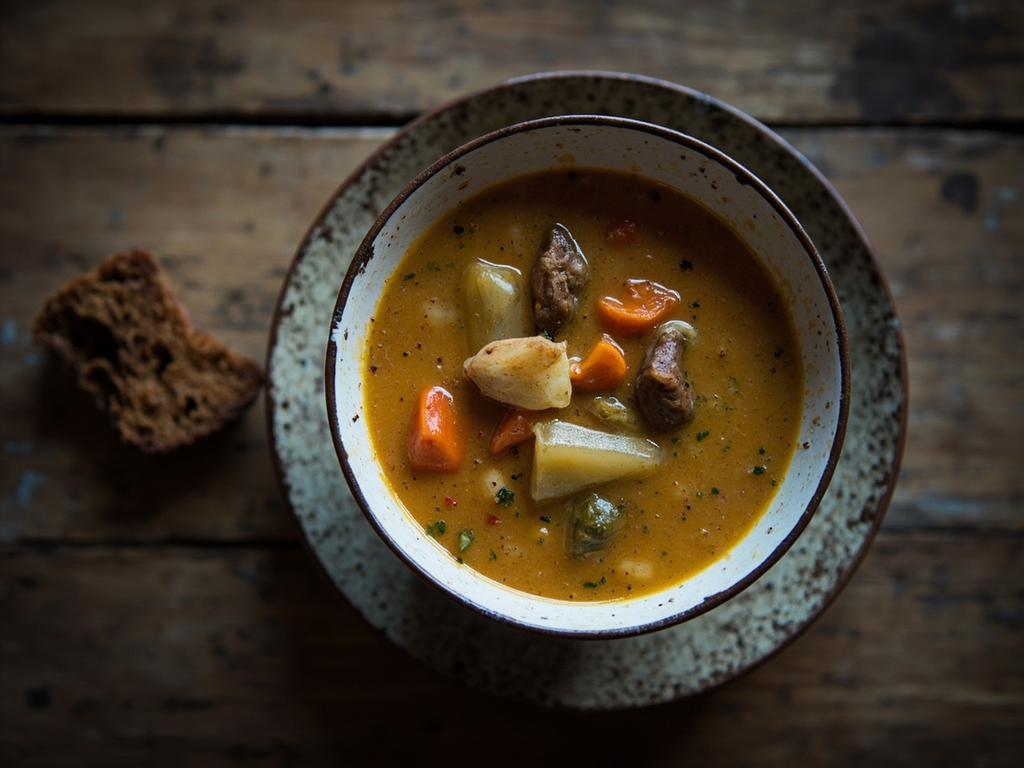
Rutabaga and Jerusalem Artichoke Soup
Why this dish? This is the austere, rationed everyday fare of Parisian intellectuals under the Occupation, the very one Vercors shared while secretly writing *Le Silence de la mer*: thin soups, seasonal vegetables, almost no meat or fat.
A thick, fortifying soup made from the two vegetable kings of scarcity. Little fat, no meat: just water, indestructible vegetables, and a bit of patience to warm a poorly heated Parisian apartment.
You know, we ended up knowing this vegetable by heart, this rutabaga that our grandmothers fed to the cattle and that we had to put on our plates. We peel it, cut it into big chunks, add those knobby Jerusalem artichokes that grow everywhere and nothing stops, and let it simmer for a long time over the meager fire. I had neither butter nor bacon to put in it, so I saved it all with a sprig of thyme and a grain of patience. We blew on the spoon, held the bowl tight between our hands for the little warmth it gave, and then we worked better, our stomachs filled as best they could.
- •Rutabagas — two large (base vegetable, earthy sweetness)
- •Jerusalem artichokes — a good handful (thickener and bitter hazelnut flavor)
- •Leek or onion — whatever is available (aromatic base)
- •Thyme — a sprig (flavor)
- •Salt — according to the ticket (seasoning, measured)
Rutabaga and Jerusalem Artichoke Soup
A thick, fortifying soup made from the two vegetable kings of scarcity. Little fat, no meat: just water, indestructible vegetables, and a bit of patience to warm a poorly heated Parisian apartment.
Why this dish? This is the austere, rationed everyday fare of Parisian intellectuals under the Occupation, the very one Vercors shared while secretly writing *Le Silence de la mer*: thin soups, seasonal vegetables, almost no meat or fat.
You know, we ended up knowing this vegetable by heart, this rutabaga that our grandmothers fed to the cattle and that we had to put on our plates. We peel it, cut it into big chunks, add those knobby Jerusalem artichokes that grow everywhere and nothing stops, and let it simmer for a long time over the meager fire. I had neither butter nor bacon to put in it, so I saved it all with a sprig of thyme and a grain of patience. We blew on the spoon, held the bowl tight between our hands for the little warmth it gave, and then we worked better, our stomachs filled as best they could.
Ingredients (period version)
- Rutabagas — two large (base vegetable, earthy sweetness)
- Jerusalem artichokes — a good handful (thickener and bitter hazelnut flavor)
- Leek or onion — whatever is available (aromatic base)
- Thyme — a sprig (flavor)
- Salt — according to the ticket (seasoning, measured)
Ingredients
- Rutabaga — 500 g (base vegetable)
- Jerusalem artichokes — 300 g (thickener and hazelnut flavor)
- Leek — 1 (aromatic base)
- Potato — 1 medium (softens bitterness and thickens)
- Vegetable broth — 1 liter (liquid base)
- Drizzle of oil or knob of butter — 1 tbsp (richness (today's luxury))
- Thyme, salt, pepper — to taste (seasoning)
Method
- Peel the rutabaga, Jerusalem artichokes, and potato, cut into large dice.
- Slice the leek and sweat it for a minute in the oil at the bottom of the pot.
- Add the vegetables, cover with broth, add the thyme.
- Simmer for 35 to 40 minutes over low heat, until the tip of a knife pierces the rutabaga.
- Blend for a velvety texture, or mash roughly with a fork to stay true to the era. Season with salt and pepper, serve piping hot.
How it was made : Without butter, cream, or almost any meat, these soups drew all their comfort from long cooking. Jerusalem artichoke and rutabaga, unrationed, fed French cities from 1940 to 1944 — to the point of becoming, even today, the hated symbol of deprivation.
The contemporary twist : A drizzle of toasted hazelnut oil and a few fried Jerusalem artichoke chips restore this dish of poverty to a bistro-style velouté.
Vercors · Charactorium