 flip
flipThe Roast Poultry from the Poor Children's Dinner
The Roast Poultry from the Poor Children's Dinner
Why this dish? From 1862, while in exile at Hauteville House (Guernsey), Hugo regularly hosted a real dinner for dozens of poor children on the island, serving them meat, vegetables, and a good meal himself. A roast poultry embodies this festive generosity and his lifelong fight for the wretched.
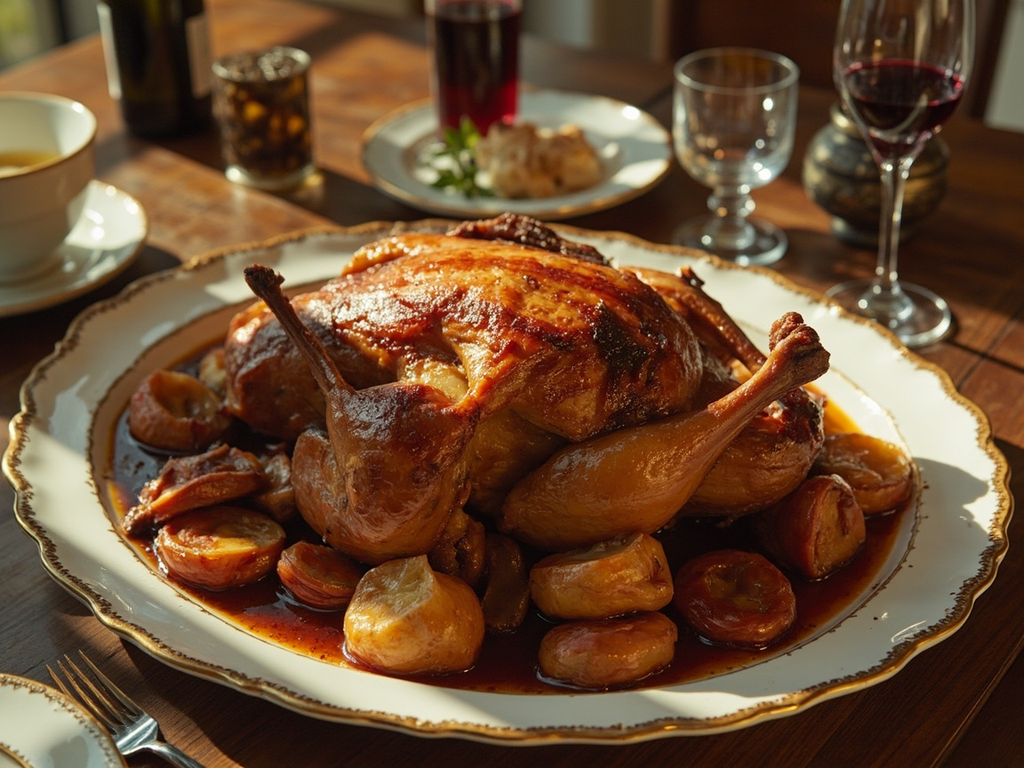
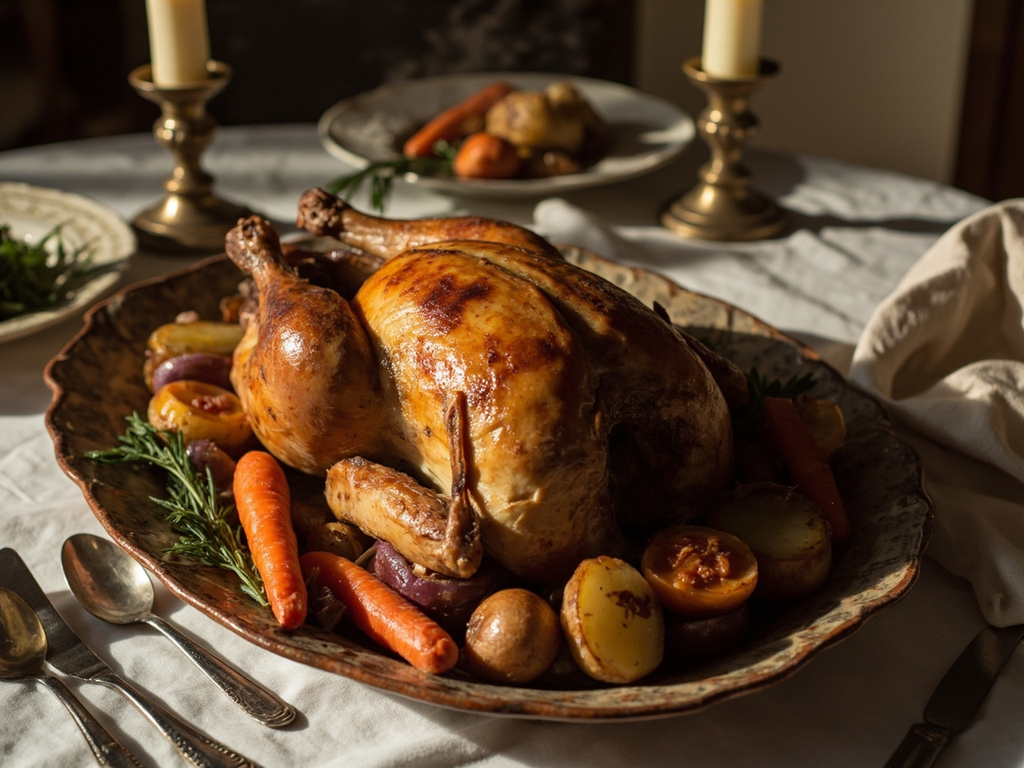
A beautiful golden poultry from the oven, crispy skin and juicy flesh, surrounded by roasted vegetables. The festive dish par excellence of the bourgeois table — here offered to the most destitute.
Sit down, little ones, sit down: today the table is yours. I wanted that once a week, under my roof of exile, the children whom misery forgets should have a real tablecloth and a steaming poultry before them. One browns it slowly, bastes it with its own juices, places it whole so that each may see he is not a beggar but a guest. To feed a hungry child is to give back a little bread to the future.
- •Fine poultry (capon or poularde) — one (centerpiece)
- •Butter — a good lump (browning and tenderness)
- •Onions and carrots — a few (roasted garnish)
- •Thyme and bay leaf — a few sprigs (aromatic)
- •Salt and pepper — as needed (seasoning)
The Roast Poultry from the Poor Children's Dinner
A beautiful golden poultry from the oven, crispy skin and juicy flesh, surrounded by roasted vegetables. The festive dish par excellence of the bourgeois table — here offered to the most destitute.
Why this dish? From 1862, while in exile at Hauteville House (Guernsey), Hugo regularly hosted a real dinner for dozens of poor children on the island, serving them meat, vegetables, and a good meal himself. A roast poultry embodies this festive generosity and his lifelong fight for the wretched.
Sit down, little ones, sit down: today the table is yours. I wanted that once a week, under my roof of exile, the children whom misery forgets should have a real tablecloth and a steaming poultry before them. One browns it slowly, bastes it with its own juices, places it whole so that each may see he is not a beggar but a guest. To feed a hungry child is to give back a little bread to the future.
Ingredients (period version)
- Fine poultry (capon or poularde) — one (centerpiece)
- Butter — a good lump (browning and tenderness)
- Onions and carrots — a few (roasted garnish)
- Thyme and bay leaf — a few sprigs (aromatic)
- Salt and pepper — as needed (seasoning)
Ingredients
- Free-range chicken (or capon) — 1 of ~1.8 kg (centerpiece)
- Softened butter — 60 g (browning and tenderness)
- Onions — 2 (roasted garnish)
- Carrots — 4 (roasted garnish)
- Potatoes — 600 g (roasted garnish)
- Thyme and bay leaf — a few sprigs (aromatic)
- Salt and pepper — to taste (seasoning)
Method
- Bring the poultry to room temperature 1 hour ahead. Preheat the oven to 200 °C.
- Massage the skin with softened butter, season generously with salt and pepper, tuck thyme and bay leaf inside.
- Place the poultry in a large roasting pan, surround with onions, carrots, and potatoes cut into pieces.
- Roast for 1 hour 15 to 1 hour 30, basting regularly with its juices.
- Check doneness (juices should run clear); let rest under foil for 10 minutes before carving.
- Present the whole bird at the table, then carve it in front of the guests with its vegetables.
How it was made : Roast poultry was the honor dish of festive meals in the 19th century, traditionally seared then roasted on a spit in front of the hearth, constantly basted with its fat. At the Hugos’, the ‘poor children’s dinners’ in Guernsey, real and still famous, transformed this symbol of bourgeois abundance into a weekly gesture of solidarity toward the underprivileged children of the island.
The contemporary twist : Present the poultry on a large board at the center of the table and invite everyone to help themselves — to recapture the spirit of the shared meal as Hugo intended.
Victor Hugo · Charactorium