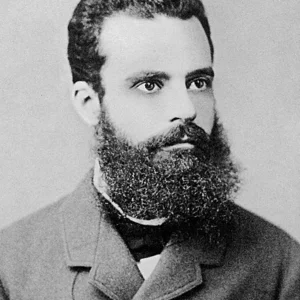

Vilfredo Pareto (1848-1923) was an Italian economist and sociologist, a major figure of the Lausanne School. He left his mark on neoclassical political economy and sociology through his work on the distribution of wealth and the behavior of elites.
Vilfredo Pareto(1848 — 1923)
Vilfredo Pareto
France, royaume d'Italie
6 min read
Frequently asked questions
Key Facts
- Born in 1848 in Paris, died in 1923 in Céligny (Switzerland).
- Succeeded Léon Walras to the chair of political economy at the University of Lausanne in 1893.
- Formulated the law of income distribution (Pareto's law) in 1896, the origin of the so-called “80/20” principle.
- Defined the concept of Pareto optimality, a state in which one cannot improve one person's situation without worsening another's.
- Published his “Treatise on General Sociology” (1916), developing the theory of the circulation of elites.
Works & Achievements
Major work in which Pareto formulates his law of income distribution and applies mathematics to economics.
A critical analysis of socialist doctrines and the first outline of his theory of the circulation of elites.
Introduces the Pareto optimum and indifference curves, foundations of modern welfare economics.
A statistical observation on the concentration of wealth, which became a universal tool in economics and management.
A key concept of economic efficiency: a situation in which no one's lot can be improved without harming someone else.
A sociological synthesis of more than 2,000 pages theorizing residues, derivations, and the circulation of elites.
Anecdotes
Before becoming an economist, Pareto worked as a railway engineer and then as the director of an ironworks company in Italy. It was only after the age of 40 that he became a professor of economics in Lausanne, succeeding Léon Walras. His background as an engineer explains his fondness for mathematics and for curves applied to economics.
By studying the tax records of several countries, Pareto noticed that about 20% of the population owned 80% of the wealth, and that this proportion repeated itself strangely from one era and one country to another. This observation became the famous “Pareto principle,” or “80/20 rule,” still used today in management and economics.
Pareto was a strong-willed character, often at odds with those in power. At his villa in Céligny on the shore of Lake Geneva, he kept a great many cats, so many that his neighbors had nicknamed him the “hermit with the cats.” There he worked apart from the academic world he was fond of criticizing.
To explain history, Pareto coined the idea of the “circulation of elites”: according to him, ruling groups are constantly renewed, with the old elites being replaced by new ones. He compared history to “a graveyard of aristocracies,” a phrase that has remained famous in sociology.
In 1923, shortly before his death, Mussolini's fascist regime sought to claim Pareto's prestige by appointing him a senator of the Kingdom of Italy. Pareto, already very ill, hardly ever took his seat. Historians still debate his ambiguous relationship with fascism, which he observed without being a committed supporter.
Primary Sources
The income distribution curve displays a remarkable regularity: in the societies we have been able to observe, the shape of this curve varies very little.
We shall say that the members of a community enjoy maximum ophelimity at point P when it is impossible to move even slightly away from this position in such a way that the ophelimity enjoyed by each of the individuals increases.
History is a graveyard of aristocracies. Elites do not last; they succeed one another.
The struggle for life and for well-being is a general phenomenon that manifests itself in various forms according to times and places.
Key Places
Pareto's birthplace in 1848, where his Italian family had gone into exile for political reasons.
The city where Pareto studied engineering at the Polytechnic School, acquiring his mathematical training.
The city where Pareto worked as an engineer and then as director of an iron-and-steel company, and where he took part in economic debates.
Where Pareto succeeded Léon Walras in 1893 and developed the bulk of his economic and sociological work.
A Swiss village on the shore of Lake Geneva where Pareto owned his villa “Angora” and where he died in 1923.
Typical Objects

A graph showing how wealth is distributed across a society. It was here that Pareto observed the regularity of the “80/20” rule.

Numerical data on incomes that Pareto compiled from several countries. They served as the raw material for his law of distribution.

The professor's everyday tool for drawing curves and equations in front of his students in Lausanne. Pareto used it to demonstrate his mathematical reasoning.

The writing instruments with which Pareto composed his voluminous treatises. The 'Treatise on General Sociology' runs to more than two thousand pages.

A vast collection of books and journals in his house at Céligny. Pareto worked there in seclusion, surrounded by his many cats.

The characteristic attire of the late-19th-century European notable and scholar. Pareto wore a frock coat, a waistcoat and a long, well-kept beard.
School Curriculum
Vocabulary & Tags
Key Vocabulary
Daily Life
Morning
Secluded in his villa at Céligny, Pareto devoted his mornings to reading economic journals and fiscal statistics from all over Europe. He tirelessly annotated his sources before settling down to write.
Afternoon
His afternoons were dedicated to writing his treatises, pen in hand, in a study lined with books. When he taught at Lausanne, he delivered his economics lectures there at the blackboard.
Evening
In the evening, Pareto sometimes received disciples and correspondents, but above all he enjoyed solitude. He kept up an abundant correspondence and observed his cats, which filled his house.
Food
He lived the life of a well-to-do bourgeois of the Belle Époque, with refined European cuisine and wines from the Lake Geneva region. His declining health, however, forced him to watch his diet in his final years.
Clothing
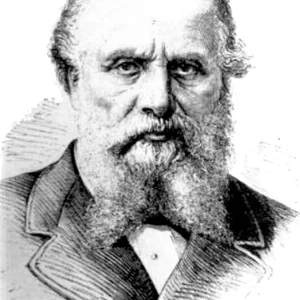
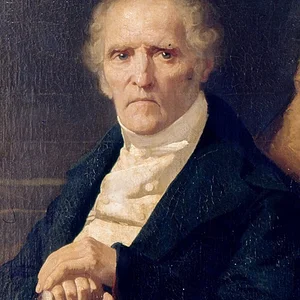
Pareto dressed like a notable of the turn of the century: a frock coat or dark three-piece suit, waistcoat, starched detachable collar and necktie. A long beard framed his face, in the fashion of the scholars of the era.
Housing
He lived in his villa “Angora” at Céligny, a vast bourgeois residence on the shore of Lake Geneva, surrounded by a garden. The house held his library, his study and his many Angora cats.
Historical Timeline
Period Vocabulary
Liens externes & ressources
Références
Œuvres
Cours d'économie politique
1896-1897
Les Systèmes socialistes
1902-1903
Manuel d'économie politique
1906
Loi de Pareto (principe 80/20)
1896
Optimum de Pareto
1906
Traité de sociologie générale
1916