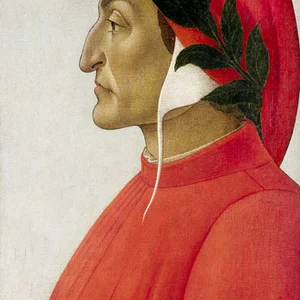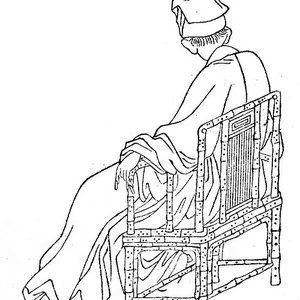

Wang Wei (701-761) was one of the greatest poets of the Tang dynasty, as well as a painter, musician, and high-ranking official. Deeply influenced by Chan Buddhism, he is celebrated for his landscape poetry in which nature and contemplation merge.
Wang Wei(699 — 759)
Wang Wei
dynastie Tang
7 min read
Frequently asked questions
Key Facts
- Born in 701 in Shanxi, he passed the imperial examination (jinshi) around 721
- A high-ranking official at the Tang court, he rose to senior posts under Emperor Xuanzong
- Captured during the An Lushan Rebellion (755-763), he later escaped severe punishment
- Retiring to his Wangchuan estate, he composed landscape poetry imbued with Chan Buddhism
- Died in 761; tradition (Su Shi) praises in his work “painting within poetry and poetry within painting”
Works & Achievements
A series of twenty quatrains composed in dialogue with his friend Pei Di, each devoted to a site on the Wangchuan estate. A summit of Chinese landscape poetry.
A four-line quatrain, one of the most translated poems in all of Chinese literature. In a few words it captures the luminous solitude of a forest.
A farewell poem set to music under the name “Three Variations on the Yang Pass,” sung for centuries at times of parting.
A regulated poem in which the mountain landscape after rain becomes meditation. A model of the genre, uniting painting and inner emotion.
A frontier poem born of his official journey westward, famous for the line “in the great desert, a lone column of smoke rises straight.”
A youthful poem written at seventeen, which became the proverbial expression of longing for family in China.
A long painted scroll depicting his estate, now lost but known through copies. A founding work associated with literati landscape painting.
Anecdotes
Wang Wei's given name (Wei) and his courtesy name (Mojie), joined together, form “Weimojie” — the Chinese transcription of Vimalakirti, a famous lay sage of Buddhism. This choice reveals his family's devotion: his mother was for more than thirty years the disciple of a master of the Chan school.
At seventeen, far from his family, Wang Wei wrote a poem for the Double Ninth Festival, thinking of his brothers who had stayed east of the mountains. The line “on every joyful festival, one thinks twice as much of one's loved ones” became so famous that Chinese people still quote it today when they are far from those they hold dear.
It is said that Wang Wei, an accomplished musician, once looked at a painting of an orchestra. He immediately declared that the musicians were playing “the first bar of the third section” of a famous tune, the Nishang yuyi. Connoisseurs questioned real musicians: he had been right simply by observing the position of the fingers.
In 756, when An Lushan's rebel troops seized the capital Chang'an, Wang Wei was captured and forced to serve the new regime. As a prisoner, he secretly composed a poem lamenting the fate of the deposed emperor. When the Tang retook the city, this poem — and the intervention of his brother Wang Jin, who was ready to sacrifice his own rank — spared him a conviction for treason.
Wang Wei acquired a vast estate at Wangchuan, at the foot of the Zhongnan Mountains, once the property of the poet Song Zhiwen. With his friend Pei Di, he composed there a collection of twenty short poems, each describing a place on the estate: a deer enclosure, a hut among the bamboos, a landing stage. He also painted there a long scroll, the Wangchuan tu, copied and admired for centuries.
Primary Sources
Empty mountain, no one to be seen; yet the echo of voices can be heard. The setting sunlight enters the deep forest and shines once more upon the green moss.
The morning rain at Weicheng dampens the light dust; at the inn, the freshened willows take on a new green. Let me urge you to drain one more cup of wine: once you pass Yang Pass and head west, you will have no friends left.
Ten thousand households broken-hearted, wild smoke rising; when will the hundred officials again pay homage to the imperial court? The pagoda-tree leaves fall in the deserted palace, and by Ningbi Pond they play the flute and strings.
Wei excelled at painting landscapes of mountains and waters; after his wife's death he did not remarry, and lived alone for more than thirty years, fasting and meditating in the Buddhist manner.
Key Places
The ancestral home of Wang Wei's family, in present-day Shanxi. This is where his roots lie and where the “eastern mountains” mentioned in his early poems are found.
Capital of the Tang dynasty and the largest city in the world at the time, a center of power and the arts. Wang Wei pursued his career as a government official here and died here.
A country property at the foot of the Zhongnan Mountains, near Lantian, where Wang Wei would retreat to write and paint. The place inspired his most famous poetry collection and scroll painting.
A mountain range south of Chang'an, a major site for Buddhist and Taoist retreat. Wang Wei found here the setting for his contemplative landscape poetry.
A frontier town on the Silk Road where Wang Wei was sent on an official mission. From it he brought back famous poems of the borderlands, such as “On a Mission to the Frontier.”
Typical Objects

A four-stringed plucked lute, held vertically, very fashionable at the Tang court. Wang Wei, a renowned musician, held a position at the Imperial Music Office.

A seven-stringed zither, the emblematic instrument of the Chinese scholar, associated with meditation and self-mastery. Playing the qin was one of the arts expected of a cultivated man.

The brush, the ink stick, the inkstone and paper, the indispensable tools of the poet, the calligrapher and the painter. Wang Wei used them both to write his verses and to paint his landscapes.

A long scroll of silk or paper painted in ink, unrolled section by section like a journey. Wang Wei's Wangchuan tu is its most famous example.

A long robe whose colour indicated one's rank in the imperial hierarchy. Wang Wei wore it throughout his career as a high-ranking official.

A sacred text of Buddhism, copied and recited by the faithful; the Vimalakirti Sutra held a special place for Wang Wei. Copying sutras was an act of piety as much as an exercise in calligraphy.

A small cup used at banquets and at farewells between friends, a recurring motif in Tang poetry. Wine seals friendship in the famous Song of Wei City.
School Curriculum
Vocabulary & Tags
Key Vocabulary
Daily Life
Morning
On days of service, Wang Wei rose before dawn to attend the imperial audience at Chang'an, dressed in his official's robe. At his Wangchuan retreat, by contrast, he began the day with meditation and watched the mist rise over the hills.
Afternoon
At court, he attended to administrative affairs and kept company with poets and musicians. Far from the city, he composed verses, painted in ink, or strolled along the river with his friend Pei Di.
Evening
In the evening, he read the sutras by lamplight and practiced “zuochan,” the seated meditation of Chan Buddhism. He also loved to play the qin in the silence of the bamboo.
Food
A devout Buddhist, Wang Wei followed a vegetarian diet and avoided meat and strong alcohol in daily life. His table consisted of rice, vegetables, bamboo shoots, and tea, a commodity then flourishing under the Tang.
Clothing
On duty, he wore the long silk robe and cap of the mandarins, whose color signaled his rank. In retreat, he preferred the simple garments of a reclusive scholar, close to those of a hermit.
Housing
In Chang'an, he occupied an official's residence in the capital. His true home at heart, however, was the Wangchuan estate, made of pavilions scattered among the bamboo, ponds, and mountain paths.
Historical Timeline
Period Vocabulary
Liens externes & ressources
Références
Œuvres
Recueil de la rivière Wang (Wangchuan ji)
vers 744
Le Clos aux cerfs (Lu zhai)
VIIIe siècle
Chant de Weicheng (Adieu à Yuan le second)
VIIIe siècle
En mission à la frontière (Shi zhi saishang)
vers 737
Le neuvième jour du neuvième mois, je pense à mes frères à l'est des monts
vers 716