Kids interview Alfred de Musset
by Charactorium · Alfred de Musset (1810 — 1857) · Literature · 5 min read
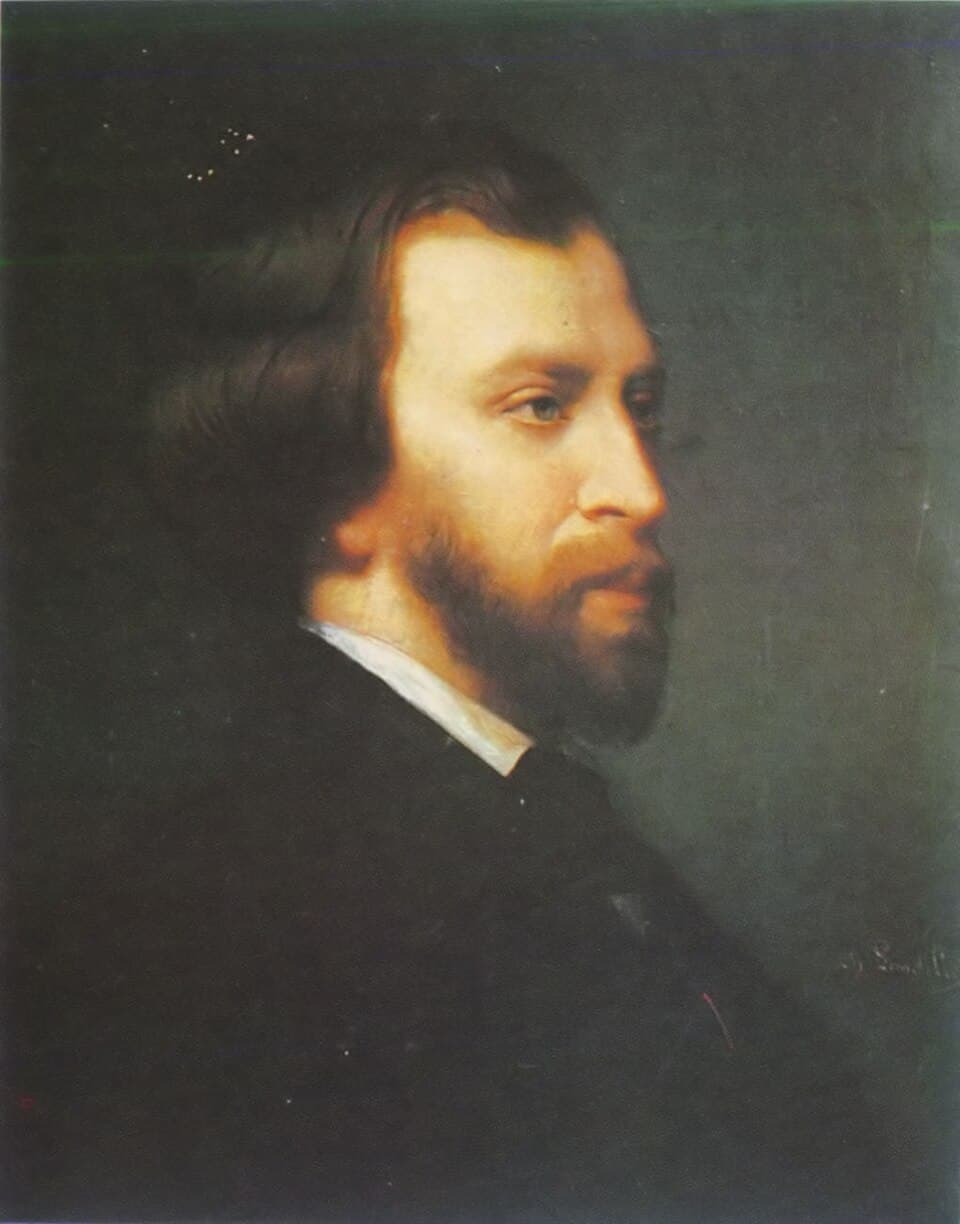
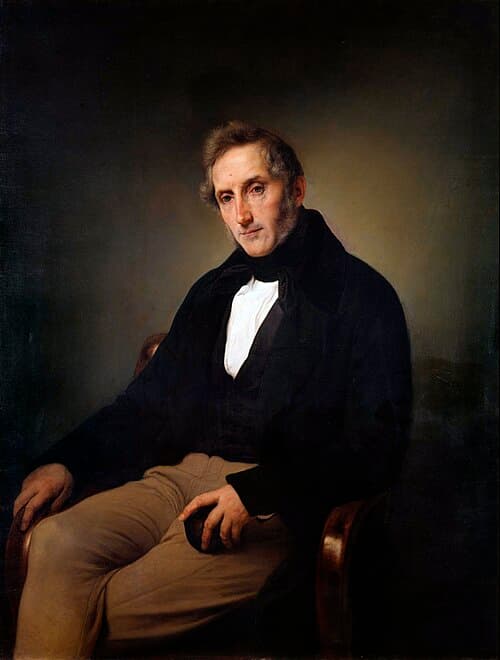
Two twelve-year-old students, on a school trip, push open the door of an old Parisian salon. In the light of an oil lamp, an elegant man awaits them, with a slightly sad smile. Alfred de Musset invites them to sit down and ask all their questions.
—How old were you when you met George Sand?
You know, my child, I was twenty-three. It was in 1833, during a dinner in Paris. She, George Sand, was nine years older than me. Imagine two people who recognize each other in a single evening, like two flames set side by side. I wrote to her that I loved her with a passion that both devoured and destroyed me. Beautiful, isn't it? And dangerous. When you love so strongly, so quickly, you don't yet see the tears waiting at the end of the road. Our story lasted two years. She gave me my finest pages… and my greatest sorrows.
—What was it like when you fell ill in Venice?
Ah, Venice… Imagine a city resting on the water, without a single wheel sound, just the lapping of the canals. We went there together in 1834. And there, I fell gravely ill. Weeks in bed, burning with fever. George nursed me, but between us, something was quietly breaking. You know, sometimes two people can be in the same room and already be losing each other. The fever left. Our love, however, never recovered. The following year, in 1835, we parted for good. Venice remains for me a city both magnificent and sad.
Two people can share the same room and already be losing each other.
—What were your days like? Did you wake up early?
Early? Oh no, my child! I woke up late, very late. My nights I spent writing or frequenting the salons of Paris. Imagine a city lit by candle and oil lamp, where one dines late and laughs until dawn. In the morning, a coffee, a little hot chocolate, and I would dive back into my plays. In the afternoon, I would meet my writer friends in cafés. In the evening… the theater, always the theater. It was a beautiful, brilliant life. But a life that burns fast eventually tires the one who leads it.
—They say you partied a lot. Was that true?
I won't lie to you, my child. Yes. I loved wine too much, the endless nights, what was then called the bohemian life — a free life, without rules, like that of artists who refuse to tidy up their existence. It was fun at first. But these excesses ruined my health. And do you know the strangest part? Beneath my laughter, there was always a great sadness. They called it melancholy, that gentle sorrow that never leaves you. My heart constantly swung between lightness and darkness. That's why my works laugh and cry at the same time.
—Did you know other famous writers?
Oh yes! As a young man, I frequented the Cénacle, a circle where the great Romantics gathered. I would meet Victor Hugo, Théophile Gautier… giants. Imagine a room full of young people convinced they were going to change the poetry of the entire world. But I was a bit of the odd sheep out. They loved grand historical dramas, solemn, immense. I preferred to laugh, slip in a little irony, stay light. I didn't feel like playing the prophet. You know, sometimes being different from your friends is what makes you yourself. I admired them greatly, but I followed my own path.
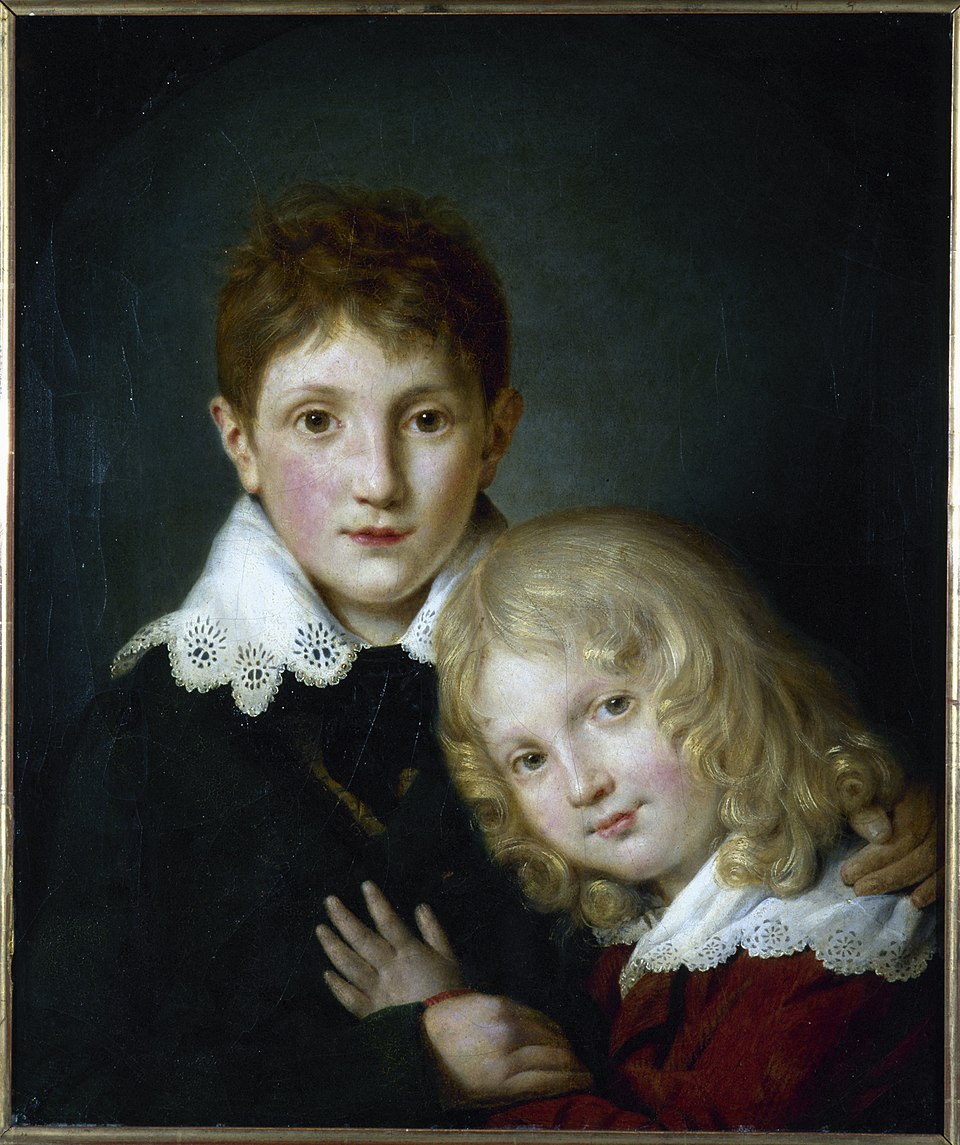
—Why did you love irony so much?
Good question, my child! Irony is saying things with a smile, sometimes saying the opposite of what you really think. For me, it was a way to talk about love without crying all the time. They called it romantic irony: mixing mockery and sentiment, like laughing to hide that you're hurting. Imagine a child joking while his heart is heavy — that was a bit like me. My plays are full of this fantasy, this blend of play, humor, and poetry. Laughing doesn't mean you're not suffering. Often, it's quite the opposite.
We sometimes laugh to keep from showing that we hurt.
—Is it true you wrote theater… not to be performed?
Surprising, isn't it? In 1832, I published a collection with an amusing title: Un spectacle dans un fauteuil (A Show in an Armchair). The idea? Plays that you read quietly at home, sitting in an armchair, instead of going to the theater. Imagine the stage is in your head, and the actors perform in your imagination. Why? Because one of my first plays, in 1831, had been hissed on the actual boards, and that hurt me. So I invented a theater just for readers. It was a wonderful freedom: no more sets, no more hisses, just words and the reader's dream.
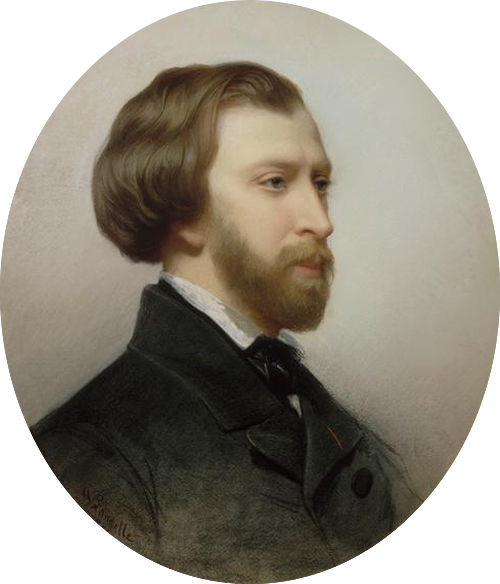
—Did your most famous play succeed right away?
Not at all, my child! On ne badine pas avec l'amour (No Trifling with Love), I wrote it in 1834. It's a comedy about love and pride, about people who play with feelings… until misfortune. A character says: “I do not want to be happy; I want to be loved.” Well, at the theater, it didn't please right away. Imagine writing your finest text and seeing the public shrug. It's hard. And yet, much later, it became one of the most performed plays in France, even in schools. Proof that you should never despair of what you love.
You should never despair of what you love.
—Did you write about a king? What was it about?
Yes! Lorenzaccio, written in 1834. The story is set in Florence, Italy, in a time when the city was ruled by a cruel tyrant. My hero, Lorenzo, decides to kill this tyrant to set the people free. But here's the trap: to get close to the villain, he must pretend to be his friend, and become a little evil himself. Imagine having to dirty your hands to do good. Is it still good? That's the whole question. Power and freedom are never simple. This play is the darkest and deepest I ever wrote.
—What did you think of freedom?
You know, that's a question I often asked myself. In Lorenzaccio, a character says he loves the people and wants them free, but that laws are also necessary. I felt that too. Freedom alone, without any rules, can quickly become chaos. Imagine a classroom without any teacher: fun for five minutes, then frightening. I lived through revolutions, in 1830, then in 1848; I saw Paris change king and regime. Freedom is precious, but fragile. My greatest wish is that you, children, learn to keep it better than we did.
Freedom is precious, but fragile.
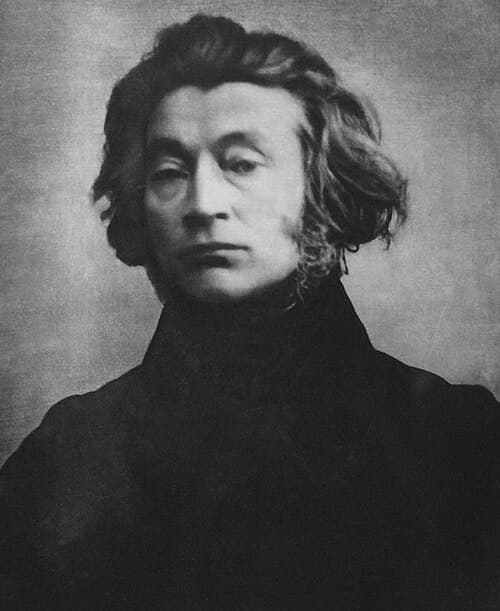
This imaginary interview was generated by artificial intelligence from sources documented in Alfred de Musset's profile. It dramatises what the figure might have said based on what we know about them, but does not constitute attested historical testimony. For primary sources and factual documentation, refer to the full profile.