Imaginary dialogue between Simone de Beauvoir and Brigitte Bardot
by Charactorium · Brigitte Bardot (1934 — 2025) · Performing Arts · Literature · Music · 5 min read
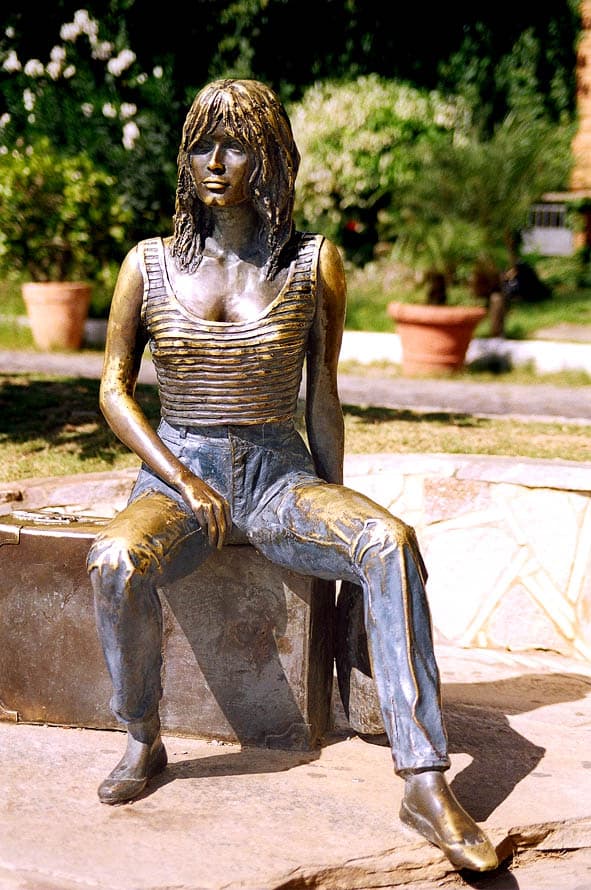
It is on the terrace of La Madrague, facing the sea of Saint-Tropez, that a graying Simone de Beauvoir meets Brigitte Bardot in the spring of 1978. The umbrella pines creak in the wind, a cat dozes on the wooden railing, and in the distance one hears the engines of tourist boats. Almost twenty years earlier, the intellectual had devoted a resounding essay to the actress in an American magazine; today, she comes to question the woman who left everything. Between the philosopher of freedom and the most photographed woman in the world, the conversation begins informally.
—Brigitte, in 1959 I wrote that you disposed of your body as a possession that belonged to you. Did you ever recognize yourself in my portrait?
You know, Simone, your text is one of the few that touched me at the time, because it spoke of me as a person and not a poster. You saw me as free, independent of men — and it's true that I always was, without even thinking about it, by instinct more than by theory. But allow me to tell you something: that freedom you celebrated cost me dearly. Every photographer believed it gave him the right to hunt me down even in my bed. I was taken as a symbol when I only wanted to live. You, you thought freedom; I, I endured it in the full light.
You, you thought freedom; I, I endured it in the full light.
—You speak of a symbol. How does one live when millions of people believe they know you through an image that is not you?
It's a dreadful thing, Simone, and I believe you are one of the few who can understand it. People no longer saw the woman, they saw the image — that BB in capital letters smiling on walls all over the world. When Andy Warhol put me in his silkscreens, in 1970, alongside Marilyn and Mao, I should have been flattered. Instead, I felt as if I were being pinned like a dead butterfly. My face was multiplied infinitely while the real Brigitte disappeared. I ended up hating that distorting mirror. Perhaps that's why I fled: to become someone again behind the myth.
I was being pinned like a dead butterfly; the real Brigitte disappeared.
—We are sitting at La Madrague. Do you remember the village you discovered here, before everything changed?
As if it were yesterday. When I arrived in 1956 to shoot And God Created Woman, Saint-Tropez was just a small, sleepy fishing port, with its nets drying in the sun and old men playing pétanque in the square. I was so happy there that I bought this house two years later. And then the film exploded, and the whole world descended. Thousands of people came to catch a glimpse of me, and the village I loved became a fairground. I have the terrible feeling that I killed what I adored just by loving it too much. Today I barricade myself behind these pines to find a little of the silence from before.
I killed what I adored just by loving it too much.
—Photographers followed you here. How did you endure that pack that camped outside your door, year after year?
Those men, those paparazzi, were the nightmare of my life. The word had barely been invented, and I was one of their first prey. They scaled my walls, rented boats to photograph me at dawn, watched for the slightest moment of weakness. Can you imagine, Simone, what it's like to never be able to cry without a lens stealing your tears? The freedom you spoke of, they confiscated it from me every day. La Madrague became a fortress rather than a refuge. I understood that being famous was not being loved: it was being devoured by people who didn't know you.
Being famous was not being loved: it was being devoured.
—You were first a sex symbol. Yet Godard and Autant-Lara directed you. Did you finally feel taken seriously as an actress?
It did me good, I admit. Opposite Jean Gabin in In Case of Adversity, in 1958, I felt for the first time that I was being watched for my acting and not just for existing. And then there was Contempt, with Godard, based on Moravia's novel. The New Wave was breaking everything, those young people filmed as they pleased, without respecting the rules — that suited me. Godard offered me a serious role, a woman who stops loving, and I touched something real. But let's be honest, Simone: the public wanted my dresses and my body, not my inner feelings. I was never quite forgiven for wanting to be something other than a pretty object.
I was never forgiven for wanting to be something other than a pretty object.
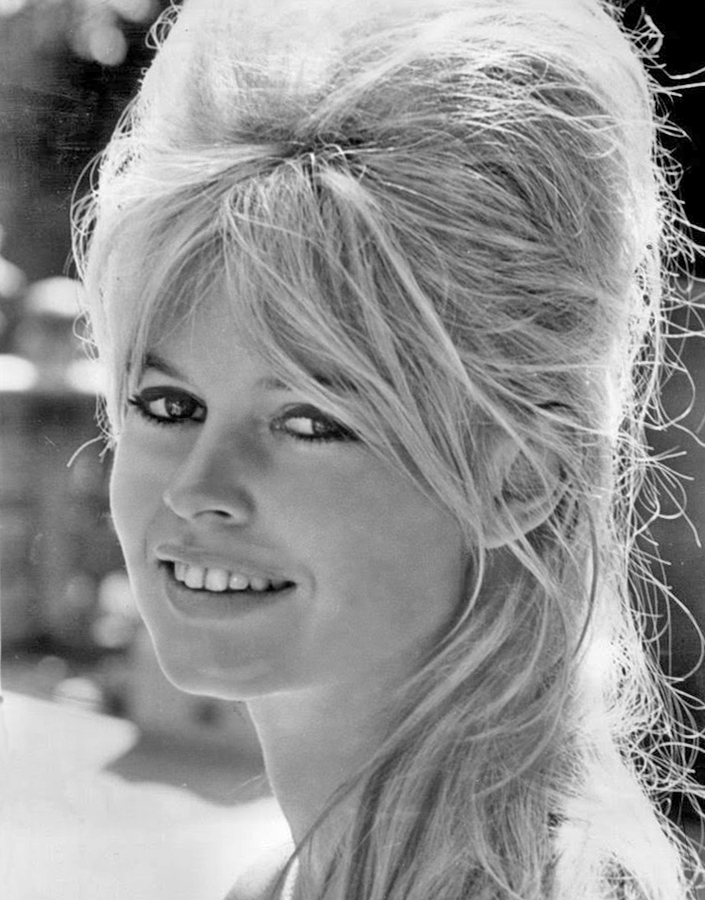
—Millions of women copied you: the gingham, the bun, the ballerina flats. Were you aware of dictating the fashion of an era?
Not at all! I dressed simply because the corsets and strict suits of the post-war period suffocated me. I tied a checkered gingham dress, let my bun come undone in the wind, walked barefoot on the pebbles — it was my way of being alive, not a strategy. And then one fine morning, I saw myself copied in magazines all over the world. That lightness went with the spirit of the times, the yéyé songs, the convertibles, that youth that wanted to breathe after so many gray years. I think women weren't copying my clothes: they were copying a desire for freedom. The fabric was just an excuse.
Women weren't copying my clothes: they were copying a desire for freedom.
—You also sang. That Madrague you hummed spoke of simple happiness in the sun — was that really your life, or already a nostalgia?
A bit of both, no doubt. When I recorded La Madrague, in 1963, I was singing about the very place where we are, this house, these olive trees, the sea that begins anew each morning. It was my real happiness — the sun, my animals, carefreeness. But I think I was already singing to remind myself, as one keeps a photograph for fear of losing the moment. My public life was a whirlwind, and this song was an island where I took refuge in thought. Music, for me, was never a career: it was a breath between two storms. Even today, when I hear it, I get a lump in my throat, because that simple happiness — I had to leave everything to truly find it again.
This song was an island where I took refuge in thought.
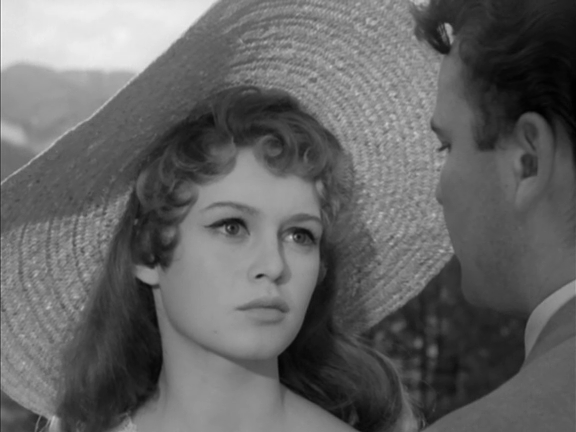
—In 1973, at thirty-nine, you abandoned everything. What was it about those animals that was worth more than the glory of cinema?
Their innocence, Simone. Animals don't lie, don't betray, have no ambition; they don't love you for your name or your face. After twenty years in the spotlight, being desired by strangers and plundered by photographers, that integrity moved me. I looked at the world of cinema and saw only lies, vanity, self-interested smiles. So I closed the door, without regret, at an age when others fight to stay on top. You, who always defended those who are not heard, will understand me: animals have no voice, and I decided to lend them mine. It was the first truly free decision of my life.
Animals have no voice, and I decided to lend them mine.
—Last year, you went to the ice floes of Canada to denounce the massacre of baby seals. Where does this activist courage come from?
From disgust, simply. When I saw those images of white baby seals clubbed on the ice for their fur, I couldn't stay silent. In 1977, I went there, on the ice floes of Newfoundland, in the cold, and I lay down next to one of those babies with its huge eyes. I wrote to the Canadian Prime Minister that France and the whole world were watching this carnage. I was called crazy, sentimental, a former star in need of publicity. I don't care. I had spent my life being looked at; for once, that gaze served a purpose. You see, Simone, I finally found a cause greater than myself — and it keeps me standing.
I had spent my life being looked at; for once, that gaze served a purpose.
—You and I have each sought, in our own way, to be free. Do you regret anything from the path you've taken?
No, Simone, and that may surprise you. I was wounded, betrayed, devoured by my image — but I always refused to be what others wanted me to be. As a little girl, I was destined for classical dance and the bourgeois salons of the sixteenth arrondissement; I preferred the sea, the sun, and my own law. They wanted me as a docile wife, eternal actress, obedient idol: each time I chose to leave. You wrote your books; I only knew how to write my freedom with my life, by living it. Today, surrounded by my animals in this house, I believe I am finally myself, without camera or audience. And that, you see, no role could ever have given me.
I only knew how to write my freedom with my life, by living it.
This imaginary interview was generated by artificial intelligence from sources documented in Brigitte Bardot's profile. It dramatises what the figure might have said based on what we know about them, but does not constitute attested historical testimony. For primary sources and factual documentation, refer to the full profile.