Imaginary interview with Brigitte Bardot
by Charactorium · Brigitte Bardot (1934 — 2025) · Performing Arts · Literature · Music · 6 min read
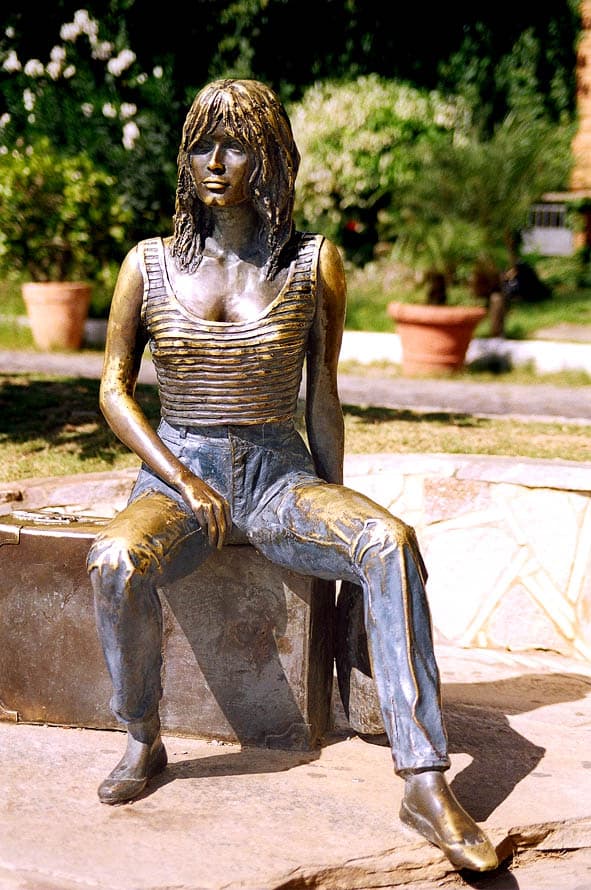
Late afternoon at La Madrague, her low villa set at the water's edge in Saint-Tropez. The umbrella pines filter a golden light, dogs doze on the cool tiles and the smell of salt rises from the nearby sea. It is here, far from the cameras she fled half a century earlier, that Brigitte Bardot agreed to look back on her life.
—How could a simple shoot transform the village of Saint-Tropez to such an extent?
It was in 1956. Roger took me to shoot And God Created Woman in this forgotten corner of the Var, a fishing port where nets dried on the quays and no one locked their doors. I walked barefoot on the hot cobblestones, swam without ever checking the time. The film caused a worldwide uproar, and soon tourist buses started coming down the winding road, hoping to catch a glimpse of the girl on the screen. In a few summers, my little port became covered with terraces, yachts, flashes. I loved Saint-Tropez with all my heart, and I may also have helped kill it. You never measure what a film can do to a place.
I loved Saint-Tropez with all my heart, and I may also have helped kill it.
—What prompted you to buy this house, La Madrague?
Two years after the film, in 1958, I bought La Madrague, a low house by the water, surrounded by umbrella pines and bougainvillea. It wasn't a palace — simple rooms, cool tiles underfoot, the salt coming in through open windows. In the morning, I did my few dance exercises, an old reflex from the National School, then my coffee on the terrace facing the sea. It's here that I ended up hiding, later, with my dogs, my cats, my horses. The crowd came looking for me right up to my gate; I wanted only one thing, that blue morning silence when the bay is still empty.
—Do you remember how you felt acting opposite Jean Gabin?
For a long time I was reduced to a body, a pouty mouth, a figure in a swimsuit. So In Case of Adversity, in 1958, opposite Jean Gabin, was something else entirely. That man had a rock-like presence; in front of him, it was impossible to cheat, you had to truly exist or disappear. Claude Autant-Lara asked for truth, not poses, and I discovered I could handle a dramatic role, make a scene tremble without showing anything but my eyes. The critics, who usually treated me like a freak show, had a kind word that day. I was as proud of that as of a victory wrested with bare hands.
—How was the shoot of Contempt with Godard different from the rest of your career?
Contempt, with Godard, in 1963, was another world entirely. He shot like he breathed, without a net, adapting Moravia in his sharp way, and he filmed me differently from all the others — not the starlet, but a woman undoing a man. Beside me, Michel Piccoli; around us, the harsh light of Capri and those colors that pop. People were already talking about the New Wave, those young filmmakers breaking the well-groomed cinema of our elders. I wasn't an intellectual, I theorized nothing, but I felt I was serving a work greater than myself, and that I was finally being taken seriously.
Not the starlet, but a woman undoing a man.
—How did your clothing style become a worldwide copied reference?
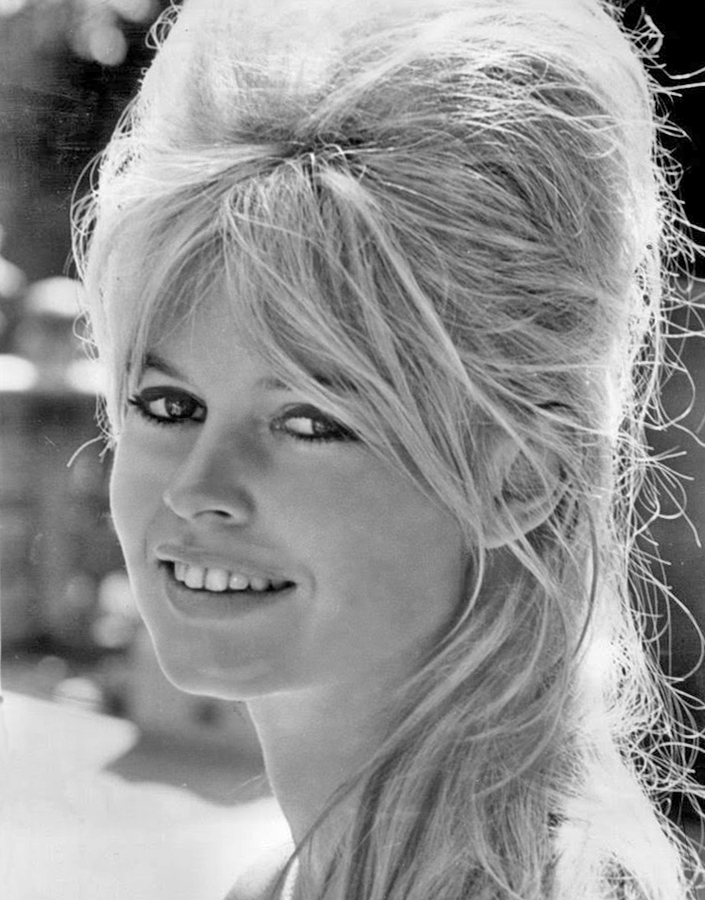
Post-war fashion corseted women, locked them into girdles, strict suits, lacquered hairdos. I put on checked gingham, that flimsy fabric reserved for tablecloths and aprons, and made it into dresses tied at the nape. I pulled my hair up in a low bun, deliberately messy, as if just out of bed or the sea. I ran on cobblestones in flat ballet slippers. None of it was calculated — it was my laziness, my desire to be comfortable. And then I saw, in Rome, in New York, millions of girls copying that bun and that gingham. People were hungry for freedom, even in a piece of checked cotton.
People were hungry for freedom, even in a piece of checked cotton.
—Why did your way of living shock your contemporaries so much?
In Saint-Tropez, in the afternoon, I would lie in the sun, laugh too loudly with my friends, swim almost naked when I felt like it. The respectable bourgeoisie choked, the priests fulminated, the newspapers ran headlines about the scandal. The paparazzi — that word had just arrived from Fellini's film — hunted me even in the coves. I wasn't campaigning for anything, understand me: I simply lived as my body demanded, without ever asking permission. Perhaps that was what was most unbearable for the era: a woman who disposed of herself without apologizing. Much later, big words were attached to it, sexual liberation. I had only taken off my shoes.
—What did Simone de Beauvoir's view of you represent to you?
That is what surprised me most. In 1959, Simone de Beauvoir, the great intellectual, wrote a long piece about me in an American magazine, Esquire. She spoke of a 'Lolita syndrome', but without any contempt — quite the opposite. She said, I remember it word for word: 'BB is neither perverse nor submissive; she is independent. She possesses her body without being a prisoner of it, she disposes of it as a possession that belongs to her.' That a woman of such stature looked at me that way, me whom they took for a pretty scatterbrain, moved me deeply. She had seen, beneath the starlet, something I couldn't name: that my freedom was disturbing because it owed nothing to men.
—How did you feel discovering your face multiplied by Andy Warhol?
In 1970, I learn that Andy Warhol made a series of silkscreens of my face, alongside Marilyn and Mao. An honor, they said. But I saw above all my face multiplied, colored, sold, turned into a product like a can of soup. It's from that gap that I wrote, much later in my memoirs Initiales B.B.: 'People no longer saw the woman, they saw the image. That image devoured me.' You think being an idol means reigning; it means being eaten alive by your own effigy. I spent a good part of my life trying to escape that portrait that the whole world owned and that I no longer recognized.
You think being an idol means reigning; it means being eaten alive by your own effigy.
—Why did you turn your back on cinema at the height of your glory, at thirty-nine?
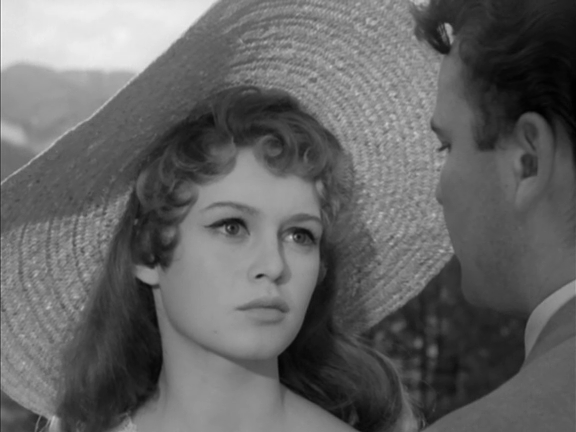
I turned thirty-nine and I said stop. In 1973, I turned my back on the cameras, on this profession that had given me everything and taken a lot. People didn't understand that you could leave the spotlight at its brightest; you don't leave a throne, they think. But I couldn't stand the looks, the roles, the myth stuck to my skin anymore. I wanted to be useful to those who never lie. I wrote it bluntly: 'I gave up everything for animals because animals don't lie, don't betray, have no ambition. They saved me.' It wasn't the whim of a tired star, it was the only true thing I had left.
I couldn't stand the myth stuck to my skin anymore.
—What played out for you on the ice of Canada in 1977?
In 1977, I left for the ice of the Gulf of St. Lawrence, in Canada. It was bone-chillingly cold, and there, on that endless ice floe, were baby seals with white fur and big black eyes, being clubbed by the thousands for their pelts. I lay down next to one of them, and that image went around the world. I wrote to the Canadian Prime Minister: 'In the name of millions of outraged people, I ask you to stop this annual massacre of baby seals. France and the whole world are watching what is happening on your ice.' They called me crazy, sentimental. I didn't care: I finally had a cause greater than my name.
I finally had a cause greater than my name.
—In hindsight, do you regret anything about the life you left behind?
In 1992, I created my Foundation, so that the fight would outlive me, no longer resting on my silhouette alone. I sold my jewels, my furs from the past — those skins that now horrified me — to fund it. At La Madrague, surrounded by my dogs and horses, I traded scripts for petitions and flyers. Sometimes people ask if I miss the cinema, the glamour, the spotlights. No. The myth belongs to the world; you can sell it as a silkscreen, print it on stamps with Marianne's face. But my animals, this silence by the water, are things no photographer could ever steal from me. That, I think, is where I finally found the woman beneath the image.
That is where I finally found the woman beneath the image.
This imaginary interview was generated by artificial intelligence from sources documented in Brigitte Bardot's profile. It dramatises what the figure might have said based on what we know about them, but does not constitute attested historical testimony. For primary sources and factual documentation, refer to the full profile.