Imaginary interview with Charles Perrault
by Charactorium · Charles Perrault (1628 — 1703) · Literature · 5 min read
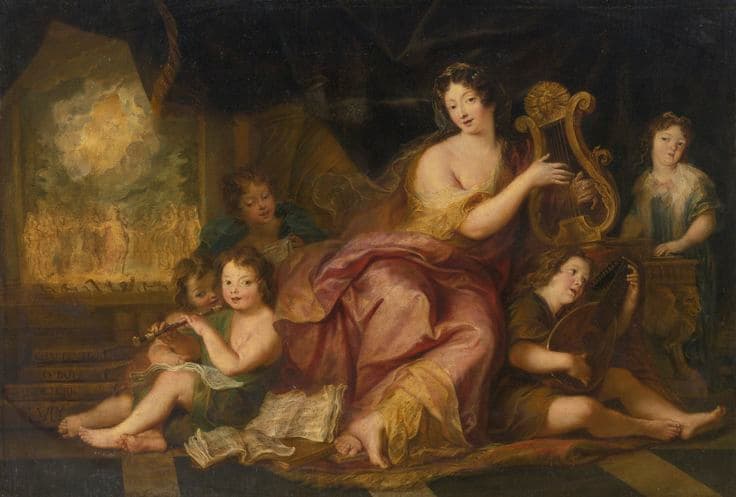
Paris, one winter evening in 1700. In his study on rue de l'Arbre-Sec, a stone's throw from the Louvre, Charles Perrault receives us with his wig slightly askew, a bound collection resting near the inkwell. The wax from a candlestick drips slowly as he agrees to look back on his double life as Colbert's man and a clandestine storyteller.
—Before the tales, you spent twenty years in the king's service. How did you enter that administrative machine?
It was Colbert who took me on, in 1662, as a clerk in the Superintendence of the King's Buildings. For twenty years, I kept registers and plans, supervised construction sites, haggled with masons and sculptors. People think of me as a man of light pen, but first I was a man of accounts and estimates. The great affair was the colonnade of the Louvre, whose facades my brother Claude designed — I can say I saw those columns born stone by stone, in this very neighborhood where I was born. Believe me, one learns the rigor of a sentence by drafting memoranda for a minister who tolerated neither rambling nor approximations.
One learns the rigor of a sentence by drafting memoranda for a minister who tolerated no approximations.
—You had the Tuileries garden opened to the public. Was that a risky initiative?
Risky, yes, because Colbert opposed it. He wanted the garden reserved for the king and his retinue, fearing the common people would damage the flowerbeds and paths. I argued to him that a beautiful garden without strollers is but an ordered desert, and that there was greatness in letting the common folk of Paris enjoy the shade of the Tuileries. I won the case, and the bourgeoisie now flock there on fine days. See the irony: the man who would one day be called the father of children's tales was already fighting to open a garden to families. The same idea runs beneath both things — that a good reserved for the great gains by descending to the humble.
A beautiful garden without strollers is but an ordered desert.
—In 1671, you entered the French Academy. What did that armchair represent for the man of the robe that you were?
A consecration, and a battlefield. I took my academician's armchair in 1671, and was immediately put to work on the first Dictionary of the Academy. There I waged my war: against pedants who wanted to embalm our language in archaic forms, stale turns inherited from old books. French is spoken today, I argued, it lives in the mouths of honest people, not in the dust of grammarians. An academician is not the guardian of a word cemetery; he is the gardener of a living language. You can guess that this quarrel announced another, even more resounding one.
An academician is not the guardian of a word cemetery; he is the gardener of a living language.
—Let's talk about that. The poem read before the Academy in 1687 set the house on fire. What happened that day?
I read Le Siècle de Louis le Grand before the assembled company. I said bluntly what I thought: 'La belle Antiquité fut toujours vénérable, / Mais je ne crus jamais qu'elle fût adorable.' Boileau, at these verses, turned scarlet and nearly rose in the middle of the session to protest; we almost had to hold him back. For those gentlemen, touching Homer and Virgil was blasphemy. But I do not bend the knee before a man just because he lived two thousand years ago. The century of Louis the Great has its Corneilles, its Molières, its scholars — why should we blush before the Ancients? That was the first blow of the Quarrel of the Ancients and the Moderns.
I do not bend the knee before a man just because he lived two thousand years ago.
—You continued this battle in a four-volume work. Why such persistence?
Because a poem thrown like a spark is not enough; you must then hold the siege. My Parallèle des Anciens et des Modernes, which I composed between 1688 and 1697, takes the form of dialogues where I confront point by point eloquence, poetry, sciences. My thesis is constant: the human mind has not weakened since the Greeks; on the contrary, it has been enriched by everything discovered since. Centuries do nothing to change the reach of the mind, but they add to its knowledge. Look at medicine, physics, astronomy — we see further, not because our eyes are better, but because we stand on the shoulders of those before us.
Centuries do nothing to change the reach of the mind, but they add to its knowledge.

—They say your tales were born by the fireside, with your children. Do you remember those evenings?
I became a widower in 1678, and I devoted myself entirely to my children's education. In the evening, before putting them to bed, I told them those stories that nurses and grandmothers have passed down forever — what are called Mother Goose tales. Little Red Riding Hood, Cinderella, Sleeping Beauty: all lived in the memory of evening gatherings, those nighttime meetings where one spun wool while scaring oneself. My sons asked for the wolf, always the wolf. And I, writing by candlelight once the household was asleep, found myself fixing on paper what had never existed except in the breath of voices.
I found myself fixing on paper what had never existed except in the breath of voices.
—What did you seek to change by turning these oral tales into printed pages?
A story told unravels by morning; a story printed endures. I gave these tales a form, a controlled language, and above all a moral at the end — that little lesson in verse that tells the reader what to take from the tale. For the wolf that devours the too-trusting child is not just a forest beast. My Histoires ou contes du temps passé were published in 1697, in small bound volumes, decorated with engravings showing the hood, the carriage, the spindle. I wanted these images of poor peasant evening gatherings to become worthy of entering an honest man's study — and even, who knows, the apartments of the court.
A story told unravels by morning; a story printed endures.
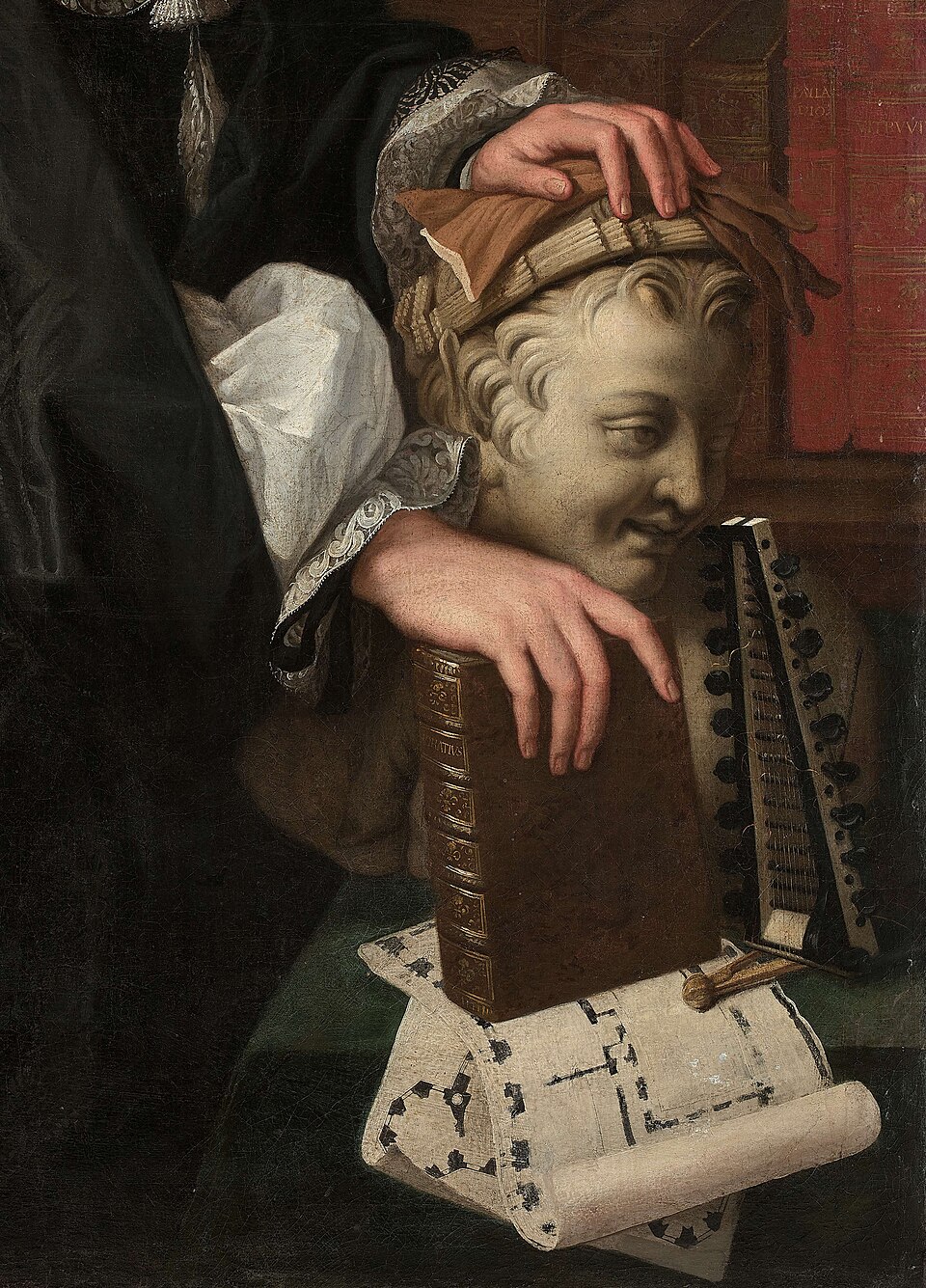
—Indeed, that 1697 collection did not appear under your name but under your son's. Why this detour?
Therein lies the mystery people love to probe. The collection appeared under my son's name, Pierre Darmancour, who was only nineteen at the time. The reasons? I leave you to weigh them. Some will say that a serious academician, the man of the Parallèle, could not decently sign nurse's nonsense without making his adversaries laugh — imagine Boileau's joy! Others, that I wanted to push my boy at court, give him a title of glory to enter society. Perhaps both at once. A father is rarely moved by a single reason, and a man who spent his life in Colbert's offices knows that one does not always sign one's name to what one has entirely conceived.
Could a serious academician sign nurse's nonsense without making his adversaries laugh?
—Reading Little Red Riding Hood, you hear a very simple voice. How do you find that tone?
'Il était une fois une petite fille de Village, la plus jolie qu'on eût su voir.' See: no pomp, no learned ornament. For these tales, I had to unlearn the eloquence of the Academy and find again the quiet step of the storyteller by the hearth. It is harder than it seems — a wit accustomed to salons and ruelles is tempted at every line to embroider, to play the gallant. I resisted. The tale wants a language clear as water, where both child and courtier find their pleasure. And at the end, my moral slips a knowing smile over the shoulder of the listening child.
I had to unlearn the eloquence of the Academy to find again the step of the storyteller by the hearth.
—In hindsight, do you think it will be your great scholarly works or your tales that survive you?
If I could imagine being read a century hence, I would confess my surprise. I placed my pride in Le Siècle de Louis le Grand, in the Parallèle, in my Hommes illustres where I arranged a hundred faces of the Grand Century — that is the work of a serious man. The tales, I gave almost in hiding, under a child's name. Yet it could be, I sometimes sense, that the Quarrel will calm and the learned forget me, while Little Red Riding Hood and Cinderella will pass from mouth to mouth, as they did before me. Strange justice: people remember the evening storyteller, and neglect the academician of twenty years. But after all, hasn't the evening gathering always won?
People may remember the evening storyteller, and neglect the academician of twenty years.
Read further
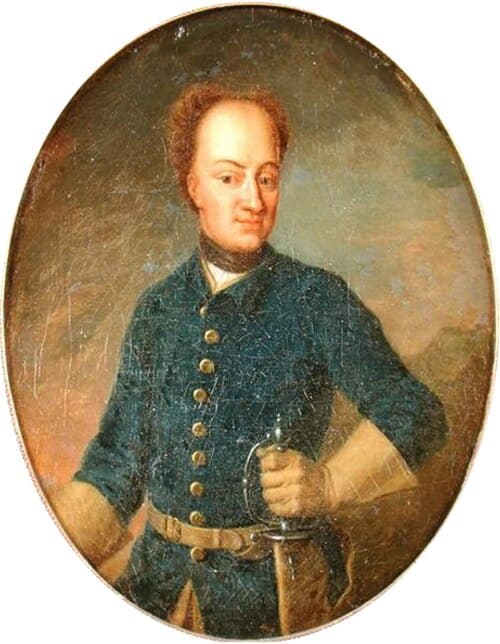
This imaginary interview was generated by artificial intelligence from sources documented in Charles Perrault's profile. It dramatises what the figure might have said based on what we know about them, but does not constitute attested historical testimony. For primary sources and factual documentation, refer to the full profile.