Kids interview Charles Perrault
by Charactorium · Charles Perrault (1628 — 1703) · Literature · 5 min read
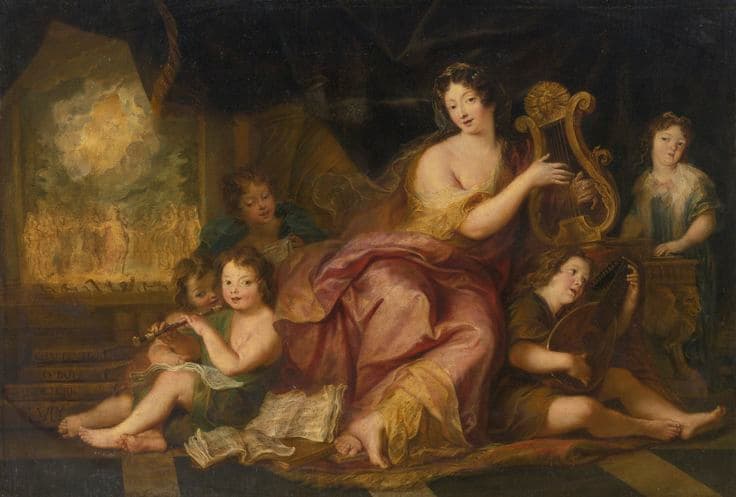
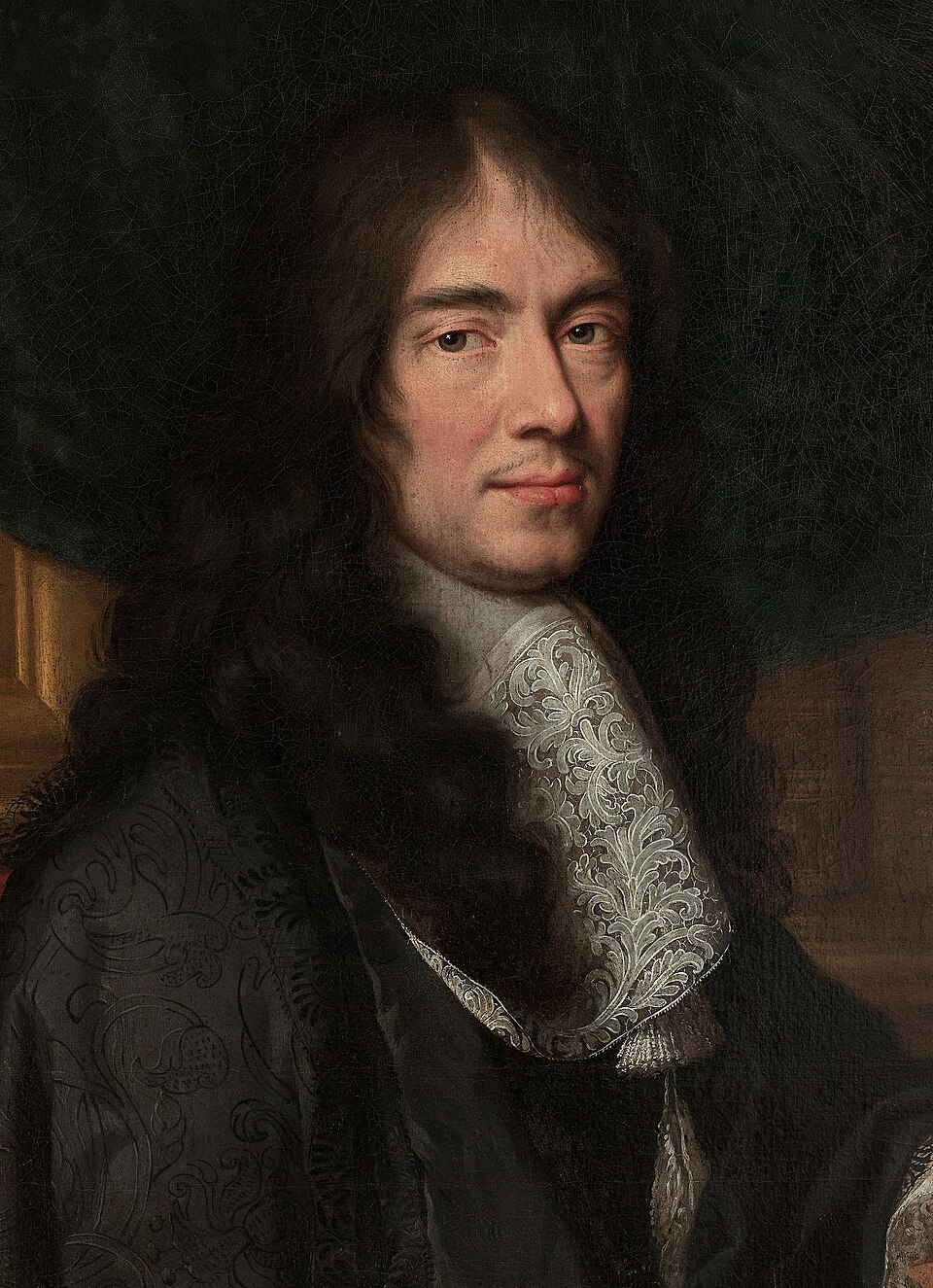
Two twelve-year-old students visit an old Parisian house this morning. By the corner of a fireplace, an old gentleman with a large curly wig awaits them. It's Charles Perrault, and he has a thousand stories to tell.
—Is it true that your tales were published under your son's name?
Yes, my child, it's quite true. In 1697, I published Histoires ou contes du temps passé under my son's name, Pierre Darmancour. He was only nineteen. You wonder why? Imagine: I was an academician, a serious gentleman who wrote learned poems. Telling fairy tales could make great minds smile. So I put my son's name on the cover. Some say I wanted to protect my reputation. Others think I wanted to help my boy become known at court. A bit of both, no doubt. A father's heart has its reasons.
A father's heart has its reasons.
—What is your story of Little Red Riding Hood about?
Ah, that one, everyone knows it! Listen to how it begins: 'Once upon a time there was a little village girl, the prettiest you ever saw.' Her mother makes her a little red riding hood, a hood, which suits her so well that everywhere she is called that. You see, I didn't invent everything. These stories had been told for a long time during the evening gatherings, those nights by the fireside where people worked wool while scaring each other. I took these tales that nurses passed down and gave them a beautiful written form. I also added at the end a moral, a little lesson in verse. For a tale, my child, must also make you think.
A tale must also make you think.
—I heard you argued with another writer?
Oh yes! And what an argument! In 1687, before the entire Académie française, I read a poem: Le Siècle de Louis le Grand. I said something daring in it. Listen: 'I see the Ancients without bending the knee, They are great, it is true, but men like us.' You understand? At the time, many thought the writers of Antiquity, the Greeks and Romans, were unsurpassable. I said: no, we are as good as those old masters! A gentleman named Boileau turned red with anger. They say he almost stood up during the session to protest. That was the beginning of a great battle of ideas called the Quarrel of the Ancients and the Moderns.
The Ancients are great, but they are men like us.
—Why was it so serious to say that, just a poem?
You're right, it was just a poem. But behind it, there was a big question. Should we always admire the past, or can we believe our own era does better? I was a 'Modern'. I thought my century, that of King Louis XIV, was magnificent. Imagine you admire your grandparents so much that you refuse to believe you could ever equal them. That's sad, isn't it? I wanted to give confidence to my time. To prove it, I even wrote a large work, the Parallèle des Anciens et des Modernes. Four volumes! I said that a man is not smarter just because he lived two thousand years ago. The human mind is the same yesterday and today.
You are not smarter because you lived two thousand years ago.
—Before the tales, what was your job?
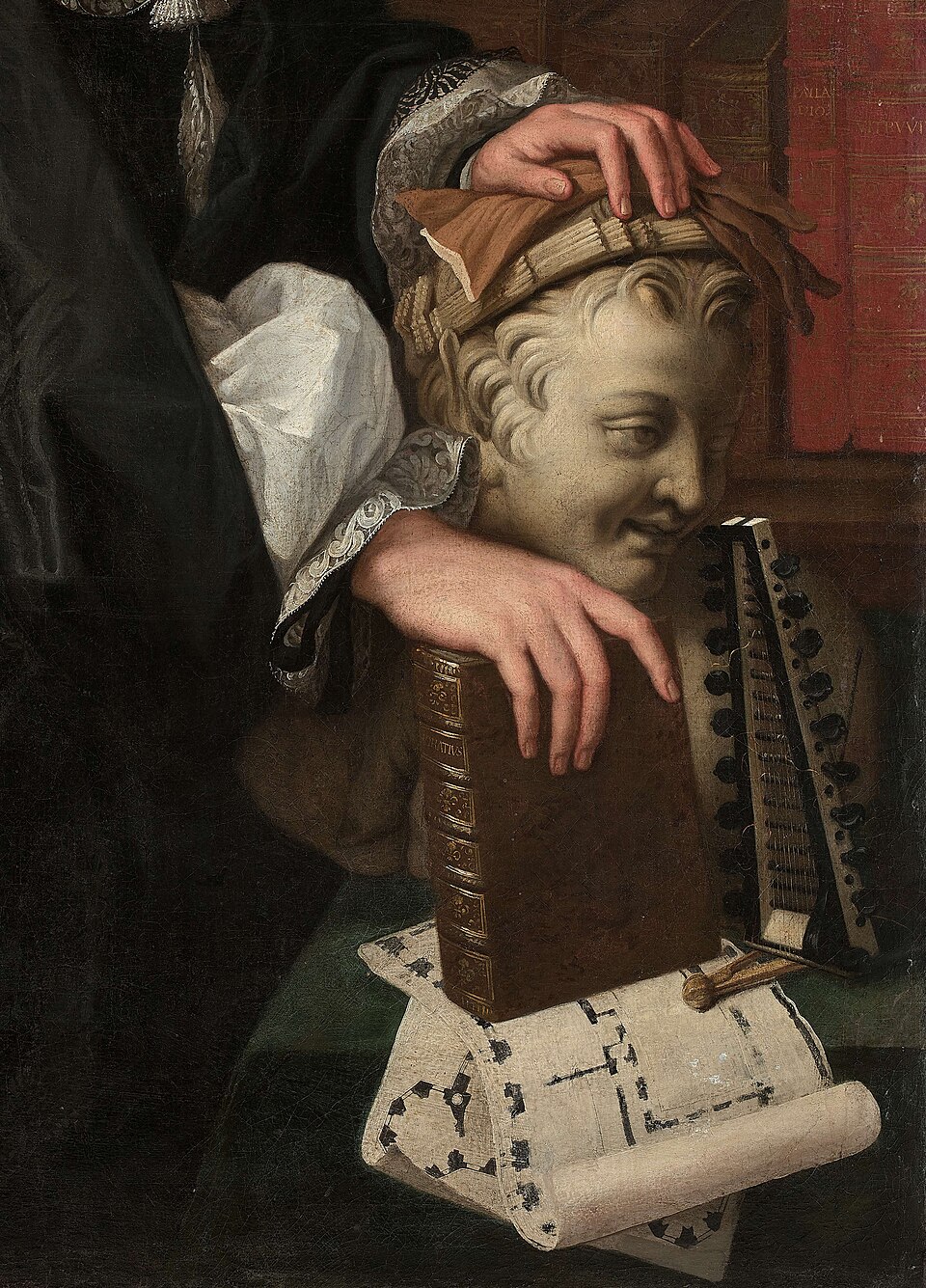
Ah, there you'd be surprised! For twenty years, I didn't write any tales at all. I worked for a very powerful man, Colbert, the king's great minister. I was superintendent of the king's buildings. My job? Overseeing royal construction sites! Imagine hundreds of workers, blocks of stone, plans spread on tables. I took part in the project of the Louvre colonnade, that magnificent row of columns. And guess who was the architect? My own brother, Claude Perrault. The whole family in the king's service! In the morning I dealt with stones and beams, and in the evening, sometimes, I told fairy tales. A strange double life, isn't it?
In the morning stones and beams, in the evening fairies.
—Did you open a garden for the people?
Yes, and I'm very proud of it! The Tuileries Garden in Paris was a beautiful royal garden. But it remained closed, reserved for the powerful. I thought that was a pity. Such a lovely place, with its paths and flowerbeds, and no one to walk in it! I convinced Colbert to open it to Parisians. He disagreed, you see. He was afraid it would be damaged. But I insisted, and I won. Imagine entire families coming to breathe fresh air, children running in the alleys on a Sunday. Even today, people stroll there. You see, a man of power can do small things that make life sweeter for ordinary people.
A beautiful garden closed to everyone is useless.
—Did you tell stories to your children in the evening?
Yes, my child, and those were my favorite moments. You know, I lost my wife in 1678. I found myself a widower, alone raising my children. That brought me much closer to them. In the evening, before putting them to bed, I would sit near them and tell stories. I drew from those old tales called Tales of Mother Goose — stories passed down by nurses and grandmothers forever. Imagine the room lit only by the flame of a candelabra, and little eyes widening as the wolf approaches. That is where, I believe, my tales were truly born. Not in my scholar's study, but at the edge of a child's bed.
My tales were born at the edge of a child's bed.
—Why do they say 'Tales of Mother Goose'? That's a weird name!
Ha ha! You find it funny, and you're right! It's a name full of tenderness. In my time, 'Tale of Mother Goose' referred to the popular stories that simple folk told each other. The goose, you know, that barnyard bird. Why the goose? Because people imagined an old woman, a grandmother or a goose-girl, spinning her wool while telling wonders to the little ones. It was the voice of tradition, that of the evening gatherings by the fireside. Those stories, no one had written them down. They traveled from mouth to mouth, from generation to generation. I wanted to catch them before they flew away, like catching a butterfly, to keep them on paper.
I caught those stories before they flew away.
—What exactly was being at the Académie française?
Good question! The Académie française was a great institution, founded in 1635 to watch over our beautiful language. Being an academician was a great honor. There were forty of us, not one more, chosen among the best minds. I entered in 1671. Imagine an assembly of wigged gentlemen, sitting in fine armchairs, gravely discussing the meaning of words. Our great work? Drafting the very first Dictionary of the Academy. A book that was to tell everyone how to speak and write French properly. It was long, it was meticulous. We sometimes debated for hours over a single word! But what a beautiful job, taking care of the language spoken by all French people.
Taking care of the language is taking care of an entire people.
—What did you want to change in the way people spoke?
I wanted people to speak a living French, the everyday kind, not dusty old French. You see, some scholars wanted to keep old words, archaic forms that no one used anymore. They thought that was nobler. I, faithful to my Modern spirit, said: no! A language is like a river, it flows, it moves forward, it renews itself. Why speak like our great-grandfathers? At the Dictionary, I defended the French of my time, the one heard in the streets and salons of Paris. That is consistent with my whole life: believing that the present is as good as the past. And you, today, you still speak a living language that changes. Good for you!
A language is like a river: it flows, it moves forward.
Read further
This imaginary interview was generated by artificial intelligence from sources documented in Charles Perrault's profile. It dramatises what the figure might have said based on what we know about them, but does not constitute attested historical testimony. For primary sources and factual documentation, refer to the full profile.