Kids interview Cixi
by Charactorium · Cixi (1835 — 1908) · Politics · 5 min read
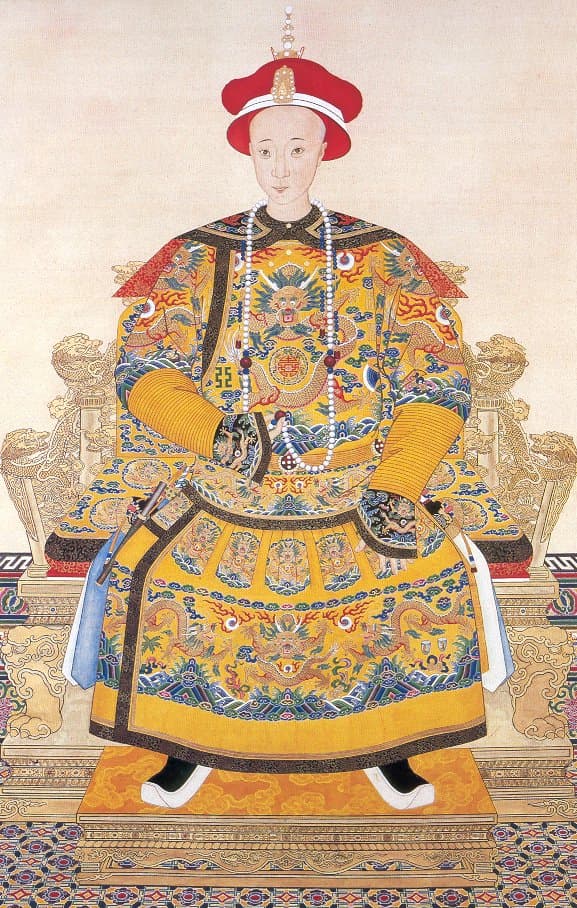
That morning, two students from a discovery class push open the heavy gates of a palace with golden roofs. An old lady with nails protected by long gold guards awaits them, sitting very upright. Empress Dowager Cixi agrees, for once, to answer the questions of two curious children.
—How old were you when you arrived in this great palace? What was it like?
You know, my child, I was sixteen when I entered the Forbidden City. I was a concubine of very low rank—imagine a little girl lost in a vast palace. But I had a gift: I knew how to trace beautiful characters with a brush. Very few women could. The emperor Xianfeng noticed me for that. Soon, he was dictating his official letters to me. Around us lived the eunuchs, those men who served in the palace and knew all the secrets. I learned to listen to them. That's how a timid child began to understand power.
—How did you manage to seize power over such a large country?
In 1861, the emperor died at the mountain retreat of Rehe. I was at his side. Can you imagine? His son, my son, was only five years old. Eight princes were to govern in his place. But I didn't trust them. So, with Empress Ci'an, we acted quickly. We had those eight men arrested before they could retake Beijing. It was risky—if we failed, it meant death. But we won. Two women seized a vast empire. Believe me, no one expected it.
Two women seized a vast empire, and no one expected it.
—What was that famous seal that everyone wanted to have?
Ah, the imperial seal! It was a carved block of jade, barely larger than your hand. But listen carefully: without it, no law existed. An order had value only if it bore its red mark. When we overthrew the regents, the first thing I wanted was that seal. Whoever holds it holds the empire. My edict said it clearly: the eight regents had betrayed the imperial will, and their seals were seized. You see, my child, sometimes real power lies in a small piece of green stone.
—Why were your nails so long? Didn't they bother you?
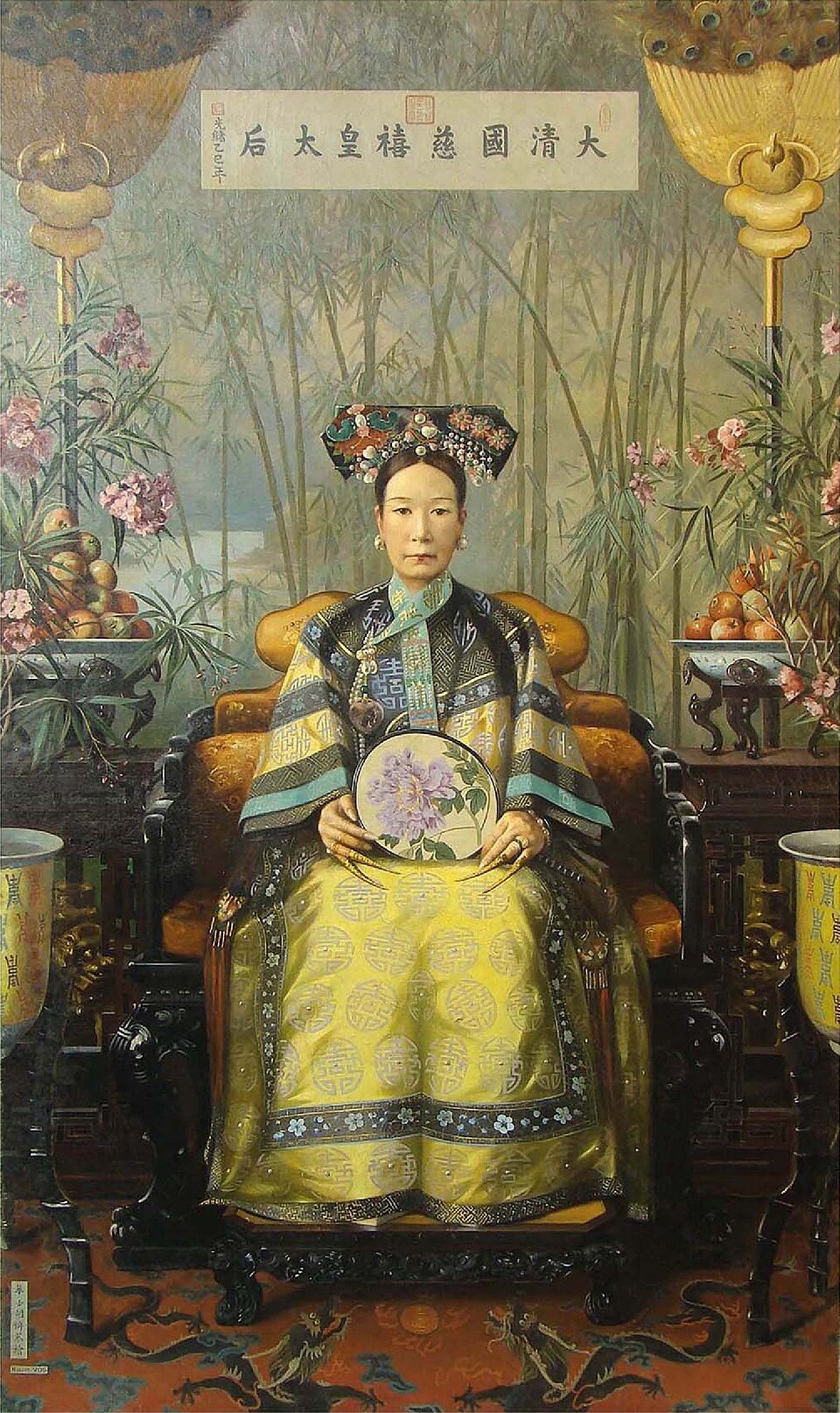
Look at these long gold guards on my fingers—they were called nail guards. My nails measured several centimeters! Why? To show that I never worked with my hands. It was the sign that I stood at the top, above everyone. Every morning, my ladies-in-waiting spent an hour or two preparing me: phoenix-wing hairstyle, face powdered white, gold and jade guards placed one by one. Everything was slow, precise, like a ritual. My body itself had become a message: here reigns the empress.
—And for fun, what did you like to do in the evening?
Peking opera—jingju! It was my great passion. I had a three-story theater built at the Summer Palace. Imagine actors in dazzling costumes, drums, high-pitched songs echoing through the night. I knew hundreds of roles by heart. Sometimes I would watch rehearsals and give my opinion! I paid the best troupes from all over the empire. In the evening, after the tiring audiences behind my yellow silk curtain, these performances were my greatest joy. Even an empress has the right to dream, you know.
—Why rebuild a palace with money meant for warships?
Ah, that is a question that still follows me... The Summer Palace had been burned by French and English soldiers in 1860. I wanted to rebuild it, more beautiful than before. But where did the money come from? From part of the funds meant for the navy. Yes, warships. I have been much criticized for it. I will tell you this: an empire needs to show its grandeur, not just its cannons. Was I wrong? Perhaps. When Japan crushed us at sea in 1894, I measured the price of that choice.
An empire needs to show its grandeur, not just its cannons.
—What was a day like in that palace by the lake?
My days there? In the morning, prayers before Buddha and a long toilette. In the afternoon, I received the ministers: I read their memorials to the throne, those long reports in which they asked for decisions. I stayed hidden behind a yellow silk curtain—no one was allowed to look me in the face. But afterward, what pleasure! I took a boat ride on the great Kunming Lake, amid the gardens. I admired my porcelain collections. Imagine a place so vast you could get lost, with water, pavilions, silence. It was my refuge from the weight of government.
—Were you afraid when foreign soldiers entered Beijing?
Yes... I was afraid, I admit it. In 1900, fighters called the Boxers rose up against foreigners. I supported them. Bad calculation. The armies of several countries entered Beijing and looted it. I had to flee! Imagine: me, the empress, leaving in a palanquin—a chair carried on men's shoulders—for hundreds of kilometers, all the way to Xi'an, far to the west. Dressed simply so as not to be recognized. It was the humiliation of my life. That day I understood that you cannot win a war against the whole world.
—Why did you have your portrait painted to show to foreigners?
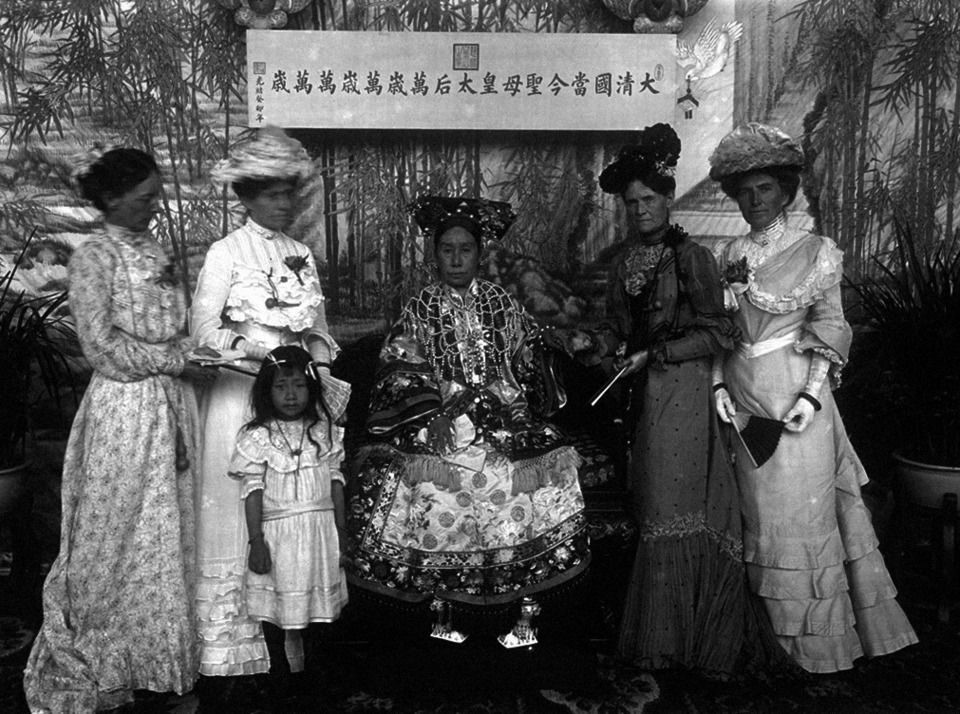
After that flight, I had to repair my image. Foreigners saw me as a monster. So I did something new: I let an American painter, Katherine Carl, paint my portrait. It was to travel very far, to a great exposition in St. Louis, America. I set strict conditions, of course. And when I received the ambassadors' wives, I personally handed out cakes to them, with a smile. You see, my child, sometimes a smile and a beautiful painting are worth more than an army. I was learning, very late, to speak the language of those distant powers.
—Did you really change your mind about modernity, you who loved traditions?
You are right, I changed. For a long time, I had protected old traditions. I had even stopped my nephew's reforms in 1898, after just one hundred days. But after the Boxer disaster, I saw that we had to modernize, or die. So I launched the Xinzheng reforms. In 1905, I abolished the mandarin examinations—those contests on old Confucian texts that had chosen officials for over a thousand years! I opened new schools, sent young people to study abroad. Imagine the shock for the scholars. But time was pressing, my child.
—And deep down, what would you like to be remembered for today?
Those reforms... they came too late. Three years later, in 1908, I died. The Qing dynasty itself did not survive much longer. Little Puyi, two and a half years old, was the last emperor. If I could pass on one lesson, it would be this: do not refuse to change for too long. I ruled for nearly fifty years, I knew glory and shame. They will say much evil of me, and a little good. It is for you, my child, to judge with your heart and your reason.
Do not refuse to change for too long: the world does not wait.
This imaginary interview was generated by artificial intelligence from sources documented in Cixi's profile. It dramatises what the figure might have said based on what we know about them, but does not constitute attested historical testimony. For primary sources and factual documentation, refer to the full profile.