Imaginary dialogue between Yu Deling (Princesse Der Ling) and Cixi
by Charactorium · Cixi (1835 — 1908) · Politics · 5 min read
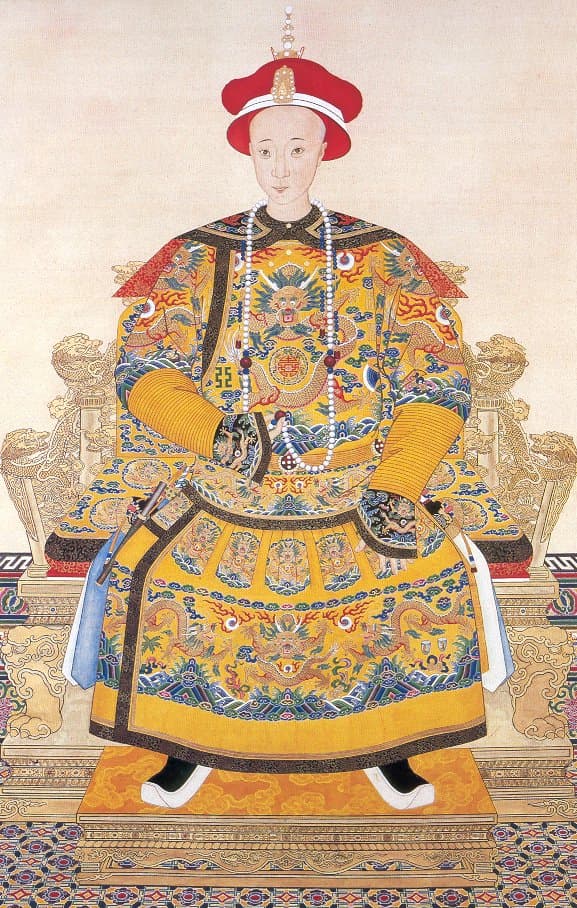
It is in the apartments of the Summer Palace, overlooking Kunming Lake where autumn 1908 sheds its last light, that Yu Deling meets the Venerable Buddha. The incense of Buddhist altars still lingers, and the long gold nail guards of the Empress glimmer faintly in the half-light. They have not seen each other since Deling, lady-in-waiting and interpreter, left court in 1905. Weakened but with a still-sharp eye, Cixi agrees to confide in the one who saw her pray, dress, and receive the West behind the yellow silk screen.
—Venerable Buddha, you told me so much about Rehe. How, in mourning for Emperor Xianfeng, did you dare seize power?
You know, Deling, what a court that smells of death is like. In that summer of 1861, at Rehe, Xianfeng was dying and eight regents claimed to rule over my son, barely five years old. They thought me a docile widow, good only for weeping behind a screen. I forged an alliance with Empress Ci'an, and we struck before they could push us aside. On our return to Beijing, I had the regents arrested; three of them paid with their heads. A woman who wants to survive in this palace has no luxury of tenderness. That day, I understood that the throne is not received: it is taken.
The throne is not received: it is taken.
—You once showed me the jade seal. What did it truly represent, the morning you made it yours?
That seal, Deling, is not a jewel: it is the very voice of the Empire. Without it, an edict is just paper; with it, a word becomes law over four hundred million souls. When I dictated the coup edict, I demanded that the regents' seals be seized immediately, for I knew that whoever holds the yùxǐ holds legitimacy. I remember my trembling hands — not from fear, but from the awareness of what I bore. They said later that I was power-hungry. The truth is simpler: I saw the void, and I refused to let it swallow my son's dynasty.
—Venerable Buddha, this palace we both love so much, they whisper it was built with the navy's money. Do you regret it?
I do not regret beauty, Deling; I regret that I am put on trial for it. The Anglo-French had reduced the old Summer Palace to ashes in 1860 — was I to leave that wound open? Between 1886 and 1895, I had the Yiheyuan reborn, yes, and they claim I diverted naval funds. The advisors had been passing the buck on those coffers for years; I built something that would last. When Japan crushed us in 1894, they wanted to blame me. But a fleet without men or will would have sunk anyway. This lake, these pavilions — this is what will survive me.
I do not regret beauty; I regret that I am put on trial for it.
—How many evenings did I see you shine at the opera! Where did this passion for jingju come from, Venerable Buddha?
Ah, Deling, you remember my three-story grand theater, the Harmony and Virtue. Peking opera is not mere entertainment: it is the soul of our people expressed in gesture and song. I knew hundreds of roles, sometimes corrected the actors, funded the best troupes in the Empire. When court overwhelmed me with memorials and bad news, those voices gave me back my Manchu youth. They thought I was numbing myself while China suffered. But a ruler who can no longer dream governs poorly. On that balcony, behind my trellises, I forgot for a moment the weight of the yùxǐ — and I became again a woman who loves music.
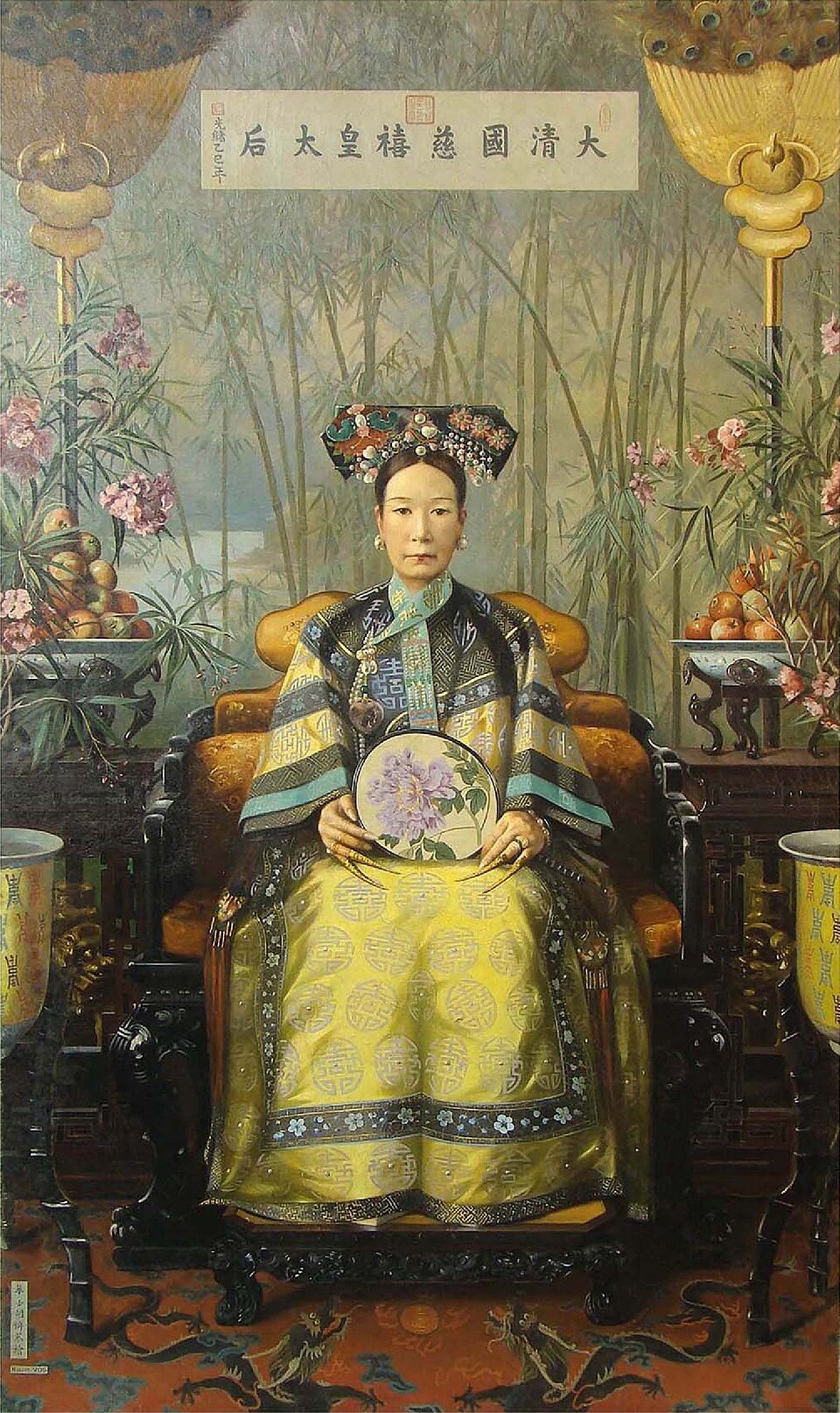
—Venerable Buddha, I was at your side when the American Katherine Carl painted you. Why submit yourself to the gaze of the West?
You more than anyone, Deling, saw my hesitations before that woman and her brushes. After the Boxer disaster of 1900, the West saw me as a bloodthirsty witch. That portrait, destined for the Saint Louis Exposition, was my gentlest weapon: to show a serene, adorned empress, mistress of herself. I imposed my conditions — the time, the pose, the light — for an image is never innocent. You translated, you soothed my suspicions, you told me what those foreigners understood or not. I was not surrendering myself: I was staging myself. A well-composed face can disarm a gunboat better than an army.
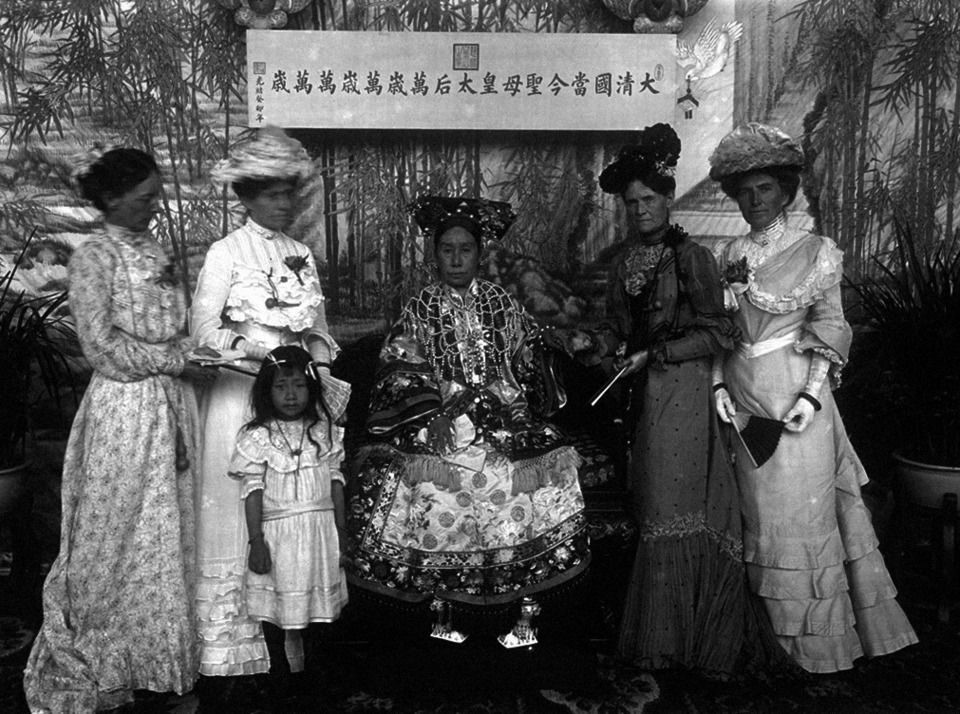
—You received the ambassadors' wives behind the yellow silk screen. What were you seeking, by offering them cakes yourself?
I was seeking to take back the upper hand, Deling. After 1900, they had seen me flee Beijing in a palanquin to Xi'an — a humiliation I will never forget. On my return, I decided that those foreign ladies would leave speaking of an affable sovereign, not an enemy. The yellow silk screen protected my rank; the cakes I distributed with my own hand said something else: see, I can be generous. The French ambassador himself was surprised, it seems. All of it was calculated, of course. But the politics of a weakened empire are also played out in these small gestures, where war has denied us victory.
—Venerable Buddha, in 1898 you crushed Emperor Guangxu's reforms in one hundred three days. Would you do it again today?
You touch there, Deling, on what still gnaws at me. Guangxu, my nephew, wanted to change everything in a breath — abolish, decree, upend a thousand years of order in three months. I saw in that haste the certain ruin of the dynasty. So I took back the reins, had the reformers arrested; Tang Sitong went to the scaffold. They call me cruel. Yet what those young men dreamed too quickly, did I not later accomplish, in my own time? The difference was not the goal, but the pace. An empire is not reformed like overturning a table: you move the pieces one by one, without the room collapsing.
An empire is not reformed like overturning a table.
—And yet, after the Boxers, you yourself abolished the mandarin examinations in 1905. Was that not proving them right?
Let us say that defeat taught me what pride refused to hear, Deling. With the Xinzheng reforms, I did what I had prevented Guangxu from doing: open modern schools, reform the army, send our young to study abroad. And in 1905, I signed the abolition of the kējǔ, that examination system thirteen centuries old that trained our scholars solely on the classics. Imagine what a wrenching away: renouncing what had been the backbone of the Chinese state. But faced with Japan, faced with the West, our mandarins could recite Confucius and ignore the world. I acted late, I know. Too late, perhaps, to save the Qing — but a sovereign must sow even where she will not harvest.
—Venerable Buddha, you who reigned for nearly fifty years, what would you say to a woman who wanted tomorrow to succeed you on the throne?
I would tell her to refrain, Deling, and you see the surprise on my face. I governed through two regencies, I held this empire with a hand they called of iron — and that is precisely why I know what it costs. For a woman to lead the state is contrary to the order our ancestors established; what I did out of necessity must not become an example. They will reproach me for this word, coming from me. But it is experience that dictates it, not false modesty. I had to become hard, suspicious, sometimes ruthless, so that I would not be crushed. Such a life wears down the soul. I wish no other woman to bear this burden after me.
What I did out of necessity must not become an example.
—Venerable Buddha, you seem very weary. Have you thought of who will hold the seal when you are gone?
I think of it with every breath, Deling, even more since illness visits me. Guangxu is fading too, in his apartments; we will soon be two shadows. I have settled my choice on little Puyi, a child of two and a half — of imperial blood, and young enough to be molded. They will judge me harshly for holding the reins until my last day. But to leave the throne masterless is to open the door to chaos, and I have fought chaos too long to invite it to my death. You who saw me pray each dawn before the Buddha, you know I do not fear to depart. I only fear leaving a dynasty without a guardian.
This imaginary interview was generated by artificial intelligence from sources documented in Cixi's profile. It dramatises what the figure might have said based on what we know about them, but does not constitute attested historical testimony. For primary sources and factual documentation, refer to the full profile.