Imaginary interview with Cixi
by Charactorium · Cixi (1835 — 1908) · Politics · 5 min read
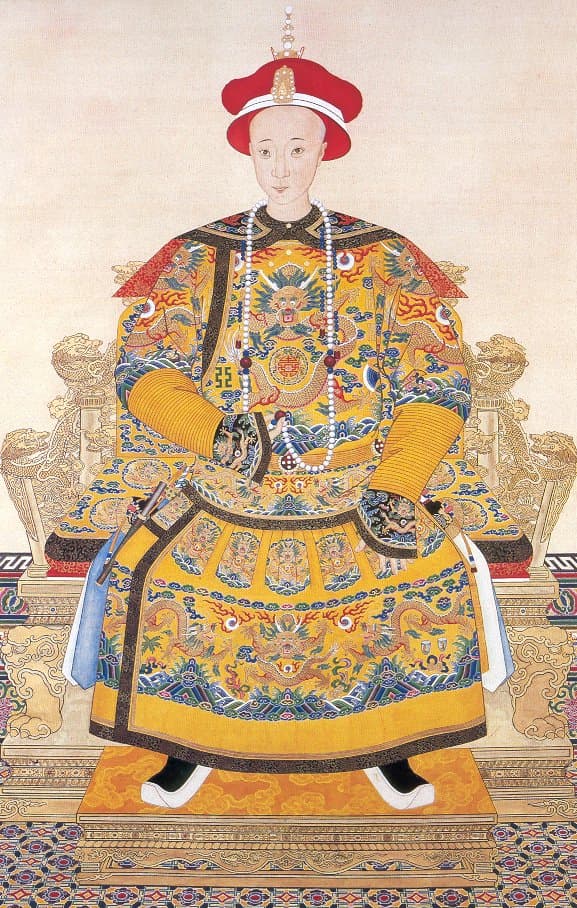
Autumn 1908, at the Summer Palace. Light fades over Kunming Lake, and the Empress Dowager Cixi, weakened but still sharp-eyed, receives behind a yellow silk screen. She is seventy-two years old, has ruled China for nearly half a century, and consents, for once, to speak in the first person.
—Do you remember the night at Rehe when everything changed?
Autumn 1861 already smelled of the cold mountains of Rehe. My husband, the Xianfeng Emperor, had just died there at the hunting lodge, and eight princes claimed to rule in my name—or rather, without me—in the name of my five-year-old son. They thought me a retiring concubine, good only for weeping behind a screen. With Empress Ci'an, I waited until the funeral cortege set out for Beijing to strike. The regents were arrested on the road, their seals confiscated; three of them paid with their heads. Two women overthrowing eight statesmen—the court had not seen such audacity for many reigns. I did not seize power: I picked it up where those men had dropped it.
I did not seize power: I picked it up where those men had dropped it.
—How could a grieving concubine prevail against eight armed regents?
Everything in the Empire rests on a piece of jade. An edict is only ink and paper until the imperial seal—the 玉璽—has bitten its imprint. The eight regents knew this and thought they held it. But the child-emperor was my son, and no decree could pass without being sealed in his name—therefore in mine. That is the true secret of the Xinyou coup: not soldiers, but that square of green stone. The edict I had proclaimed ordered their immediate arrest and the seizure of their seals, in accordance with ritual and law. They called it a woman's trick; I call it knowing where true authority resides.
—You are criticized for building your palace with naval funds. What do you reply?
The Summer Palace, the Yiheyuan, had been burned by French and British soldiers in 1860—an open wound in the side of the dynasty. Rebuilding it between 1886 and 1895, along Kunming Lake, was not an old woman's whim: it was to tell the Empire that the Qing could still create beauty when they were thought to be on the ground. Yes, funds promised to the navy flowed there. I am reproached all the more because Japan crushed us at sea in 1894. But do you believe that a few more battleships would have changed the outcome, when the entire apparatus of the state was cracking everywhere? I preferred marble that lasts to ships that sink.
—What did you love about that palace that made it your true home?
One governs poorly within walls that smell of the ancestors' death. The Forbidden City is a sanctuary, but also a prison of protocol. At the Yiheyuan, I could glide by boat on Kunming Lake, receive ambassadors in gardens rather than under ceilings blackened with incense, and have my theater built. I raised the Grand Theatre of Harmonious Virtue, three stories of wood where opera rose to the sky. A sovereign needs a place that resembles him. Beijing belonged to the departed emperors; this palace set on water belonged to me.
—In 1898, you crushed the reforms of the Guangxu Emperor in one hundred and three days. Why so fast?
My nephew Guangxu was a feverish young man, surrounded by scholars who whispered to him to remake the Empire in a single summer. Kang Youwei and his friends wanted to overturn everything with a stroke of the brush—the administration, the army, the examinations—as if thirteen hundred years of China could be redrawn in a hundred days. I let them act, I observed. Then, when it was murmured that I should be set aside, even eliminated, I took back the reins. The reformers were arrested; Tan Sitong mounted the scaffold without trying to flee, and I grant him that courage. People still debate my reasons. Let's say I was not against reform: I was against recklessness.
—Upon your death, you designated Puyi, a two-year-old child, the day after Guangxu's demise. What were you trying to protect?
They say my nephew Guangxu passed away on the eve of my last breath. I will not answer the rumors about remedies he may have been given—the court is a nest of poisoned whispers. I chose Puyi, a child of two and a half, because a vacant throne, in a China surrounded by powers, is an open door to chaos. They will say: another child, another regency. But I governed nearly fifty years on that principle; I know all its mechanics. If the dynasty was to fall, let it fall at least with an emperor seated, and not in the scramble of pretenders.
—You let an American artist paint your portrait. How did that encounter go?
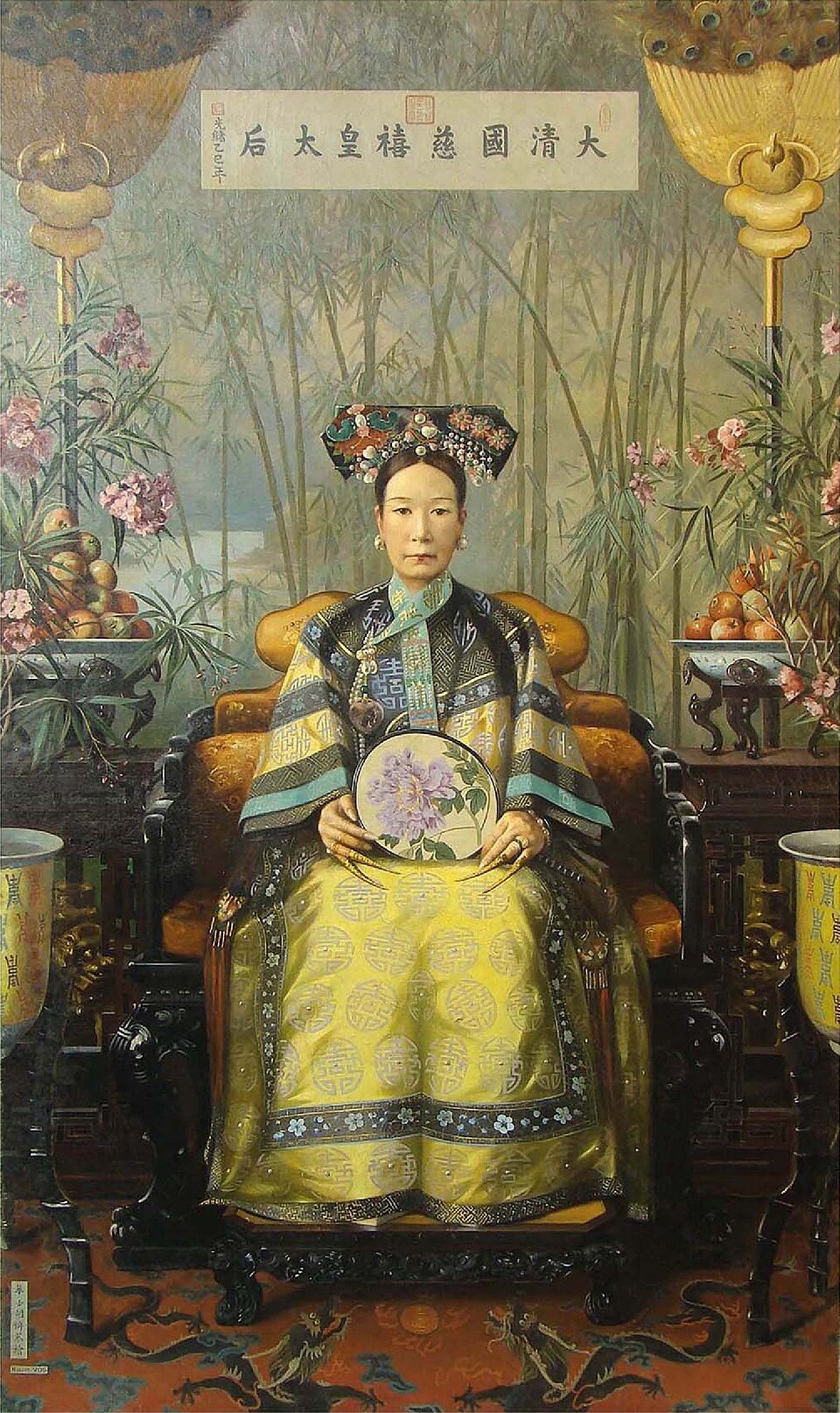
A foreigner, Katherine Carl, was admitted to paint me around 1903, so that my image could be hung at the St. Louis Exposition. I distrust Western brushes, which think they can capture a soul in a few hours. So I set my conditions: one does not raise one's eyes to the Empress, one chooses neither the hour nor the light without my consent, and the face offered to the world will be the one I wish to show. After the disaster of 1900, the West depicted me as a bloodthirsty witch. This portrait was my way of saying, without a word, that the sovereign of China could also smile.
—After the Boxer Rebellion, you received the diplomatic corps with notable courtesy. Was it sincere?
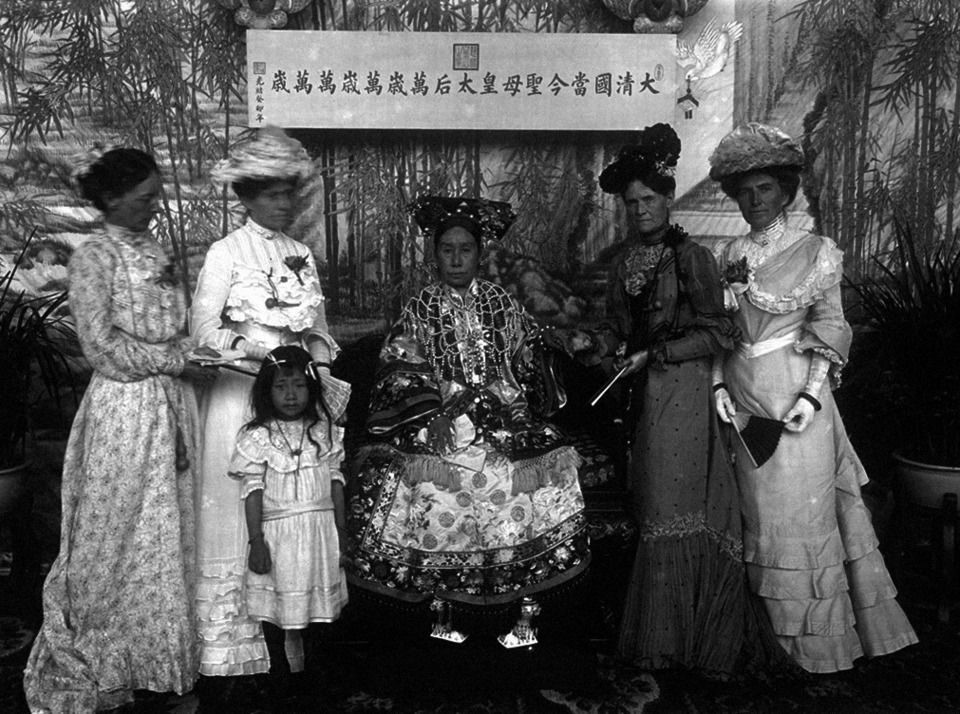
In 1900, I had supported the Yìhétuán, those Boxers who believed themselves invulnerable to foreign bullets; the powers took Beijing, and I had to flee by palanquin to Xi'an, hundreds of li swallowed in the dust. An humiliation I do not forget. Upon my return, I understood that you do not drive away barbarians with incantations, but you tame them. So I received the ambassadors' wives and distributed cakes to them myself, with my own hand. Sincere? A sovereign is never entirely sincere nor entirely false. The same hand that had wanted to drive them away offered them sweets: that is governing.
The same hand that had wanted to drive them away offered them sweets: that is governing.
—What were your mornings like in the Forbidden City?
I rose before dawn, when the sky over Beijing was still ink. My first thoughts went to the Buddha: I burned incense and recited sutras before the altars, for a reign without prayer is a roof without a beam. Then came the long toilette—an hour, sometimes two: the face softened with rice milk, the hair raised in phoenix wings, and those nail guards of gold and jade, the 護甲套, that were slipped onto my fingers. These exaggerated nails said one simple thing to anyone who looked at me: this woman does not work with her hands, for her hands hold the entire Empire.
—You were known to be passionate about Peking opera. What did you find on that stage?
The jingju, Peking opera, was my true rest. At the Summer Palace, I had a three-story theater built where actors ascended and descended like immortals between heaven and earth. I knew hundreds of roles, I followed rehearsals, I corrected a gesture, an intonation; I sometimes stepped into the performance myself. On those boards, loyal generals triumphed, traitors collapsed, the order of the world was restored in three acts—what real politics so rarely granted me. A sovereign must have a kingdom where everything ends as it should.
—If one were to remember one last word from you on women's power, what would it be?
They will marvel at my will, where I say that a woman should never take power in China, and that no woman should ever again be allowed to direct the affairs of state as I have done. A contradiction? Perhaps. But consider: I governed nearly fifty years, and I know the price a woman pays to sit where custom does not want her. Every edict cost me two battles—one against the enemy, and one against the whispers of my own court. I did not wish to bequeath that struggle to others. Let History judge me clever or cruel; it cannot say that I governed by chance.
Every edict cost me two battles: one against the enemy, and one against the whispers of my own court.
This imaginary interview was generated by artificial intelligence from sources documented in Cixi's profile. It dramatises what the figure might have said based on what we know about them, but does not constitute attested historical testimony. For primary sources and factual documentation, refer to the full profile.