Imaginary interview with Claude Debussy
by Charactorium · Claude Debussy (1862 — 1918) · Music · 5 min read
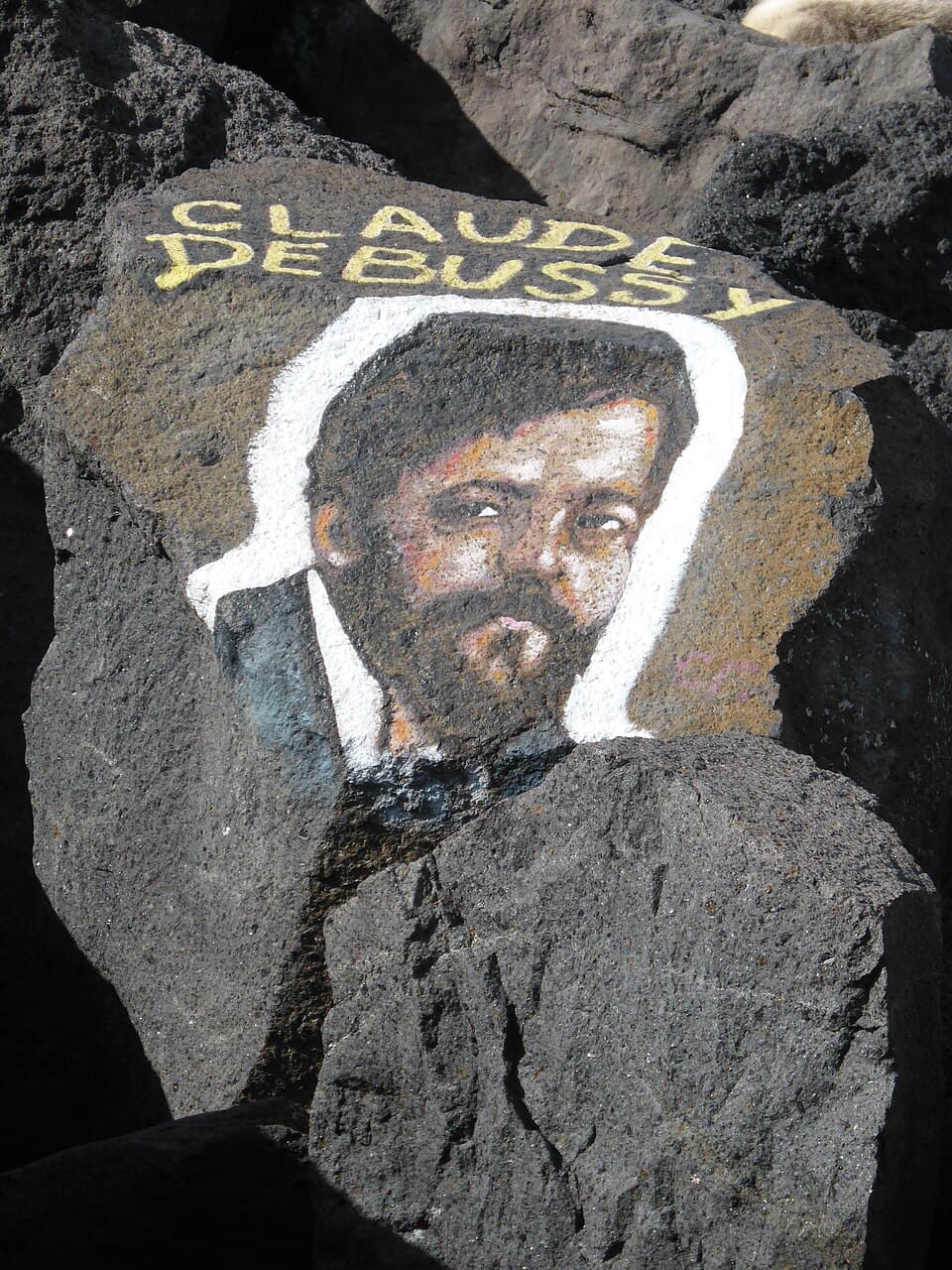
Avenue du Bois-de-Boulogne, an autumn evening in 1917. In a drawing room hung with Japanese prints, where the Blüthner piano gleams under the lamp, Claude Debussy receives a visitor, an eternal cigarette between his fingers. Illness has hollowed his features, but his gaze retains that feline acuity that catches the slightest sound.
—Do you remember entering the Conservatory, so young?
I was ten years old when I was first pushed under the vaults of the Paris Conservatory, in 1872. I had never worn out my elbows on the benches of an ordinary school; my teachers soon saw that I had fingers, but also a bad head. I was reproached for my forbidden chords, those progressions that the rules prohibited and that my ear, on the contrary, demanded. I spent my time disobeying the harmony treatises, as others play the fool in the schoolyard. Later, in 1884, I won that famous Prix de Rome—less out of submission than defiance, I think. But make no mistake: I never sought scandal for its own sake. I was simply looking for a sound that did not lie.
—Why did your prize-winning stay in Rome make you so unhappy?
Ah, Rome... They thought me blessed, a laureate installed at the Villa Medici among pines and marbles. I, however, was suffocating there. I wrote almost pleading letters to my Parisian friends, telling them that this gilded exile was consuming me little by little. Far from the cafés, far from the boulevards where I dragged my ideas, I felt like a bird locked in a golden cage for its own good. I ended up fleeing before the term ended, in 1887, unable to bear another hour of that academic solemnity. One learns as much in the disorder of a living city as in the silence of an institution. Rome taught me above all how much I valued my freedom.
—What did you hear in 1889 that so profoundly shook your ear?
1889. The Universal Exposition unfolded Paris like a fan of worlds. And there, under a thatched hut, I heard the Javanese gamelan—those bronze percussion instruments that sounded, when struck, like a rain of metallic drops. Imagine: a music that had neither our cadences, nor our obligatory resolutions, nor that tyranny of the major key that always wants to return home. It turned upon itself, hypnotic, free. I understood that day that our counterpoint, of which we were so proud, was merely one way among a thousand to fill the silence. Those sonorities never left me; they opened a window in my ear that I never closed again.
Our counterpoint, of which we were so proud, was merely one way among a thousand to fill the silence.
—How did this discovery transform your way of writing harmonies?
After that revelation, I wanted a scale that did not march in step. The whole-tone scale—six equal notes, without semitones, without that slope that pulls you toward the final note as toward a duty. With it, the chord floats, does not resolve, remains suspended in the air like a mist over the Seine. My colleagues saw it as heresy; I saw it as deliverance. I also borrowed from distant musics those five-note scales, those pentatonics that sing without effort. All this was dubbed musical impressionism, a word I never liked—it was borrowed from painters to put me in a convenient box. But the label matters little: I wanted a harmony that suggests rather than demonstrates.
—How could you compose La Mer far from any shore?
I am often asked how I could paint La Mer without looking at it—for I composed it far from the coasts, in 1905, from memory and desire. The truth is that I did not want to describe the sea: I wanted to give its sensation, its thrill. On my wall, I had pinned a print by Hokusai, The Great Wave, that blue crest ready to crash—it accompanied me more surely than any real shoreline. As I once said, “I want to sing the inner landscapes, truer than reality. Rules do not exist outside individual works.” That is my entire art: not the thing itself, but what it awakens in us. A wave of memory is worth more than a wave of water.
I did not want to describe the sea: I wanted to give its sensation, its thrill.
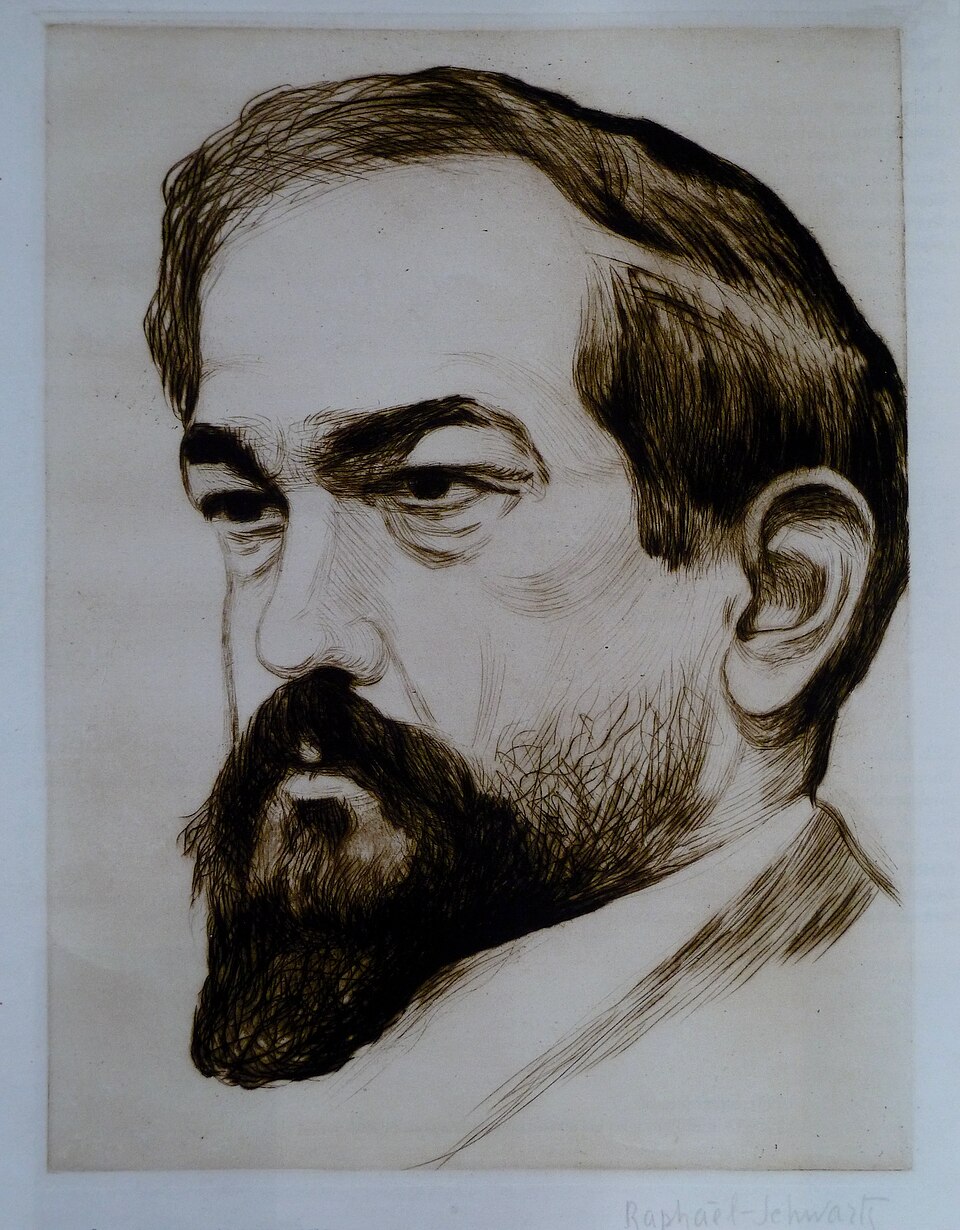
—What would you say about the Prélude à l'après-midi d'un faune, called the birth certificate of modern music?
Everything perhaps began with the Prélude à l'après-midi d'un faune, in 1894. I had read Mallarmé's poem, those verses that tell nothing and say everything—the torpor of a faun between sleep and desire. How to set that to music without weighing it down? I renounced grand thematic development, those architectures where each theme must battle and then triumph. Instead, a flute that awakens, hesitates, falls back—an arabesque that unfolds without ever justifying itself. They said it was the birth of a new music; I saw it only as fidelity to the dream. Symbolist poetry had taught me that one suggests better than one asserts.
—What actually happened on the opening night of Pelléas et Mélisande?
Pelléas et Mélisande, my only completed opera, after Maeterlinck. On the opening night at the Opéra-Comique, in 1902, there was a fine uproar. Part of the audience was indignant, the other cried genius. I must say that I had dared the unspeakable: no bravura arias, no grand outpourings where the tenor shows off his chest. My characters do not sing; they almost speak, they murmur on the thread of ordinary speech. Even the singers, during rehearsals, got lost in this music that resembled nothing they had been taught. I have always thought, as I wrote at the time, that “any music not written according to a formula is not understood here.” My opera proved it: hissed, then adored.
My characters do not sing; they almost speak, they murmur on the thread of ordinary speech.
—Why did you choose this almost spoken singing over the great operatic voices?
Because life does not sing in cadence. When you suffer, when you love, you do not belt out a high C: you lower your voice. I wanted Mélisande to speak as one speaks in the half-light, in half-words, and the orchestra, for its part, to say everything that mouths keep silent. In Maeterlinck, the characters never fully explain themselves; meaning floats between the lines like still water. It would have been odious to impose on that bravura pieces, Italian-style cabalettas. True melody, I entrusted to the instruments, and even more to the silences. I was reproached for killing beautiful singing; I believe rather I returned it to its truth, that of breath and whisper.
—One imagines you self-possessed; were you as sure of yourself in life as in music?
I am often portrayed as a confident aesthete; one forgets the anxious man, haunted by a thousand omens. I dreaded the number 13 like the plague, I avoided being thirteen at table, and more than once I pushed open the door of a fortune-teller to have my future read. I kept little fetishes on me, trifles to which I lent the power to ward off bad luck. And then there was the cigarette, always the cigarette, that blue cloud floating above my Blüthner piano while I hunted for a chord. I knew it was consuming me, especially since the illness declared itself in 1909, but one does not so easily rid oneself of familiar demons.
—And amid these shadows, what brightened your days?
Amid all that, there was Chouchou—my daughter Claude-Emma, my greatest joy. For her, in 1908, I wrote Children's Corner, six little pieces in which I put all my tenderness and a touch of mischief: a sleeping elephant, a doll, a waddling puppet. It is perhaps my most smiling music, and also the most secret, for it was born of the simplest love. I work, you see, “at things that will only be understood by the grandchildren of the 20th century”—but those pages, my daughter grasped instantly, laughing. A child hears music better than all the critics combined: without prejudice, without harmony treatise, with a wide-open heart.
A child hears music better than all the critics combined.
This imaginary interview was generated by artificial intelligence from sources documented in Claude Debussy's profile. It dramatises what the figure might have said based on what we know about them, but does not constitute attested historical testimony. For primary sources and factual documentation, refer to the full profile.