Kids interview Claude Debussy
by Charactorium · Claude Debussy (1862 — 1918) · Music · 5 min read
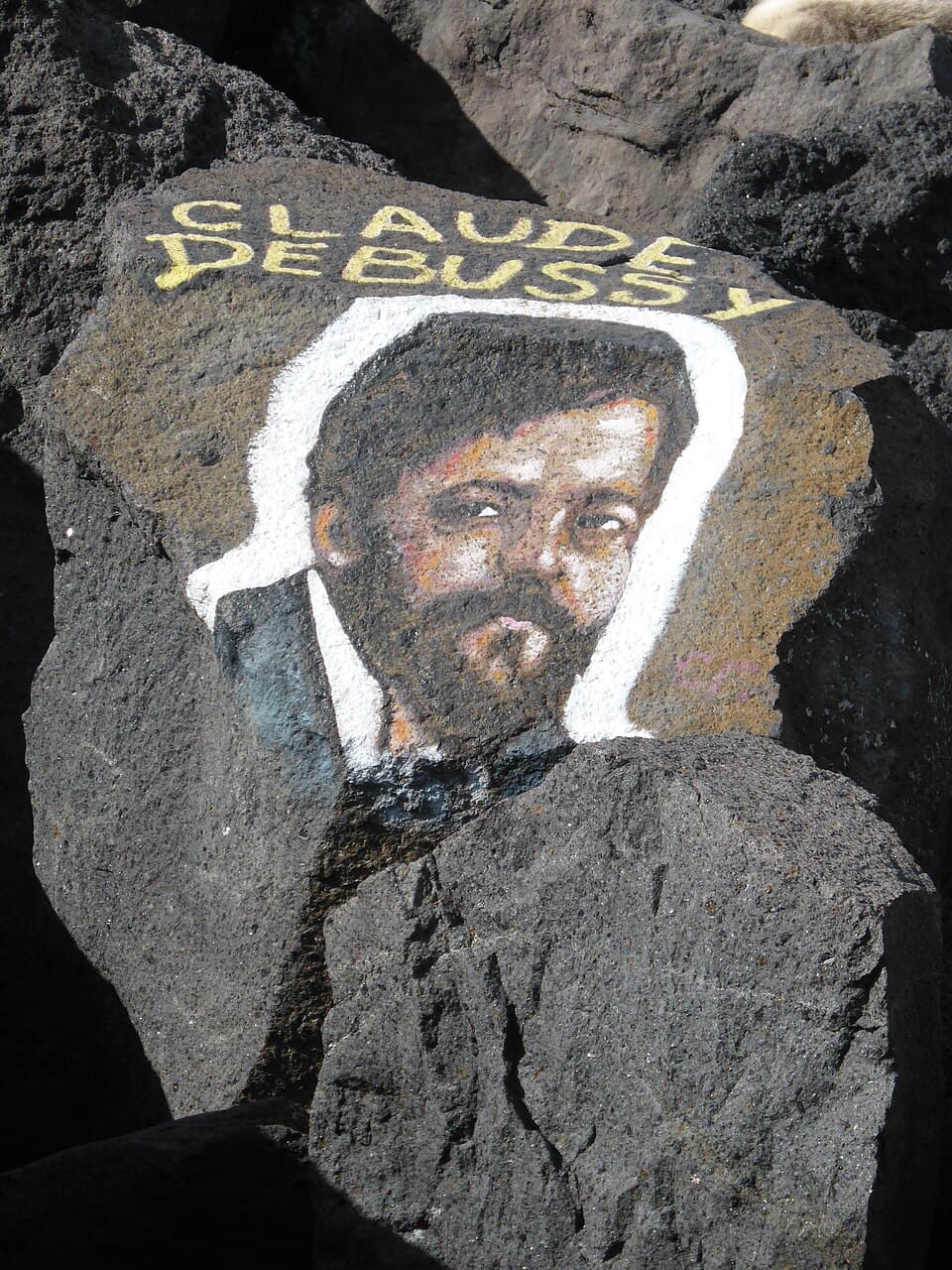
That morning, two young visitors pushed open the door of a Parisian apartment filled with Japanese prints. At the back, behind a grand piano, a man with a famous fringe put down his cigarette and smiled at them. Claude Debussy invited them to sit close by.
—What was it like, your first day at the Conservatoire at age 10?
You know, my child, I had never been to regular school. At ten years old, in 1872, I was pushed into the Paris Conservatoire. Imagine a big, serious building full of professors who wanted everything to be orderly. And me? I found their rules tiresome. They would say, 'A chord must go here, then there, always the same.' I would answer by playing something else, just to hear what color it made. They scolded me, but their ears were surprised. It was like tidying your room exactly like everyone else's: very neat, but boring. I wanted my music to breathe in its own way.
Rules are nice and tidy, but they don't breathe.
—You had won a big prize, but in Rome you were sad. Why?
It's true, in 1884 I won the Prix de Rome, a prize everyone envied. Then they sent me to live at the Villa Medici, a beautiful Italian house for young artists. You think I was happy? Not at all. I was far from Paris, far from my friends, far from the cafés where we talked all night. I wrote almost pleading letters to be allowed to come home. Imagine being given a magnificent gift, but having to keep it locked in a cold room. Fame is worthless if it prevents you from inventing freely. I left before the end.
A beautiful gift is worthless if it keeps you locked up.
—People hissed at your opera. Was that day horrible?
Ah, Pelléas et Mélisande, in 1902, at the Opéra-Comique! What a day, my child. Part of the audience found my music boring, incomprehensible. Others cried genius. And the singers struggled to remember my notes, because I had done something strange: instead of singing at full voice, they had to almost speak in music, as if whispering a secret. Imagine an actor telling you a secret very softly, instead of shouting. The rehearsals were a real mess! My heart was tight. But you know, when you disrupt habits, you always make noise before you are understood.
When you disrupt habits, you make noise before you are understood.
—Why did you want the singers to speak instead of singing well?
Good question! You know, when you are sad or in love, you don't sing like at a concert. You speak softly, you hesitate, your voice trembles. For Pelléas et Mélisande, I wanted that truth. I took Maeterlinck's play, full of silences and mystery, and I glued my music as close as possible to ordinary speech. No grand flourishes to impress. Just true emotion. The people of 1902 were disappointed: they came for brilliant arias! I offered them a whisper. Imagine entering a sleeping house on tiptoe. That was my music.
I wanted them to sing as if confiding a secret.
—How do you put the sea into music?
You think it's impossible, don't you? Yet I did it with La Mer, in 1905. I don't imitate the sound of waves, no. I listen to what the sea makes me feel: sometimes calm and bright, sometimes furious. And I translate that into sounds and colors. On my wall I had a Japanese print by Hokusai, The Great Wave — that enormous wave about to crash. I liked it so much that we put it on the cover of my score. Imagine closing your eyes at the water's edge: you don't need to look to know the sea is there. My music is those closed eyes.
I don't paint the sea; I paint what it makes me feel.
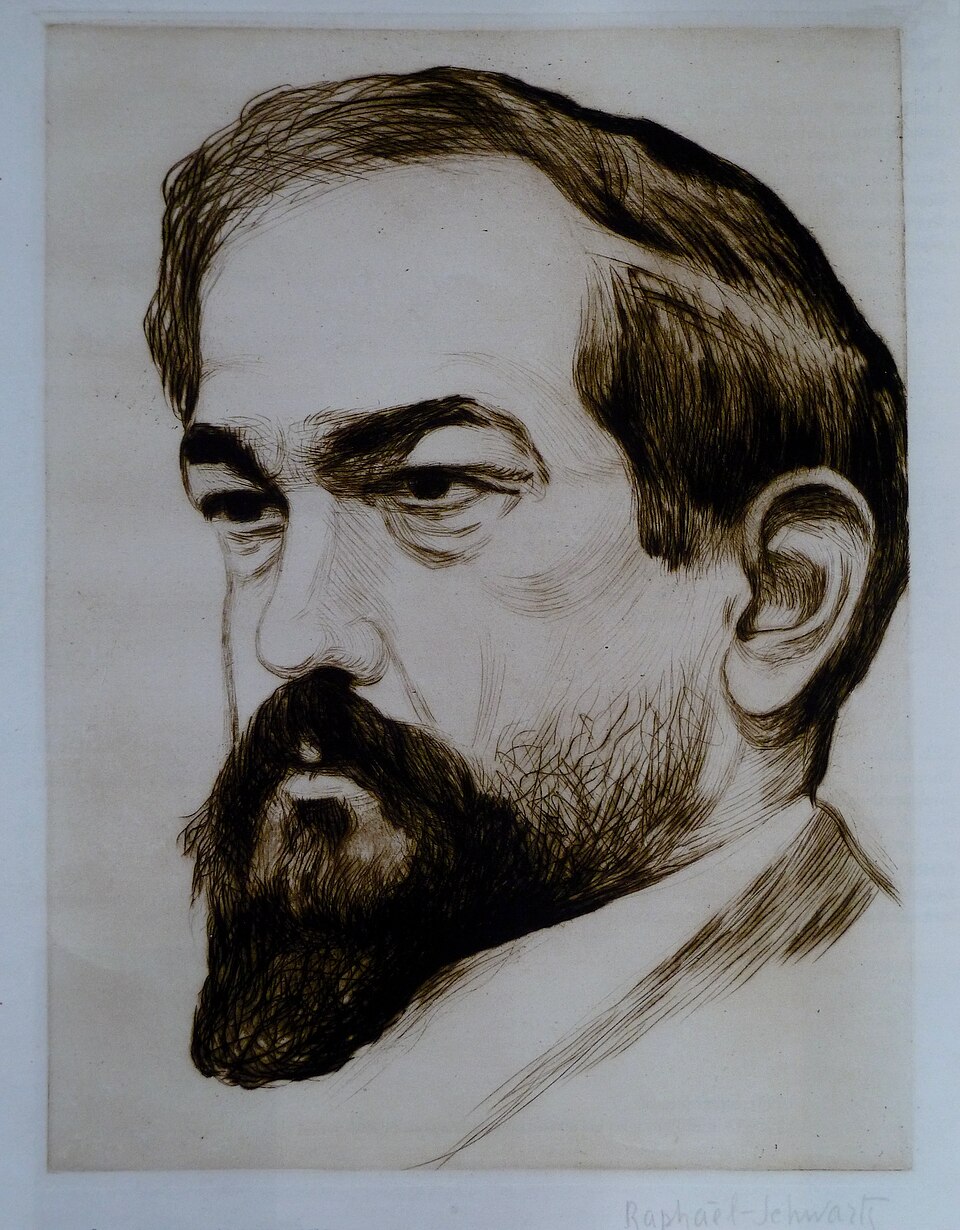
—Your pieces have weird titles like 'The Sunken Cathedral.' What does that mean?
Ah, you noticed! In my Préludes for piano, I put titles like a doorway to a dream. La Cathédrale engloutie: imagine an old church asleep at the bottom of the sea. One misty morning, it slowly rises to the surface, its bells ring in the fog, then it sinks back down. I make the piano's sound rise, like the water receding. For Des pas sur la neige, listen: you can almost feel the solitude of a cold white path. I don't tell you the story with words, my child. I only give you the sensation, and you imagine the rest.
I give you the sensation; you imagine the rest.
—During a fair in Paris, you heard music that changed you. Which one?
Yes! It was at the 1889 World's Fair in Paris. A huge festival where the whole world came to show its wonders. And there, I heard musicians from Java, in Asia: the gamelan. Imagine dozens of little bells and metal plates struck softly, shimmering like light on water. Nothing like our serious pianos! These sounds followed none of the rules I had been taught. I was like a child before a treasure. That music taught me that you could create entirely new sound colors. It changed my way of writing forever.
Music from far away taught me to create new colors.
—Is it true you were afraid of the number 13?
Ha! You've done your digging, little curious one. Yes, I admit it: I was terribly superstitious. The number 13 really scared me. I went to fortune-tellers to have them tell me the future, and I always carried little lucky charms, fetishes, as they say. Do you find that strange for a serious man who composes masterpieces? Yet, you know, an artist remains a fragile being. Imagine every concert is like jumping into the void. My little charms reassured me before the jump. We all have our hidden little fears, even grown-ups.
Even a serious composer keeps his little hidden fears.
—You wrote a piece for your daughter? What was her name?
Yes, and it is one of the things I am most tender about. My daughter was named Claude-Emma, but at home I called her Chouchou. In 1908, I gave her Children's Corner, six little piano pieces just for her. There's a stuffed elephant falling asleep, a doll, joyful mischief. Imagine a father who, instead of telling a bedtime story, composes one in music. That was my gift. Amid my great difficult works, here are notes full of laughter and tenderness. A child reminds you that music can also be a game.
For my Chouchou, I wrote a story in music.
—What were your last years like, with the war?
My last years were dark, I won't hide it from you. From 1909, I learned I was seriously ill. Then, in 1914, the First World War broke out. My country was suffering, and so was I. To show my love for France, I signed my final scores 'musicien français'. That was my way of standing tall. I passed away in 1918, in Paris, while shells were falling on the city. Imagine leaving amid the din, when you've spent your life seeking beauty and silence. But you know, my child, music does not die. It still speaks to you today.
Shells were falling on Paris, but music does not die.
This imaginary interview was generated by artificial intelligence from sources documented in Claude Debussy's profile. It dramatises what the figure might have said based on what we know about them, but does not constitute attested historical testimony. For primary sources and factual documentation, refer to the full profile.