Imaginary interview with Drusilla
by Charactorium · Drusilla (16 — 38) · Politics · Society · 6 min read
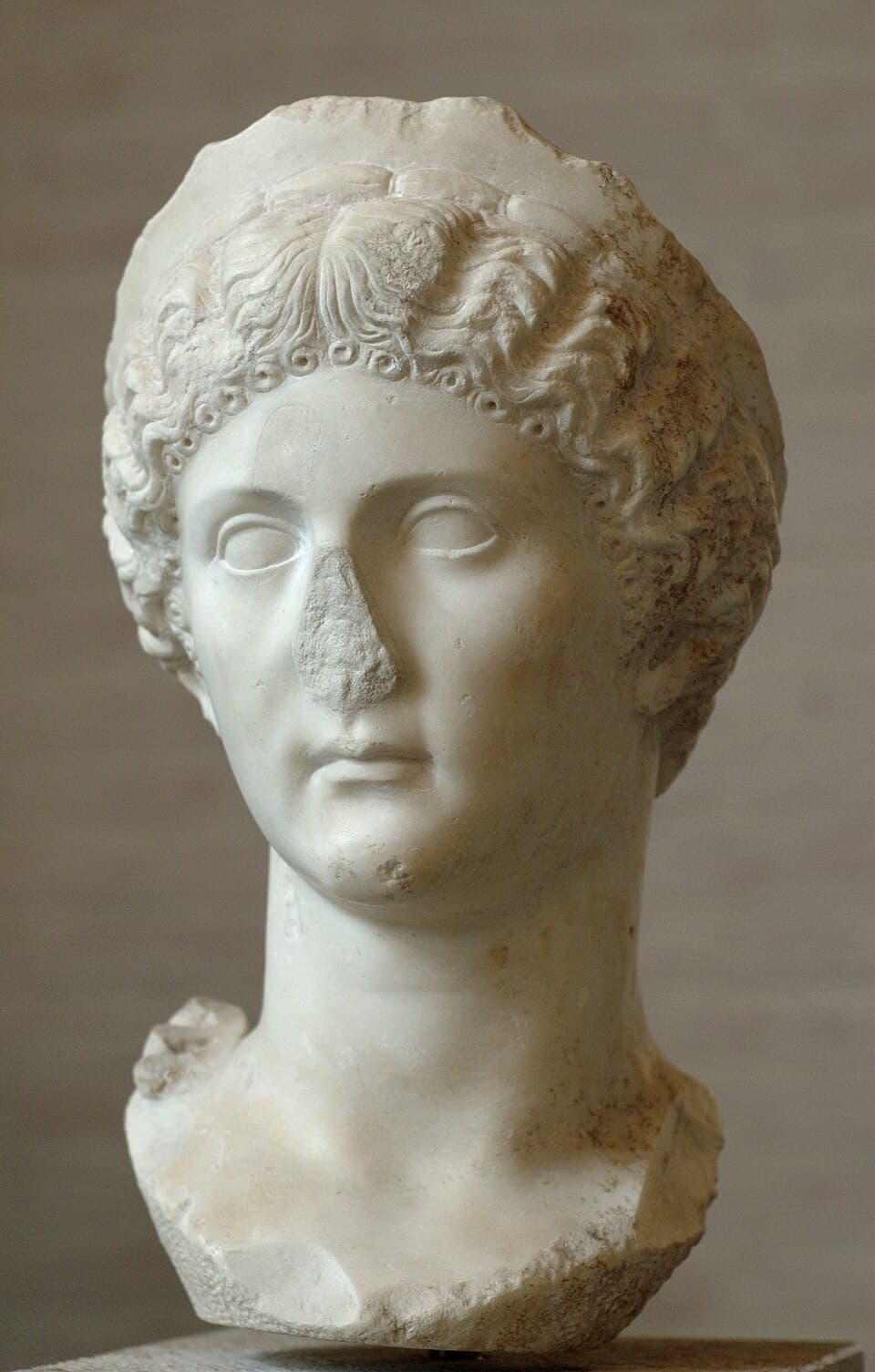
One does not meet Drusilla in an atrium or on the steps of a circus, but in the half-light of the Temple of Venus, where her marble statue has kept watch since her consecration. She speaks softly, like a woman who has known the court and the pyre, the favor of a brother and the silence of the gods. Here is Diva Drusilla, the sister of Caligula, as one might have questioned her on the threshold of her cult.
—You were born into one of the most illustrious families. What do you remember of your early years?
I came into the world in the year 16, the daughter of Germanicus, the general Rome loved as one loves a promising son, and of Agrippina, who carried the lineage of Augustus in her blood. As a child, I followed my parents to the East, along the roads of Syria, when my father was sent beyond the seas. It was at Antioch, that great city on the Orontes, that he died, in the year 19, under circumstances that were never dared to be spoken aloud. I was too young to understand poison, but old enough to see my mother's face change. They say Germanicus's blood brought good luck; I learned above all that it brought mourning, and that in our house, a father could die far from his family without a judge being moved.
I was too young to understand poison, but old enough to see my mother's face change.
—How would you describe those years when the prefect Sejanus held Rome in his hand?
Sejanus. That name was pronounced like one whispers a disease. Prefect of the Praetorian Guard, master of the guard, he had persuaded the old Tiberius that our house threatened him. My mother was arrested, exiled to an island where hunger consumed her until death, in the year 33. My elder brothers disappeared one after another. I grew up learning to lower my eyes, to say nothing too much, to marry my name to Senator Cassius Longinus because I was ordered to. When Sejanus finally fell, strangled as he had had so many others strangled, I did not laugh. One does not laugh when one has counted one's dead on one's fingers. I only thought that Rome's turn had come to tremble in its turn.
—Your brother's accession changed everything. What did Caligula's rise to power mean to you?
When Tiberius died, in the year 37, and my brother Gaius assumed power, it was as if the windows of a house too long closed were thrown wide open. He loved us, his sisters, with a love that bewildered the Senate. He had our names inscribed in the oaths of allegiance that the magistrates swore — our names, us women! — alongside his own and that of the State. Never had daughters of the domus Augusta been raised so high in public vows. Some muttered that it was excess; I saw a brother who, having grown up orphaned of everything, clung to his sisters as to the last piece of Germanicus that remained to him. One does not measure the tenderness of a man who has lost everything.
—It is said that he made you his heir. Do you remember that moment?
It was still the year 37, a few months after his accession. Gaius fell ill, so gravely that Rome held its breath and prepared for mourning. On his sickbed, believing his end had come, he dictated his will: he designated me, to receive his property — and, the boldest said, the Empire itself. A woman, heir to the Roman world! Never had such a thing been seen since Romulus. I did not triumph, believe me. I watched at his bedside, telling myself that if the gods took him, they would leave me a burden that no woman's shoulder had ever borne. He recovered, and other matters were spoken of. But that day, I knew that my brother considered me more than a sister: almost his equal, in a world that granted women neither the forum nor the floor.
A woman, heir to the Roman world! Never had such a thing been seen since Romulus.
—Your face was struck in bronze. How do you feel about those coins?
Gaius had sesterces minted where we all three appeared, his sisters, standing like virtues-divinities. I am seen in the center, holding the cornucopia and the cup of offerings, in the guise of Concordia — harmony, the agreement of hearts. Imagine: living women, cast in the bronze of the Empire, distributed from hand to hand to the ends of the provinces! That had hardly ever been done. A stone portrait is forgotten in a temple; a coin travels, passes through the fingers of a legionary in Germania as well as a merchant in Syria. I do not know if my face really resembled that — engravers always flatter. But I sometimes think that, of all that I have been, it is this small metal disc that will survive me the longest, rolling from purse to purse long after my voice has fallen silent.
—Did this unprecedented place in public honors worry you?
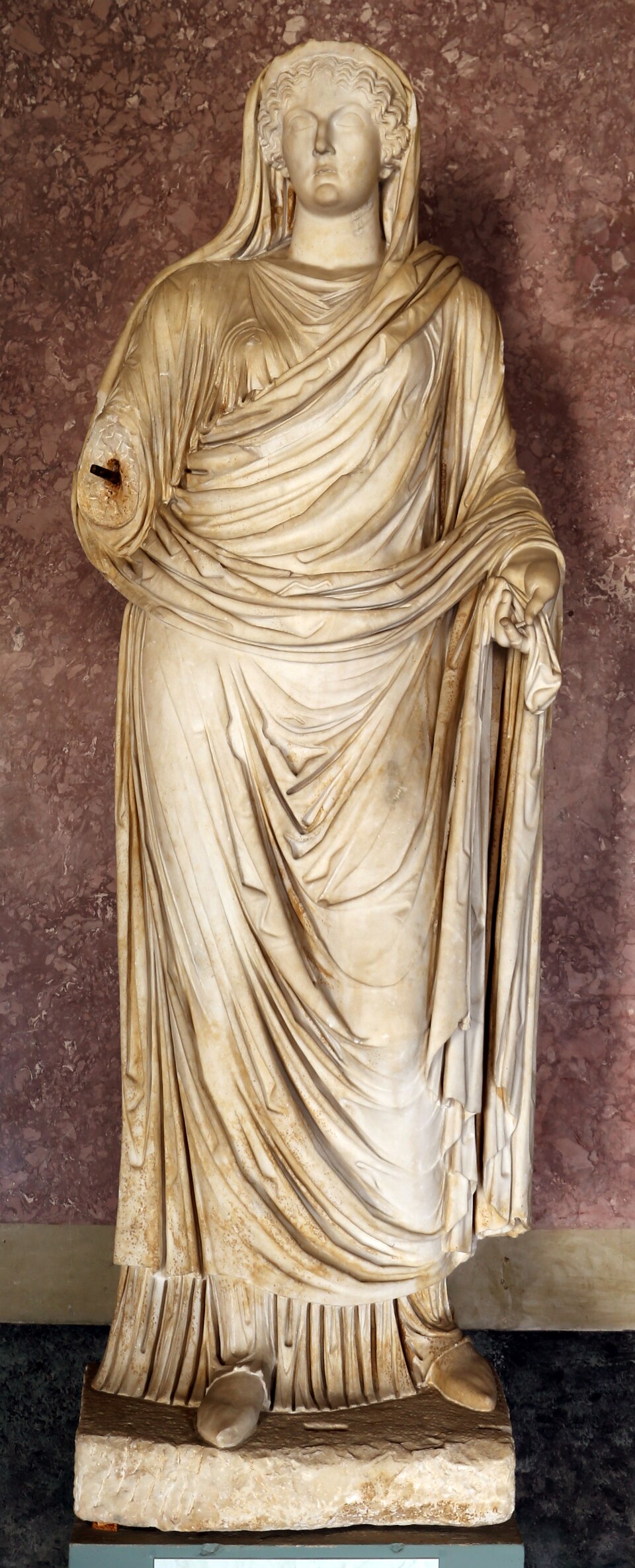
I am not naive. In Rome, every honor one receives, one pays for one day. To see our names mixed with oaths, our images embody Concord, receive the ceremonial distinctions reserved for the most worthy matrons — the carpentum, that covered chariot in which we were allowed to appear like priestesses — all this delighted my brother and pleased the crowd. But I knew the tongues of the Palatine. A woman is praised in the morning and plotted against in the evening. I knew that these favors, while raising us above all, also exposed us to the resentment of those blinded by rank. Fortune is a wheel; my family had taught me that it turns quickly, and rarely in the direction one hopes. I wore these honors as one wears too heavy an ornament: with grace, and with mistrust.
A woman is praised in the morning and plotted against in the evening.
—Your death, in the year 38, shook the Empire. How do you imagine the grief it caused?
I departed in the month of June, still young, barely over twenty. Of what followed, I speak only as a shadow, for only the living see the mourning of the living. But I have been told that my brother lost all measure. He decreed the suspension of all public business, that iustitium which freezes the city; and his grief went so far that it became, they say, a capital crime to laugh, to take a bath, or to share a family meal while the mourning lasted. He left Rome without governing, let his beard and hair grow, wandered through Campania and Sicily, unable to look at the city that had seen me die. An emperor who flees his Empire for a dead sister — that is how Gaius loved. I do not know if I should be touched or terrified.
—The Senate elevated you to the ranks of the gods. What does such a consecration mean?
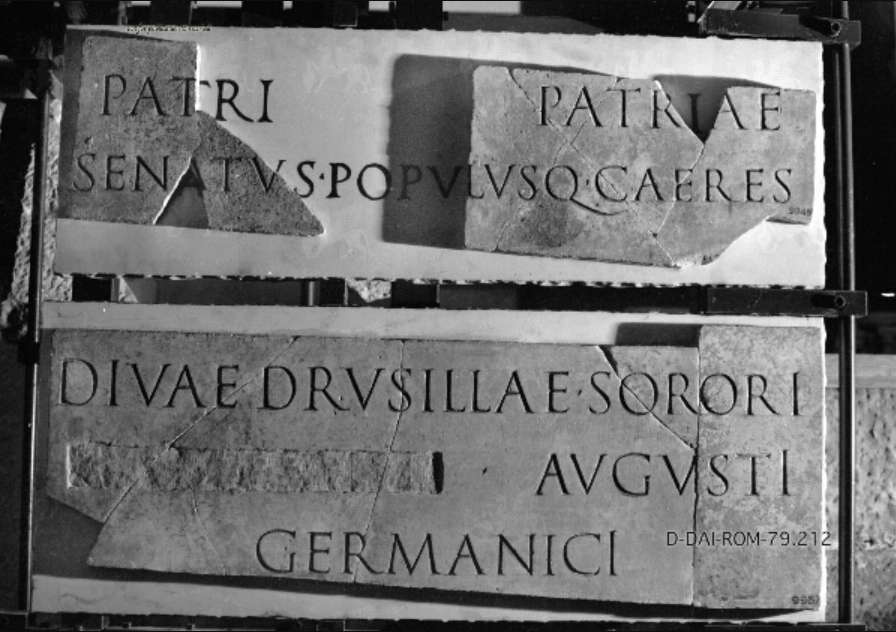
What Rome had never granted to any woman, the Senate granted me: the consecratio, that decree which passes a mortal to the side of the immortals. I was named Diva Drusilla, and I was given that epithet which still troubles me — Panthéa, 'all goddess,' as if I united in myself the virtues of several deities. Before me, only the divine Augustus had known such an apotheosis; a woman, never. A statue of me was erected in the temple of Venus, assimilating me to the goddess of love and beauty, and another, of gold, in the very Curia where the Fathers sat. Imagine the strangeness of the thing: yesterday still the great-niece of Augustus trembling under Sejanus, today I am the object of sacrifices. I often wonder if I was deified to honor me, or to honor my brother's grief.
I often wonder if I was deified to honor me, or to honor my brother's grief.
—A genuine cult was organized in your name. How do you perceive it?
A state cult, yes, with its priests, its altars, its sacrifices, and my birthday celebrated as a sacred festival. Roman women could swear in my name as one swears by the ancient gods. And there was that man, a senator named Livius Geminius, who swore solemnly, calling upon himself and his children ruin if he lied, that he had seen with his own eyes me ascending to heaven and conversing with the gods. My brother rewarded him with a fortune — a million sesterces, it is said. A million for having seen what no eye can see! That is Rome: she buys the witnesses of her miracles by weight of gold. I reproach that man nothing; he said what was expected of him, and he fed his family. But I smile, from the depths of my temple, at the idea that my ascent was paid for so dearly.
—At the end of this interview, how would you like Rome to remember you?
I was the daughter of Germanicus, the sister of an emperor, the first woman the Senate placed among the gods. That is many titles for such a brief life. Yet, if I am read in a century — and I dare imagine it only with trembling — I would like them to remember not only the marble Diva, nor the cornucopia on my coins. I would like them to remember a woman who endured the exile of her family, poison, silence, and who was loved by a brother to the point of excess. The gods, they say, know neither grief nor fear. I knew both before I was called a goddess. Perhaps that, in the end, is what is deified in mortals: not what they become, but what they have endured to become it.
I knew grief and fear before I was called a goddess.
Read further


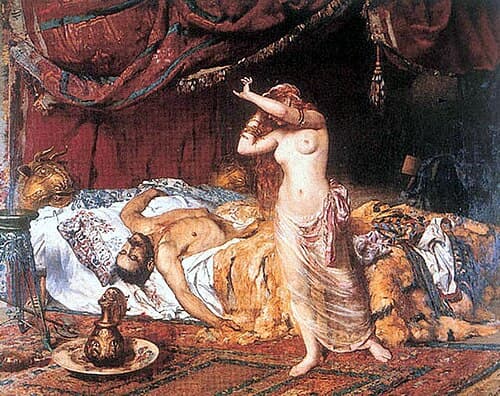
This imaginary interview was generated by artificial intelligence from sources documented in Drusilla's profile. It dramatises what the figure might have said based on what we know about them, but does not constitute attested historical testimony. For primary sources and factual documentation, refer to the full profile.