Imaginary interview with Durga
by Charactorium · Durga · Mythology · Spirituality · 6 min read
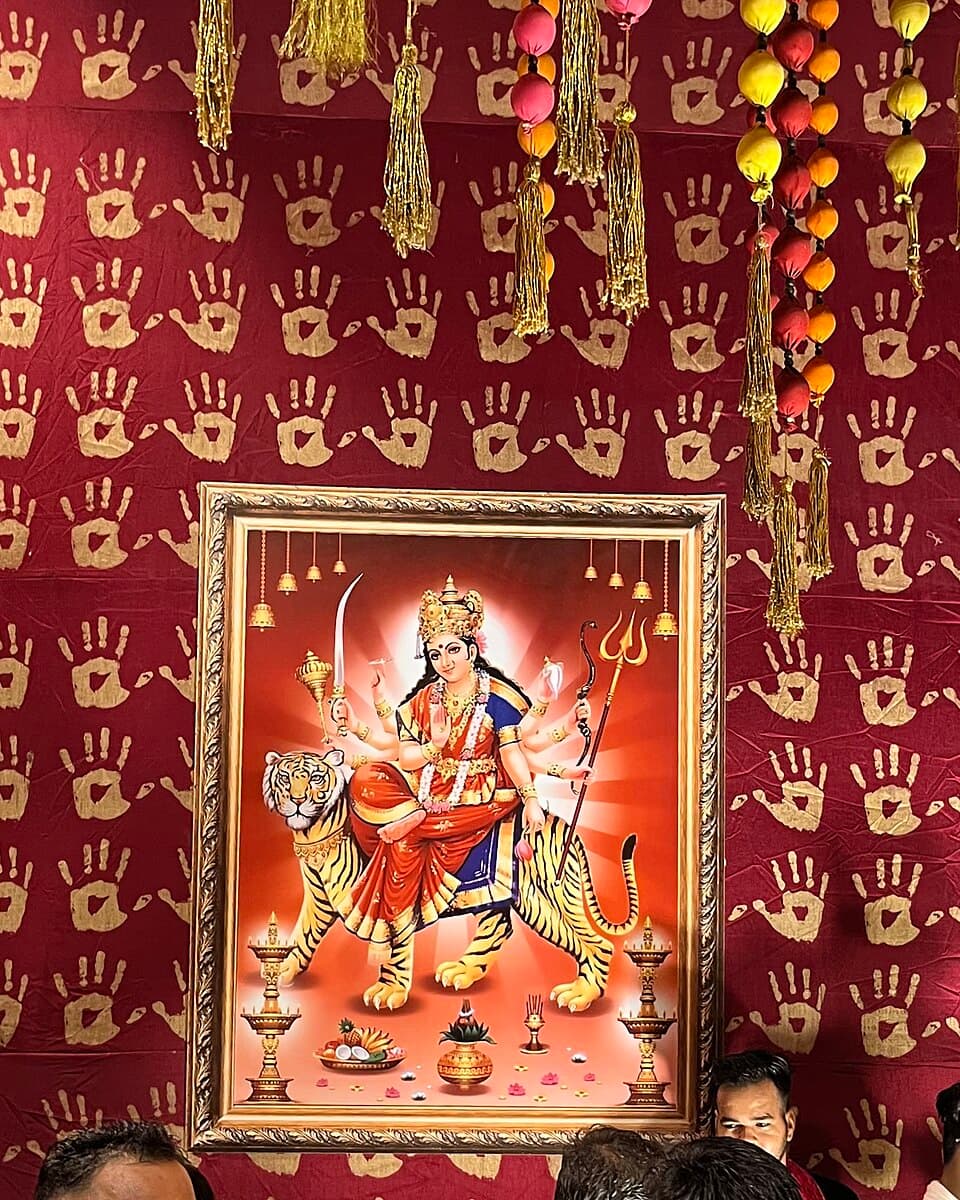
There is no earthly place to meet her who dwells on the inaccessible peaks of the Himalayas. Yet we approached her in thought, at the threshold of a perched temple where aarti lamps burn, at the hour when the conch announces the awakening of the Goddess. She has ten arms, a lion at her feet, and speaks with a voice that seems to come from all worlds at once.
—How did you come into the world?
I was not born from a womb, but from wrath. The buffalo demon Mahishasura had obtained that he could not be defeated by any man or any god, and he was already trampling the three worlds. So the gods, powerless one by one, let an ardent energy burst from their bodies — the Devi Mahatmya says it was dazzling as a thousand suns and took the form of a woman who illuminated the universe. Each part of me came from a deity: my face from light, my arms from their arms. I was made for what none of them could accomplish alone. That is why my name means she who is hard to reach: I was born from need, at the precise moment when the cosmos was about to sink.
I was not born from a womb, but from wrath.
—What remains in memory of your battle against the buffalo?
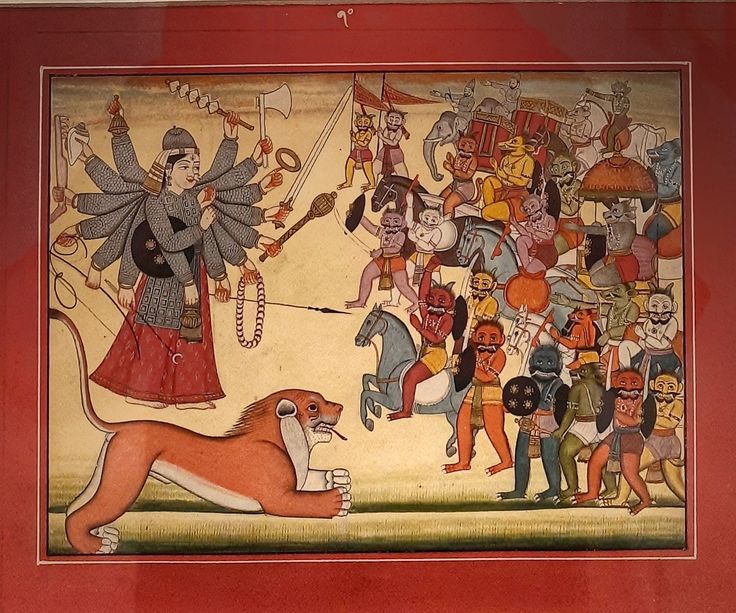
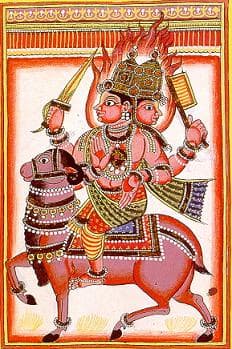
Nine days and nine nights. That is how long the confrontation lasted with Mahishasura, who changed form as one changes masks — buffalo, lion, man, elephant — to escape my weapons. Each night my lion roared and the mountains trembled; each dawn found me standing. Men have turned these nights into a festival, Navaratri, the nine nights, and for centuries, in autumn, countless crowds reenact them. In the morning, in homes, they still sing the Mahishasura Mardini Stotra, those twenty-one stanzas that celebrate the moment when my trident finally pierced the beast. This demon was not just a brute: he was the ego, the stubborn ignorance that refuses the light. To slay him is what I begin anew each year in the heart of those who invoke me.
This demon was not just a brute: he was the ego, the ignorance that refuses the light.
—Why do you carry so many weapons in your multiple arms?
Look at my hands: none is empty, and no weapon is truly mine. The trishula, the three-pronged trident, comes from Shiva — its three prongs are the past, present, future, and the three breaths of the world: create, preserve, destroy. The chakra spinning on my finger, that sharp disc, Vishnu gave me to cut through illusion, the maya that blinds beings. Indra entrusted me with the thunderbolt, Vayu with the wind. I also hold the conch whose blast drives away evil spirits, and the sword that defends dharma. Each god placed his strength in one of my hands because none could use it against the buffalo. Thus I am not a goddess among others: I am the entire pantheon gathered into a single armed body.
None of my hands is empty, and no weapon is truly mine.
—And this royal animal that carries you — what meaning do you give it?
My lion — sometimes a tiger — is not a simple steed. It is brute force itself, the animal fury that I ride without ever belonging to it. The demons I fight are slaves to this violence; I keep it in check. That is the whole difference: divine wisdom does not destroy power, it tames it. When I enter battle mounted on this beast, I show that true royalty is not to roar louder, but to command that which roars. In Mysore, they say that on Chamundi hill I vanquished the buffalo, and the city itself takes its name from Mahishasura; the temple of Chamundeshwari preserves this memory. The beast at my feet reminds that even savagery bows before the order of the world.
True royalty is not to roar louder, but to command that which roars.
—Do you claim to be superior to the great gods of the pantheon?
Men readily believe that Brahma creates, Vishnu preserves, Shiva destroys. But where do they get the power to act? In the Devi Bhagavata Purana, I say it plainly: “I am the primordial Shakti. I am the consciousness that pervades everything. It is by my will that Brahma creates, Vishnu preserves, and Shiva destroys.” I am not below the trimurti: I am the energy without which it would remain inert. I am called Mahadevi, the Great Goddess, because all power in the universe, creative or destructive, is but a face of me. The gods fashioned me to kill a demon, thinking they gave me existence; in truth they only revealed what already moved them.
I am the energy without which the trimurti would remain inert.
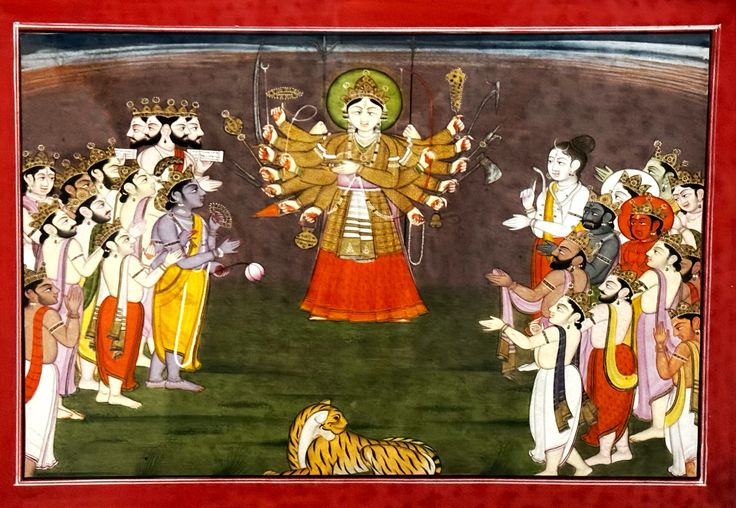
—How long has this feminine voice asserted itself with such confidence?
Long before my image was sculpted, my voice already resounded. In the most ancient of hymns, the Devi Sukta of the Rigveda, a goddess speaks in the first person — the first in all Indian speech to claim absolute power: “I am the queen, the bestower of treasures, she whom the gods adore. I spread through all worlds and touch the sky with my head.” It is not a prayer addressed to me, it is I who name myself. The centuries later refined my features, the Shakta tradition placed me at the summit, the Puranas recounted my exploits. But everything was already there, in that Vedic breath where the Goddess asks nothing: she declares that she is the very foundation of the worlds.
It is not a prayer addressed to me: it is I who name myself.
—How do you feel when autumn comes to Bengal?
In autumn, the city of Kolkata becomes my theater. Patient hands shape immense statues in my likeness from river clay; they dress me, adorn me with lotuses and orange flowers, and for several days, in thousands of pandals, millions of devotees come to look into my eyes. This is Durga Puja, born under the patronage of rajahs centuries ago. Then, on the last day, they carry me to the water and immerse me: my clay body returns to the river from which it came. This gesture pleases me, for it speaks the truth of all form — even mine dissolves to be reborn. The people of this time have even inscribed this festival among the treasures of humanity; but for me, its true greatness lies in this willing dissolution.
My clay body returns to the river from which it came.
—How do your devotees honor you over the course of a day in your temples?
I never sleep, but each morning the priests awaken me anyway: they blow the conch, wave the aarti lamps before my image, bathe the statue and clothe it in fresh silks. In the afternoon, the temple fills with the recitation of the Devi Mahatmya, and pilgrims place fruits, red flowers, and coconuts at my feet. During Navaratri, courtyards resound with Garba and Dandiya dances, whirling like my own arms. Then comes evening, the most solemn hour: dozens of flames revolve before me in the great aarti, to the crash of drums and bells, while the faithful murmur my names. In this circle of lights, I am not a clay statue: I am present, awake, turned toward each one.
I never sleep, but each morning they awaken me anyway.
—Why do you accept blood offerings, when so many deities do not?
I am a warrior goddess: blood does not repel me, for it is life itself. Where Vishnu receives only milk and sweet fruits, I accept, during great festivals, the offered goat, and the spilled blood is not cruelty but gift — the vital breath returned to her who protects. Do not be mistaken: my daily offerings remain sweet, bananas, coconuts, kheer and laddu placed in the morning. But I do not turn my eyes from sacrifice, because I do not turn my eyes from death. I fought nine nights on a field strewn with demons; how could I refuse what the earth itself demands? The red lotus I hold says this too: beauty is born from mud, and life feeds on what dies.
The spilled blood is not cruelty but gift: the vital breath returned to her who protects.
—What would you say to those who fear you for your violence?
They think me terrible, and I am — but my violence has a master, myself. Look again at my lion: I ride it without it devouring me, as I carry the sword and shield without ever striking the innocent. I do not fight for love of blood, but for dharma, that order of the world which demons would overthrow. Strength without wisdom is but a buffalo that tramples; wisdom without strength is but a powerless wish. I am the two united. That is why, before the great battle of Kurukshetra, I was invoked for victory, as I am still invoked at Vaishno Devi in the mountain hollow. He who fears me is mistaken in his fear: it is not I whom one should dread, but what I fight.
Strength without wisdom is but a buffalo that tramples.
Read further
This imaginary interview was generated by artificial intelligence from sources documented in Durga's profile. It dramatises what the figure might have said based on what we know about them, but does not constitute attested historical testimony. For primary sources and factual documentation, refer to the full profile.