Kids interview Durga
by Charactorium · Durga · Mythology · Spirituality · 5 min read
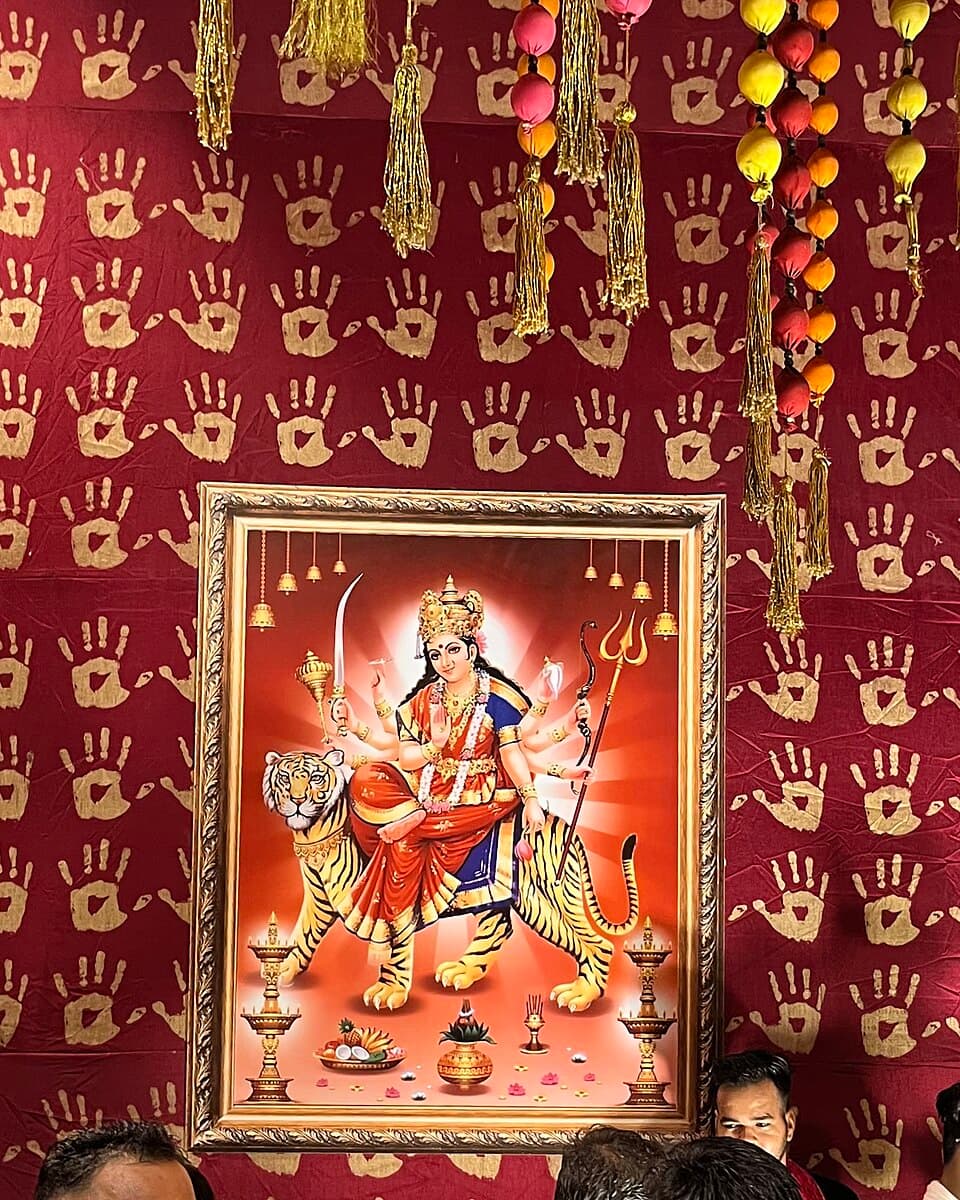
Two young visitors, on a school field trip, stop before an immense statue of Durga with many arms. The warrior goddess welcomes them with a warm smile. She wants to tell them about her world, the world of gods and demons.
—Is it true you were born because the gods were angry?
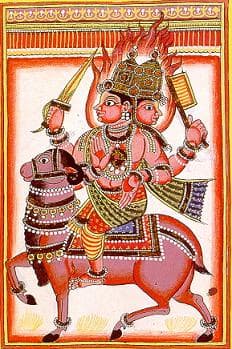
Yes, my child, listen carefully. One day, a terrible demon, Mahishasura, an asura — that is, an anti-god, an enemy of order — threatened to destroy the entire universe. He had the form of a giant buffalo. No god could defeat him alone. So imagine: all the gods gathered their anger and their light, like a thousand suns converging into a single point. And from that energy, I was born. A warrior woman, made of all their power. I was not their daughter: I was their force, come alive. That is why I am called the Great Goddess.
I was not born of a mother, but from the united anger of all the gods.
—How long did your battle last? Weren't you tired?
Nine days and nine nights, my little one. Imagine a battle that never stops, neither in the morning nor under the stars. Mahishasura kept changing form: buffalo, lion, giant man... But I followed him, patient, never retreating. A goddess does not sleep, you know. In the end, I struck him down. Humans have not forgotten this battle. Every autumn, they celebrate Navaratri — that means 'nine nights' — to remember those nine days. Hundreds of millions of people dance and pray. All that joy, for a very ancient battle.
A goddess does not sleep: for nine nights, I never closed my eyes.
—Why do you have so many arms? What are they for?
Look at them closely, my child. I often have ten arms, sometimes eighteen! And in each hand, a weapon. But these are not my own weapons. Each god gave me theirs. Shiva gave me his trishula, the three-pointed trident. Vishnu gave his chakra, a sharp disc that spins like time. Indra handed me his bow. Do you understand? All the power of heaven rests in my hands. It is as if each god put a piece of his courage into me. That is why I have so many arms: to carry the power of the entire world.
Each arm holds a god's weapon: I bear the strength of all heaven.
—You ride a lion? Aren't you afraid of him?
Afraid? Oh no, my child. The lion — sometimes a tiger — is my mount, what is called my vahana. I ride this royal animal into the heart of battle. And do you know why that is important? A lion is brute force, wild, the kind that could devour. But I master it. I guide it. The demons I fight let themselves be carried away by blind violence. Not me. I hold power as one holds reins. Imagine a huge fire that, instead of burning everything, warms and protects. That is what my lion is: wild force, tamed by wisdom.
The lion is wild force — and I hold it by the reins.
—So are you stronger than the other gods?
Come closer, I will tell you a secret. In a very old text, the Devi Bhagavata Purana, I myself say these words: I am the primordial Shakti — the primal energy, the one that makes everything move in the universe. Without me, nothing stirs. By my will, Brahma creates the world, Vishnu preserves it, and Shiva one day destroys it to remake it. Do you see? Those three great gods act, but it is my energy that flows in them. I am called Mahadevi, 'the Great Goddess.' I am not above out of pride, my child. I am simply the force that makes everything possible.
I am the energy that makes Brahma create, Vishnu preserve, and Shiva destroy.
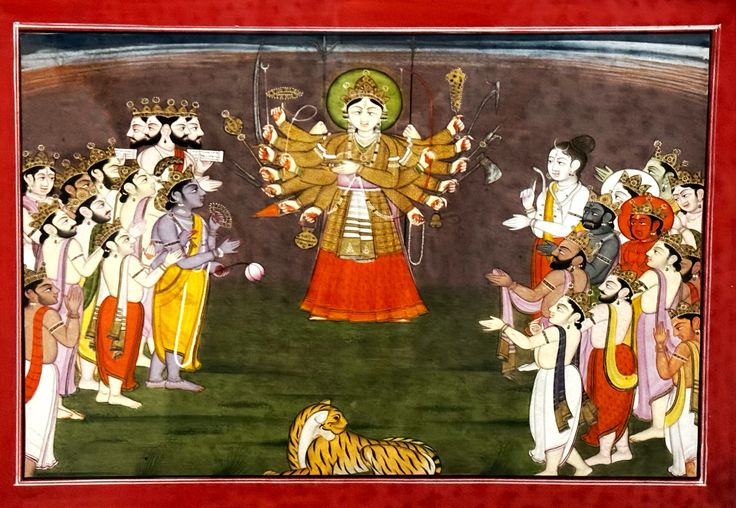
—Is it true that in a very old poem, you are the one speaking?
Yes, and it is very ancient, you know. In the Devi Sukta, a hymn of the Rigveda composed over three thousand years ago, a goddess speaks. She says: 'I am the queen, the bestower of treasures, whom the gods adore.' Imagine: it was the very first time, in ancient India, that a divine female voice dared to say 'I spread throughout all worlds.' Not a god, a goddess! These words have crossed the centuries, recited from teacher to student, long before they were written on leaves. My voice is as old as the mountains.
Three thousand years ago, a woman's voice dared to say: I fill all worlds.
—What is that festival where they make statues of you?
Ah, you mean Durga Puja! It is my favorite festival, in Bengal, every autumn. Listen how beautiful it is. People shape huge statues of me, out of clay, with their hands. They adorn me with silks and flowers. Then, for several days, they worship me, sing, bring fruits and coconuts. And at the end — this is the most moving part — they carry the statue to the river and let it glide into the water. The clay returns to the earth. This custom has existed for hundreds of years. Even today, in Kolkata, millions of people gather there. UNESCO even honored it in 2021.
They shape me in clay, celebrate me, then return me to the river.
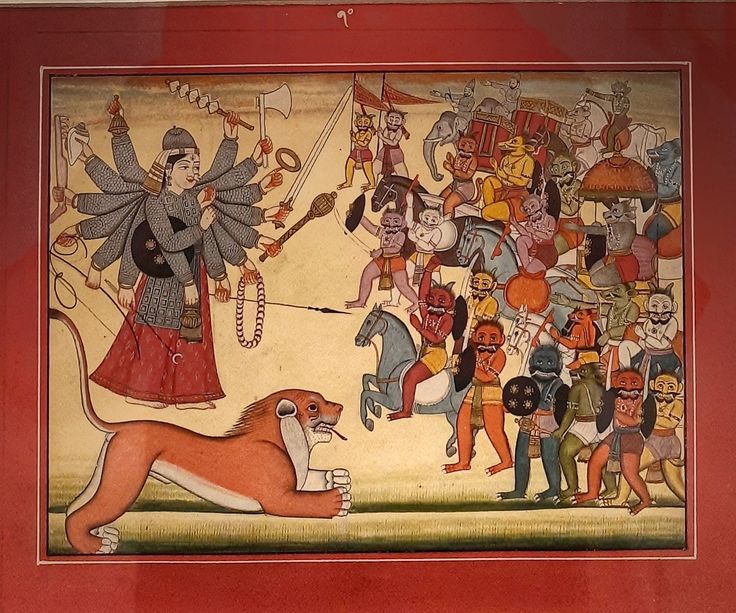
—What was a day in your temple like?
Come, imagine yourself there, at dawn. The priests blow a conch, a large seashell, to wake me. They wash me, dress me in fresh silk, place red lotus flowers at my feet. In the afternoon, the brahmins — the priests — recite my story, the Devi Mahatmya, aloud. Pilgrims arrive with sweet fruits and coconuts. And in the evening, my favorite moment: the aarti. They wave dozens of lit lamps before me, in circles, to the sound of drums and bells. All that light spinning in the night... It is as if the stars had come down to keep me company.
—What does your name, Durga, mean?
Good question, my child. My name means 'she who is difficult to reach.' Difficult, like a summit where the path is lost. For I do not dwell in the midst of noisy cities. I live in wild places: the peaks of the Himalayas, deep forests, hidden caves, beside sacred rivers. Imagine a mountain so high that clouds cling to its slopes. That is where I abide. To find me, you must make a real journey, an effort of the heart. It is no coincidence: wisdom too is difficult to attain. You do not meet it without walking a little.
My name says it all: she who is difficult to reach.
—Do you really have to walk a long way to come see you?
Yes, my child, and that is a good thing. Think of Vaishno Devi, my sanctuary hidden in a cave, deep in the Himalayan mountains. Every year, millions of devotees climb on foot along steep paths to greet me there. They climb for hours, sometimes all night, out of breath. Why so much effort? Because what is earned is more precious. A goddess you could find on a street corner would soon be forgotten. But one you reach after climbing the mountain, you never forget. The journey is part of the prayer, do you understand?
What is earned is more precious: the journey is part of the prayer.
Read further
This imaginary interview was generated by artificial intelligence from sources documented in Durga's profile. It dramatises what the figure might have said based on what we know about them, but does not constitute attested historical testimony. For primary sources and factual documentation, refer to the full profile.