Kids interview Freya
by Charactorium · Freya · Mythology · 5 min read
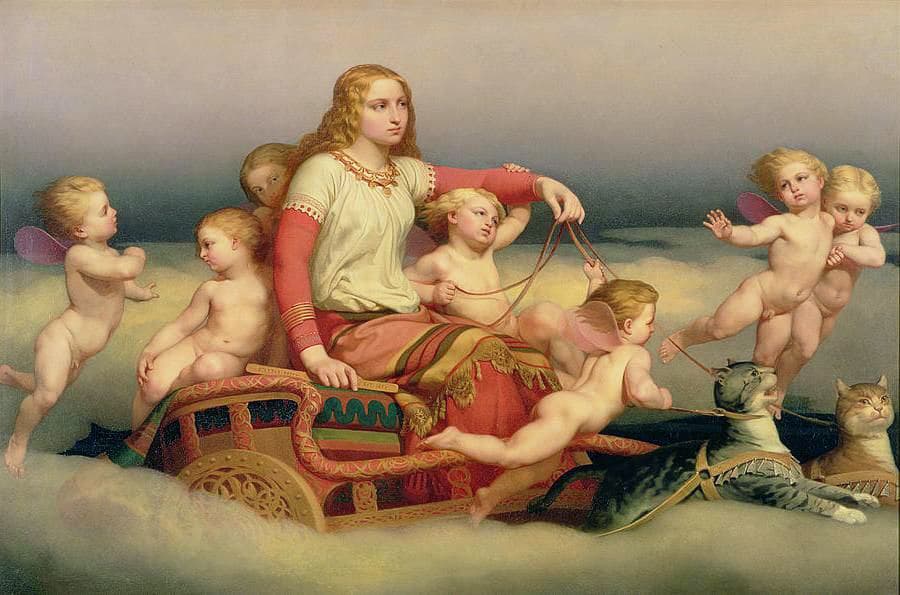
Two fifth-graders on a school trip can't believe their eyes: before them stands Freyja, the great goddess of the North, adorned in gold. A little further off, her chariot pulled by two cats awaits them. Intimidated but curious, they dare to ask their first questions.
—If we could see you in real life, what would we notice first?
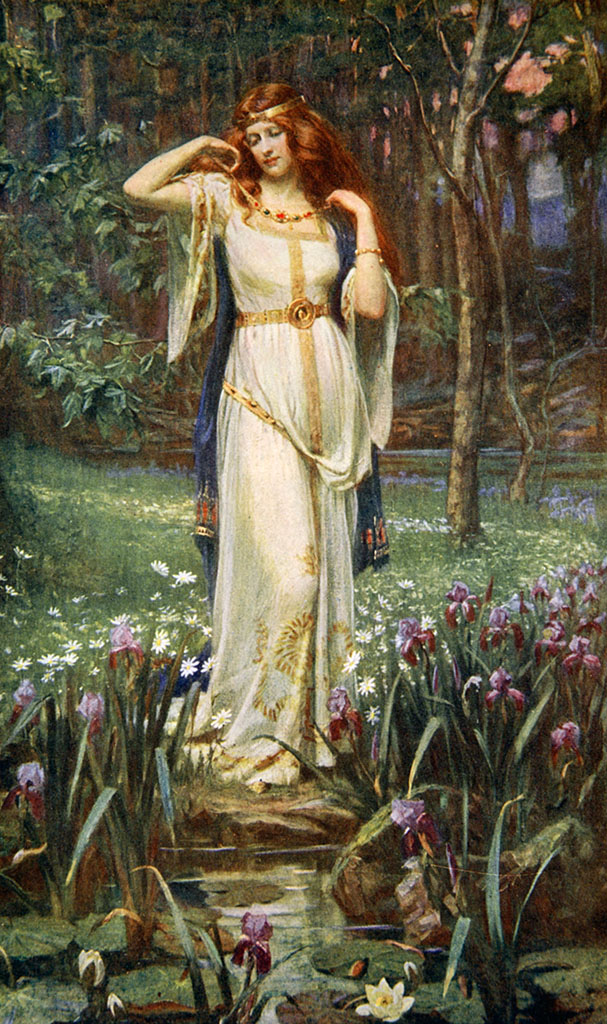
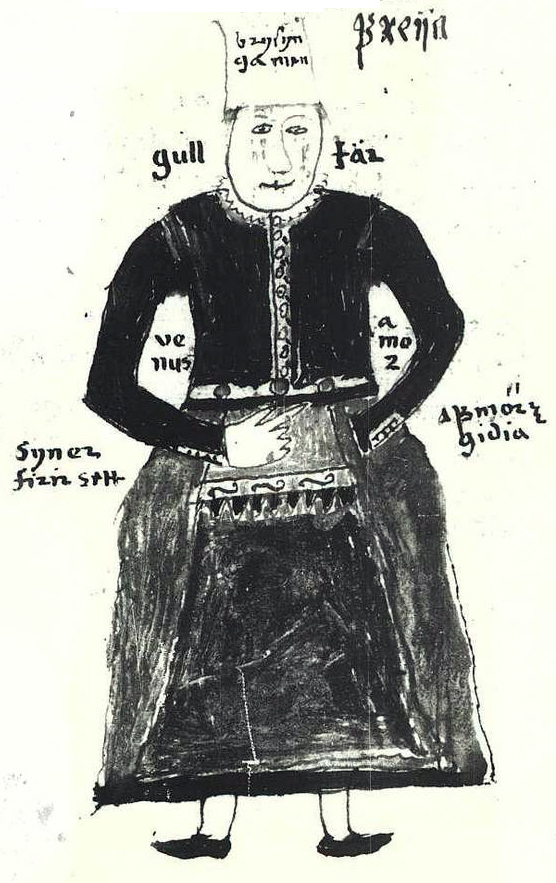
You know, my child, the first thing you would see would be my chariot. I ride in a chariot pulled by two large gray cats. Imagine that: not horses, cats! They purr, and the ground trembles softly under the wheels. Around my neck shines the Brisingamen, my necklace. It catches the light like morning dew. They say that everything that glitters eventually belongs to me. And then you would probably notice my falcon-feather cloak. When I throw it over my shoulders, I can fly between worlds. That is who I am: a goddess who travels, dressed in gold and magic.
—What exactly is your famous necklace?
Ah, my Brisingamen! It is the most beautiful jewel in the nine worlds. Four dwarves forged it, deep in the earth, where the metal glows red. Imagine a gold necklace so pure it seems alive, sparkling even in the dark. The ancient texts, the Edda, say it is my most precious treasure. When I wear it, it reminds everyone who I am: the goddess of love and beauty. But such a magnificent object also attracts greed. Even the cunning Loki once tried to steal it from me. A jewel like that, you see, is as much a joy as a worry.
—They say you paid a high price for this necklace. Is that true?
You have heard that story, then... It is true that it is told. The four dwarves who forged the Brisingamen did not want gold in return. They asked for something greater: my company, one night for each. In my world, my child, desire and beauty are not shameful things—they are forces, like the rain that makes the fields grow. I wanted this necklace, and I paid the price. Goddesses like me do not have to lower their eyes. I rule over love and fertility, and I own it without blushing. A treasure always has a price; I chose mine.
Desire and beauty are not shameful: they are forces.
—Is it true that you have a magical boar?
Yes! His name is Hildisvíni, which means "battle swine." He is a boar with golden bristles that shine in the night. I ride on his back to cross the nine worlds, like you would jump from one bank of a stream to another. The boar, for us northern peoples, is the animal of strength and bountiful harvests. And when I am not riding Hildisvíni, I put on my falcon-feather cloak and fly away. Imagine being able to become a bird whenever you want! My cats, my boar, my feathers... each carries me to a different world. A goddess, you see, never stays in one place for long.
—What is the magic you practice?
It is called seiðr, my child. It is a very ancient magic, the kind that lets you see the future and touch the thread of destinies. Imagine that people's lives are a great weaving: with seiðr, you can glimpse the threads, and sometimes even move them a little. For this, I hold a special staff, a wand. The women who practice this art are called völva, and they are greatly respected in our villages. They sit on a platform and sing to call the spirits. Among the gods, I possess this knowledge best. Magic, you see, is listening to what the world whispers softly.
—Did you really teach your magic to the great god Odin?
Yes, and I am proud of it! You know Odin, the one-eyed god, the king of the Æsir, whom everyone fears? Well, seiðr—that magic—I taught it to him. Imagine: the most powerful of gods coming to sit beside you to learn. Among us Vanir—my family of deities—we know the secrets of the earth, of fertility, of destinies. Odin, for his part, knew war and poetry. But my magic, he did not know it. So he came to me. That teaches you something, my child: even the greatest king has someone as a teacher.
Even the greatest king has someone to teach him.
—Is it true that you welcome dead warriors, like Odin?
It is true, and many do not know it. When a warrior falls bravely in battle, half of the dead go to Odin, in Valhalla. But the other half comes to me, in my domain, Folkvangr—that means "people's field." Imagine a vast golden meadow, endless, where heroes finally rest. I receive them there myself. Many believe that only one god decides the fate of the dead. Well, no: I also choose. A goddess of love who also watches over fallen warriors—that surprises, doesn't it? Yet love and death often walk hand in hand, my child.
—Does it bother you to share warriors with Odin?
Not at all! On the contrary, it proves that I am as worthy as he is. Think: Odin is the king of the gods, and yet he does not keep all the heroes for his Valhalla. Half come to me, in my Folkvangr. We are equal on this point. In many stories of the world, goddesses remain in the shadow of gods. Among us in the North, it is not so. I am a Vanir, and I have my full place among the powerful. When the cunning Loki once dared to insult me, I answered him without lowering my head. I am not silenced, my child. Never.
—You weren't born among the other gods? Where do you come from?
Good question! I am not an Æsir, like Odin or Thor. I am a Vanir—a goddess from another divine family, that of the earth, harvests, and wealth. At the very beginning, you see, my family and the Æsir family made war. A long war between gods! Then, to make peace, we exchanged hostages, and I came to live among the Æsir. Imagine moving to another village to reconcile two feuding families. It is a bit like that. Today, I am counted among the most honored goddesses, the Ásynjur. But I never forget where I come from: from Vanaheimr, the home of the Vanir.
—Today, what would you like people to remember about you?
That I was never just a goddess of love, my child. Of course, I rule over beauty, over marriages, over fields that yield bountiful harvests. But I am also the one who knows seiðr magic, who welcomes warriors to Folkvangr, who wears the Brisingamen without blushing. The northern peoples loved me so much that they named a day of the week after me. When you hear the word Friday, think of me: "Freyja's day." That is what I would like: for people to remember that a woman can be gentle and powerful at the same time. Both together, always.
A woman can be gentle and powerful at the same time.
Read further
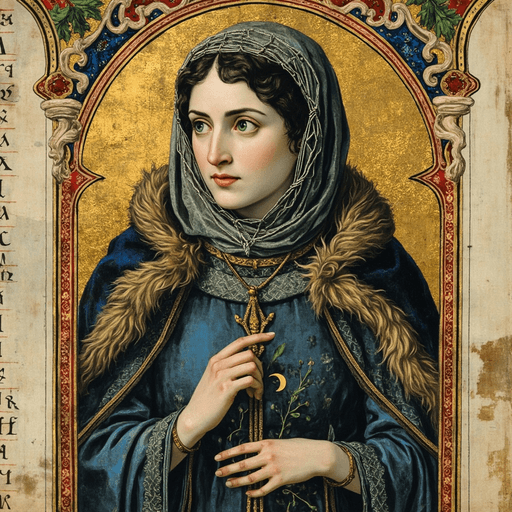
This imaginary interview was generated by artificial intelligence from sources documented in Freya's profile. It dramatises what the figure might have said based on what we know about them, but does not constitute attested historical testimony. For primary sources and factual documentation, refer to the full profile.