Kids interview Georgia O'Keeffe
by Charactorium · Georgia O'Keeffe (1887 — 1986) · Visual Arts · 5 min read
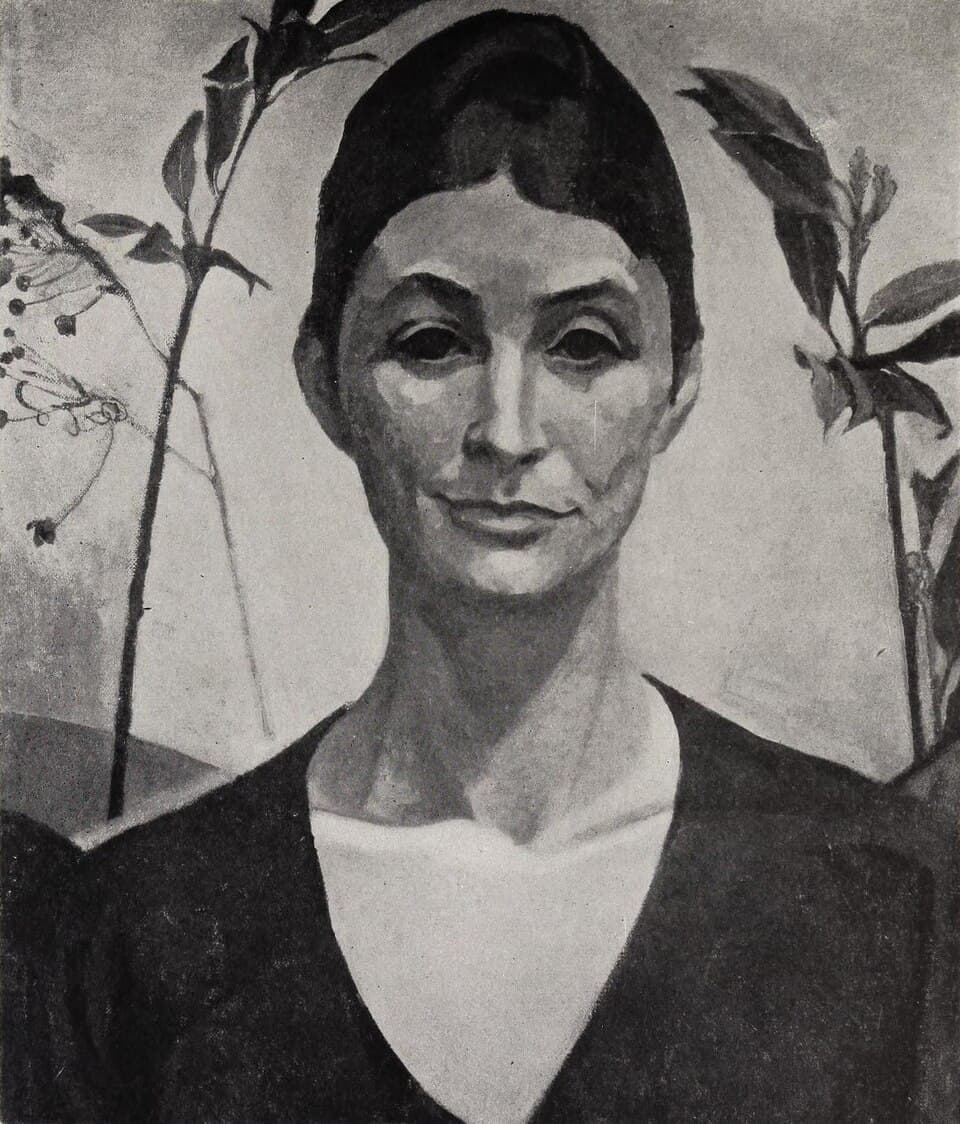
Two twelve-year-old students push open the door of a mud-brick house, deep in the New Mexico desert. An old woman in a black dress awaits them, white bones and stones laid around her like treasures. She smiles and invites them to sit: the questions can begin.
—How old were you when your drawings were shown without your consent?
You know, I was almost thirty. I was sending my charcoal drawings to a friend, just for her to see. And then a man, Alfred Stieglitz, hangs them in his Gallery 291 in New York, in 1916 — without asking me! I was furious. Imagine: your secret drawings suddenly displayed before strangers. I went to see him to have them taken down. He flatly refused. He told me people needed to see them. Deep down, he was right. It was there, on that wall, that everything really began for me.
—Why did you paint flowers larger than a wall?
Because no one takes the time to look at a flower! It's small, you walk past it, you forget it instantly. So I painted it huge, bigger than you. My Black Iris III, from 1926, is almost a meter tall. When a flower becomes a landscape, you have no choice but to stop. You step into it, you see every fold of the petal, every nuance. I wanted to say with colors and shapes what words cannot say. A giant flower is my way of taking you by the hand and whispering: look, really look.
When a flower becomes a landscape, you have no choice but to stop.
—People saw weird things in your flowers; did that annoy you?
Oh, yes! People looked at my flowers and invented all sorts of stories I never meant to paint. I painted a jimson weed — the Jimson Weed, a big white desert flower — because it was beautiful, period. Not to hide a secret message. I always rejected those readings. A flower is a flower. You know, people often see in a painting what they already carry in their own heads. My job was to show form, light, color. The rest was their ideas, not mine.
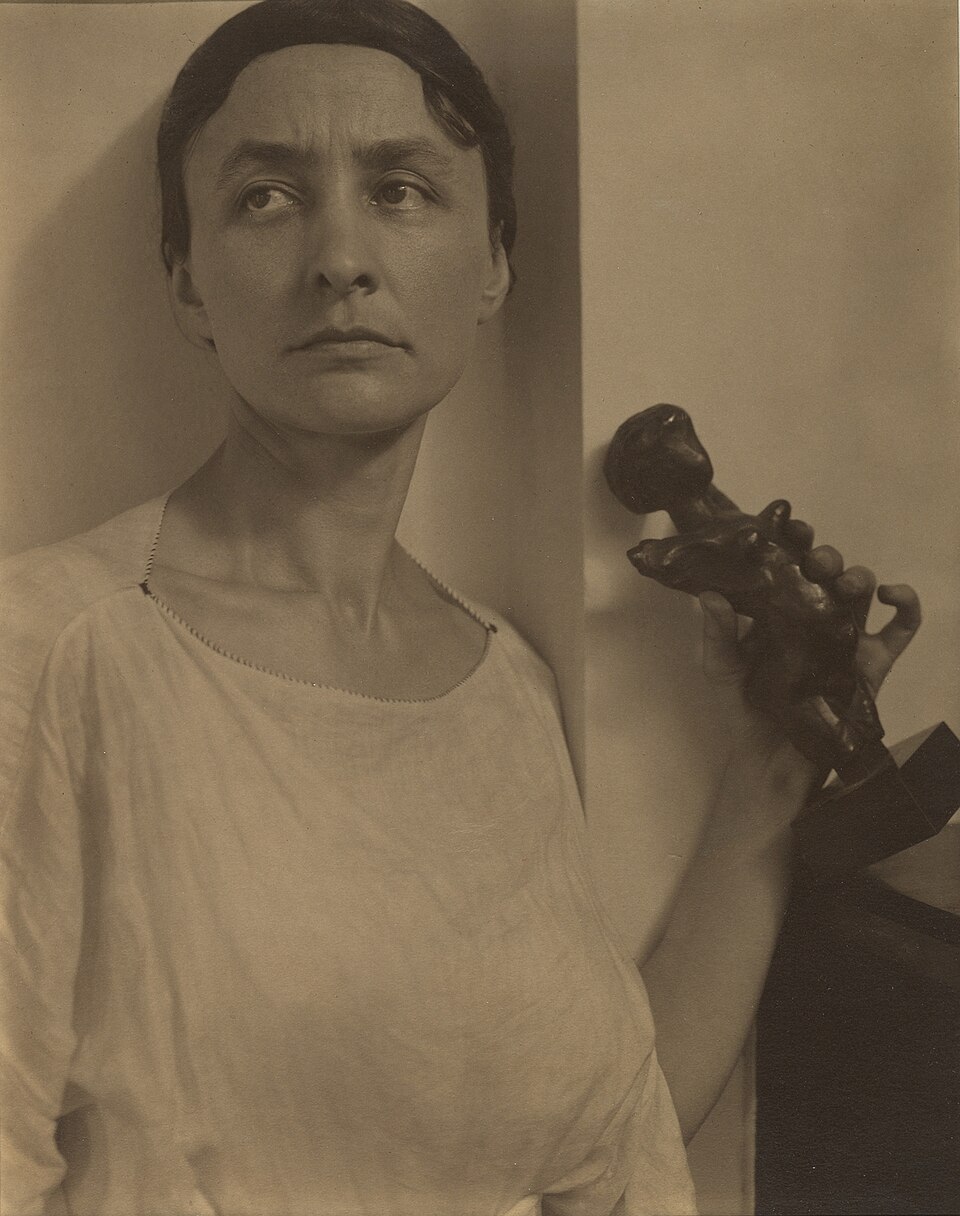
—What was it like being photographed over 300 times by your husband?
It was strange and beautiful at the same time. Alfred became my husband in 1924, and for twenty years he photographed me — more than three hundred and fifty times! My hands, my face, my back. Imagine someone looking at you so long that they end up knowing every line of your skin. Sometimes I loved it, sometimes I felt like just an object placed before him. He photographed me, I painted — each with their own art, in the same house. Our love was strong but turbulent, like two rivers colliding. We inspired each other and argued, often on the same day.
—What was it like the first time you saw the desert?
The day I saw the New Mexico desert, in 1929, my heart turned over. It was the most beautiful thing I had ever seen, and I told everyone who would listen: I had to paint it. Imagine a vast land, the color of ochre, without a single sound, with a light that cuts the hills like a knife. The sky was so big it seemed endless. I came back every summer, again and again. This land was mine, it suited me exactly, like a garment tailored for me alone.
—What did you do in the mornings, in your desert house?
I got up before the sun, at Ghost Ranch. In the morning, light glides over the red cliffs and everything turns golden. I would walk for a long time in the desert alone, and I picked up whatever I found: a bone, a stone, a dried flower. My house was made of adobe — sun-dried mud bricks, with walls so thick they kept the cool inside. Inside, almost nothing: my bones and stones laid out like treasures. In the afternoon, I painted by daylight, sometimes for hours on a single painting. In the evening, I read. A simple life, and full.
—Why did you collect dead animal bones?
Don't make that face! I know, collecting skulls can be a little scary. But in the desert, bones bleached by the sun are beautiful. A bison skull, all white, is smooth, pure, solid. Others saw death; I saw the beauty of what lasts. I painted whole series of them: those bones floating in a big blue sky, as if they were flying away. For me, it wasn't sad at all. It was the entire American West — dry, harsh, and yet terribly alive.
Others saw death; I saw the beauty of what lasts.
—You painted a skull with the colors of the flag — was that a joke?
Not quite a joke, but almost a challenge! Around 1931, writers were everywhere searching for "the great American painting." So I painted Cow's Skull: Red, White, and Blue: a cow skull set on red, white, and blue, the colors of our flag. It was my answer, a bit mocking. I was telling them: here is your America, dry and bony, but real. Not skyscrapers, not pretty stories — a skull in the desert. People didn't know whether to laugh or think about it. I found it enormously amusing.
—What did you do when you started to lose your sight?
Ah, that is the trial of old age. In the 1970s, my eyesight declined, declined further... In the center, everything became blurry. For a painter, you can imagine the sorrow. But I wasn't going to stop for such a small thing! I took up clay. With my hands, I felt the form under my fingers, without needing to see it. My fingers saw in place of my eyes. And for painting, young assistants helped me mix colors. I was past eighty, nearly blind, and I was still creating. You can lose your eyes without losing your vision.
You can lose your eyes without losing your vision.
—You painted a giant painting at 77; how did you keep going so long?
Because I never stopped being hungry to see! At seventy-seven, I painted Sky Above Clouds IV: an immense canvas, almost seven meters long, a sea of clouds like you see from the sky. It took a large barn to set it up. At ninety, the president gave me the Medal of Freedom, the highest honor in the country. But you know, medals pass. What matters is having lived on a land I loved, and having painted it. If you one day find your own desert, your corner of beauty, never let it go.
This imaginary interview was generated by artificial intelligence from sources documented in Georgia O'Keeffe's profile. It dramatises what the figure might have said based on what we know about them, but does not constitute attested historical testimony. For primary sources and factual documentation, refer to the full profile.