Imaginary dialogue between Enkidu and Gilgamesh
by Charactorium · Gilgamesh · Mythology · 6 min read
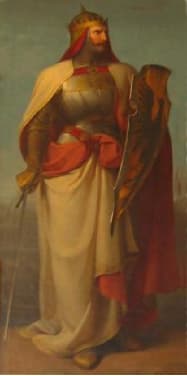
It is in Uruk of the mighty walls, on a night when Gilgamesh has dug a passage into the underworld, that the shade of Enkidu rises like a cold breath. The two companions embrace, the dust of the threshold clinging to their arms. They hunted the lion together, felled Humbaba in the Cedar Forest, struck down the Bull of Heaven — then death separated them. Returned for a moment from the houses of dust, Enkidu wants to know what has become of his brother since he closed his eyes.
—My brother, when my breath left me on my bed, what did you do with your days? Tell me how you mourned me.
You who lay before me, Enkidu, I refused to believe in your silence. Seven days and seven nights I watched over your body, unwilling to surrender you to the earth, until a worm fell from your nostril. Only then did I understand that you would never rise again for the hunt. I tore off my royal garments, let my hair grow wild, put on the skin of a lion. I, the king of Uruk of the mighty walls, wandered the steppe howling your name. It was no longer the simple loss of a companion: it was death entering my own house for the first time. If you, the strongest at my side, could fall, then I too would fall one day.
It was death entering my own house for the first time.
—Your cheeks are hollow and your skin burned from travel. Where did your grief carry you, after the earth covered me?
Your death drove me from my city like an evil wind. The terror of nothingness had lodged in my belly, and I had but one thought: to find the one who escaped death. I walked toward Mount Mashu, whose peaks guard the rising and setting of the sun, where no mortal had passed. The scorpion-men let me cross the tunnel of darkness, and I ran before the night trapped me there. Beyond lay the garden of the gods, then the waters of death. I crossed the Abzu, the primordial ocean, to reach Uta-napishti, the only man to whom the gods gave eternal life. All that road, my brother, I traveled so that I would not end like you, under the dust.
—And that deathless man, Uta-napishti, did he give you his secret? Did you return carrying eternal life in your hands?
He told me of the Great Flood, my brother — how the gods, weary of the noise of men, resolved to drown all flesh, and how Ea whispered to him to build a ship to save the seed of life. His endless life he had not earned: the gods granted it once, and they would never gather like that for me. He challenged me to conquer only sleep — and I slept six days and seven nights. How could I conquer death, I who cannot even hold out against sleep? Yet he showed me a thorny plant at the bottom of the waters that restores youth. I picked it. But a snake snatched it from me while I bathed, and carried away my last hope.
How could I conquer death, I who cannot even hold out against sleep?
—Before the gods shaped me from clay to match you, you ruled alone. What was I to you, truly?
Before you, Enkidu, I was a force without restraint. I exhausted the young men of Uruk, I left no son to his father nor daughter to her mother, so great was my excess upon the city. The gods kneaded you from clay and released you among the wild beasts so that someone might finally stand up to me. When we clashed on the threshold, shaking the doorposts, neither could overcome the other — and from that struggle our embrace was born. You were the half I lacked, the one before whom I did not have to be king. Only you could stop me with a word or follow me to the end of madness. Without you, my strength was only solitude.
—Do you remember, my brother, the day we entered the Cedar Forest? You who sought glory — do you regret Humbaba?
How could I forget? It was I who dragged you along, hungry for a name that would outlast my flesh. You knew the way, you who had lived among beasts, and you warned me against Humbaba, the guardian the gods had posted to frighten men. We felled the sacred cedars, and the guardian roared until the mountain shook. When he begged for mercy, it was you who urged me to strike, lest he undo us. We killed him together, and Shamash lent us his great winds to bind him. I do not regret the fight — but I sometimes wonder if that guardian's blood did not draw the gods' wrath upon you.
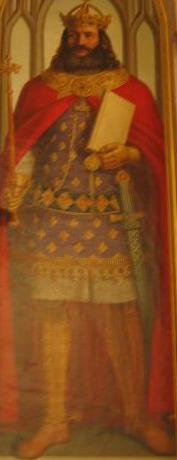
—And the Bull of Heaven, sent by Ishtar whom you had spurned? We struck it down side by side — do you remember?
I remember it as yesterday, my brother. Ishtar wanted me as her husband, and I reminded her of the fate of all those she had loved and broken. Furious, she obtained from Anu the Bull of Heaven, whose breath opened chasms that swallowed the men of Uruk. You seized it by the tail while I plunged my sword between its neck and horns. Then you threw its thigh in the goddess's face — magnificent madness I would not have dared alone. We paraded through the streets, and the city sang both our names. But it was that day, I fear, that the gods held council and decided that one of us would pay. They chose you, not me.
—Before our adventures, you led me to the top of the ramparts to show me your city. Those walls of Uruk — what did you want to inscribe there?
Climb those walls, Enkidu, walk around them, examine their foundations: have you ever seen such work? Seven sages laid their foundations, and fired brick forms the circuit to a length no city matches. Within I enclosed the temple of Eanna, the dwelling of Anu and Ishtar. When I returned from my vain quest, without the plant of youth and without eternal life, it was upon these walls that my eyes finally rested. I had sought eternity at the end of the world, and it was there, in the brick my hands had ordered. A king does not survive in his flesh, but in what he builds for his city. These ramparts will stand when my very body is dust.
I had sought eternity at the end of the world, and it was there, in the brick.
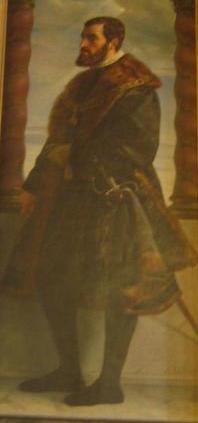
—They said you were made two-thirds of the substance of the gods. Did that divine part weigh on you or carry you?
They call me two-thirds god and one-third human, son of the goddess Ninsun and a king of Uruk. That divine part gave me a stature and strength no mortal approaches, and none can bear my gaze. But it is the human third, my brother, that decides everything. For the gods do not die, and I will die. What use is it to have the blood of immortals in your veins if death still claims its share? That divine part did not spare me your corpse nor the fear that drove me onto the roads. It made me greater than men, and more alone. The mortal third taught me to weep.
What use is it to have the blood of immortals in your veins if death still claims its share?
—Now that you know the dusty dwelling where I rest, what have you come to understand of human life?
You who are there, in the land of no return, know better than I: below, the light goes out, they eat clay and dust is their bread. I tried to flee that, and I learned that one does not flee it. The gods, when they created mankind, kept eternal life for themselves and left us death as our lot. So what remains for me to do? Fill my belly, rejoice day and night, keep my head clean, take the child's hand, and delight the wife who is given me. That is the lot of man. I returned empty-handed from my great journey, and perhaps that is the only wisdom I brought back.
—The breath that brought me up is already fading, my brother. Before the earth takes me back, tell me: what do you keep of me?
Do not leave yet, Enkidu — let me clasp your arms one last time, even cold as clay. What do I keep of you? Everything I have become. Before you, I was only a force crushing its own city; you gave me a companion, and your death made me a man who knows his worth. I had your statue carved, I mourned you as a widow mourns her only one. When I walked alone in the steppe, it was your shade I pursued as much as eternal life. Return now to your dwelling, since it must be — but as long as the walls of Uruk stand, your name will be spoken there with mine. Go in peace, my brother, and may the dust be light upon you.
Read further
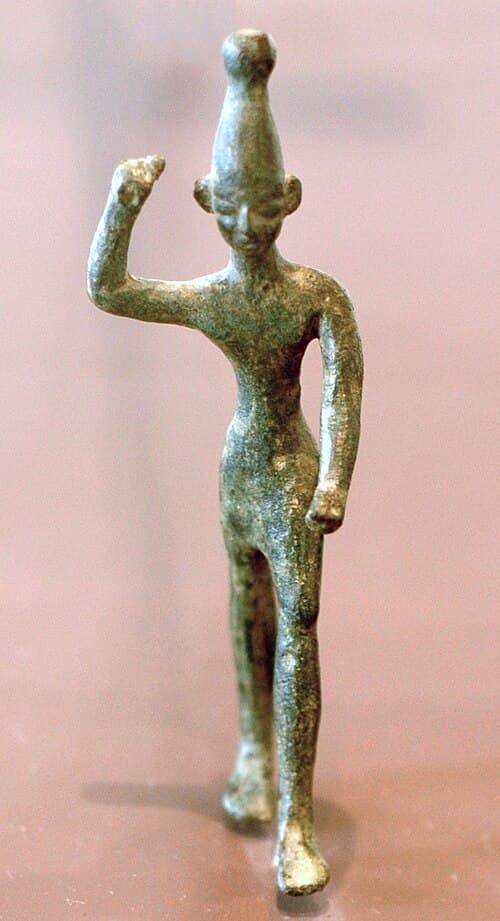
This imaginary interview was generated by artificial intelligence from sources documented in Gilgamesh's profile. It dramatises what the figure might have said based on what we know about them, but does not constitute attested historical testimony. For primary sources and factual documentation, refer to the full profile.