Kids interview Gilgamesh
by Charactorium · Gilgamesh · Mythology · 5 min read
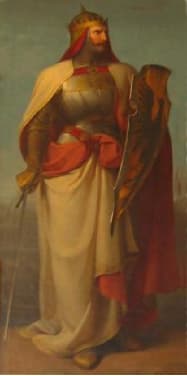
That morning, two young visitors of 12 years old step forward to the king of Uruk. They are a little scared: they say he is two-thirds god. But the giant smiles at them and sits down to talk.
—They say you are two-thirds god and one-third man. What does that mean?
You see, my child, my mother was a goddess and my father came from the ancient kings. So imagine: a great part of me burned like the fire of the gods. I was taller, stronger than all the men of Uruk. No one could match my strength. But there remained in me that small third of man. And that third, you see, is the one that had to die one day. It is strange, to be almost a god and to know that you are not quite eternal. That little piece of man, it is the one that made my whole story.
Two-thirds of me were divine fire; the last third, it had to die.
—Is it true that you ruled for a really long time, like 126 years?
The scribes engraved it thus on the King List, yes: 126 years on the throne of Uruk. Imagine a king who sees the birth, growth, and aging of all the children of his city, many times over! I was counted among the kings before the great Flood — that immense deluge the gods sent upon the world. In my time, my child, a king was not a man like others. He stood between the gods of the sky and the people of the street. It is heavy, such a long life. You bury many people when you reign that long.
A very old king buries everyone he has loved.
—What was your day like when you were king of the city?
At sunrise, I went to see my ramparts. I climbed the walls, I touched the clay bricks. Imagine a wall so high you can see the whole plain beyond! My servants brought me the accounts: the barley harvests, the taxes, the building sites. In the afternoon, I dispensed justice; people came to tell me about their disputes. In the evening, I ate barley bread and river fish, and I listened to storytellers. You know, a king who does not take care of his city is just a useless warrior. The walls, they protect the children while they sleep.
A well-built wall watches over children while they sleep.
—Why were you so proud of your walls?
Ah, my walls of Uruk! That is the most solid thing I left behind. A man dies, my child, but a brick wall can last a thousand years. I wanted that, long after me, people would climb those ramparts and say: 'It is Gilgamesh who raised them.' Imagine you set one stone, then another, and that stone outlives you. It is a bit like not dying entirely. Much later, researchers dug the earth of Uruk and found my old walls again. You see? They were still waiting for me.
A man dies, but a well-built wall can last a thousand years.
—You went to fight a monster in a forest, right?
Yes! The Cedar Forest, far into the mountains. A vast, dark place, full of trees so tall you could not see their tops. There lived Humbaba, a terrible guardian the gods had placed to frighten men. I went there with my friend Enkidu, my bow and arrows on my shoulder, my sword at my belt. Imagine the silence of a giant forest, and suddenly that guardian roaring! I was afraid, I admit it. But together, we gave each other courage. A friend beside you makes monsters smaller.
A friend beside you makes monsters smaller.
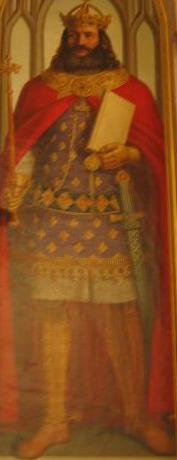
—Were you scared before such a dangerous fight?
All heroes are scared, my child — whoever tells you otherwise lies. Before entering the Cedar Forest, my heart beat fast. But Enkidu looked at me, and I looked at him. We said to each other: if we fall, at least we dared. In my time, a warrior carried the bow, arrows, and bronze sword, but his real weapon was his companion's courage. Imagine you have to cross an icy river: alone, you retreat; together, you jump. It is exactly that. Fear never leaves. You just learn to walk with it.
Fear never leaves; you learn to walk with it.
—Who was Enkidu to you, exactly?
Enkidu was my brother of the heart. The gods shaped him: at first, a wild creature who lived with the beasts, in the steppe, far from men. Then he became a man, and he became my friend. Imagine you meet someone as strong as you, who understands you without speaking. Before him, I was alone at the top: a king has no equal. With him, I finally had someone at my side. We did everything together, the travels, the fights, the laughter in the evening. A king has many servants, my child. But a true friend, that is rare.
A king has a thousand servants; a true friend remains rare.
—Were you sad when Enkidu died?
Sad? My child, it was a hole that opened in my chest. Enkidu fell ill, and the gods took him back. I, two-thirds god, could do nothing. I stayed by his body without moving, for days and days. I refused to believe he was gone forever. Imagine half of you disappearing all at once. It was there, before him, that I understood a terrible thing: I too, one day, would die. Before, I did not really know it. His death taught me my own. And then, I took the road.
The death of my friend taught me my own.
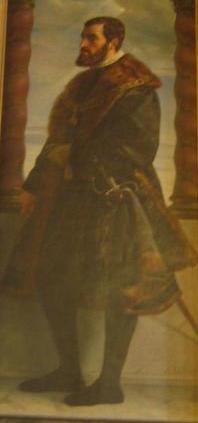
—After his death, what did you go looking for?
I went looking for immortality — the secret of never dying. I could no longer bear the idea of ending up like Enkidu. So I walked and walked, all the way to Mount Mashu, two enormous peaks that guard the Dwelling of the Sun. Imagine a tunnel so long, under the mountain, that you run in total darkness hoping to see light before you run out of air. I crossed deep waters, the primordial ocean, where the world of the living ends. All that for a single answer: can one escape death? I had lost my friend. I did not want to lose myself too.
I ran in the darkness of the mountain to flee death.
—And did you find the secret to never dying?
At the end of the world, I met Uta-napishti, the only man to whom the gods had given eternal life. He told me about the great Flood, that rain that drowned the whole earth. He looked at me and said, basically, that this gift was not given twice. Death is part of men, my child. Imagine you hold water in your hand: the harder you squeeze, the more it escapes. I understood that I would not live forever. But my walls of Uruk, they would remain. You do not become eternal: you only leave something beautiful behind you.
You do not become eternal; you only leave something beautiful behind.
—If people still tell your story today, how does that make you feel?
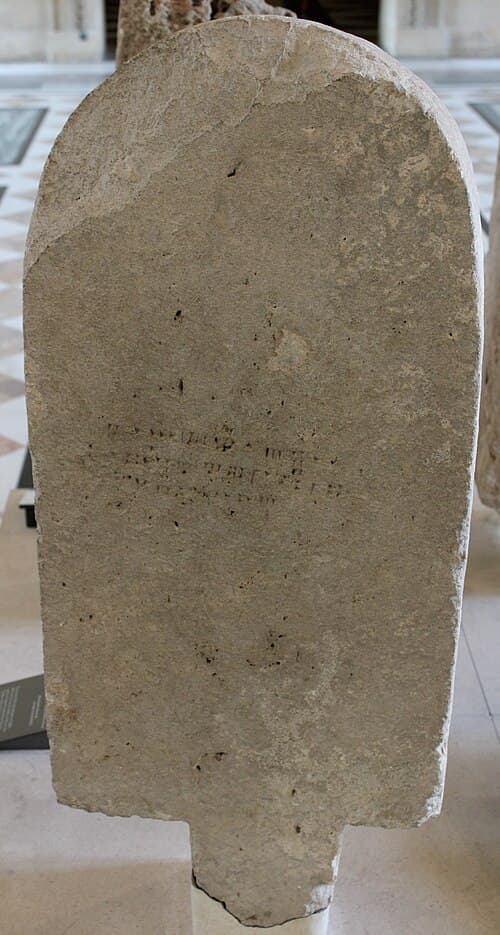
It touches me more than you think, my child. My story was carved on clay tablets, in wedge-shaped signs called cuneiform. Imagine little bricks covered with marks, buried in the earth for thousands of years. Then researchers found them in the great library of Nineveh and read my name again. You see, I was looking for immortality at the edge of the world… and it was there, in those words that you still read. As long as two children come to listen to me, I do not entirely die.
As long as children tell your story, you do not entirely die.
Read further
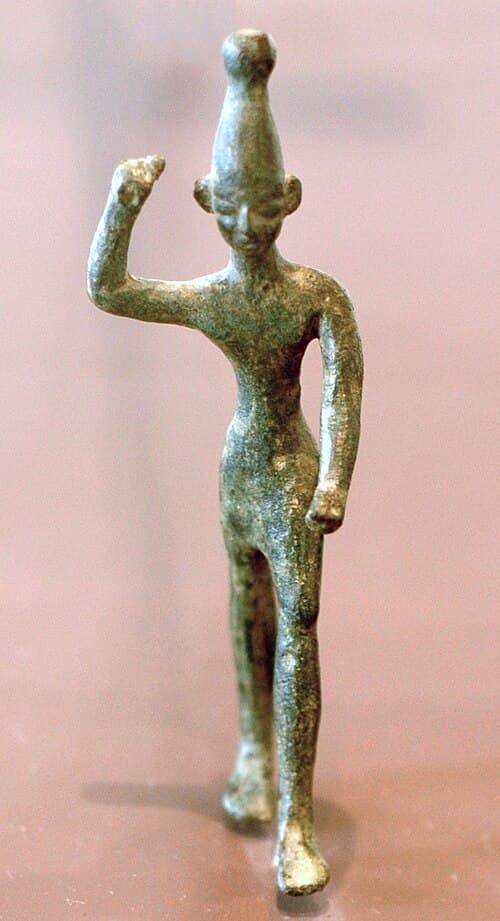
This imaginary interview was generated by artificial intelligence from sources documented in Gilgamesh's profile. It dramatises what the figure might have said based on what we know about them, but does not constitute attested historical testimony. For primary sources and factual documentation, refer to the full profile.