Imaginary interview with Gilgamesh
by Charactorium · Gilgamesh · Mythology · 6 min read
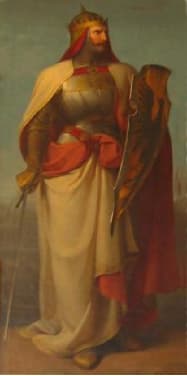
On the ramparts of Uruk, at dusk, where the sun-dried brick still holds the day's warmth, a man watches the river. He is twice as tall as his guards, his gaze burdened with something that resembles the weariness of the gods. He agrees to speak of his walls, his friend, and that death he pursued to the ends of the earth.
—You are said to be the son of a goddess and a being of darkness. How do you live with this dual nature?
The scribes have carved it into clay: two-thirds god and one-third human. That third part, believe me, weighs heavier than the other two combined. My mother is the goddess Ninsun, wisest of the wise, and my father is counted among the ancient shadows. From that seed I received a strength that none in Sumer can match, a stature that makes men recoil. But that third of mortal clay whispers to me each night that I will end as dust like the lowliest of my water carriers. That is my lot: to rule over Uruk with the muscles of a god, and to carry in my chest the trembling heart of a man who knows he will die. No king list consoles for that.
That third of mortal clay weighs heavier than the two-thirds of god combined.
—Your ramparts are famous throughout Mesopotamia. What do they mean to you?
Climb up with me onto the wall and touch the baked brick: it is my work. I girded Uruk with a rampart that no king before me had dared to dream, wide enough for a chariot to race upon, high enough to defy the storm. They credit me with these walls as they credit a god with a mountain. When I leave my palace of sun-dried brick in the morning to inspect the construction sites, when I listen to the foremen speak of harvests and fortifications, I feel that this stone will outlive my flesh. Perhaps that is the only honest immortality a man can build: not to live forever, but to leave behind an enclosure that generations will gaze upon while murmuring my name.
Not to live forever, but to leave an enclosure that generations will gaze upon.
—What would you say of an ordinary day as king, when no monster threatens your city?
A day without war is rare, but it exists. In the morning, I honor Shamash the sun and Anu the sky, then I receive my administrators: barley, taxes, canals, the complaints of shepherds. In the afternoon, I dispense justice under the gaze of my counselors, I listen to petitions, I decide. Then I train with my warriors at the bow, for a king who can no longer string his weapon is nothing but a crown set upon emptiness. In the evening, the singers chant ancient exploits while I drink barley beer. Remember that Agga, king of Kish, once came to besiege my city: I stood and I repelled him. That is why a king trains even on days of peace.
—Tell us about the Cedar Forest and what awaited you there.
The Cedar Forest stands far off toward the mountains of the west, dark, forbidden, guarded by Humbaba, whose breath is fire and whose voice is the flood. Reasonable men do not go there. I went there, my bow on my shoulder and my sword at my side, with Enkidu at my side. Why face this guardian? Because a name is carved as one carves a cedar: with blows of the axe and courage. I wanted them to say, after me, that Gilgamesh entered where the terrible Humbaba ruled, and that he came out alive. Fear, I felt it rise like any man; but Enkidu reminded me that together, we are stronger than the solitude of heroes.
—The Bull of Heaven remains one of your most dreaded battles. How did you face it?
When the goddess, wounded in her pride at having seen me reject her advances, unleashed the Bull of Heaven upon Uruk, the earth split beneath its snorts and hundreds of my men fell into the chasms. Again, it was not the work of one alone. Enkidu seized the beast by the tail, I drove my blade between its neck and horns, like a butcher who knows his stroke. My bow, my Mesopotamian bronze sword: these weapons accompanied me against Humbaba as against the Bull. But I know now — every monster slain brought closer the hour when the gods, angered at our audacity, would demand a price. That price, they would soon claim.
—Tradition attributes a prodigious reign to you. What do you think of it?
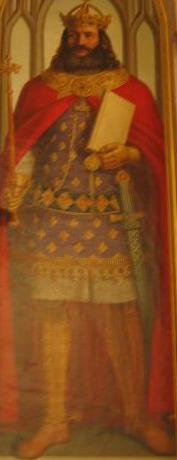
The king list states that Gilgamesh reigned one hundred and twenty-six years, counted among the sovereigns before the great Flood, those antediluvian kings whose years are measured like mountains. Should it be taken literally? I will answer you this: a king's years are counted less in seasons than in works. My father was of the race of demons, my mother a goddess — such seed does not go out like an ordinary oil lamp. Yet, and here is all the irony of my blood, those one hundred and twenty-six years were not enough to satisfy me. The more days one has, the more one fears the last. A short-lived man perhaps does not know this vertigo; a nearly immortal king knows it too well.
—Enkidu. How did that wild creature become the friend of your life?
The gods fashioned him from clay and cast him into the steppe to be my equal — for I had become too harsh a king, and Uruk groaned under my vigor. Enkidu ran with the gazelles, drank at the ponds with the beasts, ignorant of bread and beer. The first time we clashed, in the street, our bodies shook the doorposts. Neither of us overcame the other. And from that fight without a victor was born something I did not know: a brother. He, the wild creature become man; I, the man made more human by his roughness. We faced Humbaba together, felled the Bull together. I believed this friendship as solid as my ramparts.
From that fight without a victor was born something I did not know: a brother.
—His death broke you, they say. Do you remember that moment?
The gods decreed that he would pay for Humbaba and for the Bull: Enkidu faded slowly, consumed by disease, cursing his fate on his bed. I, the two-thirds-god king, sat beside him for seven days and seven nights, refusing to let him be taken away, until a worm fell from his face. Only then did I understand. I tore off my royal garments, let my beard grow wild, wandered like a beast in the steppe where he himself had run. It was no longer the mourning of a companion: it was the first time death looked me straight in the eye and told me its name. If death had taken Enkidu, it would come for me. That day, the builder king turned into a wanderer.
For the first time, death looked me straight in the eye and told me its name.
—It was that fear that set you on the roads of immortality. What path did you take?
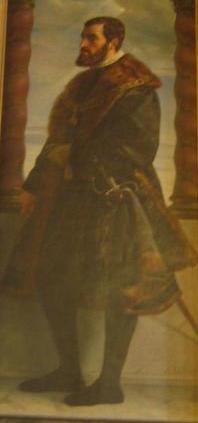
I had only one obsession: to find the one who had survived the Flood, Uta-napishti, the only man to whom the gods had granted endless life. To reach him, I walked to Mount Mashu, the twin mountain whose peaks hold up the sky and whose gates guard the path of the sun. I traversed twelve leagues of absolute darkness, running before the course of Shamash, seeing neither ahead nor behind, my heart tight with terror. Beyond stretched the waters of death, the Abzu, that primordial ocean no mortal crosses. I was no longer a king on campaign: I was a naked man chasing a rumor, ready for anything to avoid ending like my brother beneath the earth.
—What did you learn at the end of the world, from the survivor of the Flood?
Uta-napishti looked at me, dripping and haggard, and he told me how the gods had drowned the world, how he had built an ark and saved the seed of life, and how, for that alone, he had been granted immortality — a unique favor, never renewed. He set me a simple trial: stay awake for six days and seven nights. I who had felled Humbaba collapsed into sleep almost at once. How can one defeat death, its great sister, when one cannot even defeat sleep? Yet he still pointed out a plant at the bottom of the Abzu, capable of restoring youth. I plucked it, my hands torn. And a snake stole it from me while I bathed. That is what I brought back from the end of the world: nothing, except the truth.
—If your walls outlive you but not your flesh, what have you ultimately understood of the human condition?
I returned to Uruk empty-handed, and it was by touching my brick wall again that I finally heard what the gods were trying to tell me. The immortality they keep for themselves is not made for the third of clay that composes me. But look at these ramparts: that is what a man can oppose to death. Not to live without end, but to build, to pass on, to leave a story carved on the tablet so that a stranger, in a thousand years, may still speak my name. If I could believe that I would be read in a distant future, on tablets pulled from the dust, then perhaps I have found my immortality — not in my flesh, but in this story that you, stranger, are still listening to.
Immortality is not to live without end, but that a stranger, in a thousand years, may still speak my name.
Read further
This imaginary interview was generated by artificial intelligence from sources documented in Gilgamesh's profile. It dramatises what the figure might have said based on what we know about them, but does not constitute attested historical testimony. For primary sources and factual documentation, refer to the full profile.