Imaginary interview with Hercules
by Charactorium · Hercules · Mythology · 6 min read
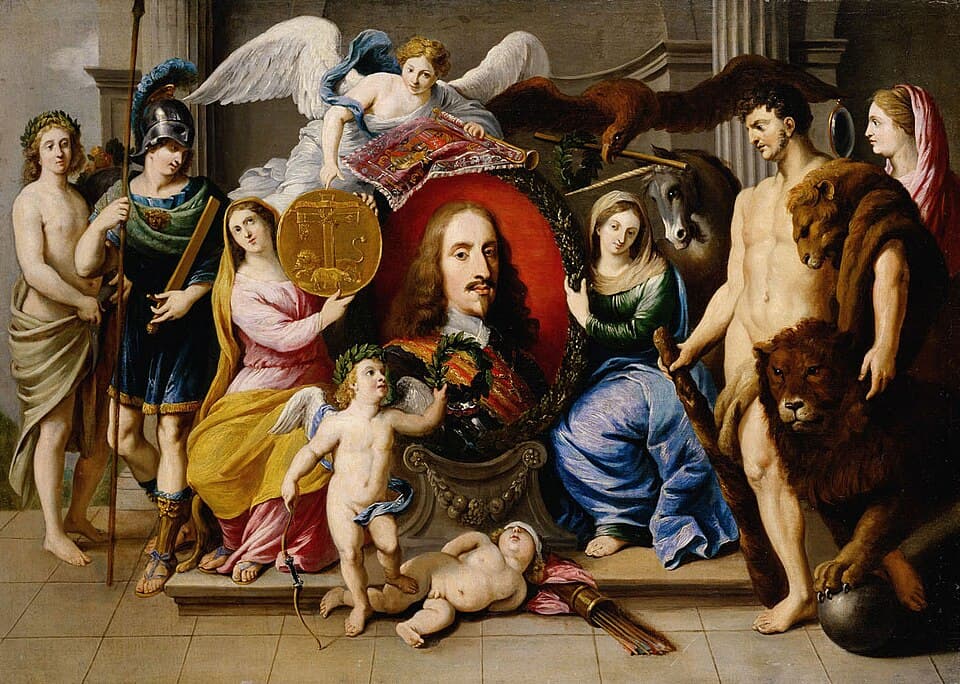
At the foot of Mount Oeta, where the pyre once smoked, a man in a wild beast's skin sat on a rock, his club laid across his knees. The sweat of the Underworld had not yet dried on his brow. He agreed to speak, in a low voice, as one confides what was paid for too dearly.
—They say the goddess Hera has pursued you since your first breath. Where does this anger come from?
I was born in Thebes, son of Zeus and Alcmene, a mortal. That is my whole crime: to exist. My father's wife never forgave my blood for being half-divine and wholly illegitimate. They say she slipped two serpents into my cradle, and that my infant hands strangled them before I could even speak. Later, it was she again who clouded my reason until I struck my own family with my own hands. That guilt no river can wash away. The twelve labors were not a glory I sought: they were the expiation imposed on me, the only path left to atone for the blood spilled. Hera made my life a series of traps, and yet, without her hatred, I would never have become what I am.
That is my whole crime: to exist.
—Why did you accept to submit to King Eurystheus, you whose strength surpassed his?
Because strength washes nothing away. The oracle of Delphi commanded me: to put myself at the service of Eurystheus, in Tiryns, and accomplish whatever he demanded. A man half as brave as I, who hid in a bronze jar when I brought back a live beast. The humiliation was part of the penalty. The Greeks have a word for what I sought then: not victory, but aretê, the excellence one attains only by bending pride under a task heavier than oneself. I bore his orders as one bears golden chains: the gold does not lessen the weight. Each completed labor did not erase the fault; it paid a part of it. And twelve were needed.
Gold does not lessen the weight of chains.
—The first of the labors was the Nemean Lion. How does one kill a beast that iron cannot wound?
At Nemea, my arrows bounced off its flank as off bronze. No blade bit that hide. I understood quickly: I must not cut, I must squeeze. I cornered it in its cave with two entrances, walled one up, and from the other side I took it in my arms. My hands closed on its throat and did not let go, despite the claws that tore my shoulder. When it was dead, I wanted to skin it, but no knife could pierce its skin. Its own claws served as my blade. Since then, that hide has never left me: I wear it on my shoulders. The first thing the beast taught me is that true strength begins where the weapon becomes useless.
I must not cut, I must squeeze.
—Facing the Lernaean Hydra, each severed head grew two more. What did that monster teach you?
That arms alone are fools. In the swamp of Lerna, I struck and struck, and the beast smiled at me with two new jaws with each blow. I could have struck until evening and only killed my own fatigue. It was my nephew Iolaus who held the torch: as soon as my sickle cut a neck, he cauterized the wound, and the charred flesh did not grow back. Fire did what the blade could not. The immortal head I buried under a rock, still alive. People remember me for a bull's build, but that day I learned that the hand that thinks is worth ten that tire. The club opens paths; it is cunning that closes them.
Arms alone are fools.
—The last labor took you to the Underworld, to fetch the dog Cerberus. What remains of a man who returns from there?
One does not fully return from the Underworld. Eurystheus had kept the worst for last: to bring back alive Cerberus, the three-headed dog that guards the gates of the realm of shadows. There, no club avails, no arrow: Hades allowed me to take him on condition that I master him without weapons. So I took him like the lion, in my arms, choking his three slobbering necks until he yielded. I dragged him into the light, and he howled to see the day he had never seen. When I set him down before the king, the man cowered in his jar, more dead of fear than the dead I had just left. I had crossed what no living man crosses. After that, no beast ever made me lower my eyes.
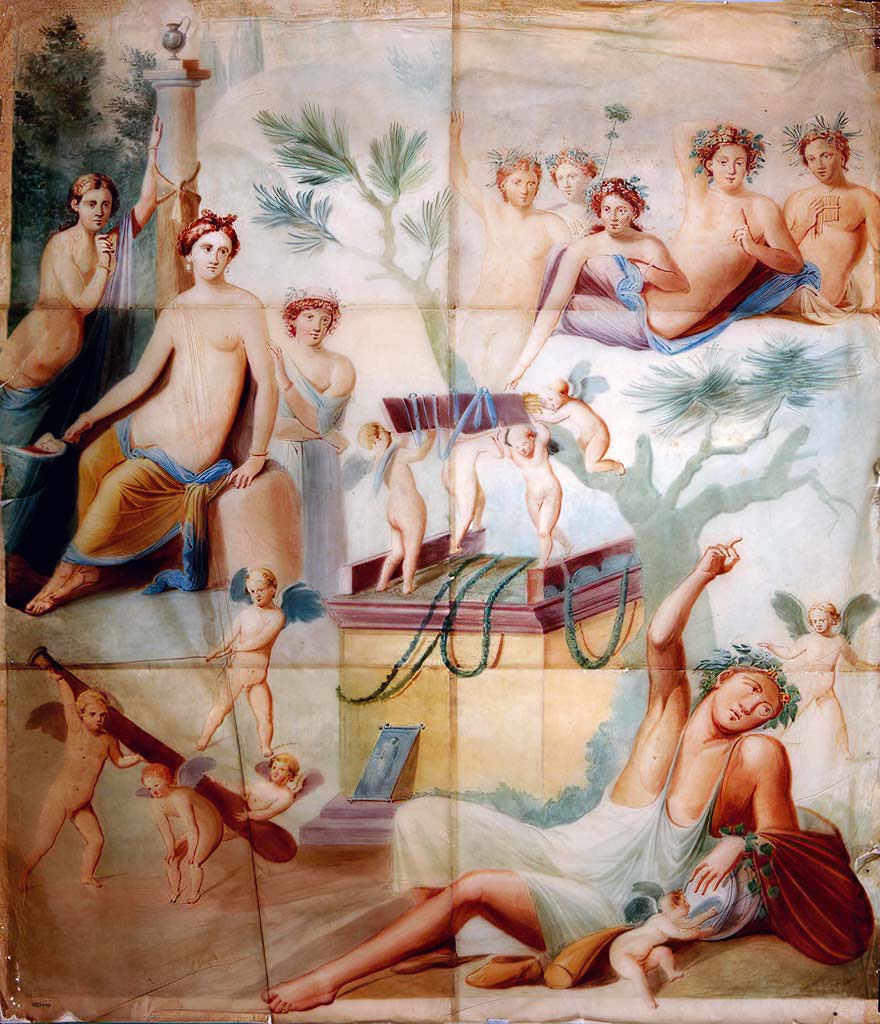
—Your club and the lion's skin follow you everywhere. What do these objects say about the one who bears them?
They tell the truth of me better than the bards. My club is not a king's sword, chiseled and vain: it is a trunk of hard wood that I tore and shaped, as raw as the arm that lifts it. It has no ornament because I need none. And the skin of the Nemean Lion, I wear it as another wears his purple: the beast's jaws cap my skull, its paws tie over my chest. No spear pierces this hide that no blade could ever wound. When they see me coming from afar, on the roads of the Peloponnese, they do not recognize a face: they recognize that silhouette of beast and wood. My weapons are my coat of arms. They tell not who I would like to appear, but what I have conquered.
My weapons tell not who I would like to appear, but what I have conquered.
—You are thought of as a man of brute force. Yet the bow also has its place among your weapons. Why?
Because one does not seize the sky bare-handed. At Lake Stymphalus, the bronze-feathered birds nested so high and so thick that no club could reach them. There, I had to flush them in a flock, then shoot them one by one with my arrows as they fled. The club is for what walks and bites; the bow is for what flies. He who knows only one way to strike will kill only one kind of enemy. They paint me on vases sometimes strangling a lion, sometimes bending my bow: that is because a hero is not an anvil; he is also the hand that chooses the tool. Later, those same arrows, dipped in the Hydra's gall, were to carry within them the poison that would undo me. One does not play long with the poison of monsters.
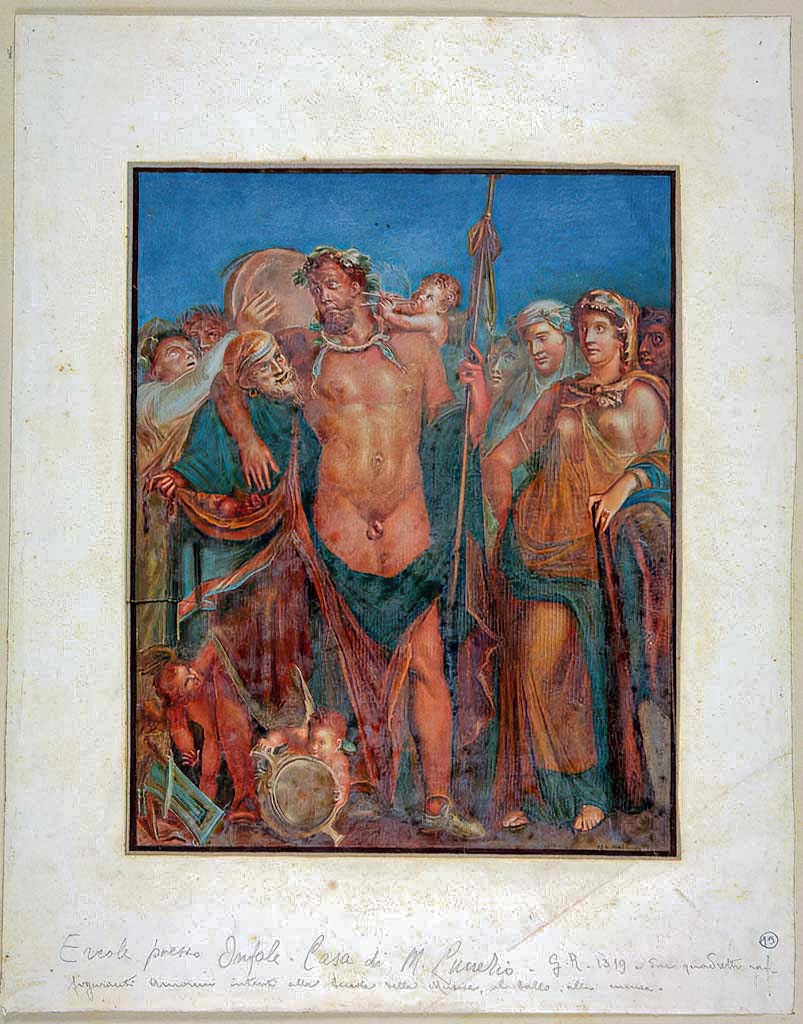
—You mention that poison. Tell us how a hero whom nothing could bring down finally fell.
No beast killed me. It was a tunic. My wife Deianeira, out of love and fear of losing me, smeared the fabric with the blood of a centaur I had slain—blood corrupted by the Hydra's gall, the same venom from my arrows. She thought she was mixing a love potion to keep me faithful; she mixed my death. As soon as I put on that cloth, the poison entered my flesh and burned it like an ember that cannot be torn away, for the tunic stuck to my bones. No living enemy could have done that. Such is the irony the gods reserved for me: I who had strangled the lion and tamed Cerberus, it was a wife's love that consumed me. The pain was such that I asked for only one thing: fire, to end it.
No beast killed me. It was a tunic.
—On the pyre of Mount Oeta, you awaited death. What did you find instead?
I had the pyre built with my own hands, on Mount Oeta, and I prayed them to set it alight, for no remedy could quench the burning. I awaited oblivion as a relief. But when the flames took my mortal part, that which I held from Alcmene, they did not touch the other, that from Zeus. The divine part does not burn. The smoke lifted me, and Olympus opened its gates to me—I, the illegitimate son whom Hera had wanted to destroy, I finally sat among the Immortals, reconciled even with her. The Greeks have a name for this passage from man to god: apotheosis. What I want to be remembered is this: it was not birth that made me a god, but the twelve pains. Immortality was not given to me. I earned it, labor by labor.
It was not birth that made me a god, but the twelve pains.
—Today athletes invoke your name and games are founded in your honor. How do you experience this fervor?
Men have made me the guardian of those who toil. The traveler on the roads calls on me before facing the passes; the wrestler, before entering the arena. I am even credited with founding, in honor of my father Zeus, the games celebrated at Olympia, where naked bodies compete as once I competed against monsters. This touches me more than all the statues: for these people do not celebrate a tranquil god sitting on his throne; they celebrate effort, sweat, the body that surpasses itself. It is aretê again, excellence wrested from fatigue. They tell me that beyond Greek lands, other peoples already venerate me under another name. Let them call me what they will: as long as they honor in me the one who never shrank from the task, they do not mistake the hero.
This imaginary interview was generated by artificial intelligence from sources documented in Hercules's profile. It dramatises what the figure might have said based on what we know about them, but does not constitute attested historical testimony. For primary sources and factual documentation, refer to the full profile.