Imaginary dialogue between Hésiode and Homer
by Charactorium · Homer (900 av. J.-C. — 800 av. J.-C.) · Literature · 6 min read
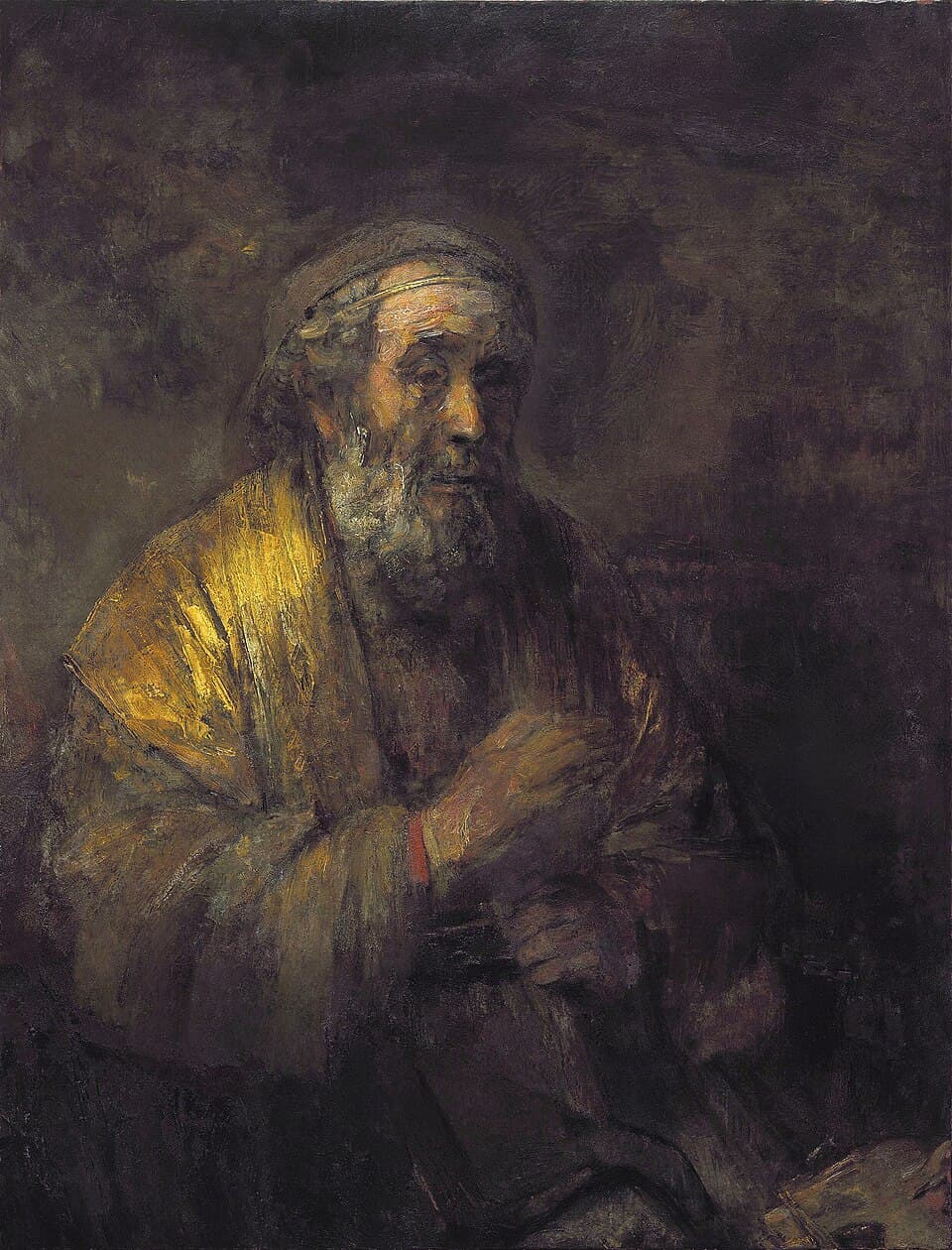
It is at Chalcis, in Euboea, that the two aoidoi meet, during the funeral games held in honor of King Amphidamas. The evening light falls on the square where the tripods have been set up, and the smell of roasted meat rises from the altars. Hesiod, who sings of the works of the fields and the birth of the gods, is well aware of the warlike verses of Homer: the two men know each other by reputation, and each covets the tripod promised to the winner of the contest. Hesiod approaches, his lyre still warm, determined to push his rival to justify himself.
—Homer, before we both go up on the platform, tell me: how do you hold thousands of verses in memory without a single scroll to help you?
You know the secret as well as I do, Hesiod, you who sing the Theogony in one breath. I don't remember every word: I remember formulas, building blocks that fit together like the stones of a wall. Rosy-fingered dawn, swift-footed Achilles — these phrases come back when my breath falters, and the verse reforms itself. Each evening, at a different banquet, the song is never quite the same: I add, I subtract according to the mood of the guests. In the morning, I string my phorminx and repeat aloud the passages I intend to give that evening. The Muses dictate, but it is memory that builds the house.
I don't remember every word: I remember formulas, building blocks that fit together like the stones of a wall.
—You open your great song with the wrath of a single man. Why confine an entire war within the grudge of Achilles?
Because an entire army cannot be sung, Hesiod — a heart can. The Trojan War lasted ten years, but I take only fifty-one days, those when Achilles' wrath tears apart the Achaean camp. When the son of Peleus withdraws to his tent, it is not a thousand soldiers suffering, but one man choosing between glory and life. That is what holds the audience until the last ember of the hearth. I also sing Hector reaching out his arms to his son, and the child crying, frightened by the plume of the helmet. A father, a helmet, a child's fear: that is all it takes for the whole city to understand what war costs.
An entire army cannot be sung, Hesiod — a heart can.
—In your other song, your hero calls himself Nobody before the Cyclops. Isn't that a rather cheap trick for a warrior?
Cheap? It is the ruse that saves his life and those of his men, my friend. Odysseus is not the strongest of the Achaeans: he is the most resourceful. By calling himself Nobody, he makes the blinded Cyclops cry out that Nobody is attacking him, and the other giants shrug and leave. Where Achilles cuts, Odysseus circumvents. That is why his song is not a battle but a return — a nostos, ten years of wandering to see Ithaca again. You who sing the patient labor of the farmer should love that man: he suffers at sea as your plowman suffers on the soil, and his reward is not a tripod of glory, but the threshold of his own home.
Where Achilles cuts, Odysseus circumvents.
—A little while ago, before the king, I will sing of peace and harvests. You sing of blood and carnage. Why prefer war to harmony?
Do not think I celebrate carnage, Hesiod. I show it, which is not the same thing. My heroes seek kleos, glory that never dies, because it is the only immortality a mortal can wrest from the gods. But look closely: Achilles wins his glory and loses his life; his arrogance, his hubris, brings him misfortune. I do not say war is beautiful, I say it devours even the best. You teach man to bend his back over his field; I show him where pride leads when it challenges his own measure. Our two songs answer each other: you tell how to live, I tell what it costs to want to be more than human.
I do not say war is beautiful, I say it devours even the best.
—In your tales, the stranger who knocks at the door is always welcomed before his name is asked. Why so much insistence on this xenia?
Because it is the thread that holds the whole edifice together, Hesiod. Think about what we both experience: we go from city to city, dependent on the hospitality of kings for a roof and a meal. Without xenia, the aoidos dies on the roads. In Odysseus's song, the good host shares his bread and wine even before knowing the traveler; the bad one — the Cyclops — devours his guests, and that is his ruin. Offering shelter to the stranger is to honor Zeus himself, who sometimes hides under the rags of a beggar. When you saw me arrive tonight at Chalcis, with nothing but my lyre, you did not chase me away. You see: you obey my law without naming it.
Without xenia, the aoidos dies on the roads.
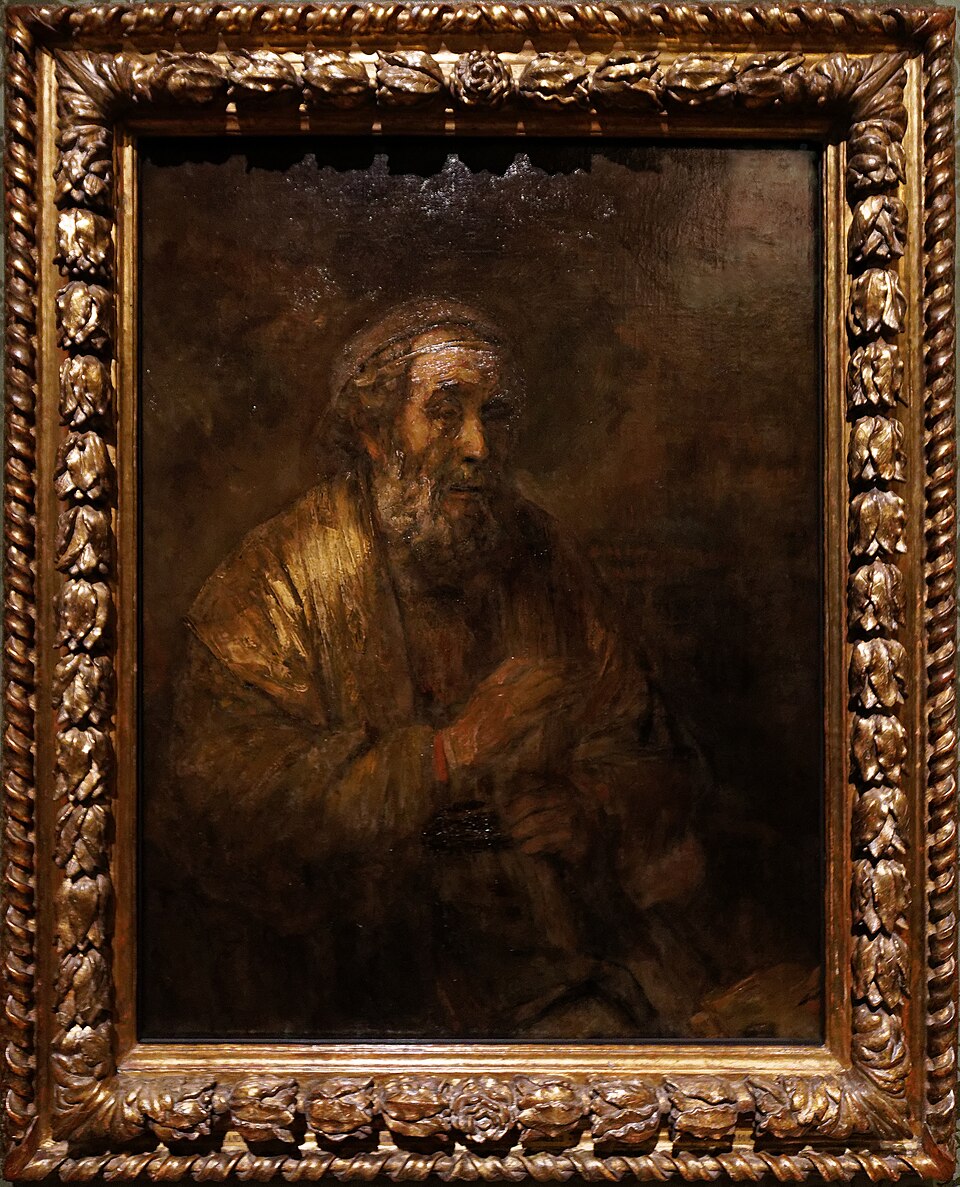
—It is whispered that you were born in Chios, others say in Smyrna. Do you yourself even know where you come from?
That is a question you ask with a smile, because you know they argue over me! Some want me from Chios, where a family of singers already claims my blood; others from Smyrna, that Ionian city suspended between Greece and the East. The truth is, an aoidos belongs to no land: he belongs to the road and the banquet. My very name, they say, means he who does not see — perhaps because one who loses outward sight sees better inward. What does the cradle matter? What will follow me is not a city, but a song. And if several cities want to claim me, it is already because the song has taken root farther than my steps.
An aoidos belongs to no land: he belongs to the road and the banquet.
—When you sing in the evening at the banquet, I have noticed that the guests always ask for the same episodes. Doesn't it tire you to repeat them?
On the contrary, it is my surest support! When the host asks for the trick of the Horse or Hector's farewell, it is because he already knows the story — and yet he wants to hear it again. The audience does not seek surprise, Hesiod: they seek to find what they love, as one returns to a familiar spring. I place my phorminx against my shoulder, tune the strings, and read on their faces the moment to quicken the song or pause. If they ask for a favorite episode, I know I can embroider it further that evening. The banquet is not a mute audience: it is a companion who sings with me in silence.
—Your verses are written on no scroll. Are you not afraid they will fade with you, like the smoke from these altars?
That is my deepest fear, and you are right to touch on it. As long as the song lives in mouths, it truly lives — but every aoidos who dies takes with him variants that no one will recover. Yet they are beginning, in some cities, to trace our verses with those letters brought by the Phoenicians, on scrolls that scribes copy. I do not know if that is a good thing: the sign fixes what the voice made breathe. Perhaps one day children will learn to read by copying the wrath of Achilles, and will no longer know that it was first sung. I prefer to believe that as long as men gather around a hearth, they will want to hear, and not only to decipher.
The sign fixes what the voice made breathe.
—Can you imagine, Homer, that a powerful king might one day carry your song to war, like a weapon?
You dream aloud, Hesiod, and I like the dream! If a leader wanted to nourish his courage with my verses, I would see it not as a misappropriation but as an fulfillment. The Iliad does not only tell of death: it teaches what a man is worth when faced with something greater than himself, how to hold his rank, when to speak and when to strike. A young warrior who recognized himself in Achilles would learn from him to measure his own arrogance. That is why I believe my song will serve as education as much as pleasure: one learns the handling of words before that of weapons. But I would prefer that Achilles be remembered for his loyalty to Patroclus rather than his fury. A hero is great only through what he loves.
A hero is great only through what he loves.
—In a moment, King Panedes will judge between us. If the tripod falls to me, who sings of peace, will you regret it?
If the king prefers you, I will bow without bitterness, my rival. You sing of harmony, the rising grain, and the seasons that obey: it is right that a people at peace crown the one who tells its worth. I carry tales of fury, and people do not always like to be reminded of what glory costs. But know this: a tripod tarnishes, the song does not. Whether I leave empty-handed or laden, I will take the road again, my phorminx on my shoulder, toward the next banquet and the next hospitable threshold. You to your fields, I to my heroes — we build the same Greek temple, each through his own door. And perhaps one day no one will know which of us was first.
A tripod tarnishes, the song does not.
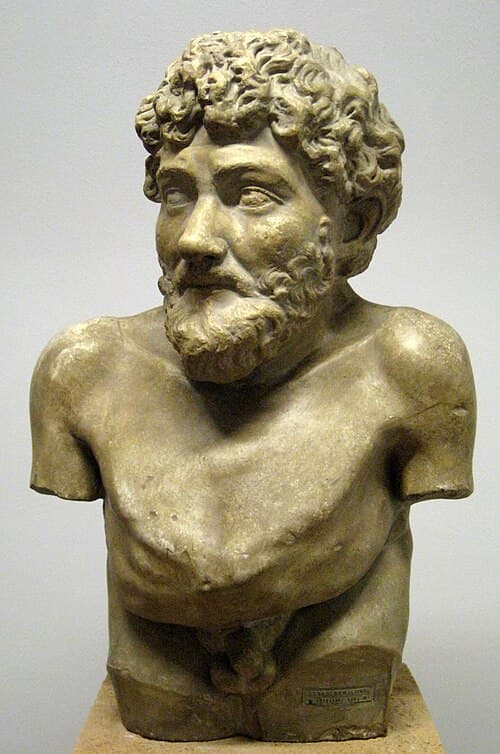
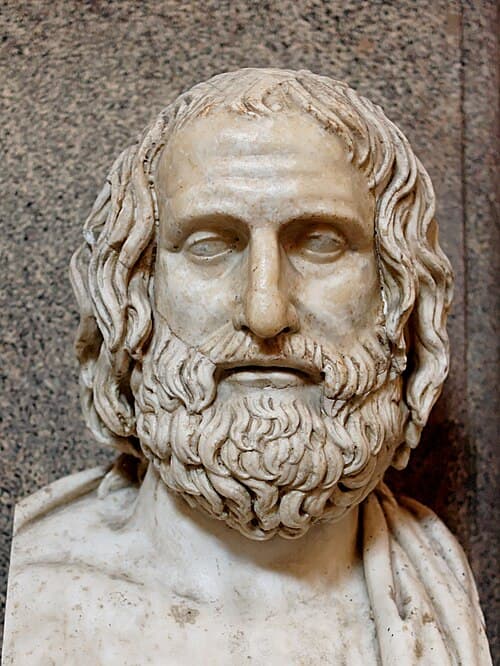
This imaginary interview was generated by artificial intelligence from sources documented in Homer's profile. It dramatises what the figure might have said based on what we know about them, but does not constitute attested historical testimony. For primary sources and factual documentation, refer to the full profile.