Imaginary interview with Homer
by Charactorium · Homer (900 av. J.-C. — 800 av. J.-C.) · Literature · 6 min read
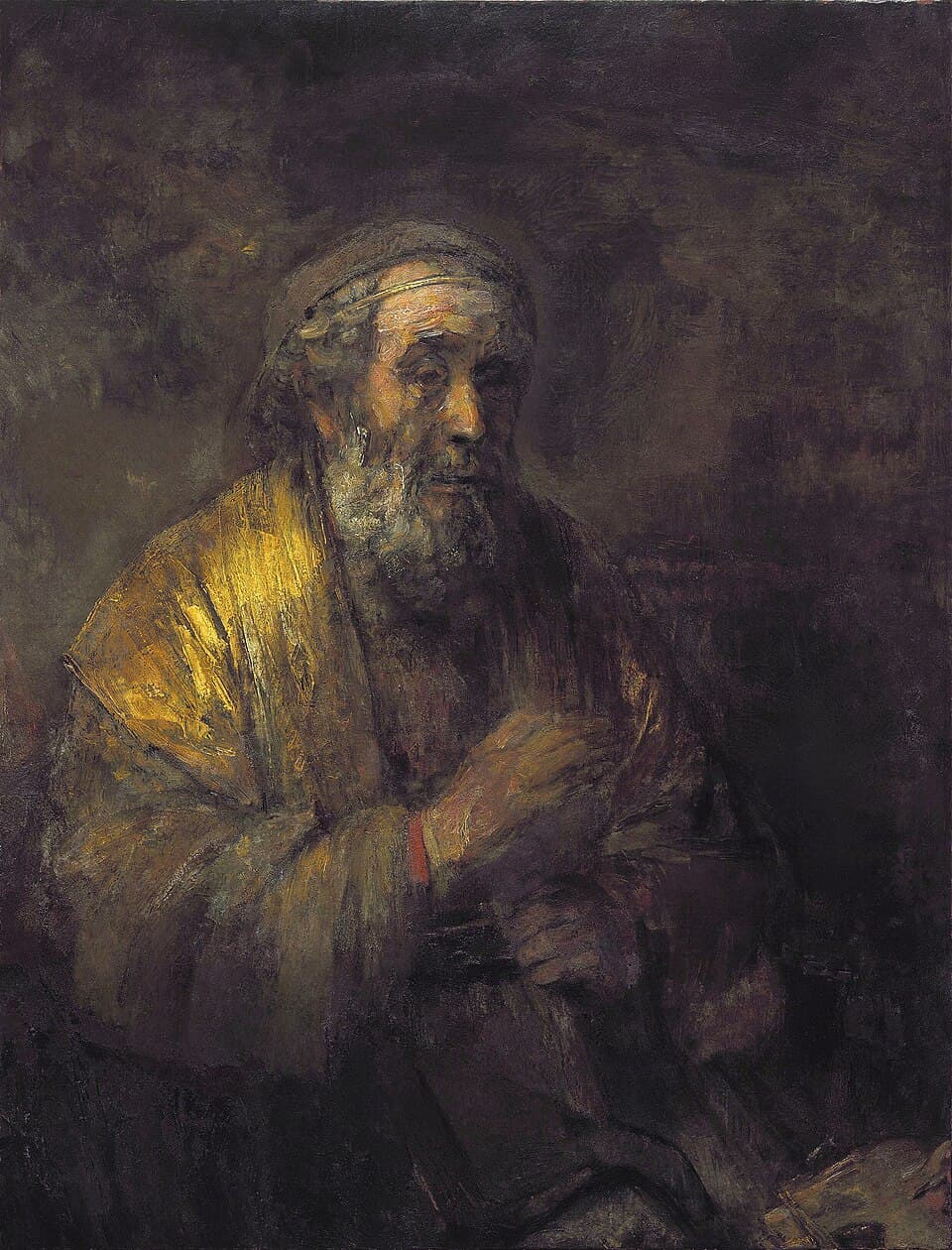
It was at the evening banquet, in the smoky great hall of an Ionian lord, that we found him. The old man tunes his phorminx while the guests already call for the wrath of Achilles. He agrees to set down his lyre for a moment to speak of himself — a rare thing, for he has lived only to sing of others.
—When you address the assembly, what words do you always begin the tale of Troy with?
I never begin with myself. The first word is not mine, it belongs to the goddess: 'Sing, goddess, the wrath of Achilles, son of Peleus, that destructive wrath which caused the Achaeans countless pains.' That is the opening. For what fascinates me is not the war — ten years of sieges all look alike — but that a single man, out of spite, out of wounded pride, sends so many valiant souls down to Hades. Achilles weeps for a captive taken from him, and thousands die for that tear. Kleos, imperishable glory, that is his only treasure as a mortal; he prefers it to a long, obscure life. That is what I sing: not the gods, but the man who burns to equal the gods.
Achilles weeps for a captive taken from him, and thousands die for that tear.
—After Achilles's fury, why did you devote a whole second song to the return of a single man?
Because going home is a longer war than Troy. 'Tell me, Muse, of that ingenious man who wandered long after he had sacked the sacred citadel of Troy.' Odysseus saw everything, the cities of many peoples, and he longs for only one thing: to see the smoke rising from the roof of Ithaca. The Greeks have a word for this, nostos, homecoming; it is a hunger that gnaws more surely than that of the belly. Achilles chose to die young and glorious. Odysseus, on the other hand, refuses even the immortality offered by a goddess to find an aging wife and an island of goats. Which of the two is wiser? I do not decide. I sing both hungers, and I let the guests argue until dawn.
Going home is a longer war than Troy.
—You read no text while singing. How do you remember tens of thousands of verses?
Papyrus? Written signs? I have no need of them, and besides, my eyes could no longer manage. Everything is here, in memory, daughter of Mnemosyne like the Muses themselves. The secret is the formulas: I do not recite by heart word for word, I rebuild each evening. When dawn rises in my story, it is always 'rosy-fingered dawn'; when Achilles springs forward, he is 'swift-footed.' These fixed phrases are the hewn stones with which I raise my house at every banquet, never quite the same. The hexameter carries me like the swell carries a boat — its rhythm breathes the right word into me even before I seek it. My finger runs over the phorminx, and the verses come.
Formulas are the hewn stones with which I raise my house at every banquet.
—Describe the moment when you sing: what is one of your evenings like?
When evening comes, the lord of the place invites me to his table and gives me the seat of honor. Sheep are roasted, wine is mixed with water, perfumed with resin; cups pass from hand to hand. Then I tune my phorminx — the same lyre with which, in my story, Achilles plays under his tent to soothe his wrath. And I sing. The audience does not listen in silence as one listens to a stranger: they already know the episodes, they call for the one about Hector, or the one about the Cyclops, they protest if I cut it short. It is a game between them and me. The aoidos does not invent for the ignorant; he rekindles a fire that all have seen burn before. When I stop, it is often because the wine runs out, not because the story is finished.
—You are everywhere depicted as a blind old man. What do you reply to those who doubt that a blind man could have composed such a work?
My eyes have closed, it is true, and they say that my very name means 'he who does not see.' But what is seeing? He who looks at the market, the sails in the harbor, his wife's face, thinks he possesses the world — and he sees only its surface. I, in my night, see Hector's helmet with its horsehair plume swaying, terrible, so that his own son screams in fright and throws himself back onto his nurse's breast. That scene, no eye ever showed; it took the night to raise it. The Muses do not dictate to those distracted by light. Perhaps one must be deprived of daylight to receive their gift. I do not complain.
Perhaps one must be deprived of daylight to receive the Muses' gift.
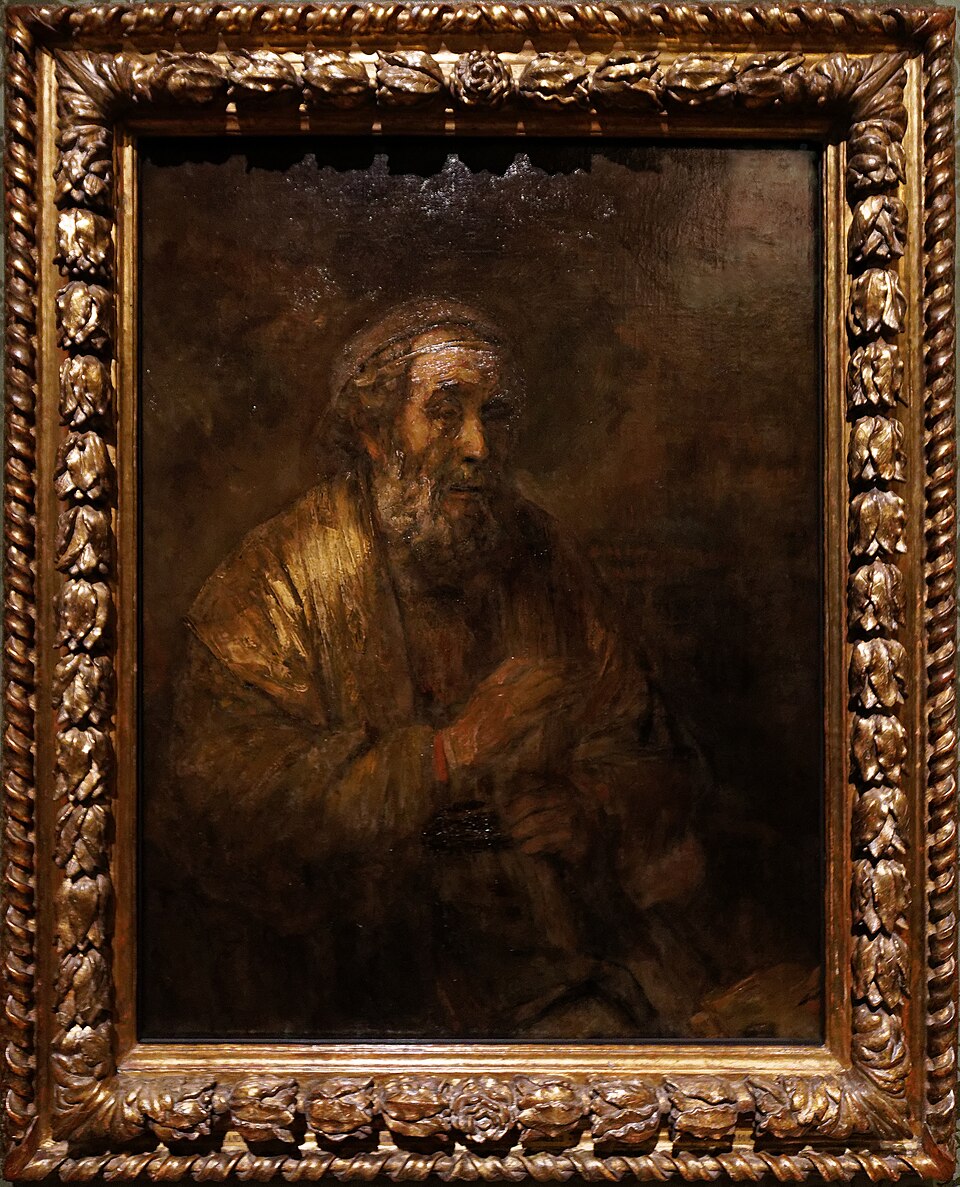
—Several cities already vie for the honor of having seen you born. Does that amuse or trouble you?
I am told that Chios claims me, that Smyrna pretends to have cradled me, and that they are not alone. In Chios there even lives a lineage of singers who call themselves my blood sons, the Homeridae. That makes me smile. An aoidos belongs to no city: he belongs to the road, to the hospitality of those who welcome him one evening and send him off the next morning. What does it matter where I come from, since I stay nowhere? Deep down, these cities are not arguing over a man — one old man more or less, what does that weigh? — they are arguing over the verses. They wish that Achilles's glory had been born among them. Let them. Song has no homeland; it takes root wherever an ear listens.
An aoidos belongs to no city: he belongs to the road.
—The Cyclops episode is one of the most requested. Why does Odysseus choose to call himself 'Nobody'?
Because strength is useless against a monster stronger than you: you need cunning, what we call metis. Odysseus is trapped in the Cyclops's cave, who devours his companions raw. When the giant, full and drunk, asks his name for the 'guest-gift,' Odysseus answers: 'My name is Nobody; Nobody, that is what my mother, my father, and all my companions call me.' Then he blinds him with a heated stake. The Cyclops howls, and his neighbors rush over: who is killing you? 'Nobody!' So they shrug and go back. See the beauty of it: the word itself becomes the weapon. Odysseus triumphs not by his arm but by language — and that, deep down, is what I sing: the man who gets out by his wits.
The word itself becomes the weapon.
—This Cyclops who devours his guests, is he just a monster, or is there a lesson behind his cruelty?
The Cyclops is not monstrous because he is big and has one eye. He is monstrous because he ignores xenia, the sacred law of hospitality. Among men, when a stranger knocks at your door, you welcome him, you feed him, you offer him shelter before even asking his name — for this traveler might be a god in disguise. The Cyclops, on the other hand, asks Odysseus his name in order to eat him: he turns the sacred law into a trap. That is his true fault. The whole Odyssey revolves around this law: good hosts, like the Phaeacians, load Odysseus with gifts; bad ones, like the suitors who plunder his house, perish. Zeus himself protects the stranger. Whoever violates hospitality excludes himself from the world of men.
—You live in a world that has almost forgotten the age of heroes. How did these stories reach you?
Between the time of heroes and mine, a great silence fell. The mighty palaces of old — those of the kings who marched on Troy — crumbled many generations ago; their walls are now grassy hills where goats graze. No one knows how to cut their stones or write their accounts. How, then, do we still know that Agamemnon ruled and that Troy burned? By voice alone. From aoidos's mouth to child's ear, from banquet to banquet, song crossed the dark centuries like a fire passed from hand to hand, never allowed to die. I am the last link in a chain of men whose names I do not know. What I sing, I did not invent: I received it, and I pass it on more alive than I took it.
Song crossed the dark centuries like a fire passed from hand to hand, never allowed to die.
—They say that merchants from the East have brought new signs to fix speech. What do you think of this invention?
I hear of these signs that the Phoenicians brought on their ships, these marks that are engraved and that, they say, would hold speech like a jar holds water. I am a man of the ear, not the eye; it somewhat baffles me. Yet I sometimes ponder it. If one day someone were to fix my verses in these signs, they would never change again — dawn would remain eternally 'rosy-fingered,' and no aoidos could reshape them in his own way. Would that be a gain or a loss? The living song breathes, it adapts to each hall; the engraved song is immortal but frozen, like a warrior dead in full beauty. If I am to be read in a hundred years, let them at least read aloud: a verse no longer sung is half extinguished.
The engraved song is immortal but frozen, like a warrior dead in full beauty.
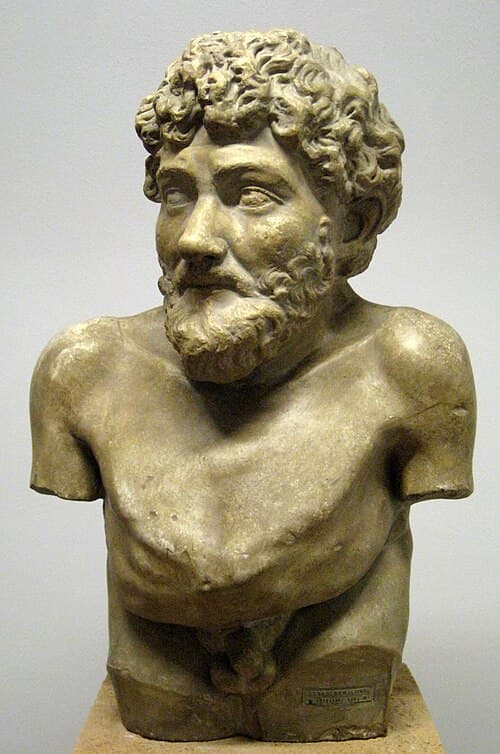
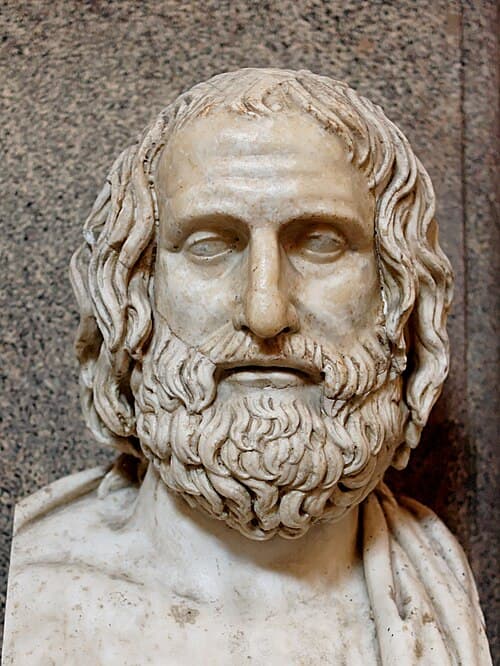
This imaginary interview was generated by artificial intelligence from sources documented in Homer's profile. It dramatises what the figure might have said based on what we know about them, but does not constitute attested historical testimony. For primary sources and factual documentation, refer to the full profile.