Imaginary interview with Horus
by Charactorium · Horus · Mythology · 5 min read
The sanctuary of Edfu sleeps under the midday heat, its walls covered with reliefs where a falcon pierces a hippopotamus. In the dimness of the naos, where priests each morning place bread and beer, a presence can be sensed, royal and winged. The god agrees to speak — in the present of tradition, as one speaks since the dawn of the dynasties.
—How did you enter this battle against your uncle Set?
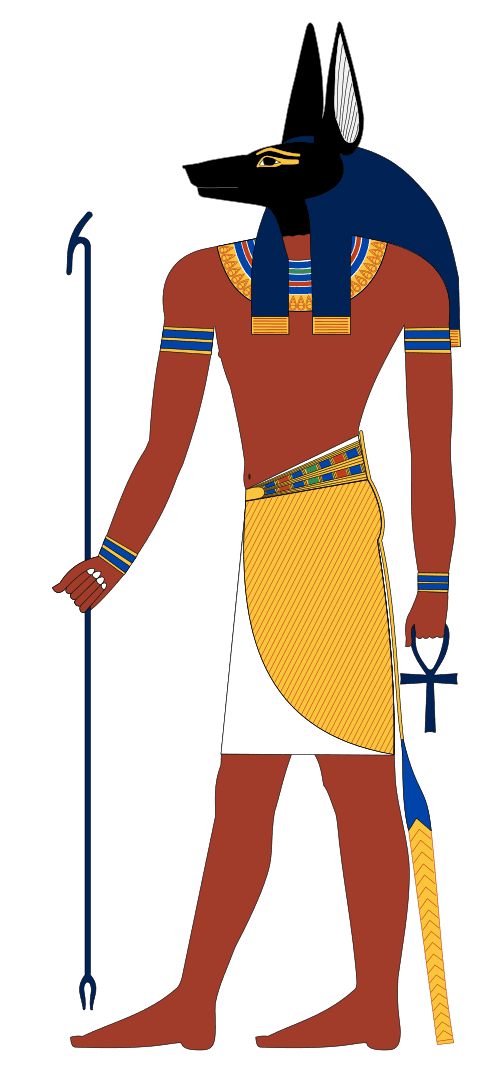
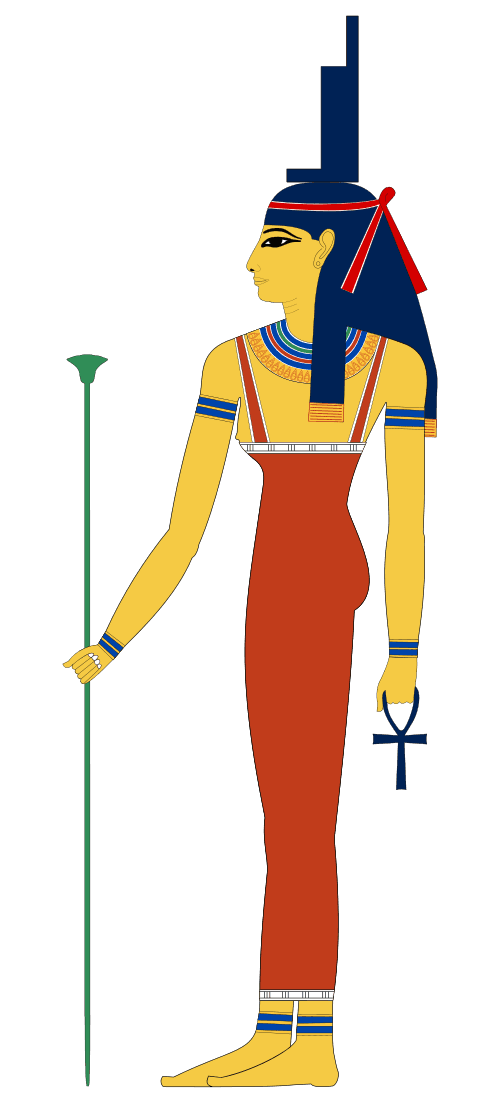
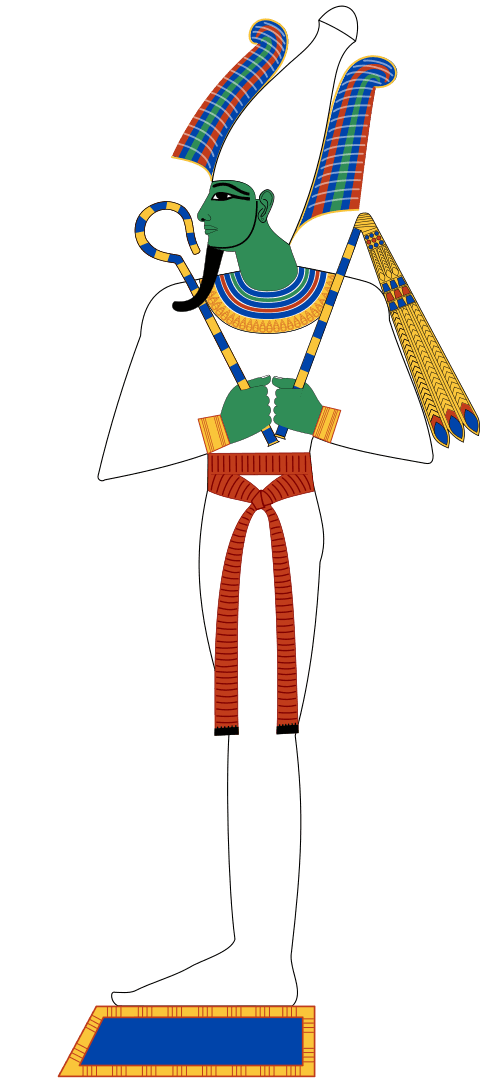
One is sometimes born from a bereavement. My father Osiris lay dismembered, and my mother Isis hid me as a child in the thickets of Khemmis, in the heart of the Delta, so that Set's hand would not find me. I grew up with a single certainty lodged in my chest like a point: the throne of Egypt belonged to me, because it had belonged to my father. What men call The Myth of Horus and Osiris is not an ancient story to me; it is my own flesh. Set embodied chaos, drought, murder; I am the order that rises against him. Avenging my father and claiming my inheritance were one and the same gesture — and all Egypt emerged ordered from it.
Avenging my father and claiming my inheritance were one and the same gesture.
—Why did you bring this dispute before an assembly of gods rather than settle it by force alone?
Because a throne taken by force is merely plunder, whereas a throne recognized becomes legitimate. Set was powerful, cunning, and he did not fail to remind the Ennead of it. So I pleaded. For years, before the tribunal of the gods, I opposed my right as a son to his claim as a brother — what your scribes have recorded on the Chester Beatty Papyrus I. Isis used her wiles, Set his violence, and I my patience. When the verdict finally fell in my favor, it was not only Horus who won: it was the very idea that power must be transmitted according to Maat, the just order, and not according to brutality. Every pharaoh who will ascend after me will inherit this judgment.
A throne taken by force is merely plunder; a throne recognized becomes legitimate.
—You are always depicted with a falcon's head. What do those two eyes, said to be celestial, mean?
Look at the falcon cleaving the sky: nothing escapes him, neither the hare in the sand nor the barque on the Nile. That is why men gave me this head. My right eye is the Sun, my left eye the Moon; together they sweep day and night, and nothing of the world remains hidden. When the falcon soars above the temples, it is not a bird you see, but vigilance itself poised over Egypt. My eyes do not merely gaze: they govern. The sky is not a roof above your heads; it is my outstretched plumage.
The sky is not a roof above your heads; it is my outstretched plumage.
—The Eye amulet, the Wedjat, is found everywhere in Egypt. Where does its power come from?
From a wound. In the fury of battle, Set tore out my eye and broke it into pieces. But what was torn can be made whole: the eye was reconstituted, restored, healed — and from that healing was born the Wedjat. That is why your people wear it around the neck, carve it in tombs, slip it against the skin of the living and the dead: it says that what is mutilated can become complete again. My torn-out eye became the most beloved talisman of Egypt, not despite its wound but because of it. Each amulet silently repeats the same promise: protection, wholeness, return to integrity. Pain, among the gods, knows how to become remedy.
My torn-out eye became the most beloved talisman of Egypt, not despite its wound but because of it.
—You say that every pharaoh is you. How can a mortal man be a god?
He does not become one: he receives it. As soon as a king dons the double crown, the Pschent that unites Upper and Lower Egypt, he ceases to be merely a man — he becomes the 'Living Horus', my face turned toward the living. The royal lists, down to that engraved for Seti at Abydos, give this title to every sovereign upon his accession to the throne. Thus I do not rule from the sky as a spectator: I rule through him, in him, through his hands that dispense justice and build temples. When the king upholds Maat, it is I who maintain the order of the world. And this belief did not last a season: it held for three thousand years.
The king does not become a god: he receives it.
—What did it mean for the Egyptians to place their king under your name?
A guarantee against chaos. Remember: before all else, there was Narmer uniting the Two Lands, and already the king claimed the falcon. As long as a Living Horus sits in Memphis, the Nile rises, the harvests grow, order holds. Should that king fall, Egypt fragments — your chroniclers saw it when the Old Kingdom collapsed and my royal cult scattered. The pharaoh was therefore not a tyrant set above the people: he was the pivot where heaven and earth were tied together. By naming him with my name, the Egyptians told themselves that the world had a guardian, and that guardian had a face.
As long as a Living Horus sits, the Nile rises and order holds.
—Beyond the king, what is your office in the sky itself?
I traverse the firmament. In the morning I am Horakhty, Horus of the two horizons, the sun that rises and drives away shadows; at noon I dominate the daytime sky from the height of my course. The priests understood: they perform their rituals at dawn to greet my return, as one welcomes a traveler who has conquered the night. The sky is not a void to me; it is a path I retrace each day, faithful, from east to west. And when the day declines, I yield to the nocturnal deities, knowing I will reappear. This regularity, this pulse of the sun, is the very breath of Egypt.
The sky is not a void to me; it is a path I retrace each day.
—You are sometimes associated with the great sun god Ra. How can two gods be one?
Because light does not divide. At Heliopolis, heart of solar theology, the priests saw that my celestial flight and the course of Ra were one and the same flame — and from this evidence was born Ra-Horakhty, where our two names join like two rivers in a single bed. I then cross the sky in the solar barque, the Mandjet, that ship which carries the day from one horizon to the other. The gods of Egypt do not envy each other's domains: they merge, they enrich themselves, they add their strengths. Whether I am falcon of the sky or winged sun disk spread above temple gates, it is always the same power that watches — that which prevents the night from prevailing.
The gods of Egypt do not envy each other's domains: they merge.
—You receive us at Edfu. What does this temple represent for you?
It is my stone dwelling, the best preserved of all. Your builders raised it patiently, generation after generation, from the time when the Ptolemies reigned — nearly two centuries of work to erect my walls. And on these walls, they engraved my battles: one sees me harpooning Set transformed into a hippopotamus, one reads the Hymn that hails me as lord of the sky, son of Osiris and Isis. Here, the priests serve me daily as one serves a king in his palace: they open the sanctuary, present offerings, close the door of the naos on the secret. A god without a temple is but a rumor; at Edfu, I am at home.
A god without a temple is but a rumor; at Edfu, I am at home.
—Your cult has spanned millennia. Did you expect to last as long as Egypt itself?
A god does not count centuries as a scribe counts sacks of grain. But I see the loyalty of my people, and it amazes even me. From Narmer uniting the Two Lands to the priests of Edfu under the last Ptolemies, they never ceased to pronounce my name, to carve my eye, to crown my kings. Even when strangers came from the north and recognized me under other features, it was still me they hailed. As long as a falcon soars above the Nile, as long as a hand slips the Wedjat around the neck of a child or a dead person, I will watch. Dynasties pass; the sky, however, remains open.
Dynasties pass; the sky, however, remains open.
This imaginary interview was generated by artificial intelligence from sources documented in Horus's profile. It dramatises what the figure might have said based on what we know about them, but does not constitute attested historical testimony. For primary sources and factual documentation, refer to the full profile.