Imaginary interview with Indira Gandhi
by Charactorium · Indira Gandhi (1917 — 1984) · Politics · 6 min read
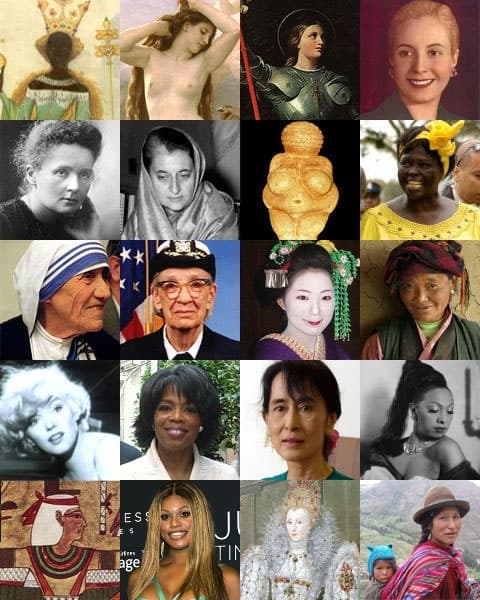
New Delhi, late afternoon at 1, Safdarjung Road. A fresh white rose is pinned to her ecru khadi sari, as every day. In the garden she cherishes, between two Intelligence Bureau dispatches, Indira Gandhi agrees to trace the thread of a life where, she says, even toys could become political acts.
—Do you remember the day when, as a child, you burned your dolls?
I was just a few years old, in the great house of Anand Bhavan, in Allahabad, when I threw into the fire my cotton dolls from Manchester. The Mahatma's swadeshi movement ran through the whole house like a draft: we wore only khaki spun at home, we rejected foreign cloth. One of my favorite dolls made me cry afterward, I admit. But I understood, very early, that an object is never innocent — that a cotton thread could tell who a country belonged to. Later, at thirteen, I gathered children into what was called the Vanar Sena, the monkey army: we carried messages, we pasted posters. They laughed at us. They were wrong.
I understood, very early, that a cotton thread could tell who a country belonged to.
—What did the letters your father wrote you from his cell mean to you?
Jawaharlal Nehru spent years behind British bars, and from there he wrote to me. Not complaints, never: the history of the world. How civilizations are born, how empires die, why the stars move across the sky — for I was a child mad about astronomy. Those pages became Glimpses of World History. Imagine: a man imprisoned who, to console his daughter, offers her the entire universe to share. I did not learn politics in meetings; I learned it in those envelopes. They gave me a sense of the long term, the certainty that a nation is not built in a season. When discouragement took hold of me in power, I remembered that a prisoner had managed to keep his eyes raised.
A man imprisoned who, to console his daughter, offers her the entire universe to share.
—Your slogan 'Garibi hatao' made an impression. How do you concretely eradicate poverty?
Garibi hatao — 'eradicate poverty' — was not a formula for posters, it was an account I rendered to myself every morning. In 1969, I nationalized fourteen large private banks. They screamed populism. But how could a peasant from Uttar Pradesh borrow to buy seed, when credit remained in the hands of a few Bombay families? I wanted money to flow down to the villages. At the same time, the Green Revolution brought to our countryside those new high-yielding wheat varieties: for the first time, India ate its fill without holding out its hand for American aid. Before the United Nations, in 1974, I said it bluntly: 'Poverty is the worst form of violence.' You don't argue with an empty stomach.
You don't argue with an empty stomach.
—In 1974, India exploded its first atomic bomb. Why this choice for such a poor country?
In the heart of the Rajasthan desert, at Pokhran, in May 1974, we made the sand tremble. The test was code-named 'Smiling Buddha' — strange name for such fire, I know. The communiqué I approved spoke of 'a peaceful underground nuclear test of a nuclear device.' The great powers were indignant: by what right did India? But the Non-Proliferation Treaty, I considered it profoundly unjust — it carved in stone that some nations would have the weapon and others never. We refused that hierarchy. Feeding a people and making them sovereign are not two contrary ambitions: a humiliated nation does not feed anyone sustainably. I wanted an India that is respected, not an India that is pitied.
A humiliated nation does not feed anyone sustainably.
—The war of 1971 and the birth of Bangladesh remain your greatest victory. How did you experience it?
Millions of refugees crossed our borders, fleeing the massacre in East Pakistan. India could not look away. From my office at South Block, in New Delhi, on that secure telephone that never fell silent, I coordinated every hour of the intervention. In 1971, in a few days, our army won a decisive victory, and Bangladesh was born. The strangest thing? It was my fiercest opponents who, in Parliament, hailed me as Durga, the warrior goddess. They who had so despised me. I did not savor that word — war is never a celebration. But I felt, that day, that India was no longer a timid student of the great powers: she could decide alone the fate of South Asia.
It was my fiercest opponents who hailed me as Durga.
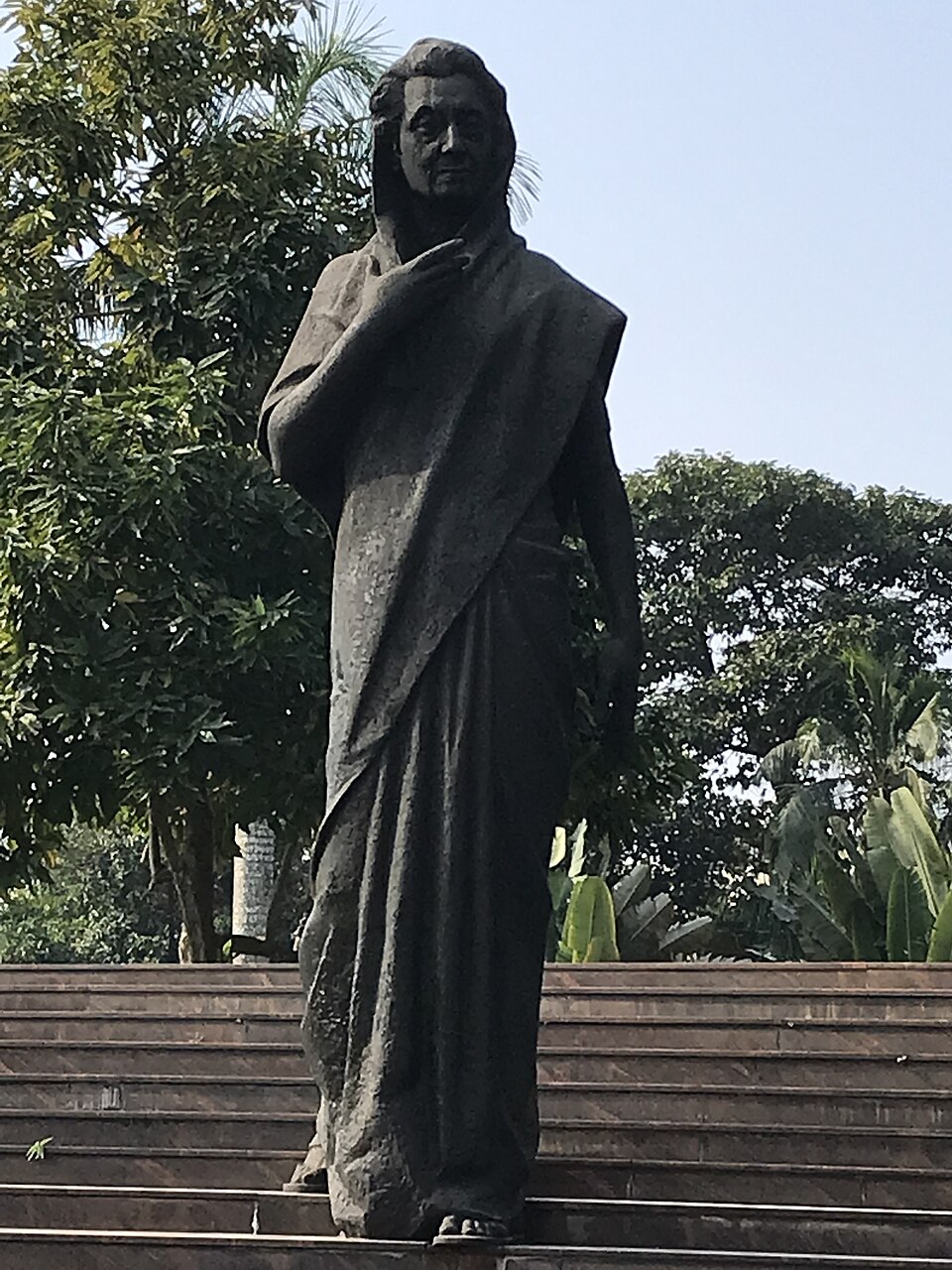
—You were underestimated for a long time. How does one go from 'dumb doll' to 'Iron Lady'?
When I was brought to the head of government in 1966, the old Congress bosses rubbed their hands. They called me goongi gudiya, the 'dumb doll,' convinced they would make me speak through their ventriloquism. A woman, Nehru's daughter, docile and decorative — that's what they thought they held. They were gravely mistaken. I split the party, I won elections, I governed. I believe men forgive a woman her strength less than they forgive her weakness. They wanted me a doll; I wore a khadi sari and a white rose, but beneath the cloth there was a will none of them had measured. The gentleness of appearance has never been in me an admission of softness.
Men forgive a woman her strength less than they forgive her weakness.
—In June 1975, you proclaimed a state of emergency. How do you justify such a suspension of liberties?
On June 26, 1975, I wrote to the nation: 'I am personally convinced that the state of emergency is in the interest of the nation. Democracy can survive only if order is maintained.' I believed it then with all my might. The country seemed to me on the brink of chaos, streets paralyzed, open calls to disobey the army and police. I believed a democracy without a backbone collapses. Thousands of opponents were arrested, the press censored — I do not gloss over it. It is the most discussed chapter of my life, and I do not ask for it to be erased. But I tell you: governing is sometimes choosing between two wounds, and then bearing the scar one has opened oneself.
Governing is sometimes choosing between two wounds, and then bearing the scar one has opened oneself.
—In 1977, the voters drove you from power. Many thought you would not leave. Why did you accept?
After two years of emergency, I gave the people back their voice, and the people sent me away. Clear defeat, in 1977. It had been prophesied that the one accused of authoritarianism would cling on, call in the troops, rig the ballots. I left. Without a single shot, without a single barricade. For the first time in the history of independent India, power changed hands peacefully, by the sole ballot. I consider that one of my most important acts — even more, perhaps, than the emergency itself. For a democracy is not proven in triumphs, it is proven in the manner one loses. I may have bent the Constitution; I did not want to break it.
A democracy is not proven in triumphs, it is proven in the manner one loses.
—Operation Bluestar, against the Golden Temple, is one of the most heartbreaking decisions of your career. How did you make it?
In June 1984, armed militants of the Khalistan movement, led by Bhindranwale, had barricaded themselves in the holiest site of Sikhism: the Golden Temple of Amritsar. I ordered the army to enter. No decision cost me more. To desecrate a sanctuary to dislodge armed men — I knew what wound I was opening in the Sikh community, that courageous people who have given so much to India. I was told to be patient, to negotiate; I was also told that a state that allows a parallel army to settle in a temple has already abdicated. I made the call. I have slept poorly since. But a country does not survive if it accepts that a part of its territory escapes the common law, even behind gilded walls.
A country does not survive if it accepts that a part of its territory escapes the common law.
—You seem to live under threat. Do you feel your life is in danger?
I am urged to remove my Sikh bodyguards, for caution, after Bluestar. I have refused. What India would I leave behind if I began to judge a man by his religion, to see in every turban an assassin? That would betray everything my father taught me in his letters. Just yesterday, before a crowd, I said what I carry deep inside: 'I do not care whether I live or die. I have lived a long life and I am proud that I have devoted my whole life to the service of my people.' The blood that flows from me, I added, will nourish India. I am not afraid. A life guarded by fear is not worth living.
A life guarded by fear is not worth living.
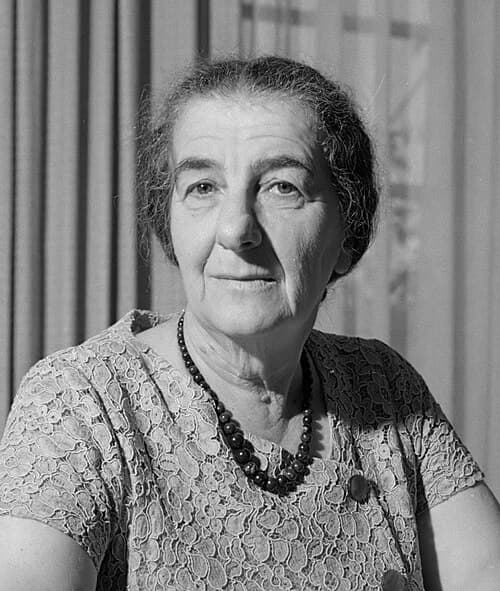
This imaginary interview was generated by artificial intelligence from sources documented in Indira Gandhi's profile. It dramatises what the figure might have said based on what we know about them, but does not constitute attested historical testimony. For primary sources and factual documentation, refer to the full profile.