Imaginary dialogue between Jawaharlal Nehru and Indira Gandhi
by Charactorium · Indira Gandhi (1917 — 1984) · Politics · 6 min read
It is in the garden of Anand Bhavan, in Allahabad, under the banyan tree where young Indira held her Vanar Sena meetings, that her father comes to find her. The late-afternoon light gilds the walls of the old family home, and a white rose is pinned to her khadi sari. Jawaharlal Nehru knows her as no one else does — he raised her in nationalism, wrote her the history of the world from his prison cell. He comes with the grave curiosity of a father who wants to understand the stateswoman born from the little girl he shaped.
—Indu, I remember my letters written from prison to you. But tell me: what, as a child, made you political even before you understood the word?
You know better than anyone, Papa: it was your letters, Letters from a Father to his Daughter, that gave me the world when you were taken from me. But before them, there was a gesture of my own. I burned my foreign cotton dolls for swadeshi — I must have been five or six. I was given a beautiful doll from overseas, and I understood, looking at it, that a toy could be a betrayal. Later, at thirteen, I founded my Vanar Sena, my monkey army: children who carried messages for the adults. People laughed at us, but we were serious. I learned very early that nothing, in a house like ours, was ever merely private.
I understood, looking at that doll, that a toy could be a betrayal.
—You grew up alone, between a sick mother and a father in prison. Did that solitude harden you, or hurt you, my daughter?
Both, and one did not come without the other. The house was full of people — activists, leaders, the perpetual agitation of the struggle — and yet the child I was often felt apart. Mummy suffered, you were behind bars, and I learned to be self-sufficient. Glimpses of World History was my real tutor: you wrote me the history of civilizations as one reaches out a hand through a wall. That solitude gave me something that politics demands and that is hard to teach: the ability to decide alone, without seeking approval. For a long time, people thought me fragile, a goongi gudiya, a mute doll. They mistook silence for emptiness. I was silent because I was watching.
They mistook silence for emptiness. I was silent because I was watching.
—You made the eradication of poverty your rallying cry. Garibi hatao — isn't that too vast a promise to keep?
Vast, yes, but it was the only promise worth making. Garibi hatao was not a campaign slogan for me; it was the very test of our independence. What use is freedom to a man who does not eat? I told the United Nations, in 1974, that poverty is the worst form of violence — I still believe it. In 1969, I nationalized fourteen major private banks so that credit would no longer be the privilege of cities and would reach the peasant. I was accused of populism. But you taught me, Papa, that the economy of a poor nation could not be left to the rich alone. I wanted India to feed its own children before begging elsewhere.
What use is freedom to a man who does not eat?
—In my time, we begged for American wheat. I am told that changed under you. How did India stop holding out its bowl?
That dependence weighed on you, I know, and it humiliated me. Receiving wheat from a power is to surrender a part of your foreign policy. So I supported with all my strength what was called the Harit Kranti, the Green Revolution: high-yield seeds, irrigation, fertilizers, an agricultural modernization that many thought too brutal. In a few years, our granaries filled. Food self-sufficiency is not just an agronomist's figure — it is a matter of national dignity, exactly like the swadeshi of my childhood. The Mahatma's charkha spinning wheel and the Punjab tractor say the same thing: what India produces, India does not beg for. You would have loved to see those harvests, Papa.
Food self-sufficiency is not just an agronomist's figure — it is a matter of dignity.
—I am told a war led you to give birth to a nation on our border. Tell me about that ordeal, you who hated violence.
I did not seek that war of 1971, but ten million refugees were crossing our border, fleeing the massacre in East Bengal. You do not receive ten million starving people without acting. From my office in South Block, on the secure telephone, I coordinated every hour of the intervention. In two weeks, the army won a decisive victory and Bangladesh was born. Even my opposition called me Durga, the warrior goddess — they who thought me a mute doll. I took no intoxication from it. War, even just, leaves a taste of ash. But I understood that day that a head of state must sometimes bear alone the weight of blood shed so that a people may cease to be martyred. You had prepared me for that without saying it.
War, even just, leaves a taste of ash.
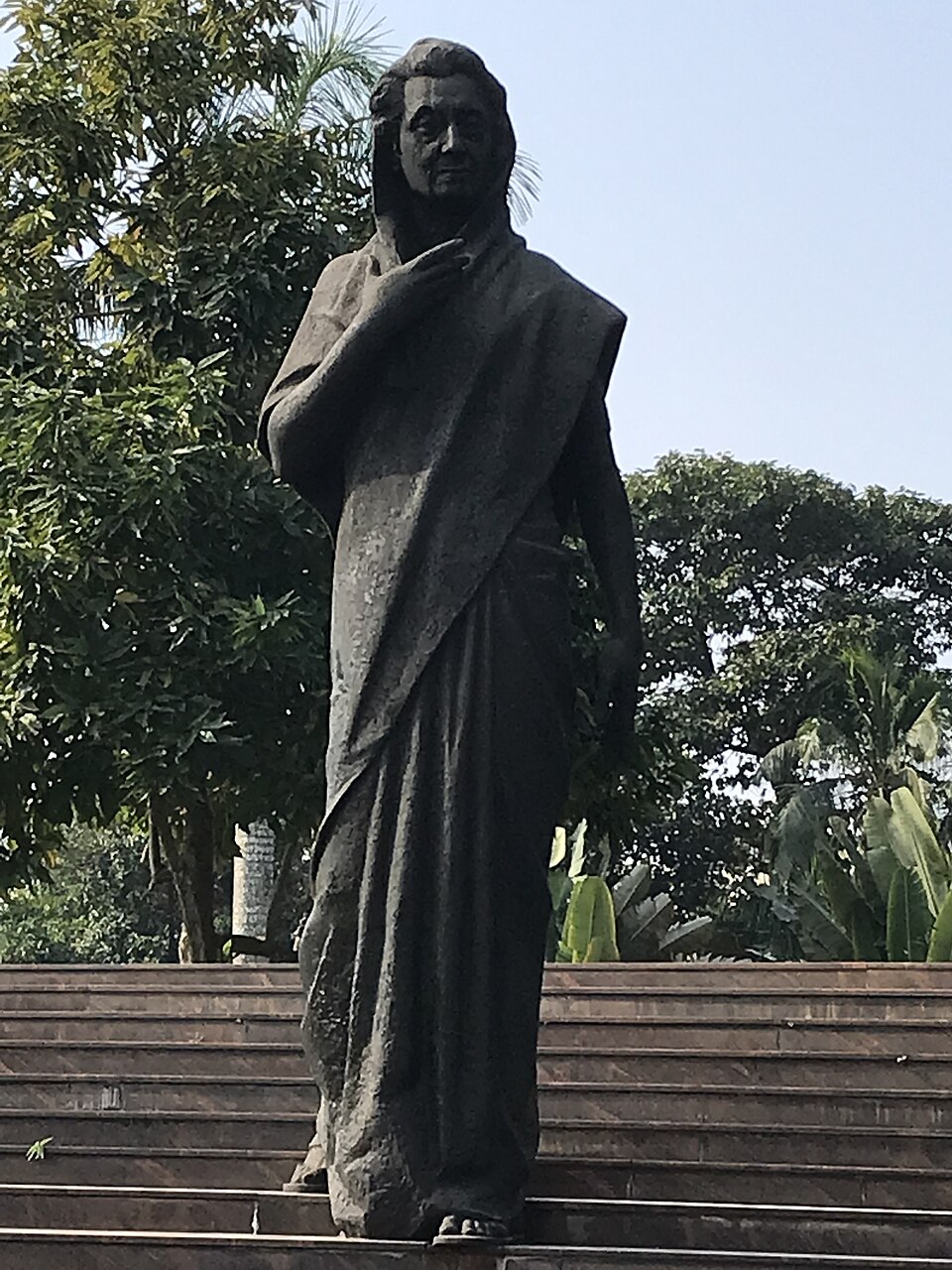
—Indu, I devoted my life to democracy. It is whispered that you suspended the country's freedoms. How could you come to that?
That question, Papa, I ask myself every day. In June 1975, I proclaimed the Emergency. I wrote to the nation that democracy can survive only if order is maintained — I sincerely believed it, the country seemed to me on the brink of chaos. But I will not hide behind words: thousands of opponents were arrested, the press censored. I know what it costs you to hear that from my mouth, you who made freedom your honor. Power has its slope, and one too easily persuades oneself that one acts for the common good. It is the episode from which I will never draw pride. The line between firmness and tyranny is thinner than one admits.
The line between firmness and tyranny is thinner than one admits.
—And when the people disowned you at the polls, after that night, what did you do with your pride?
I bent it. In 1977, the voters drove me from power, and that was the penalty for the Emergency. I could have clung on, contested, used the levers. I did not. I accepted the verdict of the ballot box and withdrew. It was the first true peaceful transfer of power in our history — and I insist that it be remembered as much as my faults. You see, I was accused of betraying democracy; but it is by losing, and by bowing, that I paid it homage. An accepted defeat is sometimes worth more than a snatched victory. You had taught me that serving the people also means obeying them when they dismiss you. I returned later, but cleansed.
It is by losing, and by bowing, that I paid homage to democracy.
—I hear of a tearing apart in Punjab, a sacred temple entered by force by your soldiers. What fire did you have to face there?
The fire of separatism, Papa. A movement demanded Khalistan, an independent Sikh state, and armed militants led by Bhindranwale had barricaded themselves in the holiest site of Sikhism, the Golden Temple in Amritsar. I long sought another path. In June 1984, I ordered Operation Bluestar: the army entered the sanctuary. No decision cost me more. One does not enter a people's temple without wounding its soul for generations — I knew that when I signed the order. But to allow a state within a state to defy the Republic was to condemn the very unity of India that you had held together single-handedly after Partition. I chose the nation, knowing what that choice would leave behind.
One does not enter a people's temple without wounding its soul for generations.
—You speak like someone who knows her life is threatened. Are you afraid, my daughter, of what you have unleashed?
I live surrounded by guards, and some of them, I sense, will never forgive me for Amritsar. I am urged to dismiss my Sikh guards; I refuse to govern a country by suspecting my men according to their faith — that would betray all we have built. As for fear, Papa, I have moved beyond it. I do not care whether I live or die; I have lived a long life and I am proud to have devoted every day to the service of my people. If a few drops of my blood should one day nourish India, so be it. You taught me that one does not serve a nation halfway, by calculating one's own survival. I will go to the end, whatever the end may be.
I do not care whether I live or die: I have devoted every day to my people.
—Before I go, Indu: of all I passed on to you in our letters and our silences, what do you still carry?
I carry your voice, Papa, more than you imagine. In my office, your portraits sit beside those of the Mahatma — not out of piety, but because your two demands contradict each other in me and keep me standing. From you, I kept non-alignment, that pride of not bowing to any bloc, neither Washington nor Moscow. From you, the love of history and the stars, those nights when you explained the world to me from your cell. But you also bequeathed me to my own decisions, and some you would have disapproved of — I know it. A daughter is not the continuation of her father; she is what she makes of him. What I owe you, I could never inscribe in any speech. It is too intimate to belong to the country.
A daughter is not the continuation of her father; she is what she makes of him.
This imaginary interview was generated by artificial intelligence from sources documented in Indira Gandhi's profile. It dramatises what the figure might have said based on what we know about them, but does not constitute attested historical testimony. For primary sources and factual documentation, refer to the full profile.