Imaginary dialogue between Voltaire and Jean-Jacques Rousseau
by Charactorium · Jean-Jacques Rousseau (1712 — 1778) · Literature · Philosophy · 6 min read
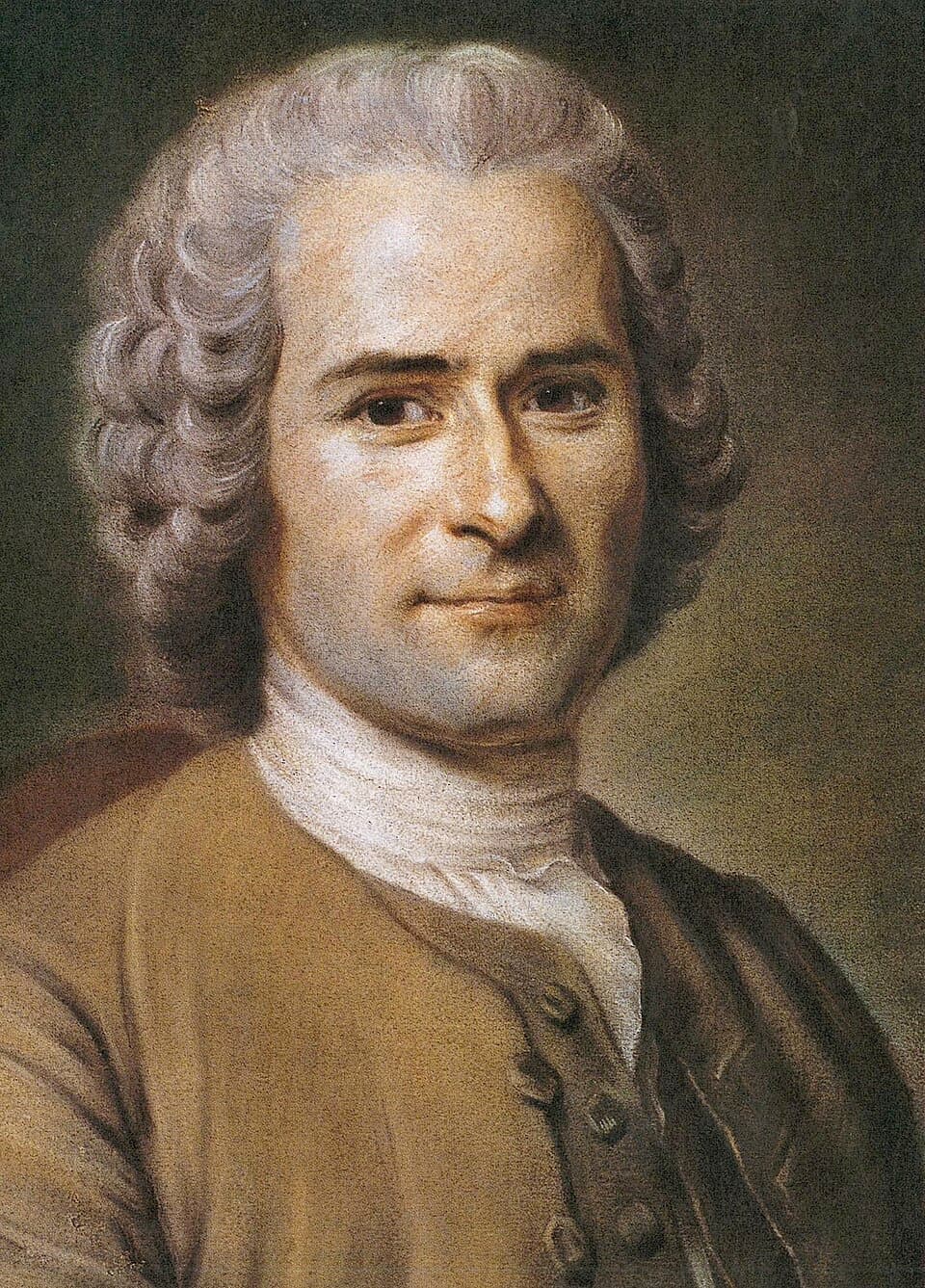
It is in a discreet garden of Paris, in the spring of 1778, that two old lions of the Enlightenment finally come face to face. The air smells of cut grass and mint; on a bench lies a tin box full of freshly picked plants. Voltaire, ironic and feverish, never liked Jean-Jacques; he even wounded him in the past with his writings — but he knows that both will not see another summer. He comes less as a judge than as a curious rival, determined to make this solitary man speak, whose fame annoys him as much as it intrigues him.
—Jean-Jacques, it is whispered that your entire system was born under an oak tree, on the road to Vincennes, while going to see Diderot in prison. An illumination, really?
You may smile, but I have invented nothing truer in my life. It was in 1749, I was walking to the tower where Diderot was held; I sat down under a tree to catch my breath, and opened the Mercure de France. There I found the question of the Academy of Dijon: have the sciences and arts purified morals? In an instant I saw another universe, I became another man. A thousand truths fell upon me like a rain shower, I was suffocated by an emotion that resembled intoxication. From this turmoil was born my first Discourse, in 1750, which won the prize and threw me, despite myself, into celebrity.
In an instant I saw another universe, I became another man.
—Admit the strangeness: you, who write so well, use all your talent to prove that letters corrupt man. Is that not betraying yourself?
The reproach is amusing, and you are not the first to make it. But I do not condemn the mind, I condemn the use that a society makes of it, a society that has sacrificed everything to appearances. The arts polish manners and leave the soul servile; one learns to please before learning to be just. I hold that man comes out good from the hands of nature and that our institutions degrade him. If I wield the pen, it is to denounce the evil from within, like a physician who knows the poison. Remember: when I had you receive my Discourse on Inequality, you replied mockingly that I wanted to make us walk on all fours. I never asked that — only that we look at what civilization has cost us.
The arts polish manners and leave the soul servile.
—Let us speak of your Social Contract. You dream of a 'general will,' a sovereign people. Is that not entrusting power to the multitude that knows nothing?
You confuse, like so many others, the general will with the tumult of crowds. The general will is not the sum of particular appetites; it is what a people wills when it aims at the common good and not its private interest. Man is born free, and everywhere he is in chains — that is where I start. The pact I propose delivers no one to the multitude: each, by uniting with all, nevertheless obeys only himself and remains as free as before. It is the law, consented to by all, that creates civil liberty. I did not write to flatter princes, nor even philosophers; I wrote for citizens, such as once existed in my Geneva.
Each, by uniting with all, nevertheless obeys only himself.
—And for this book, your own Geneva renounced you. In 1762, Émile and the Social Contract were burned in Paris and at the foot of your walls. What did you feel?
More pain than I can say. To be outlawed by France, I expected that; but to be condemned by the homeland of which I proudly called myself a citizen, to see my books torn and burned in the city where I was born, that pierced my heart. I had dedicated my Discourse on Inequality to the Republic of Geneva, I believed it the last refuge of ancient virtue. It drove me out like a criminal. I wandered from Môtiers to Saint-Pierre Island, everywhere hunted, nearly stoned. They took me for an impious man when I never stopped believing in God. This ingratitude of my own taught me solitude far better than all books.
To see my books burned in the city where I was born, that pierced my heart.
—I must ask you, since it was I who revealed it to the public: the tutor of Émile placed his five children at the Foundling Hospital. How do you reconcile that?
You were cruel, Voltaire, to throw that as fodder, under cover of anonymity. But I will not deny the facts; I myself recorded them so that I might be judged in full truth. I was poor, without a station, unable to support a family, and I persuaded myself that a hospital would raise them better than I could, that at least they would be workers and not adventurers like their father. I was wrong, I know, and no remorse has left me. Yes, he who wrote on education failed in his own; I carry this contradiction like a wound. But I did not want to appear better than I am: I want to show a man in all the truth of nature, and that man will be myself.
He who wrote on education failed in his own; I carry this contradiction like a wound.
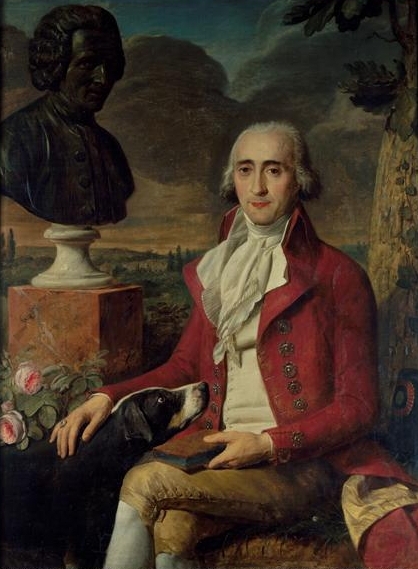
—Let us come then to this Émile. You want to leave the child to his nature, far from books and lessons. Is that not abandoning him to ignorance?
Quite the opposite, it is saving him from false knowledge. Everything is good as it leaves the hands of the Author of things, and everything degenerates in the hands of man: that is my first lesson. We stifle the child under words he does not understand, we train him like a little ridiculous scholar. I, on the contrary, want him to learn through experience and need, to run, to touch, to make mistakes and correct himself alone. Nature wants children to be children before being men. One does not form a free man by enslaving him from the cradle to the opinions of others. I preach not ignorance, but order: everything in its time, and judgment before memory.
Nature wants children to be children before being men.
—People forget that you are a musician. Your The Village Soothsayer charmed even Louis XV at Fontainebleau in 1752. Did the philosopher blush at this courtly success?
Not at all — music was my first passion and perhaps my purest. As early as 1742, I had presented to the Academy of Sciences a system for notating tunes with numbers instead of those tangled staves; they found it ingenious and impractical, which amounts to politely refusing it. But The Village Soothsayer avenged me for everything: it was performed before the king, who wanted to give me a pension. But do you know what I did? I fled before being presented, for fear of losing my independence for an annuity. Even today I earn my bread by copying scores, penny by penny. I prefer this obscure labor to a gilded armchair that would have made me a courtier.
I prefer this obscure labor to a gilded armchair that would have made me a courtier.
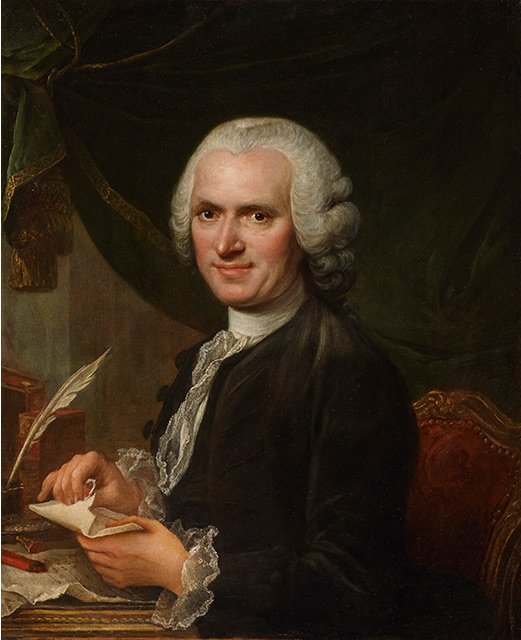
—And this costume that sets all Paris gossiping: this Armenian caftan, this fur cap. Savage coquetry or a new moral lesson?
Neither, or both, as you wish. I adopted this garment around 1762, first out of necessity, because a cruel ailment made tight French breeches unbearable to me; this long, loose garment relieves me. Then I found pleasure in it, I confess: that of no longer being disguised as a gentleman that I am not. Your wits scoff, I am pointed out like a curious beast. What does it matter! I owe nothing to their fashions or their wigs. To wear what I want, to eat vegetables and dairy rather than the meats of the rich, to walk alone on foot: these are my little freedoms, and I know none sweeter.
The pleasure of no longer being disguised as a gentleman that I am not.
—Now you have become a botanist, rummaging through ditches with a magnifying glass in hand. Does the great thinker on inequality amuse himself counting the stamens of flowers?
Laugh if you will; this tin box you see there has given me more peace than all my systems. Philosophy earned me enemies, lawsuits, stones thrown at my shutters; botany never betrayed me. I spend hours in the fields examining a moss, a blade of grass, with no other design than to look. It is a study that demands nothing of the heart and rests it from everything. On Saint-Pierre Island, on Lake Bienne, I lived the most beautiful days of my life: I let myself drift alone in a boat, stretched out, eyes to the sky, listening only to the lapping of the water. There, I was no longer the persecuted author; I was a man, simply, in harmony with things.
Philosophy earned me enemies; botany never betrayed me.
—Here we are, both old, Jean-Jacques, and estranged for so long. What remains for a solitary man, without brother or friend, when evening falls?
A grave question, and coming from you, it touches me more than from anyone else. So here I am alone on earth, having no society but myself: that is where men have led me. For a long time I suffered from it as an injustice; now I almost consent to it. When I walk in the evening along the waters, when I smell the earth and the sunset reddens the leaves, a contentment comes over me that depends on no one. I wander in my reveries and at night I put on paper what my heart has felt during the day. You chose the noise of the world, I chose silence; I do not know which of us will have been the less unhappy. But neither you nor I will see, I think, many more springs.
You chose the noise of the world, I chose silence.
This imaginary interview was generated by artificial intelligence from sources documented in Jean-Jacques Rousseau's profile. It dramatises what the figure might have said based on what we know about them, but does not constitute attested historical testimony. For primary sources and factual documentation, refer to the full profile.