Imaginary interview with Jean-Jacques Rousseau
by Charactorium · Jean-Jacques Rousseau (1712 — 1778) · Literature · Philosophy · 6 min read
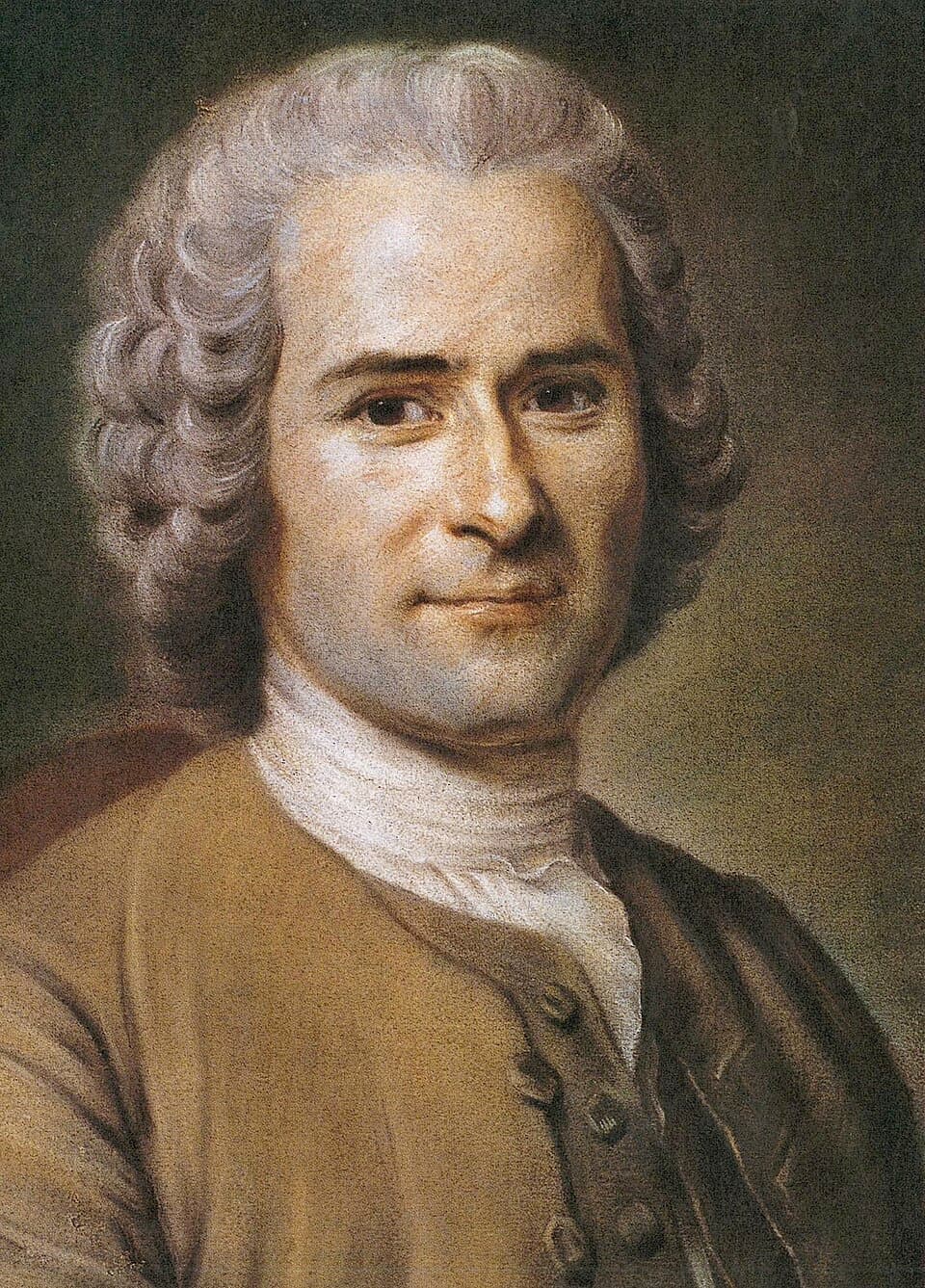
Summer 1778, Ermenonville. Under the marquis de Girardin's poplars, an old man in a threadbare caftan returns from botanizing, his tin box still warm from the sun. He agrees to sit for a moment, his voice weary but his eye sharp, to answer a few questions before evening falls on the island.
—Do you remember the day your life turned upside down, on the road to Vincennes?
It was the summer of 1749, and the heat of the road was overwhelming. I was going to see my poor Diderot, held in the dungeon at Vincennes for his overly free writings. To spare my legs, I walked slowly, a copy of the Mercure de France in hand. I sat down under an oak, and my eyes fell on the question from the Academy of Dijon: Have the sciences and arts purified morals? In an instant, it was no longer a reading but a vertigo. I saw in a single glance that all our knowledge, far from making us better, had corrupted us. When I arrived near Diderot, my face was distraught and my waistcoat wet with tears. From that shock was born my first Discourse on the Sciences and Arts.
It was no longer a reading but a vertigo.
—How do you explain having defended a thesis so contrary to your entire century?
Because I never knew how to lie about what I felt within me. The whole Age of Enlightenment sang the progress of the arts as a march toward virtue; I, under my oak, had seen the opposite. The more peoples polish their manners, the more they lose their frankness; the more academies flourish, the more souls empty. They thought me paradoxical, they thought me a poseur. But I had only said aloud what my heart as a citizen of Geneva had murmured since childhood: that man is born good, and it is our fine institutions that spoil him. That first prize from Dijon gave me a fame I did not seek, and which has since cost me more peace than it has given me glory.
—What did you hope to accomplish by writing Of the Social Contract?
I wanted to understand how free men could unite without ceasing to belong to themselves. You know the sentence that opens my book: "Man is born free, and everywhere he is in chains." My entire treatise is but an attempt to undo those chains without destroying society. The secret is what I call the general will: not the sum of everyone's whims, but what an entire people wants when it aims at the common good. Where each, in obeying the law, obeys only himself, there is no longer master or slave. This book was burned in Paris and even in my dear Geneva, in 1762. Let them burn it: the ashes of a truth always fertilize some soil.
The ashes of a truth always fertilize some soil.
—Why do you insist so much on distinguishing natural liberty from civil liberty?
Because they are always confused, and that confusion makes tyrants as well as anarchists. In the state of nature, man is free like an animal: he follows his appetite, he owes nothing to anyone. But that liberty is only a brutal independence, constantly threatened by the force of the strongest. By entering society through the social contract, man gives up that wild liberty to receive a higher one, guaranteed by a law he has given himself. That is what the powerful do not want to hear: that a people legitimately obeys only the rules it has consented to. I saw, in the salons of Paris, so many fine minds reasoning about liberty who would not have tolerated granting a crumb of it to the people. I dedicated my discourse of 1755 to Geneva, because I dreamed of finding that people there.
—How do you live with the contradiction between Émile and the abandonment of your children?
You touch my most painful wound, and I will not flee from it. Yes, my five children, I took them to the Foundling Hospital; and yes, I wrote Émile, that treatise where I teach the whole world the art of raising a child according to nature. Voltaire, in an anonymous pamphlet, threw my shame into the public square, and I do not thank him for it. But I did not try to hide: in my Confessions, I confessed everything. I was poor, without a home, unable to give them the bread and example a father should. I persuaded myself that they would be better fed by the hospice than by my misery. I know today how cowardly that reasoning was. One does not repair such a fault; one carries it.
One does not repair such a fault; one carries it.
—What drove you to tell everything about yourself in The Confessions?
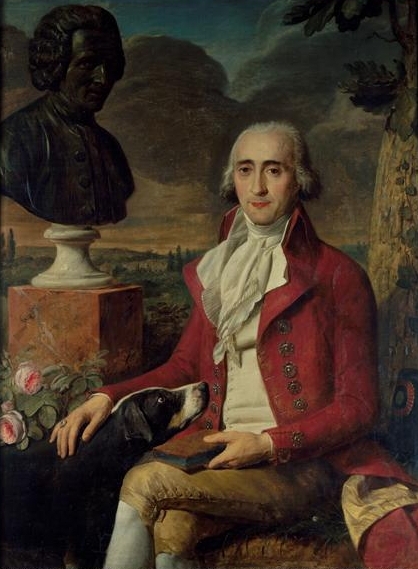
The need to show myself whole, with my shames as well as my virtues. I began this book with these words: "I am undertaking an enterprise that has never had an example and whose execution will have no imitator. I want to show my fellow men a man in all the truth of nature; and that man will be myself." All memorialists before me painted themselves in a favorable light; I wanted to paint myself as I am, down to my baseness. Why? Because I had been so slandered, so disguised as a monster, that the only defense left to me was naked truth. This book appeared only after my death, in 1782, and I know that people will find grounds to despise me. So much the better: let them despise me for what I was, not for what they invented.
—Why did you adopt that Armenian caftan that all Paris mocked?
First from bodily necessity: an old infirmity made ordinary dress—tight breeches and stockings—a real torture. This long caftan and fur cap I took up around 1762 left me in peace. But I will not deny there was also defiance. I had had enough of those embroidered jackets under which one stifles one's thoughts to please. By dressing in the Armenian style, I told the salons: I am no longer one of you. They laughed, they thought me mad or a charlatan. No matter. I had broken with Voltaire, with the philosophers of Paris, with their politeness that seemed to me so many lies. This strange garment was like a flag planted on my solitude.
This strange garment was like a flag planted on my solitude.
—You who were driven from everywhere, how do you bear this status of outlaw?
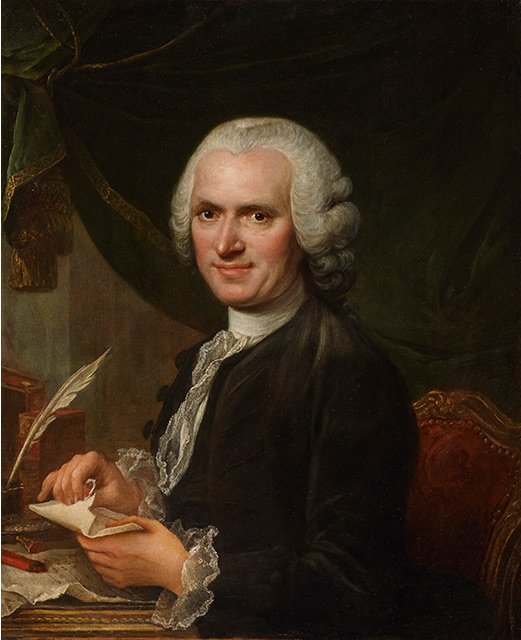
Like a burden one ends up calling one's companion. After 1762, Émile and the Social Contract condemned and burned, I was outlawed from both France and Geneva, forced to flee from refuge to refuge. England was offered to me: the philosopher Hume welcomed me in 1765 with great courtesy. But mistrust already gnawed at me like a fever; I thought I saw plots in his very attentions, and I fell out with him as with all the others. I know what will be said: that the persecuted man forged his own persecutors. There is truth in it. But when you have seen your book torn up by the executioner, you learn to distrust even outstretched hands. Solitude, at least, does not betray.
—How did botany become the refuge of your later years?
When philosophy brought me nothing but quarrels, plants gave me back calm. I set out in the morning with my botanizing box, that tin box I carry slung over my shoulder, and I plunge into the fields with no other purpose than to look. A moss, a corolla, the vein of a leaf: here are wonders that neither argue nor slander. I compile an herbarium, I write to a few botanists, and for a few hours I become again the happy child I was at Les Charmettes, with Mme de Warens. From these walks my reverie was born. Studying nature is not just counting stamens: it is learning to be silent and to receive. Men have wearied me; herbs, never.
A moss, a corolla: here are wonders that neither argue nor slander.
—What were you seeking, alone in your boat, on Lake Bienne?
Nothing. And it is precisely that nothing that was the purest happiness of my life. On St. Pierre Island, in 1765, driven away once more, I pushed my boat out into the open, then I let go of the oars and lay down in the bottom, drifting with the water for hours. The lapping, the rocking, the sky: my soul desired nothing more, regretted nothing more, it simply was. I wanted to hold on to those moments in my Reveries of the Solitary Walker, that last book I will not finish. You find me here, at Ermenonville, aged and weary; but when I close my eyes, I am still on that lake, and I believe that is where, rather than under my oak, you should look for me.
My soul desired nothing more, regretted nothing more, it simply was.
This imaginary interview was generated by artificial intelligence from sources documented in Jean-Jacques Rousseau's profile. It dramatises what the figure might have said based on what we know about them, but does not constitute attested historical testimony. For primary sources and factual documentation, refer to the full profile.