Imaginary interview with Jean Racine
by Charactorium · Jean Racine (1639 — 1699) · Literature · 6 min read
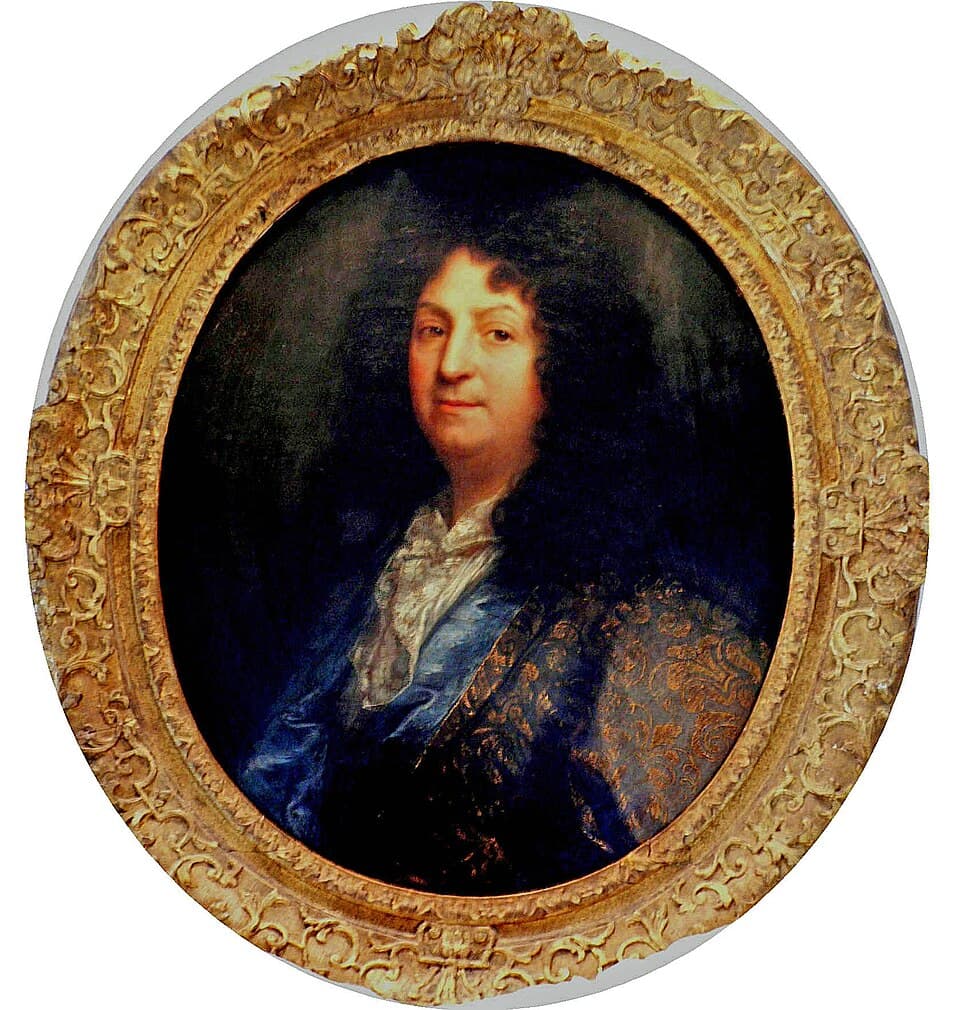
April 1699, in a Parisian room with half-closed shutters, a stone's throw from Saint-Étienne-du-Mont. Jean Racine, his face gaunt from illness, receives his visitor between a Latin Bible lying on the bed and a bundle of letters addressed to Port-Royal. He speaks softly, but his voice keeps the cadence of the alexandrines he has weighed all his life.
—How could a child raised by the solitaries of Port-Royal turn to the theater, which those masters held in horror?
My parents dead, it was the gentlemen of Port-Royal-des-Champs who raised me, and they taught me to read Sophocles and Euripides in the original text, Greek before my eyes. They were shaping me for heaven, and lo, I carried their lessons onto the boards they despised as a devil's trade. The break was bitter: harsh letters were written to me, I replied even more harshly, which I now regret. But understand me: Jansenism had taught me that man is a creature given over to his passions, powerless to rid himself of them. When I wrote a Phèdre consumed against her will, I was merely illustrating what my masters had taught me about sin. I thought I was betraying them; I was extending them.
I thought I was betraying them; I was extending them.
—You asked to be buried beside those same masters. Why this return at the end of your life?
Because one never truly leaves the place where one learned to fear God. I spent twelve years away from the theater, serving the king, and during that silence I found the path back to Port-Royal. These are people persecuted today, whose buildings are gradually being razed, and that is precisely why I am determined to sleep in their earth, at the foot of Monsieur Hamon's tomb, my former physician. In a youthful letter I wrote that Latin put me back in the taste of antiquity, without which I do not believe one can do good things — well, those men were my antiquity. If one day the abbey is destroyed, let my bones be moved wherever they will: my heart will not budge from there.
—Tell us about Phèdre. Why does this tragedy count more than the others in your eyes?
Phèdre is the least imperfect thing I have done. I took up Euripides' subject, but I changed course for the conduct of the action, for I needed a heroine one could pity without hating. That is why I wrote in my preface: I believed that slander had something too base and too black to put into the mouth of a princess. It is no longer Phèdre who accuses Hippolyte, but her nurse Œnone. You see, a criminal passion can still move if the one who bears it detests it within herself. Phèdre knows she is guilty before acting, and it is this battle lost in advance, this woman whom neither heaven nor earth approves, that, I believe, creates all the pity of the play.
A criminal passion can still move if the one who bears it detests it within herself.
—It is said that a cabal ruined the premiere of Phèdre in 1677. What really happened?
Enemies I had — and I had many, for my pen was young and insolent — commissioned a certain Pradon to write a competing Phèdre, played almost the same evening as mine. Entire boxes were rented in both theaters to be left empty or full as the cabal required. His fell, rightly so; but the noise, the catcalls, the spiteful verses circulated against me wounded me to the quick. I was thirty-seven and weary of this war. It was then that I resolved to abandon secular theater. Some said it was devotion that withdrew me; it was first the fatigue of being hated. Grace came afterward, and the office the king gave me completed my removal from the stage.
Some said it was devotion that withdrew me; it was first the fatigue of being hated.
—You wrote Bérénice, a tragedy almost without plot. How do you sustain five acts with so few events?
People always think you need blood, daggers, armies to fill a stage. I maintain the opposite. All the action of Bérénice is contained in a sentence of Suetonius: Titus, who loved Bérénice, sent her away despite himself, despite her. That is all. Five acts for a farewell. The genius of tragedy lies not in a multitude of incidents, but in the verisimilitude of a grief stretched to the breaking point. The unity of time, that single day imposed on me, is not a chain but an instrument: it tightens passion like a cord drawn taut. A sad majesty, that is what I sought. To draw tears from the spectator by showing only two beings parting, that is the most difficult and highest test of our art.
Five acts for a farewell: genius lies not in a multitude of incidents.
—You worked each verse with famous meticulousness. What did your writing days look like?
I rose early — from my time at Port-Royal this habit stayed with me — and the morning was for reading. A goose quill, the inkwell, and before me some edition of Euripides or Sophocles that I reread constantly, not to copy them but to hear their breathing. The alexandrine is a terrible thing: twelve syllables, a caesura in the middle, and everything must be there — meaning, sound, passion — without the effort ever being felt. I recited my verses aloud, undid them, started over. I am reproached for my slowness; but do you think one bends a language to music without pain? In the afternoon, I went to rehearsals at the Hôtel de Bourgogne, or to salons where Boileau and La Fontaine corrected my audacities.
—In 1677, the king appointed you historiographer, with Boileau. How does one go from tragedy to records of royal victories?
It was an honor I did not expect and dared not refuse. Louis XIV appointed us, Boileau and me, historiographers of the king, that is, charged with writing the history of his reign and his wars. Imagine two men of the study, more accustomed to counting syllables than to riding horses, suddenly asked to follow armies! We had to see the sieges, Mons, Namur, in the rain and under cannon fire, take notes in the midst of camps. I confess: I lost my verses there, for one does not write tragedy between two campaigns. But I gained familiarity with the greatest king on earth, and the office earned me lodgings at Versailles. I had traded the theater of passions for the theater of power.
I had traded the theater of passions for the theater of power.
—Did this closeness to the king change you?
It polished me, and perhaps too much. At Versailles, one learns to be silent, to weigh every word, never to displease. I had become, they say, a perfect honnête homme: easy conversation, the powdered wig, the well-cut coat, the art of appearing modest before the great. But beneath this ease, I never forgot where I came from or what austerity had shaped me. The danger of a court, you see, is that one ends up believing the prince's favor is a grace, when it is the most fragile of things. Toward the end, a memorandum I had written on the people's misery displeased, and I felt the cold creep in. One never falls so low as when one has fallen from the height of royal favor.
One never falls so low as when one has fallen from the height of royal favor.
—After twelve years of silence, what brought you back to dramatic writing with Esther?
It was Madame de Maintenon. She had founded at Saint-Cyr a house for noble girls without fortune, and she wished them to be given some decent play, without profane love, that would train them in piety as much as in diction. She came to me. At first I thought it impossible: how to write a tragedy without that amorous passion that had made all my glory? Then I opened my Bible and found Esther, that Jewish queen who saves her people. I added choruses, in the manner of the Ancients, which the young ladies sang. It was a reconciliation for me: I rediscovered the theater, but washed clean, returned to God and to my masters of Port-Royal. The play had a success that surprised even me, and the king came to hear it.
—Athalie, your last play, was hardly performed in your lifetime. Does that hurt you?
It hurts and it does not. Athalie, which I drew from the Book of Kings, is, I believe without false modesty, the most accomplished thing I have written. But times had changed: it was judged indecent to have young ladies of Saint-Cyr appear on a stage, even a sacred one, and the play was only given in street clothes, without scenery, almost in secret. That impious queen terrified by a dream, that old priest Joad, that child-king hidden in the Temple — I had put into it all my mastery of the alexandrine and all my recovered faith. If I could imagine that I would be read in a century or two, I would dare hope that justice would be done to this work that my own time left in the shadows. But that, I shall not see.
I had put into it all my mastery of the alexandrine and all my recovered faith.
—If you were to tell a young man what tragedy is at its core, what would you say?
I would tell him that a tragedy is not a lesson nor a spectacle of horrors. It is a mirror in which one sees man struggling against what surpasses him — his passion, his fault, the gods, the blood he has inherited. Aristotle called catharsis that purgation of terrors and pities one feels at the fall of a great guilty one; and I have always thought that theater, far from corrupting, could thus instruct the heart. Let him avoid blood on stage, out of bienséance, and have deaths recounted rather than shown. Let him fear above all improbability. And let him finally know that the hardest thing is not to move through uproar, but through a single tear, a single silence, a single just verse. All my art lies in that economy.
The hardest thing is not to move through uproar, but through a single just verse.
Read further



This imaginary interview was generated by artificial intelligence from sources documented in Jean Racine's profile. It dramatises what the figure might have said based on what we know about them, but does not constitute attested historical testimony. For primary sources and factual documentation, refer to the full profile.