Imaginary dialogue between Nicolas Boileau and Jean Racine
by Charactorium · Jean Racine (1639 — 1699) · Literature · 5 min read
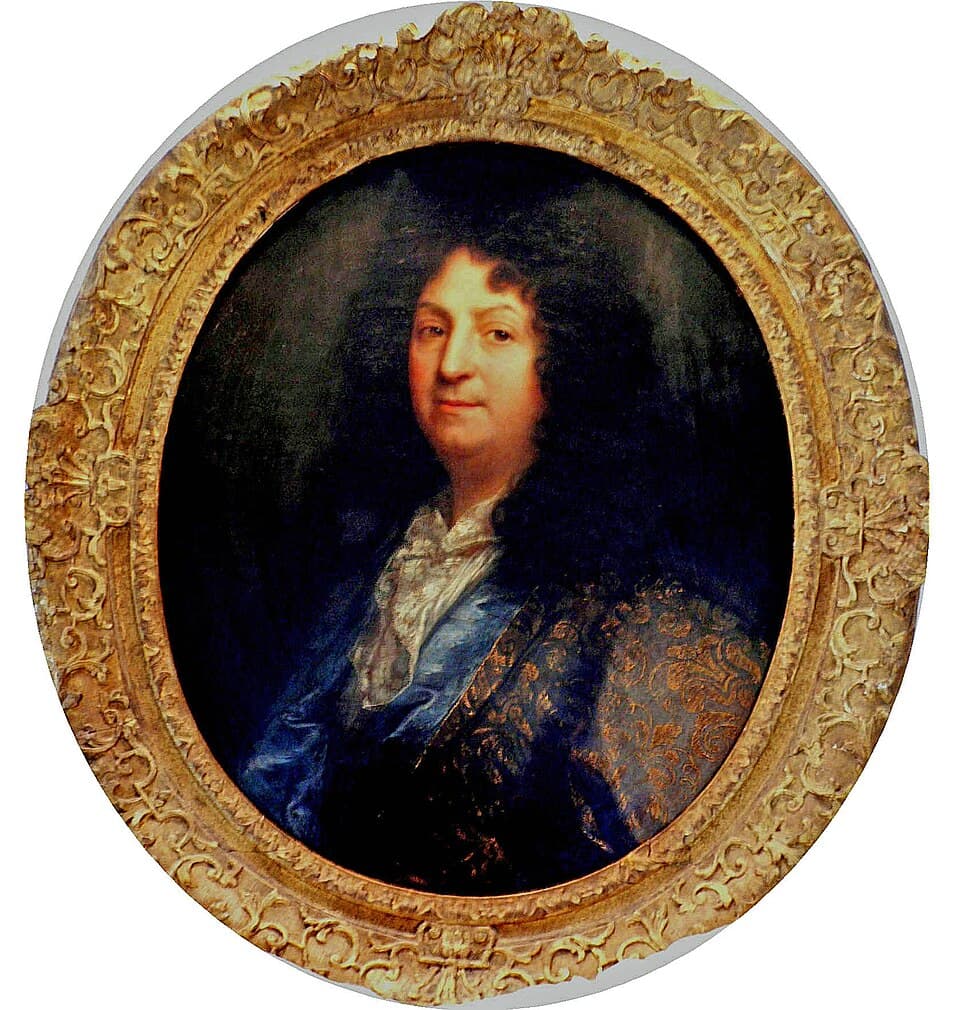
It is in the study of Racine, rue des Marais-Saint-Germain, that we find the playwright one autumn evening in 1692, the year following the premiere of Athalie. On the table, a goose quill dries in the inkwell, and the glow of a tallow candle trembles over the Greek editions of Euripides. Nicolas Boileau, his friend and companion in office for fifteen years, has come unceremoniously, as so often. The two historiographers to the king know each other well enough for questions to drop the mask.
—Jean, you who were raised by the good fathers of Port-Royal in the fear of sin, how could you embrace the theater, that art they held to be damnable?
You touch there, Boileau, on the oldest wound. Those austere masters taught me Greek, Latin, and above all a certain idea of the fatality that weighs on man — all my Phèdre comes from it. But they considered actors lost souls, and when I chose the stage, they saw betrayal. You know how much that break cost me: one does not leave without anguish those who have been father and mother to you. I carried that remorse like a stone for a long time. And yet, what they gave me that is darkest is precisely what makes people weep in my tragedies.
What they gave me that is darkest is precisely what makes people weep in my tragedies.
—Tell me, my friend, how did you dare give Bérénice, a tragedy where almost nothing happens? Many reproached you for that nakedness of action.
And you, who defend classical art better than anyone, know that there lies the whole secret. The rule of the unities is not a prison; it is a purification: one day, one place, a single passion that tightens like a knot. In Bérénice, I had no more than a separation, two hearts torn apart by duty. To draw tears without battle or murder, by the sole force of verse and feeling — that is the true test. Bienséance forbids blood on stage; so much the better, it forces me to put everything into the soul. The alexandrine does the rest: twelve well-weighed syllables are worth a thousand furies.
To draw tears without battle or murder, by the sole force of verse: that is the true test.
—They say you are a student of Euripides. What do you really seek in those old Greek tragedians that you constantly reread by candlelight?
I seek there the truth of the human heart, Nicolas, that which does not age. Euripides knew how to paint devouring passion, and in my preface to Phèdre I admit it without reservation: I followed his path, even if I sometimes strayed from it. I reread Sophocles and him in the original, as I was taught at Port-Royal, because translation always betrays something. But I do not imitate: I adapt to our century, to our souls, to the vraisemblance that our audience demands. A Greek showed the gods; I show a princess consumed by a love she hates. The fable is ancient, but the thrill is timeless.
The fable is ancient, but the thrill is timeless.
—Let's talk about that cursed year 1677. The cabal of Pradon against your Phèdre... I was at your side. Why did you abandon everything for so little?
For so little, you say? You who saw with your own eyes what they mounted against me know it was not little. To have a rival Phèdre performed, mediocre, on the same evening, to pay for catcalls, to buy boxes to bring down mine — that is how far the hatred of the envious goes. Pradon's play collapsed, certainly, but the venom had done its work in me. I felt I was giving my best to people who only sought to destroy me. So I set down the pen of secular theater. The king called me to his office; I saw there a door to leave that mire. One does not fight indefinitely against shadows.
I was giving my best to people who only sought to destroy me.
—We have both been historiographers to the king since that same year. Admit it frankly: following Louis to the armies, is that a job for poets like us?
What a strange pairing, isn't it, Boileau? We, men of the study, on horseback behind the king's army, noting sieges and redoubts! I remember our campaigns, the mud and the din, so far from the silence where alexandrines are born. It is a prestigious charge, I do not deny it: it gave us a station, access to the king, residence at Versailles. But recounting victories is not creating souls. Where my tragedy invented eternal passions, history only copies what was. I serve the king faithfully, and he is grateful. Yet, between us, my true glory will never lie in those war registers.
Recounting victories is not creating souls.
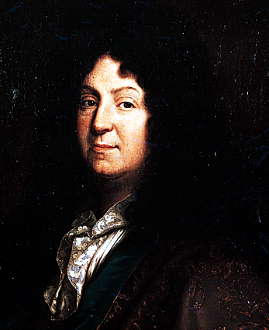
—After twelve years of silence, you take up the pen again for Esther and Athalie. How did Madame de Maintenon bring you back to the theater?
It is not the theater I returned to, Nicolas, but another way of serving God. Madame de Maintenon wanted for her young girls at Saint-Cyr an honest entertainment, without poison or gallantry. I drew from Scripture, from the Biblia Sacra that I never stopped reading, the story of Esther first, then that of Athalie. Choruses, children's voices, sacred words set to verse: that finally reconciled the poet and the Christian that Port-Royal had formed. These plays are not made for the theater crowd, but for the edification of pure souls. Writing them, I felt I was coming home.
It is not the theater I returned to, but another way of serving God.
—You who chisel every verse, how do you really work? When I come to see you in the morning, I always find you bent over your table.
You know me too well for me to lie. Yes, I rise early, and the first hours are the most fruitful, when the mind is still washed clean of sleep. I reread my Greeks, I search for the right word, I scratch out, I start over. People think I am facile because my verses seem to flow from the source; it is quite the opposite. The quill wears out and the inkwell empties before a single alexandrine satisfies me. The perfection you advocate in your Art poétique, I pursue verse after verse, hemistich after hemistich. In the afternoon, I go to rehearsals or to our salons to meet La Fontaine and the others. But it is in the morning, alone, that the real work is done.
People think I am facile because my verses seem to flow from the source; it is quite the opposite.
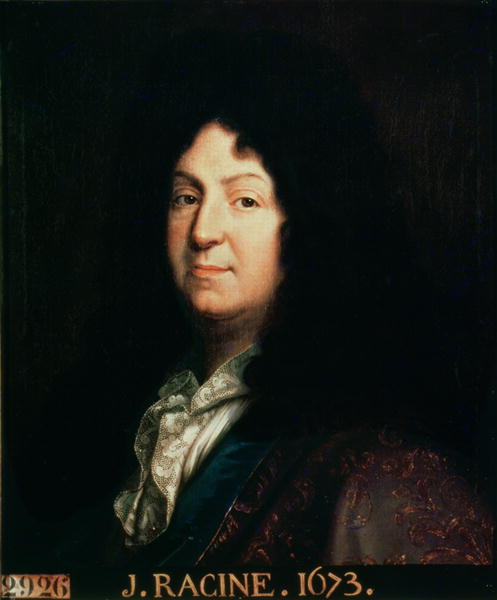
—It is whispered that you consider Phèdre your masterpiece. Is it not cruel to have abandoned the stage at the very peak of your art?
Cruel, yes, but perhaps necessary. Phèdre is what I have written most perfectly: a woman crushed by fate, a passion she knows is guilty and cannot overcome. Everything that Port-Royal taught me about grace and sin is there. And it is precisely when I reached that point that the hatred of cabals erupted. To leave then was not to flee: it was to refuse to sully myself further. A man can give his blood once for his art; he does not give it indefinitely to dishonorable rivals. I preferred silence to war. Silence, you see, is also an answer.
A man can give his blood once for his art; he does not give it indefinitely to dishonorable rivals.
—A more serious question, my old friend. If God were to call you tomorrow, where would you wish to rest? This thought seems to occupy you often.
You read my mind, Boileau. Yes, I think about it, and my decision is made: I want to sleep at Port-Royal-des-Champs, at the feet of my masters. The break of my youth weighed on me too long; in these last years, I have returned to them, I have taken up the path of grace again. To rest in that earth, near those who formed my soul before I denied them, is my way of making amends. Theater gave me worldly glory; Port-Royal gave me the sense of eternity. When the hour comes, it is toward that silence that I wish to return, like the child who finally comes home.
Theater gave me worldly glory; Port-Royal gave me the sense of eternity.
—To finish, tell me: of everything you have done — the tragedies, the office, the Academy — what will endure, in your opinion?
A daunting question, to which no one can answer in his lifetime. The historiographer's registers that we fill for the king will no doubt be lost in the archives. The Academy, where I was received in 1672, is an honor of my time, not of all time. What will remain, if anything remains, are perhaps those passions I tried to paint truthfully: a Phèdre, a Bérénice, an Andromaque. For empires fall, offices are forgotten, but the human heart does not change. If a man, a hundred years from now, still weeps at the misfortunes of my heroines, then I will not have written in vain. That is all a poet can hope for.
Empires fall, offices are forgotten, but the human heart does not change.
Read further

This imaginary interview was generated by artificial intelligence from sources documented in Jean Racine's profile. It dramatises what the figure might have said based on what we know about them, but does not constitute attested historical testimony. For primary sources and factual documentation, refer to the full profile.