Kids interview Jean Racine
by Charactorium · Jean Racine (1639 — 1699) · Literature · 5 min read
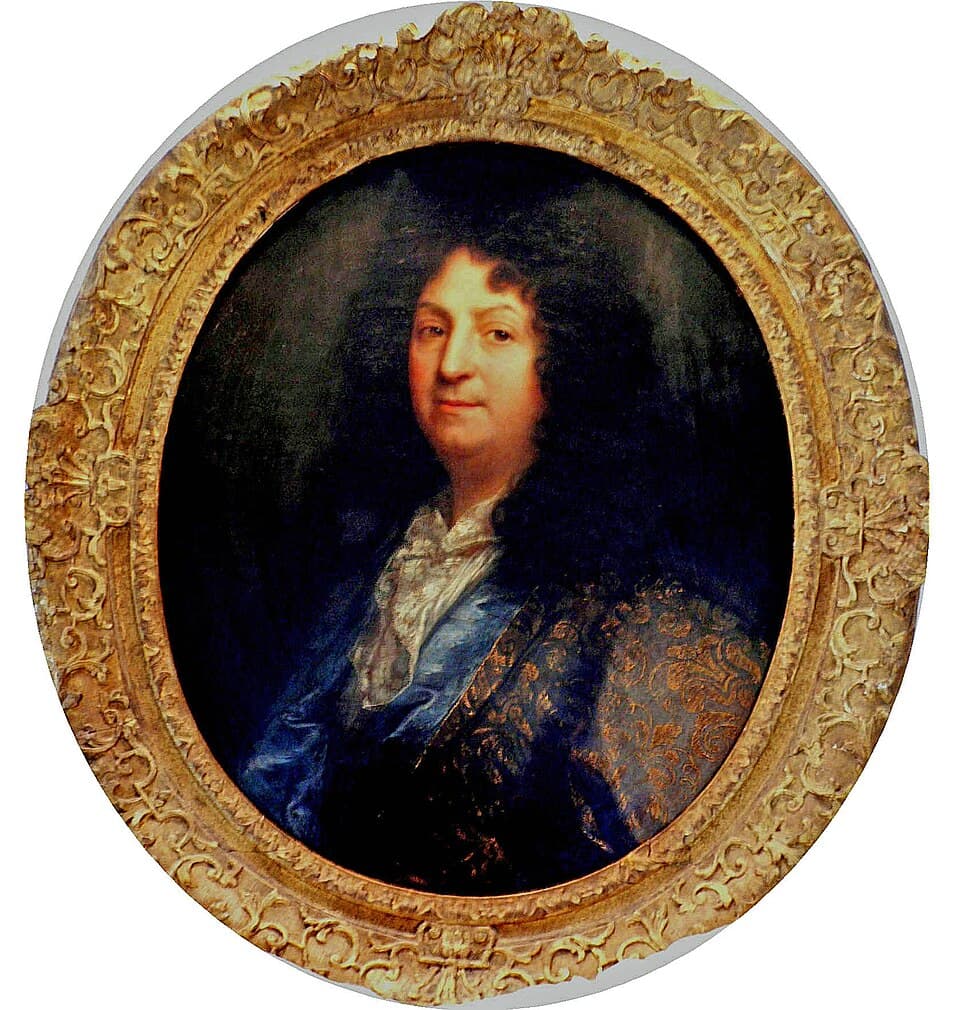
Two twelve-year-old visitors, on a school trip, pushed open the door of an old Parisian salon. There, in the light of a candle, a man in a wig awaited them. It is Jean Racine, and he has agreed to answer all their questions.
—How old were you when you arrived at the Jansenists'?
I was very small, my child. My parents had died, and I was entrusted to the masters of Port-Royal-des-Champs. It was an austere abbey, in the countryside, far from the noise of Paris. Imagine a large cold house where one prays a lot and laughs little. My masters were Jansenists: they believed that man is born marked by sin, and that it takes a whole life to deserve the grace of God. They taught me Greek, Latin, and a certain sadness. This idea that destiny crushes us, you see, I never forgot it. Later, it flowed into all my tragedies.
They taught me Greek, Latin, and a certain sadness.
—Why were your masters angry that you took up theater?
Because for them, theater was a sin, my child. A shameful entertainment that awakens passions. And I, their well-brought-up pupil, chose precisely that profession! Can you imagine the scandal. It's as if you had been taught to be silent, and you decided to sing in the public square. The break was painful. I left Port-Royal with a heavy heart, angry with those who had raised me. For years, we didn't speak. It made me suffer, because deep down, I loved them. One can disobey those one loves, you see, without ceasing to love them.
One can disobey those one loves without ceasing to love them.
—What was your day like when you were writing a tragedy?
I rose early, by the light of a candle. In the morning, I read the old Greek poets, Euripides and Sophocles, in their original language. I looked in them for stories of terrible passions. Then I took my goose quill, and I weighed each word. You know, I did not write quickly. A tragedy is twelve syllables per line, the alexandrine, with a small pause in the middle, like a breath. Six syllables, you breathe, six syllables again. I read my verses aloud, dozens of times, until they sounded right to the ear. It was a work of patience, almost of a musician.
I did not seek the right word; I sought the word that sings.
—Why were the dead never seen on your stage?
Good question! In my time, we followed a rule called bienséance (decorum). That meant we showed nothing violent or shocking before the audience. No blood, no combat, no corpse on the boards. So how does one do it, you'll ask, for a tragedy where everyone dies? Well, a character would arrive running and recount the terrible death that had just taken place backstage. The messenger! Imagine someone telling you about a storm with so much force that you think you hear it thunder. Often, words are more frightening than images. Terror is born in your head, not before your eyes.
Often, words are more frightening than images.
—What is a cabal? Did they hurt you with that?
Ah, the cabal... It's a conspiracy, my child. Enemies who secretly agree to make your play fail. In 1677, I produced Phèdre, my greatest masterpiece, the story of a woman consumed by forbidden love. And my rivals paid a certain Pradon to write a rival Phèdre, performed at the same time as mine! They even bought seats to applaud his and boo mine. His play eventually failed, it's true. But the blow had wounded me to the heart. Imagine deliberately ruining the most beautiful day of your work. I had had enough. I decided to abandon the theater.
They deliberately ruined the most beautiful day of my work.
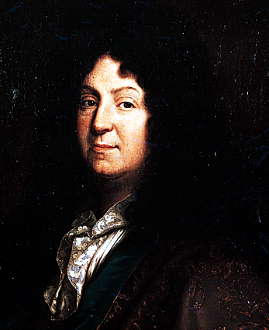
—Were you sad to stop writing plays after Phèdre?
Sad, yes and no. At the time, I was mostly tired and bitter. Phèdre was the most beautiful thing I had done, and they had sullied it. I said to myself: what's the point? But you know, when one door closes, sometimes a window opens. I found peace, I married, I had children. I even reconciled with my old masters at Port-Royal, those I had left in anger. For twelve years, I wrote no more tragedies for the public. Twelve years of silence. It was not a void; it was a rest. Sometimes one must be silent for a long time to feel like speaking again.
Sometimes one must be silent for a long time to feel like speaking again.
—Is it true that the king gave you a special job?
It's true! King Louis XIV greatly loved my plays. In 1677, he appointed me, along with my friend Boileau, historiographer to the king. A grand word, isn't it? That meant we were tasked with writing the history of his victories, recounting his exploits for centuries to come. It was a tremendous honor. But guess what: I had to follow the king to war! I, the man of libraries, found myself on horseback, in the mud of military camps, watching sieges of cities. Imagine a poet accustomed to silence, suddenly amid cannons. Life holds strange surprises, you see.
Imagine a poet accustomed to silence, suddenly amid cannons.
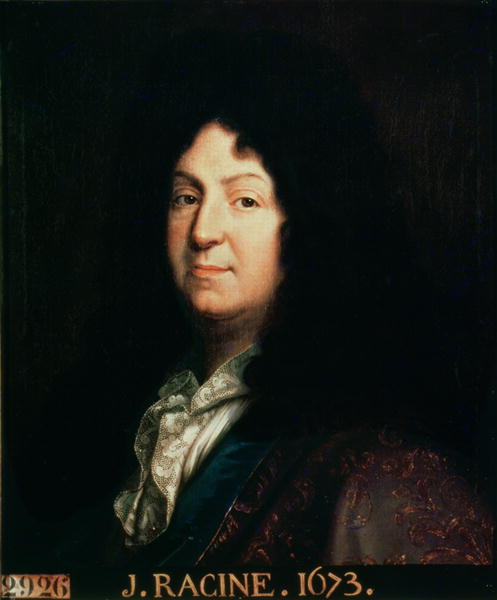
—What would one have noticed first upon seeing you at court?
My powdered wig, no doubt! At the court of Versailles, one did not appear without it. It was the fashion of Louis XIV's reign, the sign that one was someone important. I also wore a fine cloth doublet, silk stockings, a lace cravat. Yet, deep down, I was a sober man, with no taste for luxury. But at court, you dress like the others, or you are looked down upon. Imagine a place where everyone judges you by your clothes before you even speak. That is what Versailles was. A theater, too, where everyone played their role.
Versailles, too, was a theater, where everyone played their role.
—Why did you start writing again for schoolgirls?
Because a great lady asked me to, my child. Madame de Maintenon, very close to the king, had founded a school for noble but poor young girls: the Maison de Saint-Cyr. She wanted plays that the students could perform themselves. So, after twelve years of silence, I took up my pen again. I wrote Esther in 1689, then Athalie. But this time, no more forbidden passions: stories taken from the Bible, sacred tales. And it was the students who went on stage! Imagine little girls your age reciting my alexandrines. It reconciled me with the theater, and with God.
—Which of all your plays do you prefer, deep down?
What a difficult question! One loves all one's children, you see. Phèdre remains my broken heart, the most intense. But many, later, said that my last play, Athalie, written in 1691 for the girls of Saint-Cyr, was the most perfect. The curious thing is that it was hardly performed before the public in my lifetime. It truly shone after my death. It's strange, isn't it? One works a whole life, and the most beautiful fruit ripens when one is no longer there to see it. But that does not sadden me. A poet writes for those who will come. And you, precisely, have come.
A poet writes for those who will come.
Read further

This imaginary interview was generated by artificial intelligence from sources documented in Jean Racine's profile. It dramatises what the figure might have said based on what we know about them, but does not constitute attested historical testimony. For primary sources and factual documentation, refer to the full profile.