Imaginary interview with Joachim du Bellay
by Charactorium · Joachim du Bellay (1522 — 1560) · Literature · 6 min read

Paris, winter 1559. In a modest dwelling on the Left Bank, a stone's throw from the colleges, a tired-faced man receives us near a window where a candle flickers. Joachim du Bellay, back from Rome and already overtaken by deafness, agrees to speak of Anjou, of glory, and of ruins — straining his ear toward our questions.
—How did you meet Pierre de Ronsard, who was to become your brother in poetry?
Quite by chance on a road, around 1547, at an inn in Le Perche where we were both waiting for the same coach. We recognized each other by a few words: the same fever for Pindar, for Horace, for that ancient poetry that no one around us could appreciate. From that conversation at a table corner was born a friendship, then a project: to join together the Collège de Coqueret, where Master Jean Dorat opened Greek to us like one opens a window onto the morning. We formed a small band called the Brigade, which would become the Pléiade. Think of it: seven names, like the seven stars. All because one evening, two young men in a hurry found themselves under the same roof and preferred to talk about verse rather than about horses.
All because one evening, two young men in a hurry preferred to talk about verse rather than about horses.
—In 1549, you published a manifesto that caused a scandal. Why was it necessary to defend French?
Because our language was treated like a servant, good at most for wearing Latin's hand-me-downs. In the Défense et illustration de la langue française, I wanted to cry out that it was worth more: that it could, enriched by neologisms drawn from Greek and from the dialects of our provinces, rival the Ancients. The king himself, ten years earlier, by the Edict of Villers-Cotterêts, had imposed French on court records and tribunals; it remained to give it its letters patent of nobility in poetry. I wrote that whoever wants to create a work worthy of praise in his vulgar tongue must abandon 'that labor of translating, especially the poets.' Imitate to surpass, yes; copy slavishly, never. That earned me enemies — I had not spared Marot nor those of the old school.
Our language was treated like a servant, good at most for wearing Latin's hand-me-downs.
—What do you reply to those who judge the imitation of the Ancients as mere copying?
That they confuse the bee and the ant. The ant piles up another's grain without changing it; the bee gathers from a hundred flowers to make a honey that belongs only to her. When I reread Virgil and Horace, pen in hand, inkwell open, it is not to translate them word for word, but to absorb their sap and render it in French. That is what I call imitation: a struggle, almost, where one strives to equal the master and then to leave him behind. Latin remains my first school — I still write Latin verses in my Jeux rustiques — but I want our language henceforth to walk at its own pace, and not in another's footsteps.
The ant piles up another's grain; the bee makes a honey that belongs only to her.
—You left for Rome in 1553. What did you expect from this journey, and what did you find there?
I expected the Eternal City, the Muses, and glory. I found an office. My cousin, Cardinal Jean du Bellay, had taken me on as secretary, and I spent my days dispatching his correspondence, running to audiences, counting the écus of ecclesiastical affairs. Mornings for the Ancients, afternoons for paperwork: a poet turned clerk. Lodged in a sumptuous palace near the Vatican, I had never been so surrounded by marble nor so alone. It was this very disappointment that saved me: unable to sing Rome, I sang my chagrin, my nostalgia, the exile's boredom. The Regrets and the Antiquités de Rome were born from this gap between what I hoped and what I lived.
I expected the Eternal City, the Muses, and glory. I found an office.
—Roman ruins recur constantly in your verse. What did they say to you, as you walked the Forum?
They spoke to me of the death of empires. I walked among those old palaces, those old arches, those old collapsed walls of the Forum, and I felt under my feet all the grandeur of the world reduced to dust. I wrote in the Antiquités de Rome: 'Newcomer, who seeks Rome in Rome / And nothing of Rome in Rome perceives.' That is the vertigo: the most powerful city in history could no longer be seen except in its debris. With a map of the ancient city, I located the vanished temples, I imagined what was no more. And this meditation on ruin was not merely an erudite exercise: it was my way of saying that nothing lasts, neither stones, nor flesh, nor the glory of men.
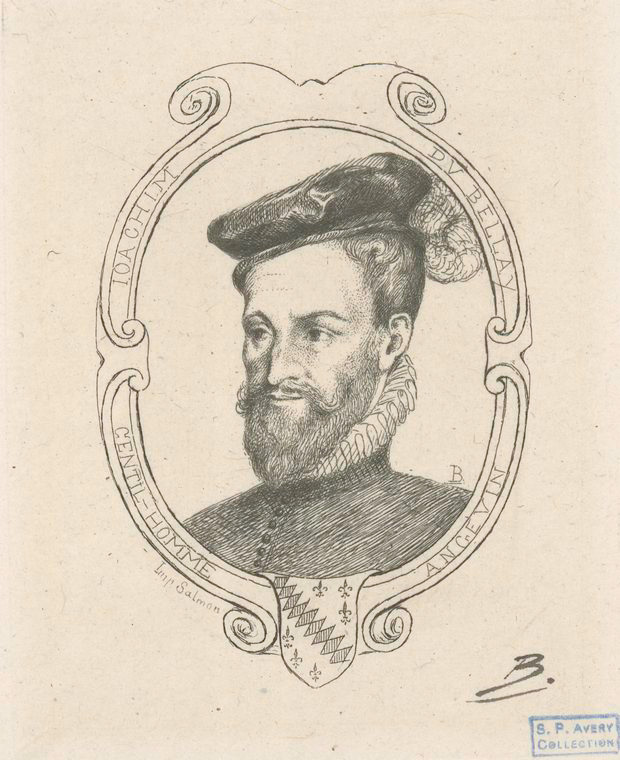
—The sonnet 'Happy Who, Like Odysseus' has become your most famous verse. Where did it come to you?
From homesickness, quite simply. There, in Roman splendor, I dreamed of a little village in Anjou and a stone house on the Loire, the château of La Turmelière, near Liré. I wrote: 'Happy who, like Odysseus, has made a fine journey, / Or like that one who conquered the fleece, / And then has returned, full of experience and reason, / To live among his kin the rest of his age!' All of exile lies in this wish: not to conquer, but to return. What did the marbles of the Tiber matter to me when I thought of the fine slate of my roof, of the Angevin sweetness, of my loved ones? Nostalgia, you see, is as sure a muse as love.
All of exile lies in this wish: not to conquer, but to return.
—You constantly contrast Rome with your native Anjou. Why did this land hold such a place in your heart?
Because I was born there and was torn from it too early. Orphaned early, poorly educated by a brother who neglected me, I knew the sweetness of Liré only to lose it all the more. Compared to the majestic Tiber, my little Loire in Anjou seemed more beautiful; compared to the palaces of Latium, the humble home of my ancestors was worth all the gold. It is distance that beautifies, I know — but also because in Rome I was only a stranger overloaded with work, while in Anjou I had been a child. The Regrets are full of this swaying between the grandeur that crushed me and the modesty that consoled me. The fish of the Loire, the wines of Touraine, the native air: that is my true kingdom.
—What was the spirit of the Pléiade when you gathered to talk about poetry?
A blend of audacity and scholarly fervor. We were young humanists convinced that we held a revolution in our hands. In the evening, around a table, we debated the rules of the sonnet, that form from Petrarch that I wanted to acclimatize in French as early as L'Olive; we discussed the ode, imitation, the right measure of an alexandrine. Master Dorat read Greek to us, and we left inflamed, certain that we could give France a poetry as lofty as that of Athens or Rome. There was a youthfulness, an insolence even — we wanted to remake everything, sweep away the old ways, raise the common tongue to the rank of sacred languages. Few groups of friends have nurtured such ambition for so little money.

—The affliction that strikes you, this growing deafness, how does it mark your work and your days?
It gradually cuts me off from the world. Voices reach me as if through thick water; court conversations, which I should cultivate, become a faceless hubbub. So I withdraw into study. In the evening, by candlelight, in the silence to which my infirmity confines me, I polish my sonnets, I reread my Ancients, I live more with the illustrious dead than with the living. There is a cruelty and a grace mixed together: the less I hear the world, the better I listen to my verse. But do not think I console myself easily. A poet deprived of hearing, at a time when poetry is sung to the lute, is a musician cut off from song.
The less I hear the world, the better I listen to my verse.
—You write against the courtier poets. What bitterness do you seek to express?
That of a talented man left in hardship while flatterers are rewarded. In Le Poète courtisan, I mock those clever rhymesters who seek the prince's favors, who beg for a smile, a pension, trading their soul for patronage. I, back from Rome laden with masterpieces, found neither the recognition nor the ease I hoped for. I live modestly, deaf, tired, watching others less gifted better provided for. It is a satire, yes, but also a confession: I denounce a baseness that I suffer from not having known how to imitate. Perhaps I should have been more flexible, more courtier-like. But then I would not have written what I wrote.
I denounce a baseness that I suffer from not having known how to imitate.
—If you dared to imagine your name in a century or two, what would you wish to be remembered?
That is a question that would make a man as little fêted as I in his lifetime smile! If I could dream that I am still read after these wars of religion, whose storm I feel coming since the death of Henri II, have passed, I would wish this to be remembered: that I loved my language enough to believe it worthy of the Ancients, and that I made regret itself a form of song. Not the scholar who piled up knowledge — in the introductory sonnet of the Regrets I say plainly that I do not wish to delve into nature nor map the architecture of the sky — but the simple man who wept for his Anjou on the banks of the Tiber. If a single reader, one day, murmurs 'Happy who, like Odysseus' thinking of his own home, I will not have written in vain.

This imaginary interview was generated by artificial intelligence from sources documented in Joachim du Bellay's profile. It dramatises what the figure might have said based on what we know about them, but does not constitute attested historical testimony. For primary sources and factual documentation, refer to the full profile.