Imaginary dialogue between Pierre de Ronsard and Joachim du Bellay
by Charactorium · Joachim du Bellay (1522 — 1560) · Literature · 5 min read

It is in a study on the Left Bank, in Paris, on a winter evening in 1559, that Pierre de Ronsard meets his old companion Joachim du Bellay, back from Rome for two years. A wax candle lights the table cluttered with sheets and an annotated Virgil; outside, the noise of the colleges has died down. They have known each other since that inn of Le Perche where chance threw them together over ten years ago, and Ronsard has come without flattery, as a friend, to hear what exile and deafness have made of their youthful poetic vow.
—Joachim, do you remember that inn of Le Perche where we crossed paths by chance? I still see your excitement talking about Virgil.
How could I forget it, Pierre? I was that rough boy who had only started his studies at twenty, and you already carried all the learning of the college. In one hour we discovered we loved the same Ancients, the same language to be raised from its poverty. From that meeting was born our Brigade, under the tutelage of Jean Dorat, at the Collège de Coqueret. We were seven who dreamed of equaling Rome and Greece in our vulgar French. I believe nothing I have written since would have existed without that evening. Friendship, you see, was the first of our arts.
We were seven who dreamed of equaling Rome and Greece in our vulgar French.
—In 1549 you launched the Defense in a few weeks, and you hardly spared the old poets. Were you not afraid of making too many enemies?
I wanted it that way, and I still stand by it. We had to strike hard so that people would hear that our French is in no way inferior to Latin or Greek. The king himself, by the Edict of Villers-Cotterêts, had made French the language of his courts; it was time it also became that of high poetry. I wrote that we should leave this labor of translating to unambitious minds, and rather imitate the Ancients to surpass them, enrich our language with new words drawn from Greek, Latin, our provinces. Yes, I wounded Marot and his followers. But a revolution is not waged in a low voice, you who know how much I care for this cause.
We had to strike hard so that people would hear that our French is in no way inferior to Latin.
—Before Rome, you spoke to me endlessly of your little Liré. That land of Anjou, what was it for the orphan you were?
You touch the right spot, Pierre. I was born at the château de La Turmelière, around 1522, into a nobility more ancient than wealthy. My father and mother died early, my elder brother took me in but neglected my education for years. From that childhood left to itself, among the hills of the Loire, I kept an almost painful attachment to my native soil. Later, in Rome, it was this little Liré that I set against all the marble of the palaces. I wrote that happy is he who, like Odysseus, returns to live among his own for the rest of his days. That Angevin sweetness, modest as it was, was worth more to me than fine slate against Roman marble.
In Rome, it was this little Liré that I set against all the marble of the palaces.
—When you left in 1553 to serve your cousin the cardinal, you dreamed of Italian glory. What did you actually find there?
Ashes, my friend, and the weight of paperwork. I imagined myself walking among the ruins as a poet, my mind nourished by ancient greatness. But I spent my afternoons dispatching the correspondence of Cardinal Jean du Bellay, running to audiences and ecclesiastical business, overwhelmed by tasks that were anything but inspiring. Rome disappointed me as much as it dazzled me. But it is precisely from this boredom, this four-year exile, that The Regrets and The Antiquities of Rome emerged. The deserted Forum, those old arches where I sought Rome without finding Rome within Rome, became the mirror of all passing greatness. The disappointment was bitter, but it made the poet you find tonight.
I sought Rome without finding Rome within Rome — and that void made my two best books.
—In those Regrets, you mix nostalgia for Anjou with harsh jabs at the Roman court. Was it not dangerous to mock so much?
I no longer wrote as in The Olive, imitating Petrarch and his ideal ladies. In Rome, I dropped the grand style for a plainer speech, closer to the familiar letter. I said what I saw: the hypocrisy of the pope's courtiers, the intrigues, the vanity of honors. One hundred ninety-one sonnets where I seek neither the spirit of the universe nor the architecture of the sky, but the simple avowal of my mood. It was risky, yes; but I was only an obscure secretary, and obscurity protects as much as it wounds. Satire was for me a way to stay honest when everything around demanded flattery.
I dropped the grand style for a plainer speech, close to the familiar letter.
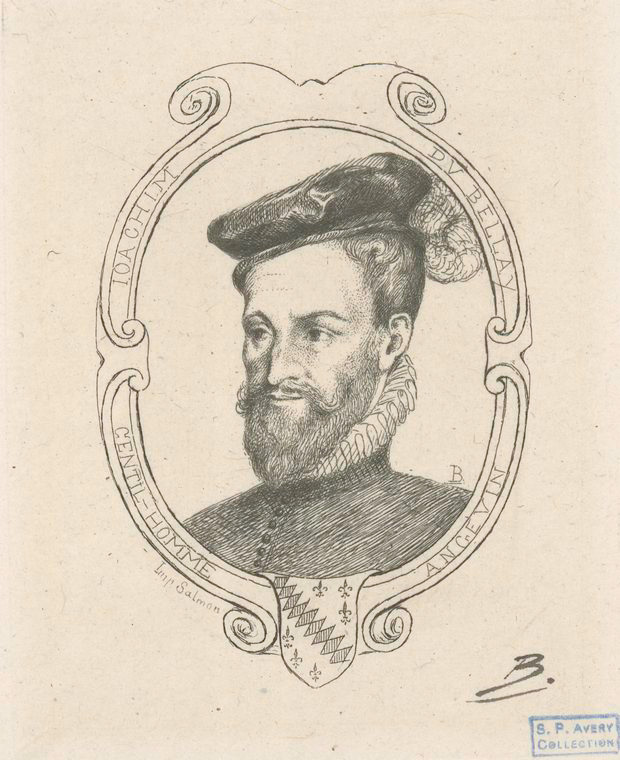
—You called for the use of new words, neologisms drawn from Greek or our dialects. Some reproached you for disfiguring French. What do you answer them?
That a language that no longer invents condemns itself to death. Latin itself was once a poor language, which its poets gradually enriched by borrowing from Greek. Why should French deprive itself of the same right? I advocated imitation, which is not slavish translation, but the art of rivaling the Ancients and raising our vulgar tongue to their dignity. To forge a word, revive an old term from our provinces, dare a turn of phrase: that is how one builds a language worthy of a great kingdom. They called me reckless. I prefer that to the lukewarmness of those who are content to repeat what Marot already said.
A language that no longer invents condemns itself to death.
—My friend, I see you straining your ear tonight. This deafness that overtakes you, how do you endure it in your daily life?
It cuts me off from the world a little more each month, Pierre. Voices reach me as if through deep water, and I must redouble my attention to follow a conversation I once caught on the fly. But there is a strange grace in this silence: it returns me to my books, to the candle, to solitary reading of Virgil and Horace. In the evening, when tasks fall silent, I polish my verses without distraction. What isolates me from men brings me closer to my pages. I will not hide from you that melancholy finds its account in it; but work too, and that is perhaps all that remains truly mine.
What isolates me from men brings me closer to my pages.

—This year you published The Courtier Poet. One senses your bitterness against those who beg for the king's favors. Do you feel so poorly rewarded for your art?
Look around you: this modest lodging on the Left Bank, these books, and very few benefits. I have served, I have written, I have defended our language, and I live in hardship while talentless rhymesters prosper by flattering the powerful. The Courtier Poet is my riposte: I mock the one who sacrifices his creative honesty for a few courtly smiles. I hoped for a patron, a protector in the Roman manner; I found only promises. Perhaps I am too uncompromising for this trade of greetings. You, Pierre, who are better placed than I with the great, know what it costs to keep the soul free when the purse remains empty.
I mock the one who sacrifices his creative honesty for a few courtly smiles.
—When I think of our beginnings at the Collège de Coqueret, under Dorat, would you say we have kept the youthful vow we made to each other?
In essentials, yes, and that is my greatest pride. We wanted French to be able to sing of love, exile, greatness, and ruin as well as the ancient languages; we have done it, you with your odes, I with my sonnets. The sonnet, that form from Petrarch, became ours, naturalized in French as if born there. We learned to imitate without enslaving ourselves, to draw from the Ancients the sap and not the copy. It remains to be seen whether those who follow us will keep this ardor. But whatever becomes of me, I know that our Brigade will have changed the very way one speaks and dreams in this language. That vow, we have kept.
The sonnet became ours, naturalized in French as if born there.
—One last thing, Joachim: between marble Rome and your humble Liré, if you were forced to choose where to end your days, which would prevail?
You already know my answer, since I put it in verse. The home my ancestors built pleases me more than the bold front of Roman palaces; more than hard marble pleases me the fine slate of my Anjou. Rome gave me my finest books, I do not deny it; but it also taught me how fragile glory is and how perishable greatness. In Liré, there is the Loire, the sweetness of the air, the memory of a childhood even if harsh. I believe every exile carries within him one true country, and that a man's entire work is but a long attempt to return there. Mine fits in four acres of Anjou.
Every exile carries within him one true country, and his entire work tries to return there.

This imaginary interview was generated by artificial intelligence from sources documented in Joachim du Bellay's profile. It dramatises what the figure might have said based on what we know about them, but does not constitute attested historical testimony. For primary sources and factual documentation, refer to the full profile.