Imaginary interview with Joan Fontaine
by Charactorium · Joan Fontaine (1917 — 2013) · Performing Arts · Literature · 5 min read
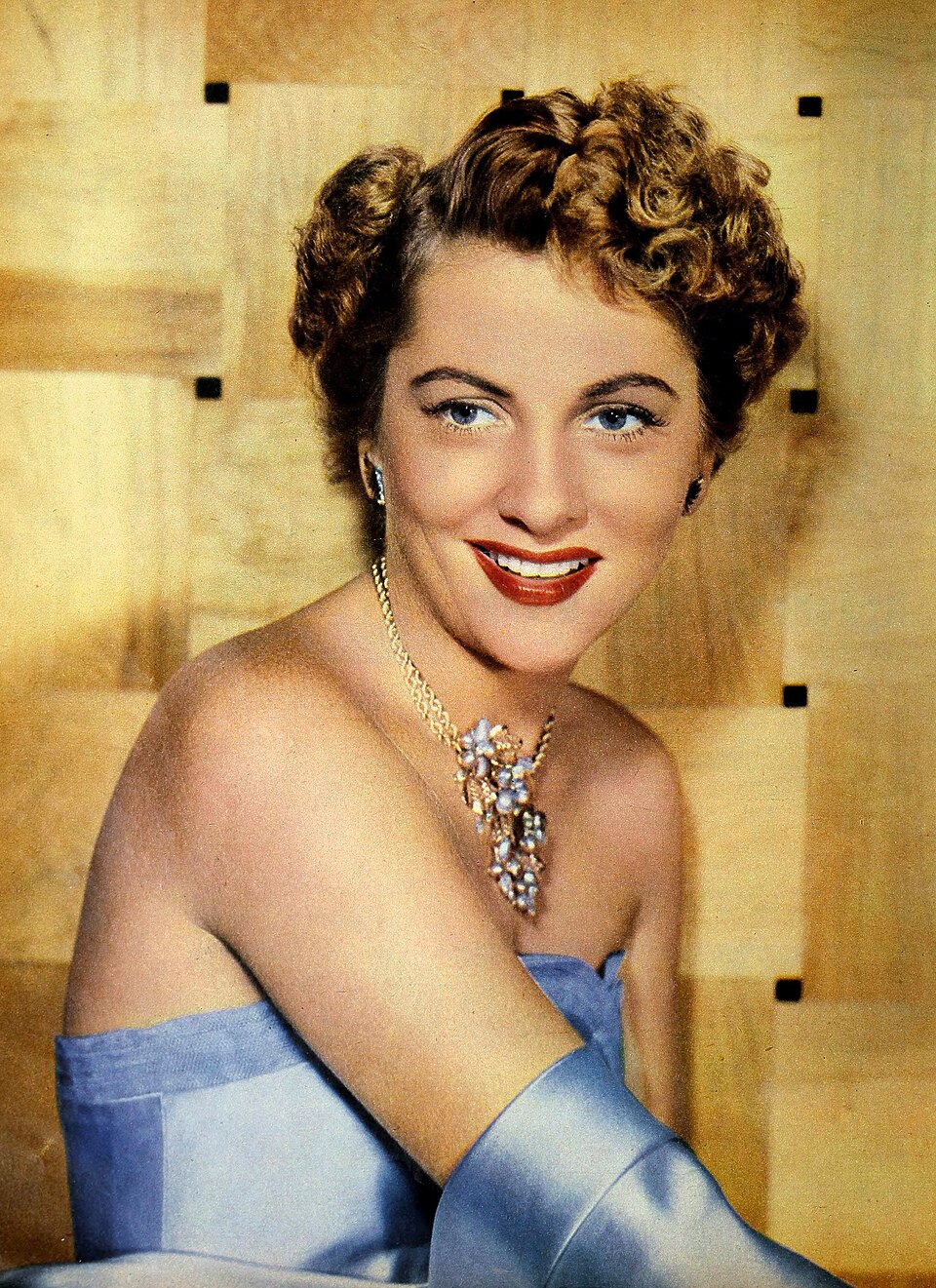
December in Carmel-by-the-Sea, in a wooden house facing the Pacific. Joan Fontaine, ninety-six years old, receives in a living room where, on a console table, a golden statuette still catches the late-afternoon light. She speaks in a clear, slightly sharp voice, with that British accent that Hollywood never quite erased.
—How do you answer when people ask where you're from?
It's the simplest question in the world and I've never known how to answer it properly. I was born in Tokyo in 1917, to a British father who practiced patent law, and I grew up under the California sun. English by blood, Japanese by cradle, American by papers—and even that naturalization, I only got after years in the studios. When I wrote my memoirs, I put down in black and white that I had never been able to say with certainty what my nationality was. People found me exotic; I mostly found myself without a fixed address. All my life, I've carried this strange unlabeled suitcase, and I think it served me: an actress who belongs nowhere can slip into any skin.
English by blood, Japanese by cradle, American by papers—and even that.
—Why did you choose the name Fontaine, when you already bore the illustrious name de Havilland?
Because Olivia already took up all the space. My elder sister was established in Hollywood, the name de Havilland was known, and I refused to enter a room where I'd be introduced as 'the little sister of.' At first I acted under the name Joan Burfield, which meant nothing, then I took Fontaine, as a tribute to my stepfather George. It was my way of cutting a door for myself. People saw it as coquetry; it was survival. You can't build anything in the shadow of a tree that's already tall—you have to go plant your own a little further away, even if the garden later becomes a battlefield.
You can't build anything in the shadow of a tree that's already tall.
—What do you remember of the evening in 1942, when the Oscar was awarded to you in front of your own sister?
A dizziness, above all. We were both nominated that year, and it was my name that was read, for Suspicion. You have to understand: Olivia and I are the only sisters in history to each have won the Best Actress Oscar. It could have been a family celebration; it became a rift. Legend has it that after the ceremony, that evening, my sister turned her back on me—I won't deny it, I won't embellish it. A golden statuette weighs very little in the hand and very heavily on a family table. It took me decades to understand that it wasn't the Oscar that divided us; it only illuminated a crack that was already there.
A golden statuette weighs very little in the hand and very heavily on a family table.
—Do you remember how Hitchcock directed you on the set of Rebecca?
I remember it as an education through fear. For Rebecca, in 1940, my character didn't even have a first name—that young woman crushed by the ghost of the first wife and by the terrible Mrs. Danvers. Hitchcock came and whispered to me, in confidence, that the whole crew hated me. I believed him—completely, foolishly. And that lie made me exactly what he needed: intimidated, fragile, alone among people I thought were hostile. I arrived on set every morning with the knot in my stomach he expected of me. It was cruel and it was brilliant. He wasn't directing an actress; he was manufacturing an emotion in my place, and he held the strings.
He wasn't directing an actress; he was manufacturing an emotion in my place.
—Would you say that method was manipulation or genius?
Both, inseparably. Much later, to a journalist from New York, I confided that he had told me I was surrounded by people who despised me, that I had believed it completely, and that it had made my acting possible—that was his genius: he understood how to use fear. On Suspicion, he did it again—that fear of a woman convinced that her husband, Cary Grant, wants to kill her. An ordinary director asks you to play terror; Hitchcock, instead, puts you into terror and just has to film. I received the Oscar for that dizziness. Do I forgive him? There's nothing to forgive: the result is on screen, and it's right.
An ordinary director asks you to play terror; Hitchcock puts you inside it.
—The studio RKO, they say, didn't want you for Suspicion. How did you experience that distrust?
Humiliating at the time; delicious in hindsight. In the RKO archives, there is a contract where management notes in black and white its reservations about my suitability for the role, while reluctantly consenting to a screen test. Imagine: you are hired with the explicit notation that they doubt you. Hitchcock himself initially preferred another actress. So I was the imposed choice that no one had selected. It was precisely this general distrust that fueled my performance—I didn't have to imagine being suspect to everyone; I actually was. And when the Oscar came in 1942, it was the same producers, sheepish, who came to congratulate me. I kept to myself the pleasure of their embarrassment.
You are hired with the explicit notation that they doubt you: that was my daily life as a beginner.
—What was the real life of an actress under contract in those years?
That of a luxury boarder, watched from morning to night. The star system didn't employ you; it owned you: a seven-year exclusivity contract that decided which films I could accept, which photographers I had to receive, sometimes my weight. I was summoned to the dressing rooms before dawn, at six a.m., for hours of makeup and hair, and I was weighed like a racehorse. The studios chose my roles, my image, almost my acquaintances. It was gilded, comfortable, and perfectly infantilizing. They called it the dream factory—the word factory was the more accurate of the two.
The star system didn't employ you; it owned you.
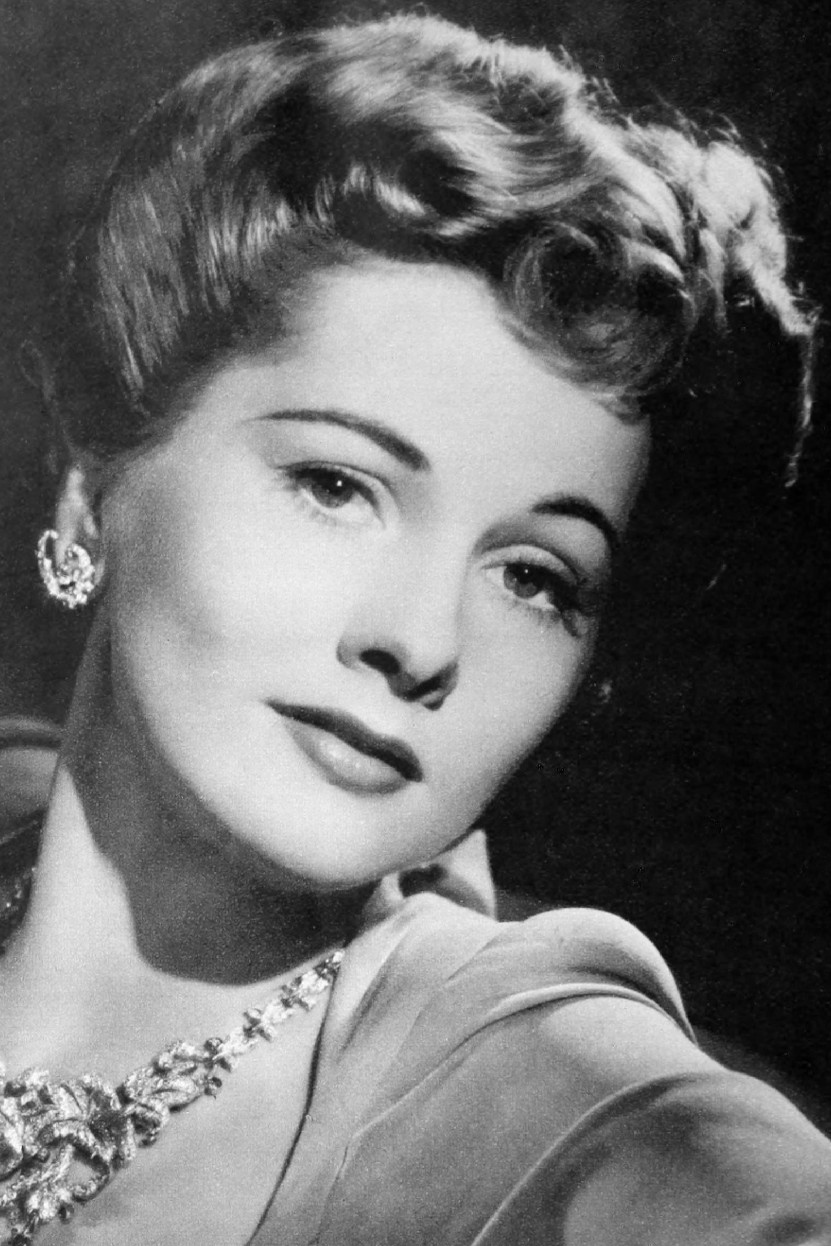
—Your roles painted an image of a fragile, suffering woman. Do you recognize yourself in that?
Partly, and that part annoyed me for a long time. I played Jane Eyre in 1944, Charlotte Brontë's heroine, alongside Orson Welles; then, in Letter from an Unknown Woman, that woman hopelessly in love with a pianist who never recognizes her. I was cast in the mold of Hollywood melodrama: the sweet, the wounded, the romantic. Those silk costumes they tailored for me embodied a certain idea of vulnerable femininity, and the public loved it. But playing fragility requires a strength that no one sees: you have to be as solid as a framework to hold up a woman who collapses for two hours straight.
You have to be as solid as a framework to hold up a woman who collapses.
—Among all those roles, which one does the actress you are prefer?
Letter from an Unknown Woman, by Max Ophüls, in 1948, without the slightest hesitation. Critics saw it as my finest performance, and for once I agree with them. That melancholy fin-de-siècle Vienna, that woman who loves a man all her life without ever being seen by him—there was a pain there that I didn't have to mimic, only to let surface. Ophüls filmed the way one waltzes with a camera; you felt carried. Next to the turmoil of my films with Hitchcock, that role whispered, and it's in the whisper that I gave my best. An Oscar rewards a dizziness; a performance like that, you keep for yourself.
A woman who loves a man all her life without ever being seen by him.
—You insisted on writing your memoirs yourself. What did you hope to say that the screen kept silent?
The truth of the flip side of the set, the one that set photographers never captured. In 1978, I sat at my typewriter and wrote No Bed of Roses—the title says it all. I recount my four marriages, the rivalry with my sister, the ambiguity of my origins, everything the star system had ironed out to make a smooth image. They wanted stars without rough edges; I was determined to leave a trace with angles. An actress is not just a face lent to the camera: she is also a woman who, one day, sits down alone and writes her own version, before others write it in her place.
They wanted stars without rough edges; I was determined to leave a trace with angles.
This imaginary interview was generated by artificial intelligence from sources documented in Joan Fontaine's profile. It dramatises what the figure might have said based on what we know about them, but does not constitute attested historical testimony. For primary sources and factual documentation, refer to the full profile.