Imaginary interview with Jules Ferry
by Charactorium · Jules Ferry (1832 — 1893) · Politics · 6 min read
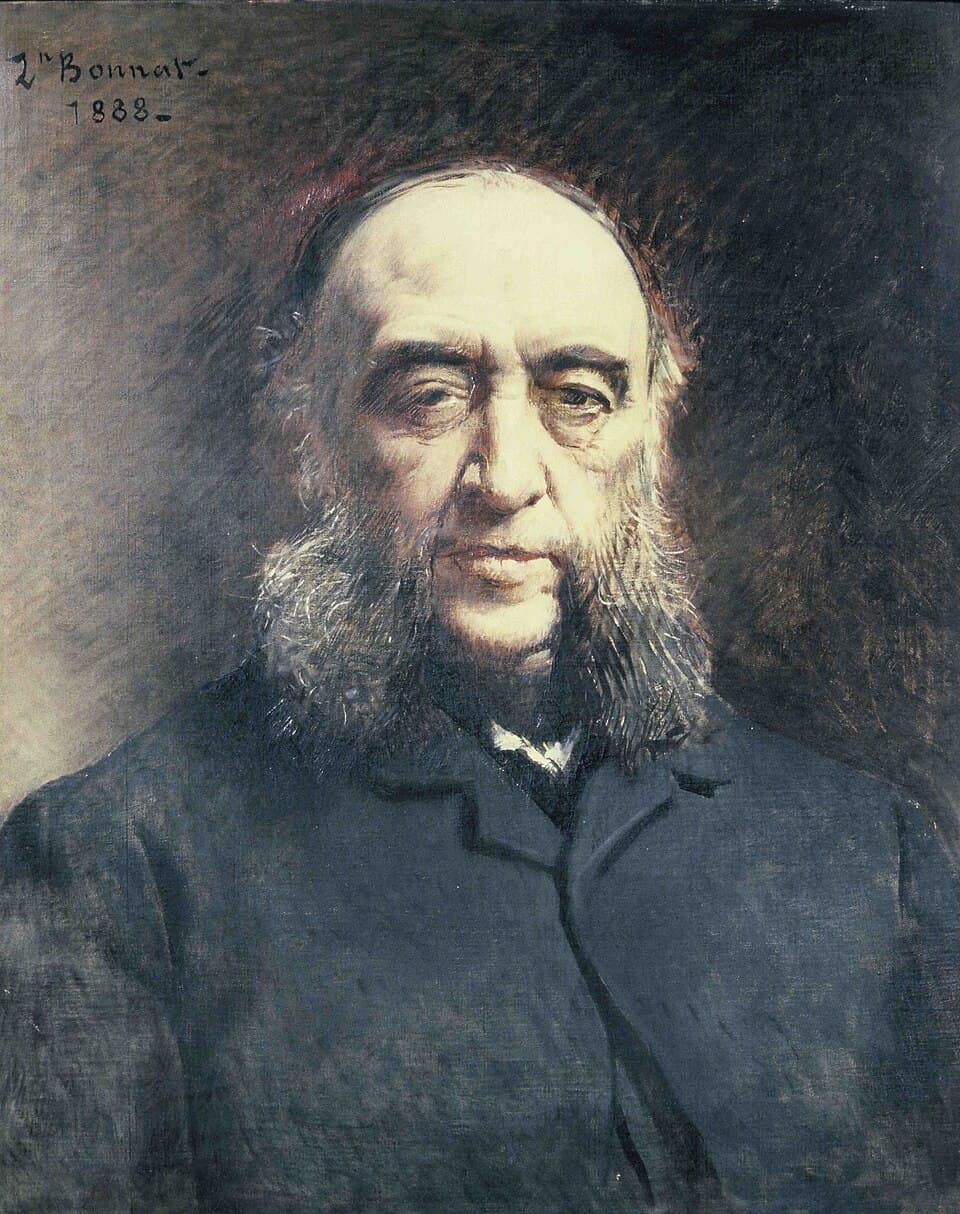
Paris, a winter evening in the 1880s. In his study on the Rue de Grenelle, cluttered with school textbooks and volumes of Auguste Comte, Jules Ferry receives visitors by lamplight. The man whom the crowd has alternately cheered and booed agrees, for once, to speak of himself.
—You were long called 'Ferry-Famine.' What does that nickname mean to you?
Ah, that name... It was hurled at me during the siege of 1870, when I was administering a Paris encircled by the Prussians. I was tasked with distributing bread, meat, whatever little remained, among two million hungry mouths. Do you think a man who hands out scarcity is thanked? He is cursed. Parisians saw in me not the manager of an imposed shortage, but the author of their hunger. That sobriquet stuck to me like slander, and I bore it without complaint. I had learned, in those terrible months, that a public man must know how to be hated for simply doing his duty. That is a lesson I never forgot.
A public man must know how to be hated for simply doing his duty.
—You governed the capital from the Hôtel de Ville during those months. What are your memories?
The Hôtel de Ville was my battle station, not under bullets but under stares. I spent nights there counting supplies, signing requisitions, receiving neighborhood delegations demanding their due when there was nothing left to give. Outside, Prussian shells fell on the city, the winter cold of 1871 gnawed at bodies, and people even ate the animals from the Jardin des Plantes. I saw what defeat does to a people: it drives them mad with hunger and anger. That ordeal forged in me a character many deemed cold, inflexible. But how can one remain lukewarm after holding a dying capital in one's hands?
—You made the school the great undertaking of your life. What enemy were you targeting exactly?
It all lies in a sentence I spoke at the Salle Molière in April 1870, long before becoming minister: 'Modern society must decide to choose: it must choose between the Church, which holds it through the rising generations, and the school, which alone can regenerate it.' That is my entire struggle. I do not hate faith, mark my words. But I could not bear that the teaching congregations held the minds of France's children as one holds a bridle. The law of free education of June 1881, followed by that of compulsory schooling, were the weapons of this reconquest. Wrenching the school from the clergy's hands was not fighting God: it was returning the child to the Republic and to reason.
—When you had the crucifixes removed from classrooms, what response did you receive?
Mountains of letters. Thousands. They called me a devil's accomplice, a gravedigger of Christian France; some contained barely veiled death threats. The law of March 28, 1882 removed religious instruction from the curriculum and took down the crucifixes from the walls, replacing them with the emblems of the Republic — and this gesture, modest in appearance, unleashed passions as if I had touched the soul of the country. I remained unmoved. I repeated everywhere that secularism was not a war machine against religion, but a guarantee of freedom for all children: Catholic as well as Protestant, Jewish as well as nonbeliever. They attributed hatred to me; I had only concern for concord.
—In 1883 you wrote a long letter to primary school teachers. What did you want to tell them?
I wanted to entrust them with a mission, and make them feel its weight. In that circular of November 1883, I told them this: 'You are the auxiliaries and, in a way, the substitutes of the father of the family; speak to the child as you would want someone to speak to your own.' That is the essence. The secular teacher does not replace the priest with another catechism; he teaches a civic morality that both the Catholic father and the freethinking father could approve without blushing. I did not ask the teacher to preach, but to elevate: kindness, gravity, sometimes severity, and above all the conviction of doing a work of civilization. It is the highest task the Republic could entrust to a man.
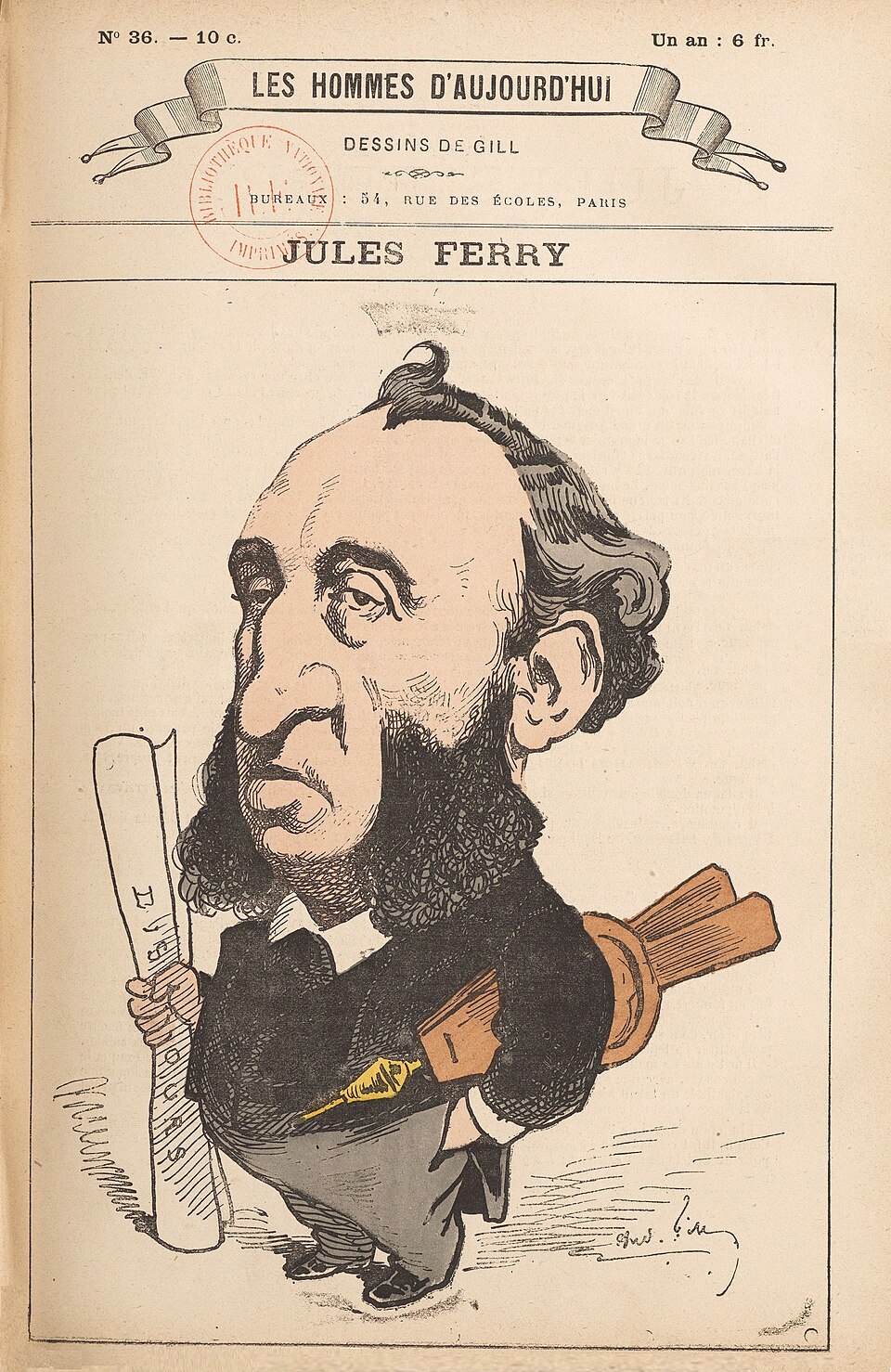
—Your teachers were nicknamed the 'black hussars of the Republic.' How did you train them?
The name is beautiful, isn't it? They were seen passing through villages in dark frock coats, straight as soldiers — hence those black hussars that Péguy later celebrated. But before marching, they had to be instructed. So I had a normal school for teachers established in every department between 1879 and 1882, to shape this peaceful army with a single discipline, a single pedagogy, a single spirit. They then set off into the depths of the countryside, the secular school textbook under their arm, bringing reading and arithmetic where only patois and prayer were known. I wanted no hamlet of France, however remote, to escape the light of the school. These were my true legions.
—You were mocked by being called 'the positivist.' Did you embrace that title?
With pride, sir, with pride. I read and reread Auguste Comte, and his philosophy illuminated my entire life as a statesman. Positivism teaches that the human mind rises through science and observation, not through dogmas or revelations. My opponents hurled this word as an insult, thinking to confound me; I picked it up like a flag. All my educational work stems from it: if the school must rest on reason rather than faith, it is because I believe, with him, that humanity progresses by leaving the theological age. In the evening, in my study lined with his works, I rediscovered that tranquil conviction — that France could be regenerated by methodical thought, not by miracles.
My opponents hurled this word as an insult; I picked it up like a flag.
—How did you spend your evenings, away from the tumult of the Chamber?
When evening came, I withdrew to my oak desk, and I often worked far into the night on my speeches and bills. It is in that silence that sentences take shape, that the law takes form. But I also enjoyed frequenting the republican salons, where alliances were forged and philosophy was vigorously debated — positivism had its faithful there. My Parisian library was lined with works by Comte and French history; one could discern the man there better than in his harangues. I led a sober life, I admit, with little taste for the pleasures of the table: a man who wants to regenerate a country hardly has time for feasting. Thought was my only true indulgence.
—1885, Tonkin, your fall. What happened that day?
It was my political end, and it was brutal. I had committed France to Tonkin, in that distant Indochina, convinced that a great nation must extend its influence. But upon news of a military setback — the retreat from Lang Son, magnified by rumor — the Chamber rose against me. Clemenceau, that harsh-toothed tribune, led the pack; I was called 'the Tonkinese' with contempt, and I left power in 1885 under jeers, almost under spittle. Overthrown in one evening, I who had remade the Republic's schools. I understood that day that the political crowd is as fickle as the one that had cursed me during the siege. Laws are forgotten; a defeat is not forgiven.
Laws are forgotten; a defeat is not forgiven.
—Your July 1885 speech on colonization caused scandal even within your own camp. Do you defend it?
I delivered it before the Senate, on July 28, 1885, and I retract nothing, whatever it costs me in some memories. I said then that 'the superior races have a right with regard to the inferior races… they have the duty to civilize the inferior races.' I believed it: republican France, in my eyes, carried a mission of civilization, just as she carried it in her rural schools. The same drive that made me establish normal schools to enlighten our peasants pushed me to bring our language and our reason beyond the seas. My adversaries, on the left and the right, saw only pride or useless expense. History will judge — but I never acted except in the conviction of serving the greatness of my country.

This imaginary interview was generated by artificial intelligence from sources documented in Jules Ferry's profile. It dramatises what the figure might have said based on what we know about them, but does not constitute attested historical testimony. For primary sources and factual documentation, refer to the full profile.