Kids interview Jules Ferry
by Charactorium · Jules Ferry (1832 — 1893) · Politics · 4 min read
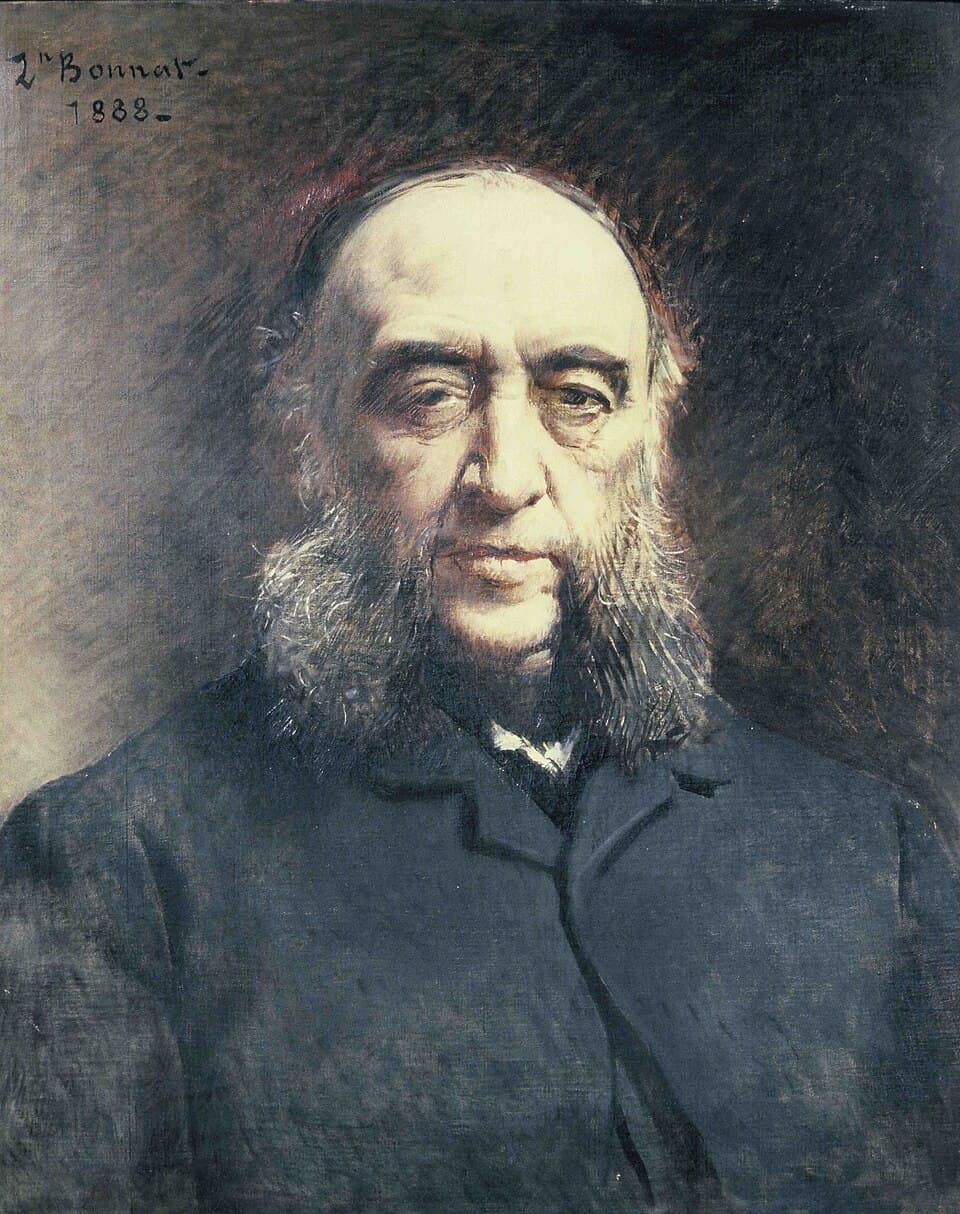
Two twelve-year-old students, on a school field trip, push open the door of an old gentleman's office. He is wearing a black frock coat. It is Jules Ferry, the man who made school free and compulsory. He welcomes them with a smile, touched that children have come to question him.
—You were born very close to Alsace. What was your childhood like there?
You know, I was born in Saint-Dié-des-Vosges, in 1832, in the middle of the mountains. Imagine fir forests, cold morning air, and right next door, a border. On the other side was Alsace. My father was a magistrate, a serious man of law. At home, we talked a lot about justice and duty. But what I never forgot was that Alsace so close. Later, when France lost it, it hurt like a wound. Even as a child, I felt that these mountains were a piece of the homeland that had to be protected.
—Is it true they called you 'Ferry-Famine'? Why that mean nickname?
Ah, that nickname... it hurt me a lot. In 1870, Prussia besieged Paris. I was mayor of the city, at the Hôtel de Ville. Imagine an entire city surrounded, cut off from the world, where food was scarce. People were hungry, terribly hungry. And I had to share the meager rations among everyone. Naturally, it was never enough. So the Parisians, angry, called me Ferry-Famine. It was unfair: I didn't create this famine, I endured it like them. But I held firm, I did my duty, even when I was hated in the streets.
—Why did you have the crosses removed from classrooms?
Ah, that caused quite a stir! In 1882, I removed religious instruction from public schools. Crucifixes were taken down from the walls. I received thousands of insulting letters, and even death threats. But listen carefully: I wasn't waging war on God. I wanted a school where Catholic, Jewish, or Protestant children would feel at home. That's what secularism is: the school serves no particular religion, so it welcomes all children. Imagine a classroom where everyone is equal to their neighbor, no matter what their parents pray. That's what I was aiming for.
The school belongs to no religion, so it belongs to everyone.
—Is it true that school wasn't free before you?
Yes, my child, and it was an injustice. Before my law of June 16, 1881, families had to pay to send their little ones to primary school. So the poorest stayed out, working in the fields or the factory. Imagine a clever child, full of promise, who would never learn to read because his parents hadn't a penny. That revolted me. So I abolished those fees: public primary school became free for all. I often repeated: educating a child is a duty that society as a whole owes him. A country that leaves its children ignorant condemns itself.
—What exactly did you ask of the teachers?
In 1883, I wrote a long letter to all the teachers of France. I told them a simple thing: be like a second father to the child. Speak to him with kindness, sometimes with severity, but always with respect. I wanted them to teach a morality without religion: to be honest, brave, just, to love one's country. This was called civic morality. Imagine a teacher who teaches a little peasant to read, and at the same time, teaches him to become an upright man. That was my greatest pride. The teacher, for me, accomplished the very work of civilization.
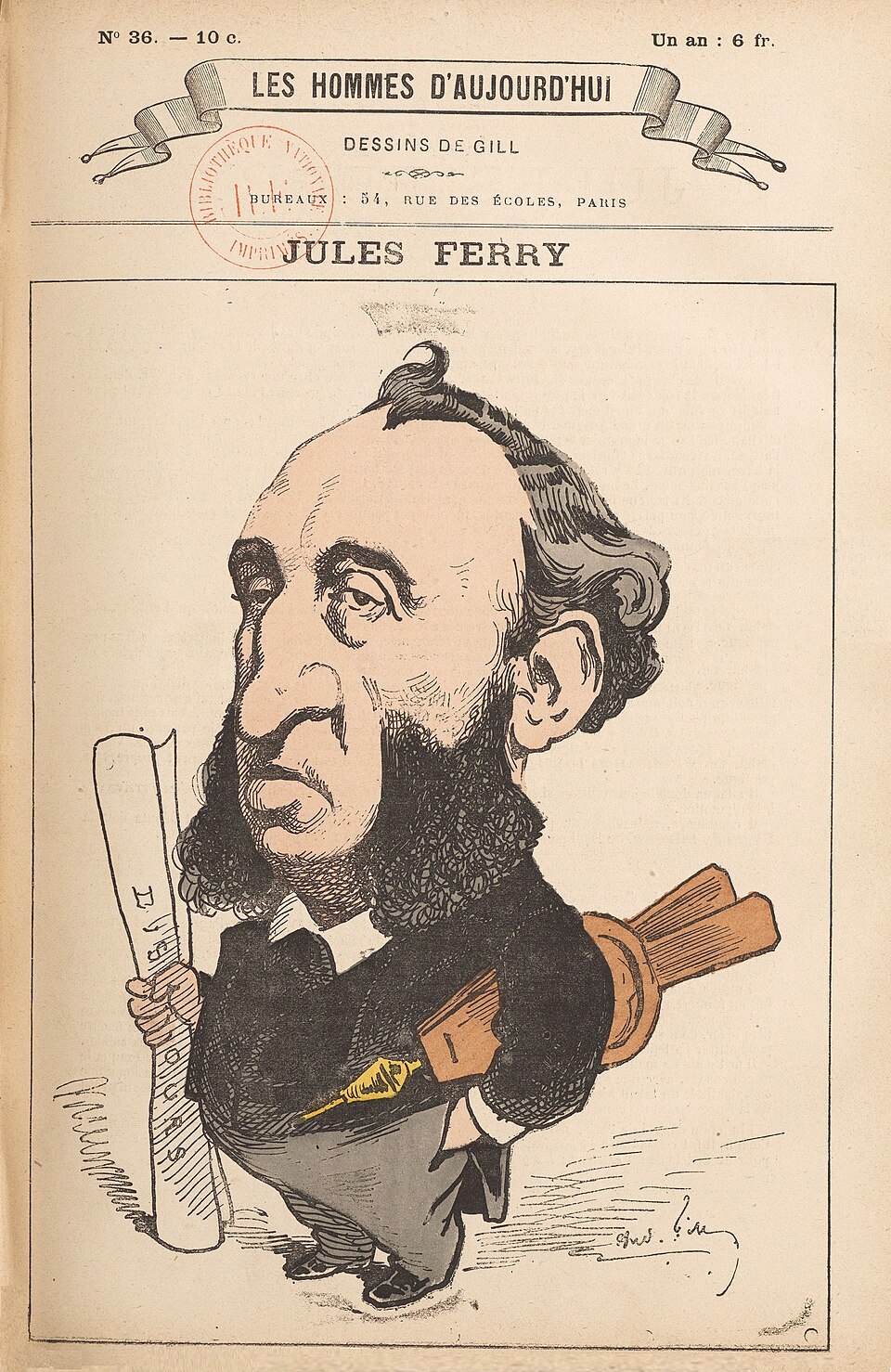
—How did one become a schoolmaster in your time?
Ah, good question! These teachers had to be trained. So between 1879 and 1882, I developed normal schools in every department — schools to learn how to teach. Young people, often sons of peasants, were trained there to become lay teachers. They were nicknamed the black hussars of the Republic, because they wore long dark coats. Imagine an army, but without rifles: their only weapon was the blackboard and chalk. They set off for the most remote villages to bring instruction. Thanks to them, entire rural areas learned to read.
Their only weapon was the blackboard and chalk.
—In the evening, after work, what did you do to relax?
You know, I rested little. In the evening, I would shut myself in my office to write my speeches, often late into the night. But I also loved my books. My library overflowed with philosophy works. I especially admired a thinker named Auguste Comte, the father of positivism. For him, we truly know the world only through reason and science, not belief. This idea guided me all my life. Sometimes, in the evening, I would join republican friends to discuss all this around a lamp. We dreamed together of a France enlightened by knowledge.
—They called you 'the positivist' — did that bother you?
Not at all, I was proud of it! My opponents said it to mock me, but I took it as a compliment. Positivism is believing that science and reason are better than old superstitions. In the morning, at six o'clock, I read newspapers like Le Temps to understand the world through facts. You see, I wanted a school built on this idea: we learn by observing, by thinking, not by reciting. Imagine a child who discovers a plant, looks at it, draws it, and understands how it grows. That was my dream of school.
—You were driven from power? What happened?
Yes, and it was hard. In 1885, I was President of the Council, head of the government. France was waging a distant war, in Tonkin, Asia. Our soldiers suffered cruel setbacks, and a man, Georges Clemenceau, attacked me violently before the deputies, at the Palais Bourbon. I was overthrown, driven from power amid jeers. Imagine leaving a great hall while a crowd shouts at you. It wasn't the first time I was hated. But you know, the anger of men passes. My schools, they remained standing.
—And at the end of your life, where did you want to be buried?
That's a question that touches me. When I died, in 1893, I had a final wish. I wanted to rest in my native village, Saint-Dié, but with my tomb facing Alsace — that land that France had lost in 1871. You understand, I never accepted that defeat. In schools, a map of France was hung where Alsace was painted black, as if in mourning. I wanted children never to forget. My hope was that school would form a youth educated enough so that one day France would rise again.
Even in death, I gaze toward Alsace.
This imaginary interview was generated by artificial intelligence from sources documented in Jules Ferry's profile. It dramatises what the figure might have said based on what we know about them, but does not constitute attested historical testimony. For primary sources and factual documentation, refer to the full profile.