Imaginary dialogue between Georges Clemenceau and Jules Ferry
by Charactorium · Jules Ferry (1832 — 1893) · Politics · 6 min read
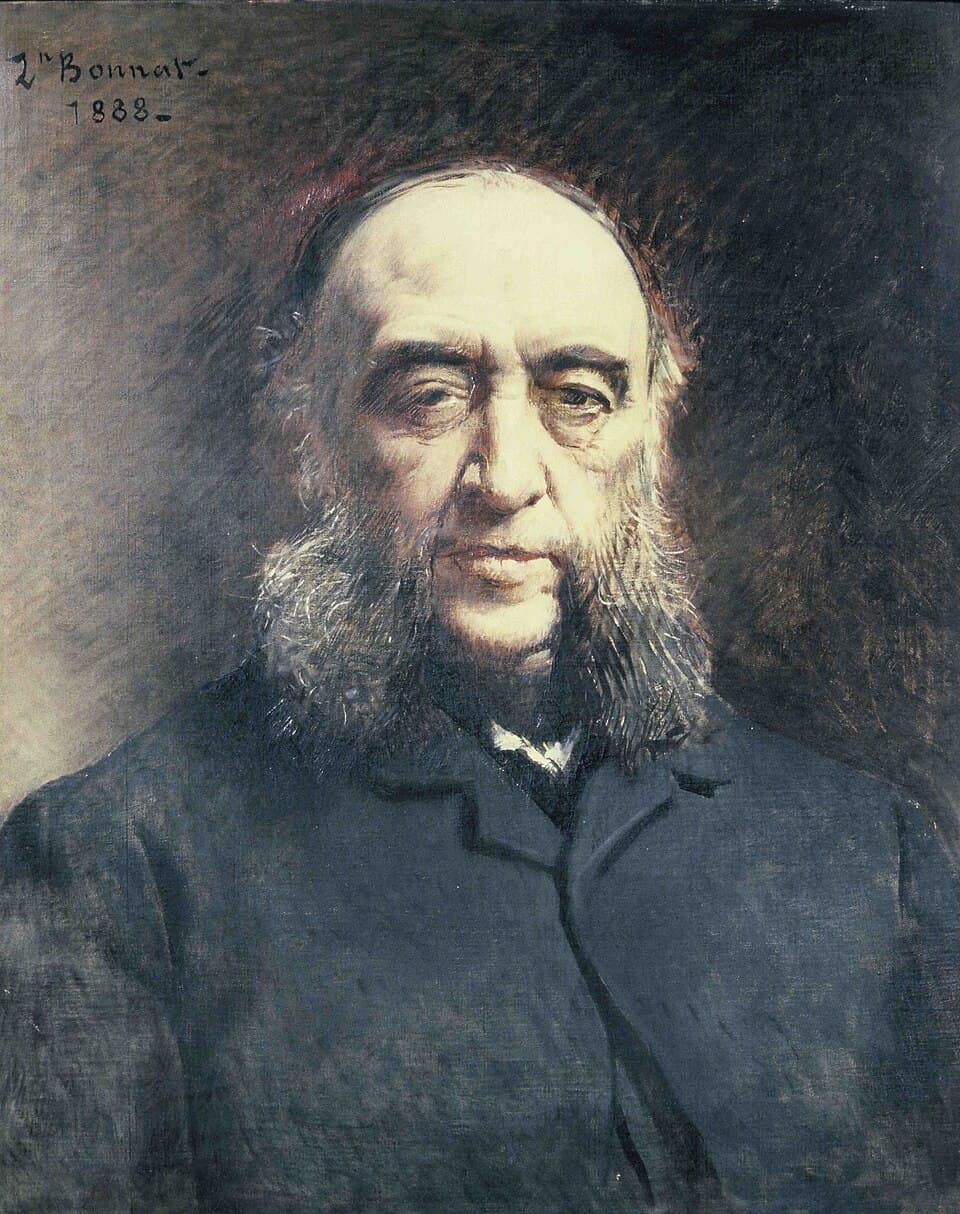
It is in the study of Jules Ferry, rue Vavin, that one winter evening in 1889 an unexpected visitor pushes open the door: Georges Clemenceau, the man whose attacks in the Chamber had hurled him from power four years earlier, after the setbacks in Tonkin. The oil lamp illuminates a library lined with volumes of philosophy, and the smell of cigar mingles with that of the old oak desk. The two men have known each other for twenty years, loyal enemies of the same Republic; Clemenceau has come tonight to understand what his rival truly wanted to build.
—Ferry, you repeated to us that we had to choose between the Church and the school. Why this mortal duel, and not simply a sharing?
You know better than anyone, Clemenceau, for you fought me on other grounds but never on that one. From my speech at the Salle Molière, in 1870, I said that a modern society must choose: the Church that holds it through the rising generations, or the school that alone can regenerate it. This is not a war against family faith; each keeps his God, his priest, his Sunday. But public education, paid for by the nation, could not remain in the hands of a clergy that deemed the Republic illegitimate. Clericalism, there is the enemy that I targeted: not religion, but its stranglehold on the child's mind. The law of March 28, 1882 decided. I received insulting letters, death threats. I did not yield an inch.
Each keeps his God; but the nation's school could not remain in the hands of those who deemed the Republic illegitimate.
—You had the crucifixes removed from classrooms. Was that not an unnecessary provocation, you who preach moderation?
I have been much reproached for those unhung crucifixes, as if I had profaned the walls. But think: a Protestant child, a Jewish child, a non-believer's child, were they to learn to read under the sign of a confession that was not theirs? The school for all could not be the school of a single faith. I wanted a neutral house, where the priest's son and the freethinker's son sit on the same bench. Neutrality is not nothingness: in place of catechism, I put civic morality, honesty, respect for others, love of country. In my Letter to Teachers of 1883, I asked the teacher to speak to the child as to his own, with kindness and gravity. Provocation? No. Simple justice rendered to all the children of France.
The school for all could not be the school of a single faith.
—You scattered France with normal schools. Who really are these teachers you train, and what exactly do you ask of them?
They are my true work, more than the laws. A law is voted in a day; a teacher is trained over several years. I wanted a normal school in every department, to give the nation an army of secular teachers, sober, devoted, often from the people they were to instruct. They have been called the black soldiers of the Republic, and I like the image: not that they wage war, but that they carry everywhere, to the remotest hamlet, the same flame. I ask of them few words and much example. Let them teach arithmetic, reading, French history, yes; but above all let them be, as I wrote, the substitutes for the father of the family. A mediocre teacher does more harm than a bad law. A good teacher saves an entire village from ignorance.
A law is voted in a day; a teacher is trained over several years.
—This morality without God that you entrust to teachers, is it not an empty shell? On what do you base it, then?
That is the objection raised against me by both the bishops and, sometimes, my own friends. They say: remove God, and the child will have no reason to be good. I answer that morality is older and broader than the dogmas that claim it. Not to lie, not to steal, to help the weak, to love one's country: does one need a catechism to understand that? This morality, all honest people share it, believers or not. It is this that I placed at the heart of the curricula and textbooks. I wanted it universal, so that no family could say that the school wounds its conscience. The teacher does not teach against the Gospels; he teaches what everyone agrees on, and leaves the rest to the home and the temple. That is civic morality: the common ground on which the whole Republic can stand.
Morality is older and broader than the dogmas that claim it.
—You were nicknamed 'the positivist.' Did you really pour this philosophy of Auguste Comte into your school?
The nickname was thrown at me like an arrow; I wore it without blushing. Yes, I read Auguste Comte, I believed and still believe that certain knowledge comes from observation and reason, not from revelation. My school was to rest on this rock: natural sciences, arithmetic, geography, facts that the child can verify with his own eyes, and not mysteries he is ordered to believe. That does not make me an enemy of feeling or beauty — I love letters too much for that. But I want people to learn to reason first. A youth that knows how to weigh evidence will not be led by fear or by charlatans. You find me cold, Clemenceau; I answer that reason is the only lasting warmth of a free people.
A youth that knows how to weigh evidence will not be led by fear or by charlatans.
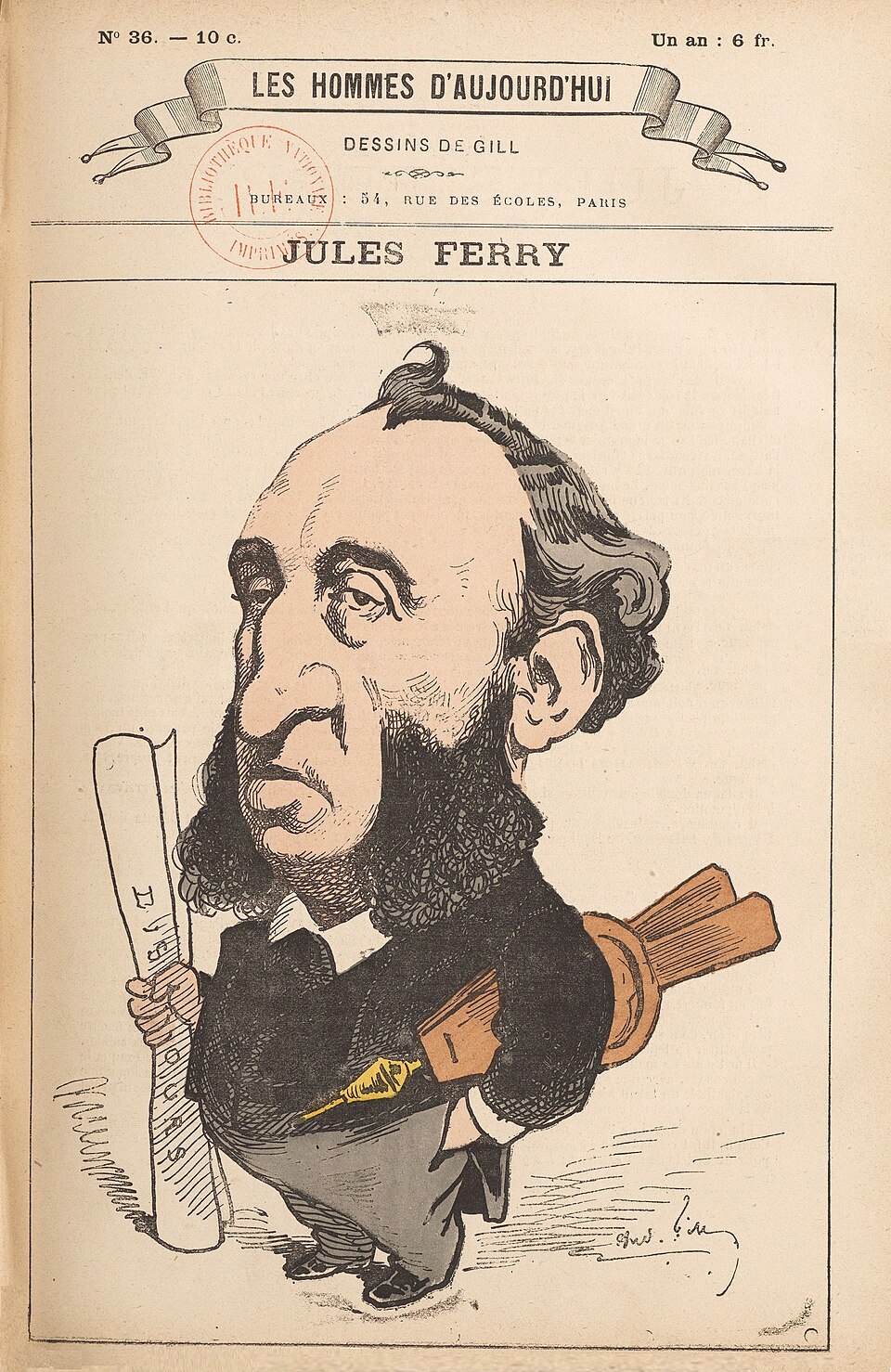
—You always advance step by step, without rushing anything. My friends see it as lukewarmness. Is it not rather calculation?
They have turned 'opportunism' into an insult; I accept its substance and reject the contempt. I do not believe one regenerates a country by thunderous decrees and the morning after barricades. First free education, in 1881; then compulsory and secular education, in 1882; finally the secularization of teachers, spread over years. Each step set before the next. You, my dear adversary, want everything, right away, and you overthrow ministries that do not advance at your pace. I prefer a building that stands to a brilliant ruin. Seizing the moment when the Chamber is ripe, when the country follows, when the law can last: that is not lukewarmness, it is strategy. Reforms that last are those one knew how to make at the right time.
I prefer a building that stands to a brilliant ruin.
—Let us talk about Tonkin. It was I who overthrew you in 1885 over that affair. Do you regret it, or would you bear me a grudge?
A grudge? We are too old in this trade for that, Clemenceau. You did your duty as an opponent with a talent I do not dispute — your words touched me to the heart, I admit, and the Chamber drove me out amidst jeers. I left power that day never to take it up again. But regret the expansion itself, no. I believed, and still believe, that France diminished in 1871 had to seek abroad an increase of greatness, markets, influence. I defended that in the Senate without hiding behind formulas. I may have been mistaken about the men, the timing, the money swallowed up there. Not about the principle. You brought me down over a misunderstood dispatch from Tonkin; history will tell whether it was a mistake or merely a defeat.
You brought me down over a misunderstood dispatch; history will tell whether it was a mistake or merely a defeat.
—You speak of 'superior races' that have a duty to civilize others. Does this idea not clash with your principles of equality?
You put your finger where my own friends are divided, and I will not flee the question. I said in the Senate, in 1885, that advanced nations have duties toward those that are not — to bring education, medicine, roads, where, in my view, stagnation and servitude reigned. You answered that this was covering conquest with a cloak of virtue. I know the force of that objection; I do not claim to have resolved it. But the equality I profess in the school of France, I never knew how to transport it as is to the peoples of Asia or Africa. Perhaps there is a contradiction here that I did not untangle. A statesman is not a philosopher in his study: he acts in chiaroscuro, and leaves it to others to judge him.
A statesman acts in chiaroscuro, and leaves it to others to judge him.
—Parisians nicknamed you 'Ferry-Famine' during the siege. You were mayor of the starving city. What did you keep from those months?
That nickname still pursues me and it is unfair, but I no longer complain about it. At the Hôtel de Ville, during the siege of 1870, I had to distribute bread, horse meat, even the animals from the Jardin des Plantes, among two million starving people surrounded by the Prussians. They saw in me the rationer, the man of scarcity, as if I had created the famine instead of fighting it. I held my post amidst jeers and bombs, because one does not abandon a city that suffers. From those dark months I kept two things: disgust for easy promises, and the certainty that an educated people defends itself better than an ignorant one. When later I built the school, I also thought of those lines of gaunt men in front of the town halls. Ignorance starves as much as the blockade.
They saw in me the rationer, as if I had created the famine instead of fighting it.
—You are from Saint-Dié, a stone's throw from the border. Lost Alsace, is it she who haunts your entire school work?
You touch on the most intimate, and that is why I answer you, who know these mountains. I was born in Saint-Dié, within sight of those provinces that were torn from us in 1871. This wound I carry in my flesh. But I never believed in revenge with fanfares and sabers drawn too soon. My revenge, it is in the classroom. A people that can read, count, reason, love their country without hating it in the neighbor — that is the army that, one day, will be worth more than all others. Training that youth, patient and educated, is preparing the return of Alsace by the only sure path. When my time comes, I want to rest up there, my face turned toward those mountains that were stolen from me.
My revenge, it is in the classroom.
This imaginary interview was generated by artificial intelligence from sources documented in Jules Ferry's profile. It dramatises what the figure might have said based on what we know about them, but does not constitute attested historical testimony. For primary sources and factual documentation, refer to the full profile.