Imaginary interview with Martin Luther
by Charactorium · Martin Luther (1483 — 1546) · Spirituality · 5 min read
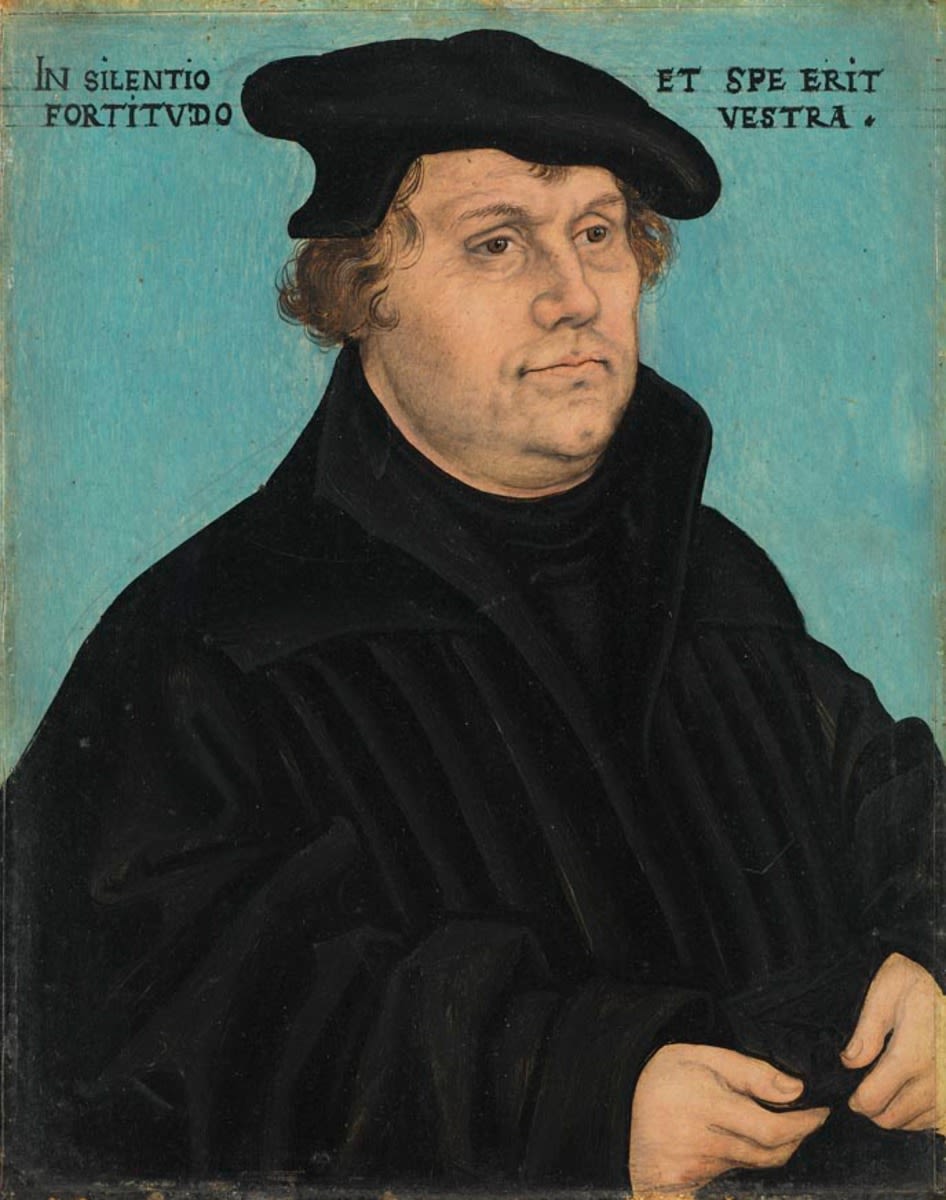
Wittenberg, winter 1545. In the great hall of the former Augustinian monastery, a long table still littered with supper scraps. Near the hearth, a massive man with keen eyes, a lute leaning against the wall, agrees to answer a few questions about the paths that led him from the monastic cell to the imperial ban.
—How did you come to publicly denounce indulgences?
I wasn't trying to split Christendom, understand. I was a doctor of theology, teaching at Wittenberg, and the Vulgate open before me cried out a truth that the peddlers of papers were trampling. They were selling poor people remission of their penalties for a few coins, like selling herring at market! It burned me. On October 31, 1517, I wrote down ninety-five propositions in Latin and submitted them for debate. I stated that no letter can erase the slightest fault where contrition of the heart is lacking. What I hadn't foreseen was Gutenberg's press: within weeks my theses were running all over Germany. A spark, and there was the fire.
They were selling remission of penalties for a few coins, like selling herring at market.
—What exactly did you reproach this practice of indulgences for?
That it lied about God. Pope Leo X wanted to build his basilica of St. Peter's, and to that end the people were persuaded that money redeems the soul from purgatory. But forgiveness is not a currency! I wrote that the true penitent obtains full remission of his penalty and guilt, even without a letter of indulgence. See the cruelty of it: they took the bread from the ploughman's children by promising him heaven. An indulgence, in the mouth of these preachers, was no longer a grace of the Church but a trade. It was against this trade, not against the faith of my fathers, that I first raised my voice.
Forgiveness is not a currency.
—Do you remember your appearance before the Diet of Worms in 1521?
How could I forget? I was summoned before Emperor Charles V himself, surrounded by princes and prelates, at the Diet of Worms. They demanded I recant my books, there, with a single word. I asked for a day's reflection, for fear gripped me, I confess. Then I replied that my conscience was bound to the words of God, and that I could not recant, for acting against conscience is neither safe nor honest. 'Here I stand, I can do no other. God help me.' I was placed under the imperial ban: an outlaw, whom anyone could kill without penalty. I walked out of that hall a hunted man.
My conscience is bound to the words of God, and I cannot recant.
—How does one find the courage to defy both emperor and pope?
It's not courage, it's compulsion. When Scripture holds you, you no longer choose. The bull Exsurge Domine had already threatened me the year before, then came excommunication. Before the Diet, everyone expected me to bend as the poor Jan Hus had bent at Constance, where he was burned. But I held a support that neither princes nor councils give. I thought of my hymn, A Mighty Fortress Is Our God — our God is a bulwark. A man alone is nothing before Charles V. A man backed by the divine word is a fortress. That is my whole secret, and it is not mine.
A man alone is nothing; a man backed by the divine word is a fortress.
—After Worms, how did you escape those who wanted you dead?
By a trick of my prince. On the return road, horsemen seized me in the forest — I thought my hour had come. It was Elector Frederick the Wise having me kidnapped to save me, and I was taken secretly to the Wartburg castle in Thuringia. There, they shaved my tonsure, let my beard grow, and dressed me in a knight's garb. I was called Junker Jörg, Squire George. I, the hunted monk, rode and hunted like a gentleman! Strange exile, those long months within four walls, where I languished far from my pulpit at Wittenberg, thinking God had set me aside.
I, the hunted monk, was called Junker Jörg, and I rode like a gentleman.
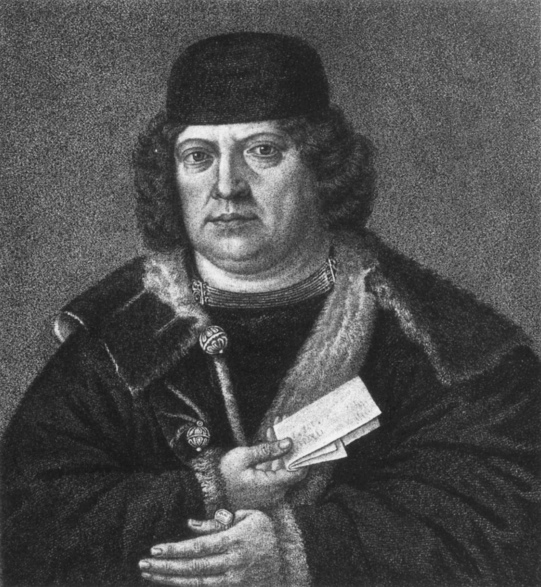
—What did you do during those months hidden at the Wartburg?
God turns prisons into workshops. In that high chamber, I undertook what I believe is the most useful work of my life: pouring the New Testament into our people's language. In eleven weeks, pen and inkstand never left my side. I wanted not a clerics' German, but the German spoken at market, at home, that a mother understands while rocking her child. For what use is a Bible chained to the Latin of scholars? The Gospel requires only one thing of us: faith. I wanted the weaver and the milkmaid to read it themselves, without a priest coming between them and the Word.
I wanted not a clerics' German, but the German spoken at market.
—Why did you abandon the monastic habit you had worn for twenty years?
Because I could no longer preach one thing and live another. I had taught that monks' vows have no power to save, that the black frock of the Augustinians does not make a man more pleasing to God than a blacksmith's apron. In 1524, I therefore shed that habit I had worn since the Erfurt monastery. It was no whim: it was joining deed to doctrine. From then on I would wear the sober robe of professors, without pomp, for simplicity of dress befits piety better than prelates' purple. Leaving that frock was silently proclaiming that my break with Rome was complete.
The black frock does not make a man more pleasing to God than a blacksmith's apron.
—Your marriage to Katharina von Bora scandalized Europe. How did you experience it?
A monk marrying a nun! I imagine the fury in Rome, and I confess it did not displease me entirely. Katharina von Bora had escaped her convent — hidden among barrels of herring, it is said — and I took her as my wife in 1525. What I taught, I did: the marriage of pastors is an institution willed by God, not a stain. Today this great house of the former Wittenberg monastery echoes with our six children, boarding students, visitors from all over Europe. My Katharina rules here, brews excellent beer, manages everything with a firm hand. From my monk's cell, God made a home.
What I taught, I did: the marriage of pastors is willed by God.
—What place does music hold in your life and in your Reformation?
The highest after theology! Music is the most beautiful gift of God, I never tire of saying it. In the evening, when my table fills with friends and students for our Table Talk, I often take up the lute and we sing. But it's not just a household pleasure. I wanted the people to sing in the services, in the vernacular, no longer mute under the Latin of choirs. For that I composed hymns, including A Mighty Fortress Is Our God. What good is a faith that does not make the heart sing? When a whole congregation intones in its own language, the devil himself takes flight.
Music is the most beautiful gift of God, second only to theology.
—Why do you insist so much that the faithful sing and pray in their own language?
Because God does not speak only to scholars. All my life I fought against this wall of Latin that separates the people from the Word. That is why I translated the Bible, preached in German, and wrote my Small Catechism so that the father of the family could instruct his children and servants at home, without waiting for the cleric. Singing proceeds from the same conviction: a hymn in the vernacular engraves doctrine in the memory better than a hundred sermons. When the blacksmith hums at his anvil a verse he understands, the Gospel inhabits his day. That is what I wanted: not a religion of specialists, but a faith that everyone can carry on their lips.
When the blacksmith hums at his anvil a verse he understands, the Gospel inhabits his day.
This imaginary interview was generated by artificial intelligence from sources documented in Martin Luther's profile. It dramatises what the figure might have said based on what we know about them, but does not constitute attested historical testimony. For primary sources and factual documentation, refer to the full profile.