Imaginary dialogue between Giorgio Vasari and Michelangelo
by Charactorium · Michelangelo (1475 — 1564) · Visual Arts · 6 min read
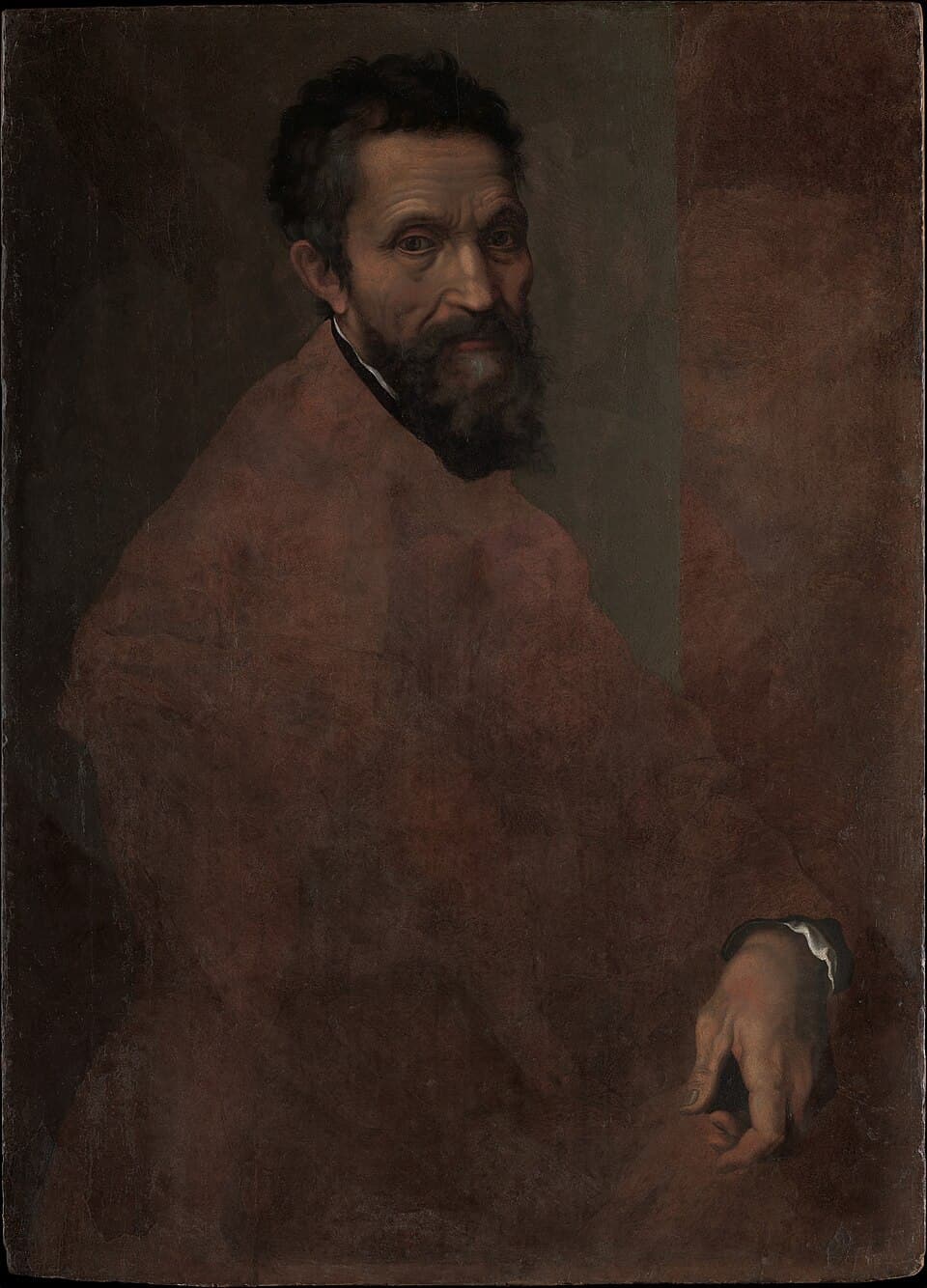
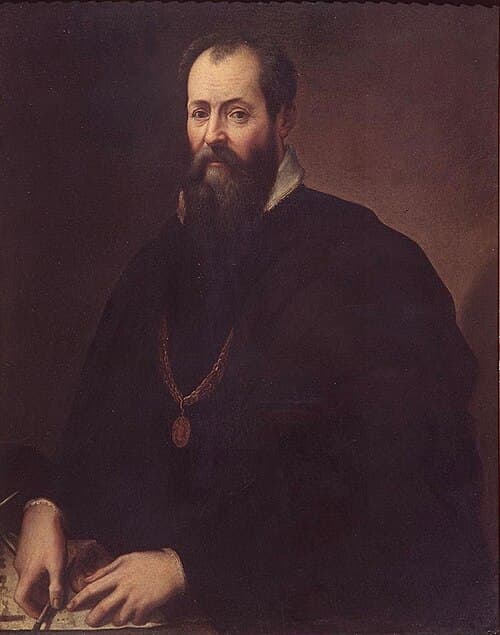
It is in the humble dwelling of the Macel de' Corvi, a stone's throw from the construction site of St. Peter's, that I find the master this winter of 1560. Marble dust still covers the floor, and a candle stuck in a cardboard hat awaits the coming night. We have known each other for so many years — I have gathered his confidences for my Lives, and this evening he receives me not as a visitor, but as an old friend come to listen to the man behind the myth.
—Master, you know that I am recording your works for my Lives. Tell me: why is the Pietà in St. Peter's the only stone you ever signed?
You know the story better than anyone, Giorgio, since it was to you that I told it for your book. I was twenty-four, and that Virgin holding her dead son was the purest thing I had ever done. One evening, I heard some Lombard pilgrims attributing it to another, a sculptor from their region. Anger seized me like a fever. I returned at night, with my chisels and a lantern, and carved my name on the sash crossing her chest. Since then, I have been ashamed of it — what vanity to mark a sacred work like that! I never did it again. God alone should sign what our hands complete. But that night I was young, and pride spoke louder than prayer.
I carved my name on the Virgin's sash — what vanity to mark a sacred work like that!
—You have often been asked how a David is born. You told me one day in Florence — will you repeat it, so that I may set it down in writing?
It is simple, and yet no one wants to believe me. The figure is already there, imprisoned in the block before I ever touch it. For the David, I created nothing: I simply removed everything that was not the David. The marble of Carrara contains a thousand sleeping bodies; my hand is merely a tool that awakens them. That is why I go myself to the quarries, sometimes for months, wading in the mud to choose my block. I look for a pure vein, without flaw that could break what slumbers within. Others buy their stone by letter, as one orders grain. I must look it in the eye, strike it with my fist to hear its song. Sculpting is not adding — it is removing, it is setting free.
I created nothing: I simply removed everything that was not the David.
—This journey to Carrara, into the mud of the quarries, always amazes me for a man of your rank. Why this stubbornness to choose the stone yourself?
Because a bad block ruins two years of work, Giorgio. A hidden vein, an invisible crack, and the marble shatters under the chisel just when you think you are reaching your goal. I have known that ruin, and I wish it on no one. So I climb up there, into the white mountain, I sleep with the quarrymen, I mark the blocks with my own hand. Some take me for a fool, a great master who soils himself like a laborer. But the sculptor who does not know his stone is nothing but a blind man armed with a mallet. The mallet and the chisel, you see, are worthless without the eye that knew how to read the material before striking it. It is in the quarry, not the workshop, that the work truly begins.
The sculptor who does not know his stone is nothing but a blind man armed with a mallet.
—Let us come to the Sistine Chapel. You confided to me that you first refused the commission of Julius II in 1508. Why resist such an honor so strongly?
Because I am a sculptor, Giorgio — not a painter! That is what I repeated to the Pope until I exhausted him. That fresco felt like a trap set by my rivals to see me fail on ground that was not mine. But you do not say no to Julius II: he was a terrible man, more warrior than shepherd. I gave in, and I suffered for four years. Imagine a man lying under a vault, his neck bent backward, paint dripping onto his face. My eyes could no longer read a letter held straight; I had to raise it above my head. I wrote to my father Lodovico in 1509 that I was living in misery and extreme toil. And yet, from that torture was born the ceiling you know.
I am a sculptor, not a painter! That is what I repeated to the Pope until I exhausted him.
—This a fresco painting that dries in a day seems to me a battle against time. How did you keep up that pace on the scaffolding?
It is a war, yes, and each morning a new battle. Every day, my assistants spread a portion of fresh plaster — what we call the giornata, the day. On that wet intonaco, I had to lay my colors before the lime dried, because once set, no correction is possible. Everything must be thought out in advance: the cartoon, the tracing, the gesture. To hesitate is to lose. I had designed the scaffolding myself, suspended from the vault without touching the ground, so that the Pope could continue his services below. You see the paradox: I who despised painting had to reinvent even its machinery. Fresco does not forgive weakness; it demands the hand of a man who already knows, before he lifts it, exactly where it will strike.
On the fresh plaster, to hesitate is to lose — fresco does not forgive weakness.
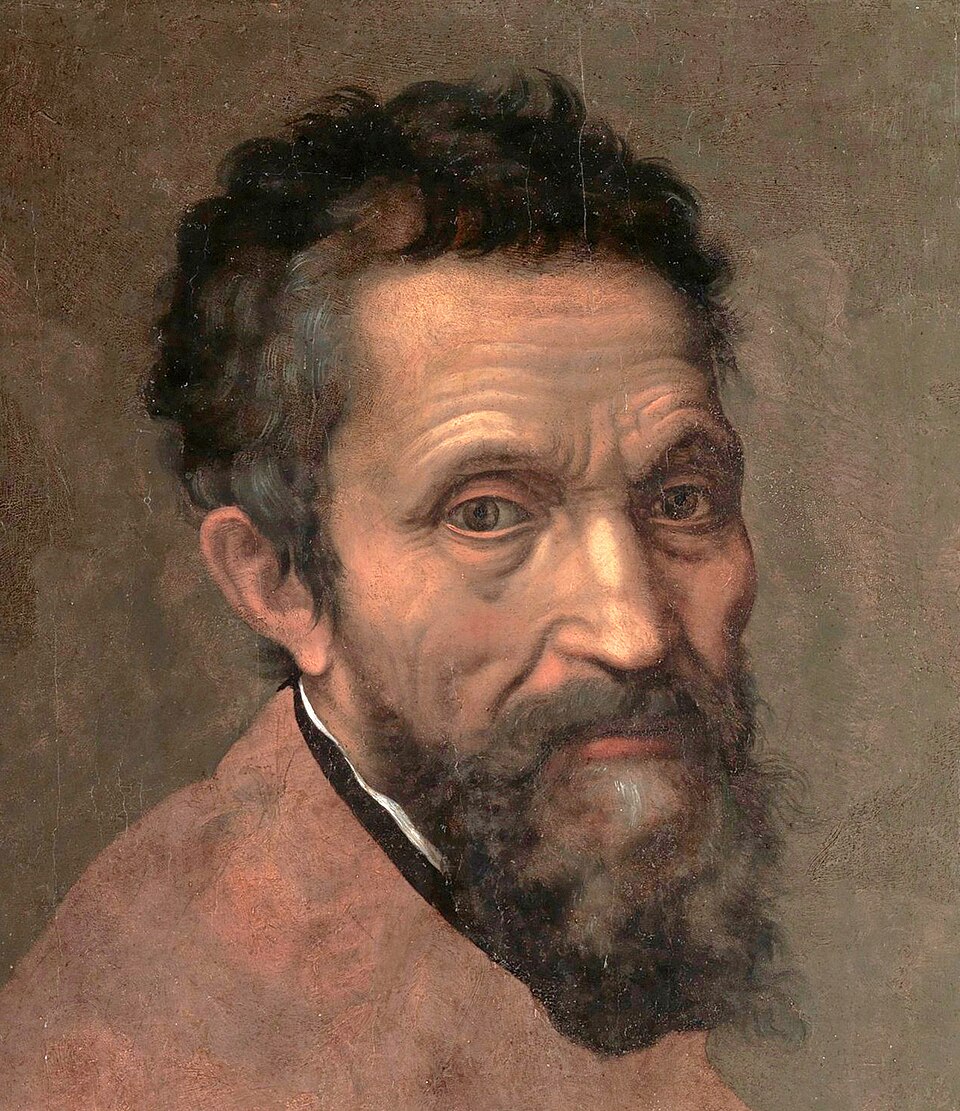
—Forgive my frankness, old friend: your close ones say that you so rarely take off your boots that the skin comes off with them. This ascetic life — is it a choice or indifference?
You are repeating a story I probably told you myself, and I am not ashamed of it. What use is care of the body when the spirit is at work? I eat bread, cheese, a little wine, often standing, eager to return to the stone. My clothes are stiff with marble dust, my boots rarely leave me, it is true. Comfort softens; I prefer a dwelling cluttered with sketches and tools to all the palaces of Rome. But do not think me miserable. In the evening, I read Dante and Petrarch, I write my own verses, and the friendship of a soul like Vittoria Colonna nourishes me more than ten banquets. The body is but a coarse shell. It is the soul that must be kept clean.
The body is but a coarse shell; it is the soul that must be kept clean.
—You mention Vittoria Colonna. What place does this friendship hold in a life as solitary as yours?
A place that words struggle to express, Giorgio, and that I would not confide to a stranger. Men think me fierce, harsh, incapable of tenderness. They are not wrong: I have little patience for fools and I work alone. But with Vittoria, I found a soul who understood what I seek in stone and in prayer. We spoke of God, of beauty that is only a reflection of the divine, of that grace from heaven which alone can overcome our hardened nature. I dedicated drawings and sonnets to her. She asked me for neither statue nor glory — only to think with her. An artist needs that as much as marble: a soul before whom to lay down his own without fear of betrayal.
An artist needs a soul before whom to lay down his own without fear of betrayal.
—You were appointed chief architect of St. Peter's at seventy-one. Why accept such a burden at the threshold of old age?
Because God asked me to, and I did not take a single coin for this work — I said so loud and clear. When Pope Paul III entrusted me with the basilica, I was at an age when others think only of dying in peace. But how could I refuse to raise the greatest church of Christendom? This dome I am designing, I know I will not see it completed. No matter. I have made the plans, the great wooden model, so that after me no one can betray its form. To build, you see, is still to sculpt — but on a celestial scale, with light as the chisel. As long as my hand holds the pencil and my eye can discern a straight line, I will serve this stone. Rest will come soon enough.
To build is still to sculpt — but on a celestial scale, with light as the chisel.
—I have seen you, these last days, taking up the chisel at night on that unfinished Pietà. What are you still seeking in that marble, at your age?
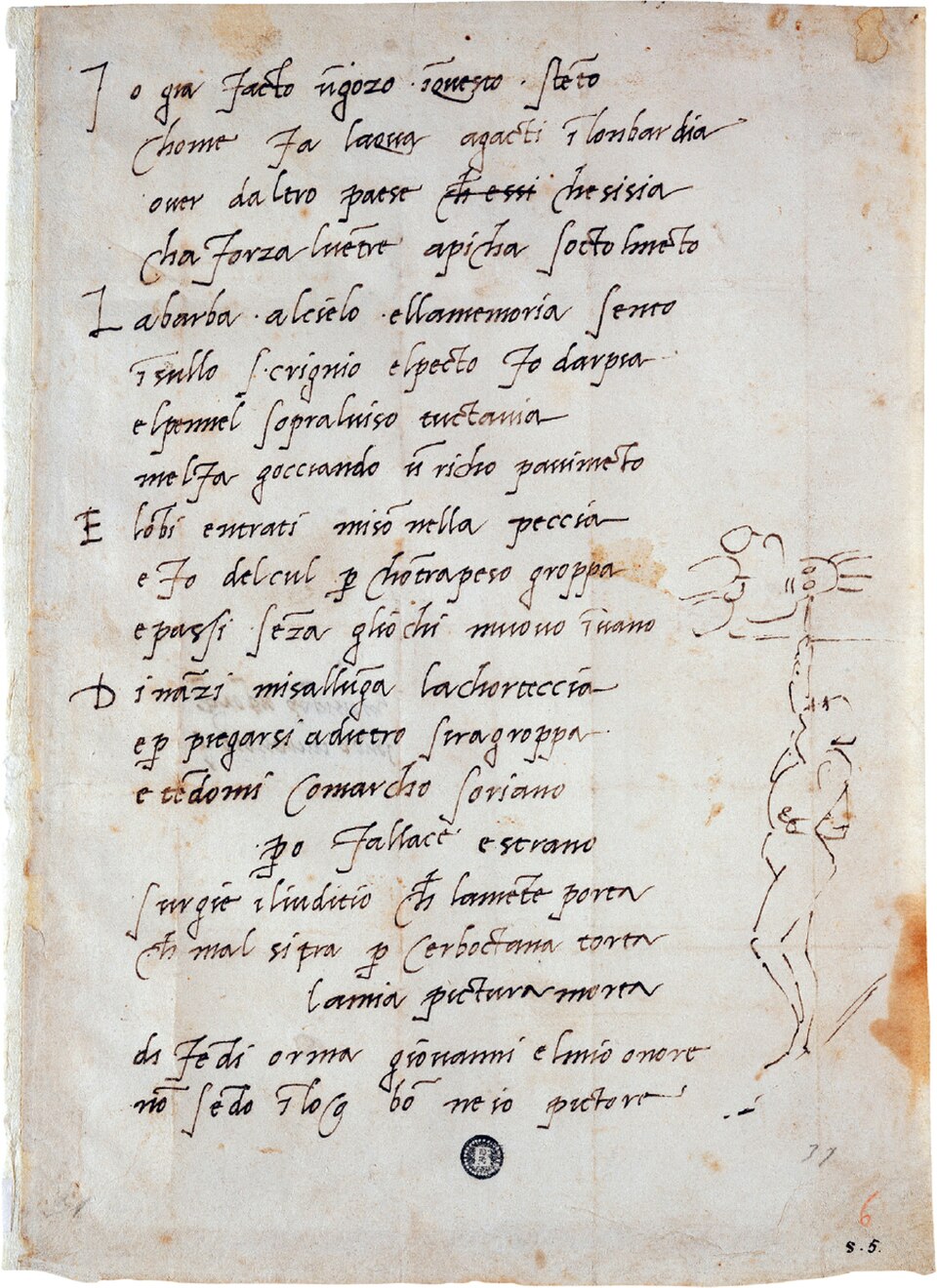
I am seeking to prepare myself, Giorgio. This Pietà, I rework and undo it endlessly; it is no longer a commission, it is a prayer carved in stone. The David of my youth exalted the strength of the body; today, I want only to strip away, to thin, to make the spirit rise out of matter. The Virgin and her son almost merge into one another — I no longer know where the marble ends and the sorrow begins. My hands tremble, I see poorly, but at night I fix my candle to my hat and I still strike. As my verses say, only the grace of heaven can overcome nature. It is that grace I implore as I remove each chip. I may die with the chisel in my hand — and that would be fine.
It is no longer a commission, it is a prayer carved in stone.
—One last question, master. When I record your life, what do you want the men of tomorrow to remember about Michelangelo?
Do not make me a demigod, Giorgio, as you are tempted to — I know you, your pen is too kind to your old friend. Rather tell the truth: a man hard at work, often unbearable, who never believed his works were finished. Say that I loved marble more than comfort, stone more than honors, and God more than the popes who commissioned me. If anything is remembered, let it be this: beauty is not an end, but a path to heaven. All the rest — the terribilità they dress me in, my signature once carved on the Virgin — is only human vanity. Write that, and you will have said the essential. The rest, time and dust will take care of.
Beauty is not an end, but a path to heaven.
Sources
This imaginary interview was generated by artificial intelligence from sources documented in Michelangelo's profile. It dramatises what the figure might have said based on what we know about them, but does not constitute attested historical testimony. For primary sources and factual documentation, refer to the full profile.