Imaginary dialogue between Tulsidas and Mirabai
by Charactorium · Mirabai (1498 — 1546) · Spirituality · Literature · 6 min read
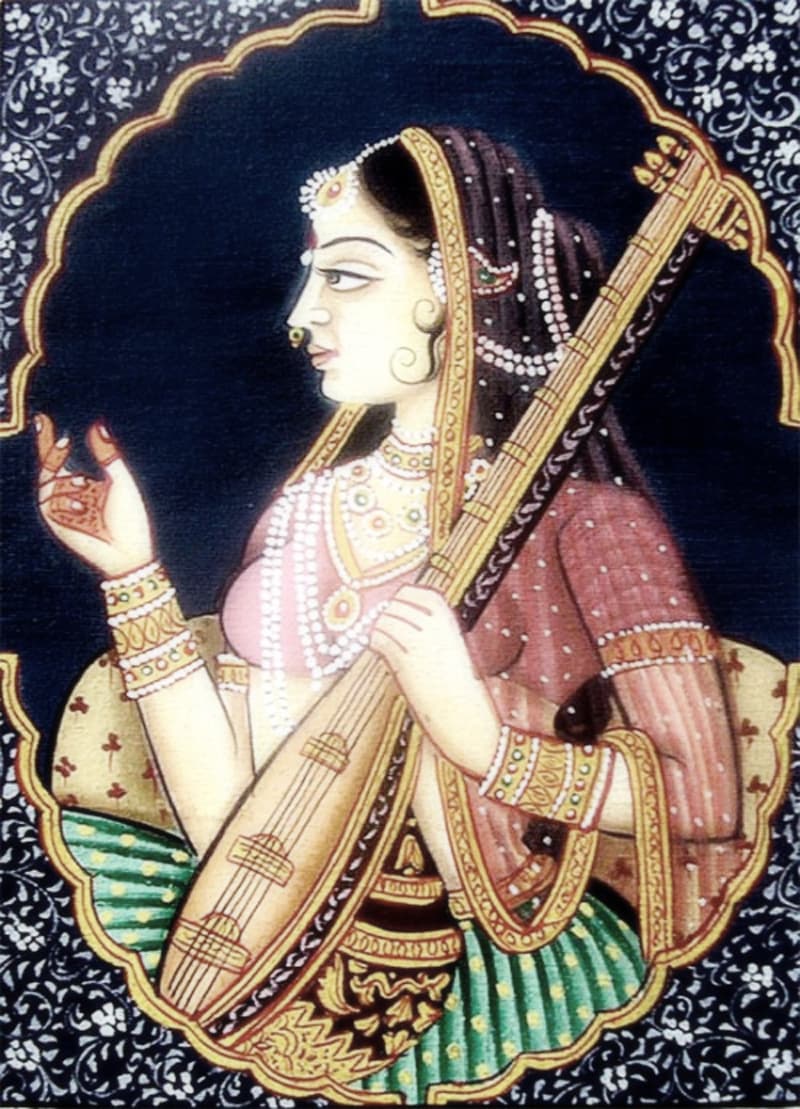
It is on a ghat of Dwarka, on the edge of the gulf where the setting sun ignites the stone, that Tulsidas meets the pilgrim of Mewar in this year 1543. An ektara rests against the step, and the scent of tulsi rises from the rosary she fingers. The two poets have never met in the flesh, but letters have traveled between them: once, she asked him for advice, torn between the duties of her rank and the call of Krishna. Tulsidas comes to listen to the one whose bhajans precede her footsteps everywhere.
—Mira, you who wrote to me to untangle duty and love, tell me: since when has Giridhar been your only husband?
Since childhood, Tulsidas. They were carrying a statue of Krishna in a wedding procession, and I asked my mother to whom that beautiful husband belonged. She replied jokingly that he was mine. A child does not trifle with such words: I believed her, and I still believe. When my earthly husband died, they wanted to throw me on the pyre like a faithful widow. I refused. How could a woman whose husband is immortal burn herself for another? Mero to Giridhar Gopal, dusaro na koi — I have no other support but him. You who weigh every word in your verses understand that a single phrase, heard as a child, sufficed to orient an entire life.
How could a woman whose husband is immortal burn herself for another?
—I have been told, Mira, that they handed you poison in a cup of prasad. Did you really go through that ordeal?
My in-laws deemed my songs dishonorable to the royal blood of Mewar. Several times they sent me, under the sacred name of prasad, a poisoned cup — hoping that a devotee would never refuse an offering. I drank while pronouncing the name of Giridhar, and death would not have me. You might call it a miracle; I say that what is offered to the Lord can no longer harm. The Rana saw enemies everywhere, even becoming enraged that an unknown beggar — said to be the emperor himself — came to listen to me and placed a necklace at my feet. The powerful fear a woman who fears nothing. It was that fearlessness, Tulsidas, that they could not forgive me.
What is offered to the Lord can no longer harm.
—Your ektara never leaves you. Teach me: how are those bhajans born that are sung from Chittorgarh to here?
They are born before dawn, Tulsidas. I rise when it is still night, I offer the flower and the light of the diya to Krishna, and while my fingers count the tulsi, the verses form on their own in my mouth. I do not compose them like a scholar carving a stanza; they rise, and the ektara gives them a body. A single string suffices — God asks no more. Some I have set to precise ragas, as in my Raag Govind, so that the melody carries the divine name further than my voice alone. In the evening, we gather for the kirtan, and there everyone sings, without anyone asking their caste. My songs do not belong to me: they belong to whoever repeats them.
A single string suffices — God asks no more.
—Do you remember, Mira, the letter in which you asked me about the dharma owed to your family? What did you take from my reply?
I remember it every day, Tulsidas. I wrote to you torn: my in-laws invoked my duty as a wife, a Rajput princess, and I heard only the call of Krishna. You reminded me that one who loves God does not abandon true duty — he finds a higher one. That strengthened me. The dharma of a woman of my rank demanded the veil, silence, and the pyre; the dharma of the soul demands song. I chose the soul. When I sing with untouchables on a ghat, I transgress nothing: I give back to each their share of God, which the castes deny them. You who praised the path of devotion in your own verses know that no wall can stand before a heart that truly loves.
The dharma of a woman demanded the veil and the pyre; the dharma of the soul demands song.
—In your songs, Mira, you often praise Narsi Mehta, that saint of Gujarat. Why that devotee rather than a king?
Because Narsi Mehta lost everything in the eyes of men and gained everything in the eyes of Krishna, Tulsidas. In my Narsi Ji Ra Mayra, I tell how his single devotion served him as fortune and rank. Kings build fortresses like Chittorgarh; they fall, I have seen them besieged. The devotee builds in the invisible, and nothing storms it. I grew up among the Rajputs, those warriors proud of their blood and honor — but what honor equals that of being called the Lord's servant? Singing a humble saint rather than a prince is saying where I place my true nobility. Bhakti requires neither sword nor crown: it requires a heart that gives itself.
Kings build fortresses; the devotee builds in the invisible, and nothing storms it.
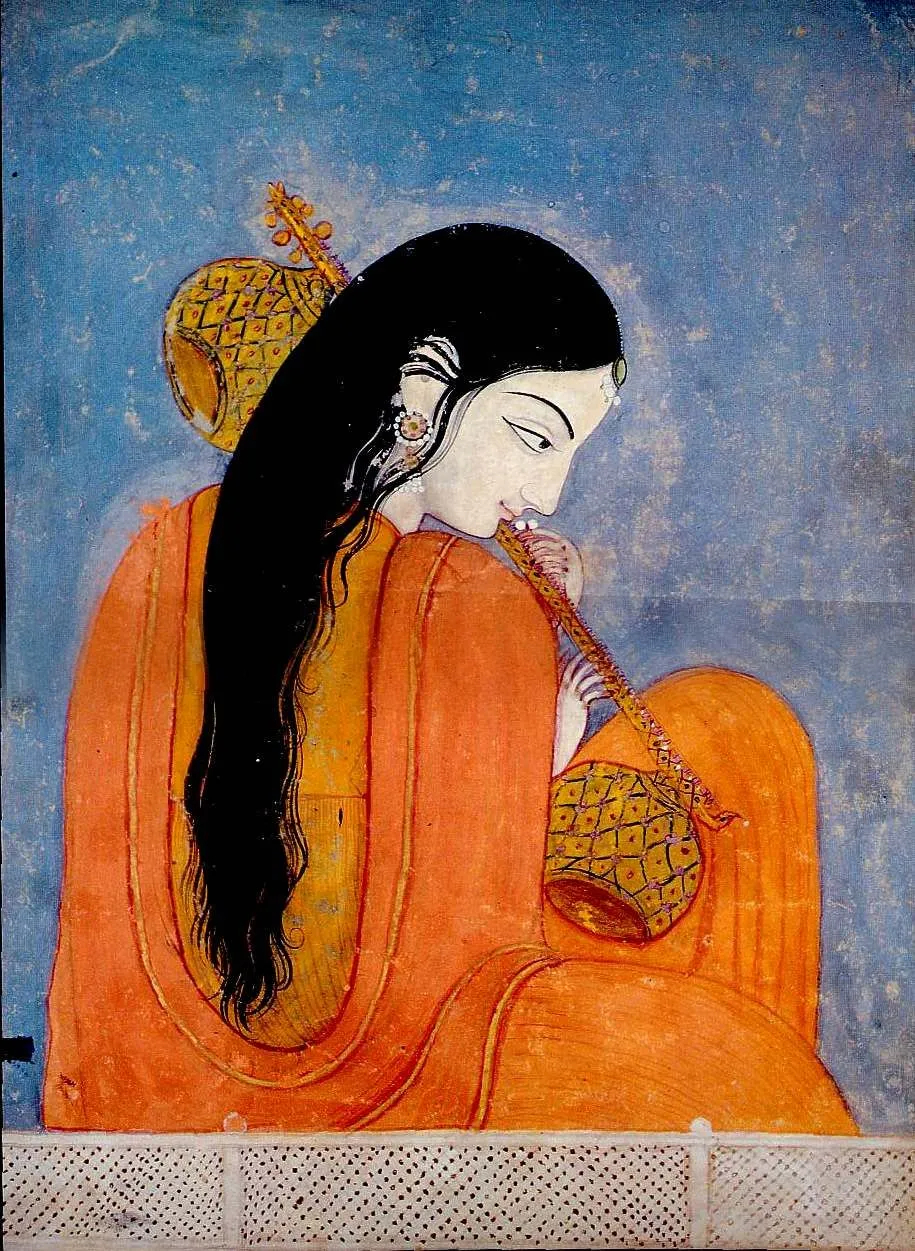
—You left the palace for the road, Mira. How does one go from royal apartments to the beggar's bowl?
One lightens oneself, Tulsidas. In 1534, I crossed the gates of Chittorgarh for the last time, carrying nothing but my statuette of Giridhar and my rosary. I traded the mirror-embroidered saris for the saffron veil of renunciation, and the golden cup for the patra of a pilgrim. The saffron color says it all: one renounces, one no longer possesses anything but God. I sleep under temple porticos, on a mat, and I eat what devotees give me. Believe me, I have never been richer. The palace was a golden cage where my prayers were monitored; the road gave me back to my Lord. One who has nothing left to defend walks free at last.
The palace was a golden cage; the road gave me back to my Lord.
—At Vrindavan, an ascetic is said to have refused to receive you because you are a woman. How did you answer him?
I arrived at Vrindavan with a full heart, Tulsidas, for it is there that Krishna spent his childhood. A reclusive saint sent word that he did not receive women, that he had renounced dealings with the opposite sex. I had him told that I believed him the only man in the universe, since there is only one true male, Krishna, and that we — he and I — are but His handmaidens before Him. He came out, confused, and welcomed me. You see, it was not insolence: it is the simple truth of bhakti. Before the Lord, there is neither man nor woman, neither caste nor rank — there are only thirsty souls. Whoever forgets that has not truly renounced.
Before the Lord, there is neither man nor woman, neither caste nor rank — there are only thirsty souls.
—You refuse the pyre, you say you are already a wife. Has this marriage to the invisible never weighed on you with loneliness, Mira?
Loneliness? You ask as one close, Tulsidas, so I answer without pretense. Yes, there are nights when the palace was empty and my in-laws looked at me as a disgrace. But how could I be alone, when Giridhar dwells in the room I have made a temple? I speak to Him, I adorn Him, I dance before Him — He is more present than any husband of flesh ever was. Women of my rank weep for a dead husband; I sing of a husband who does not die. The pain I know is not abandonment: it is viraha, the burning desire for union, when He hides to make Himself sought all the more. That absence is still a form of His presence.
Women of my rank weep for a dead husband; I sing of a husband who does not die.
—The Rana of Mewar threatened you, it is said, for letting a stranger listen to you. Did these persecutions ever make you doubt?
Doubt Him? Never, Tulsidas. Doubt men, often. The Rana saw my public bhajans as a stain on the clan's honor; that a devotee from afar placed a necklace at my feet enraged him, as if devotion had a religion or a border. They threatened me, tried to confine me, even attempted to make me disappear. Each time, I sang louder. Fear is the last possession the powerful renounce, and it is that very fear that bhakti took from me. When you have only Krishna to lose, and you know you cannot lose Him, what remains to threaten you? I chose to leave for Dwarka rather than be silent.
When you have only Krishna to lose, and you know you cannot lose Him, what remains to threaten you?
—Before I leave you to your evening kirtan, Mira, tell me: what do you want to remain of you, when your voice falls silent?
Nothing of me, Tulsidas — everything of Him. I do not compose so that Mira's name be remembered; I wish my name to fade and only the bhajans to remain, taken up by a woman at a well's edge, by a child herding goats, by the faithful gathered one evening of Navratri for the garba. Let my single string fall silent, it matters not, if a thousand mouths continue to sing Giridhar. Tradition says that at the end of the journey, the devotee merges into his Lord; that is all I ask, to disappear into Krishna like the drop into the ocean. You who also sing know that a devotional poem has no author — it has only a source, and we are but its flute.
I wish my name to fade and only the songs to remain.

This imaginary interview was generated by artificial intelligence from sources documented in Mirabai's profile. It dramatises what the figure might have said based on what we know about them, but does not constitute attested historical testimony. For primary sources and factual documentation, refer to the full profile.