Kids interview Mirabai
by Charactorium · Mirabai (1498 — 1546) · Spirituality · Literature · 5 min read
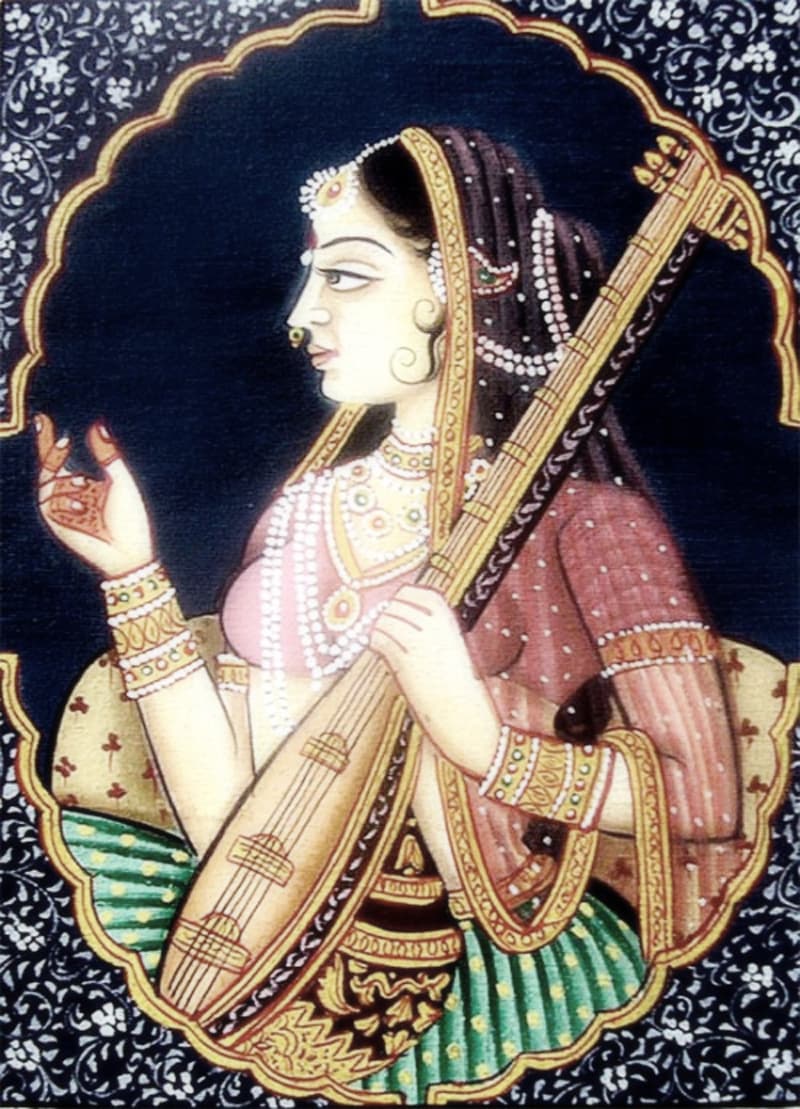
Two young visitors on a school field trip set down their backpacks under a large tree. Before them, a woman in a saffron veil holds a small one-stringed lute. She smiles: they may ask any questions they like.
—Is it true you were married to a god when you were little?
You know, my child, it all began as a joke. One day, a wedding procession passed through the street with a small statue of Krishna. I asked my mother, “Whose husband is this?” She laughed and said, “He’s yours.” Imagine a child taking that quite seriously! I never stopped believing it. Krishna became my heart’s husband, my Giridhar — the one who lifts the mountain. From that day on, I spoke to him every morning before my little statue. Others saw a toy. I saw my betrothed.
Others saw a toy; I saw my betrothed.
—When your real husband died, did they want you to die too?
Yes, and it still pains me to think of it. My earthly husband was Bhoj Raj, prince of Chittorgarh. When he died, around 1521, custom demanded that a widow mount her husband’s funeral pyre to burn with him. It was called sati. Everyone expected me to do it. But I said no. How could I burn for a man when I had been Krishna’s wife since childhood? My true husband never dies. Imagine the anger around me: a princess defying the rule. That day, my life as a devotee truly began.
How could I burn for a man when my true husband never dies?
—They say your family tried to poison you. Is that true?
Alas, yes, that’s what tradition tells. My in-laws found it shameful that a queen sang and danced in the streets with wandering saints. So they sent me a cup, saying it was prasad — you know, the blessed food offered to the god and then shared. But inside was poison. I took the cup, thinking of my Krishna, and drank it while singing his name. And nothing happened. Not a single pain. To people, it was a miracle. To me, it was simple: when you offer everything to the one you love, even poison becomes an offering.
When you offer everything to the one you love, even poison becomes an offering.
—What instrument did you sing with? What sound did it make?
My constant companion was the ektara. Imagine a long wooden neck with a single string stretched over a small gourd. Just one string, my child! You pluck it with a finger, and it makes a soft, recurring sound, like a heartbeat. With it, I sang my bhajans — love songs addressed to Krishna. I composed hundreds of them, in my language, the language of Rajasthan’s villages. In the evening, devotees gathered for kirtan, singing together. Rich or poor, from any caste, it didn’t matter. Before Krishna, everyone sat on the ground, side by side.
A single string, and yet it spoke all my love.
—If you had to sing us just one line, what would it be?
Ah, you ask me my secret in one line! Then listen well: “Mero to Giridhar Gopal, dusaro na koi.” In my language, it means: my only support is Giridhar Gopal, and there is no other. That’s my whole life in a few words. I lost my palace, my husband, my royal family. I walked the roads with a simple beggar’s bowl. But as long as I had Krishna, I was never poor, never alone. When you sing that line, you understand I feared nothing. The one who has only one treasure, but the right one, can lose nothing more.
The one who has only one treasure, but the right one, can lose nothing more.
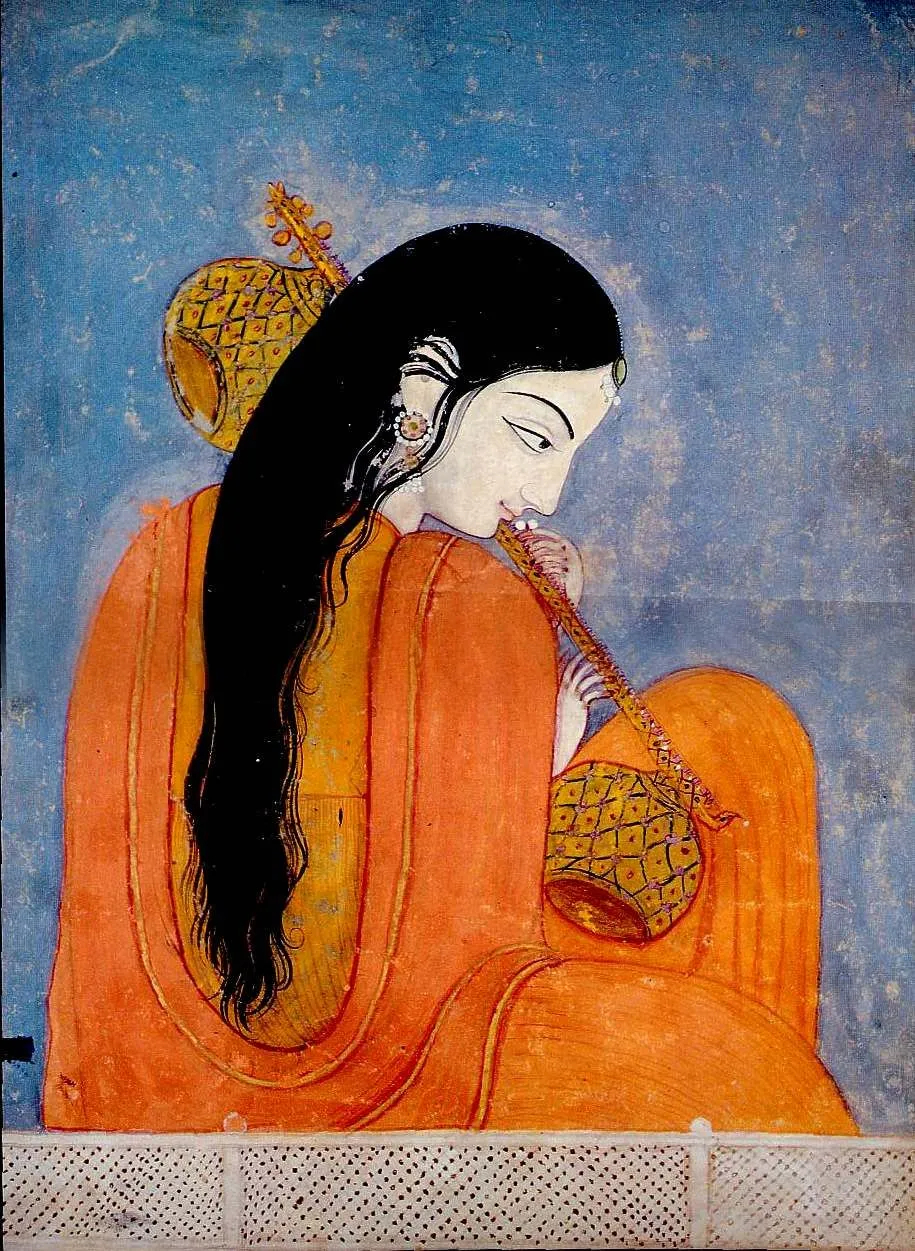
—Why did you leave the palace? You had a good life there, didn’t you?
You’re right, I had everything: gilded rooms, jewels, servants. But imagine living in a beautiful cage where you’re forbidden to sing what you love. At the palace of Chittorgarh, every day I was reproached for my devotion. So one day, around 1534, I set aside my silk saris and took to the road. I became a sadhvi — a holy woman who has renounced everything. I had only a patra, a small bowl to receive a little food. I slept under trees or in temple porches. And you know what? I was never freer than barefoot on the path to Vrindavan.
I was never freer than barefoot on the path.
—Did a saint refuse to let you in because you were a woman?
Yes, and it’s one of my favorite stories! Upon arriving in Vrindavan, the sacred town of Krishna’s childhood, I wanted to see a great ascetic. But that man refused to receive women; he said they disturbed his meditation. He sent word for me to leave. So I replied softly: I thought there was only one man in the whole universe, and that was Krishna. All others, you and I, are his servants. The ascetic was speechless, then came to greet me. You see, sometimes a simple phrase opens a door better than an army.
There is only one man in the universe; all others are his servants.
—Is it true a great emperor disguised himself to come hear you?
So it is told, yes! Emperor Akbar, the most powerful in India of my time, had heard of my songs. But he was Muslim, and I sang of Krishna in a Hindu circle. He could not enter openly. So, they say, he dressed as a poor beggar to slip among the devotees. He listened to my bhajans in silence, then placed a precious necklace at my feet as homage. When my brother-in-law, the Rana of Mewar, learned of it, he was furious that a stranger had come. Imagine the fear: in my time, mixing religions could cost dearly. But before a song, you see, there is neither king nor beggar.
Before a song, there is neither king nor beggar.
—What did you eat and where did you sleep on the roads?
Oh, a very simple life, my child! In the morning, before sunrise, I lit a small oil lamp and performed my puja — offering flowers and incense before my statue of Krishna. For food, I received prasad in temples: a chapati, that warm flatbread, spiced lentils, some vegetables. Never meat, that is our vaishnava rule. In the evening, I lay down on a simple mat, in a temple corner or under a large tree, telling my tulsi beads, that necklace of sacred wood. I slept little. How could one sleep, when eager to sing again upon waking?
—Today, are your songs still sung?
That, my child, is my greatest joy. I built no palace, won no battle. I only left bhajans, those little songs carried on the wind. At first, my disciples memorized them, then they wrote them down in collections, granthi. And imagine: even today, in villages, in temples, during great festivals, people I never knew sing the words I composed on my ektara. That is the true miracle: not the poison that fails to kill, but a voice that never fades. A love song, you see, travels farther and lasts longer than an empire.
A love song travels farther and lasts longer than an empire.

This imaginary interview was generated by artificial intelligence from sources documented in Mirabai's profile. It dramatises what the figure might have said based on what we know about them, but does not constitute attested historical testimony. For primary sources and factual documentation, refer to the full profile.