Imaginary dialogue between Jason and Orpheus
by Charactorium · Orpheus · Mythology · 5 min read
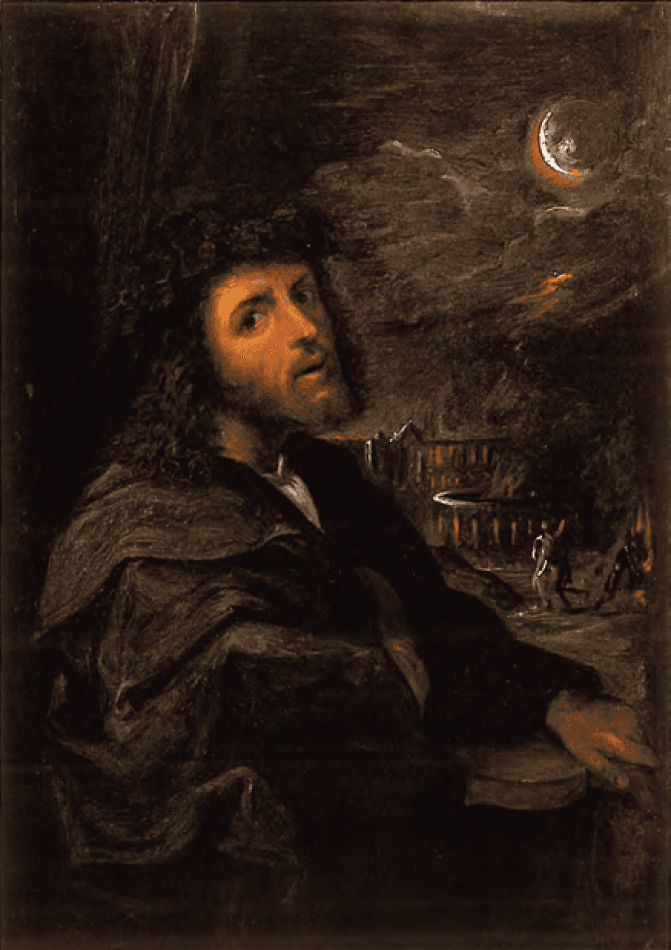
It is on the deck of the Argo, sheltered in a cove of Colchis, that Jason joins Orpheus at dusk, while the crew repairs the oars after the conquest of the Fleece. The lyre rests against the mast, and the wood creaks softly under the swell. The two men have shared storms, the Sirens' song, and nights on watch; Jason comes this evening to seek, beyond the musician who saved his ship, the man and his sorrows.
—Orpheus, my friend, do you remember the strait where the Sirens sang? Without you, we would all be at the bottom. How did you know what to do?
I didn't know, Jason — I felt. When their song made you drop your oar, when I saw your gaze drift out to sea, I understood that I must not drown out their voice with shouts, but with another beauty. I plucked the strings harder than the sea, and I sang over them. It was not strength that defeated them, but that a man opposed them with a song more beloved. You rowed like a possessed man, do you remember? The whole ship rowed to the rhythm of my lyre without even knowing it. That is what my music is: it does not shout louder, it gives men a reason to hold on.
It was not strength that defeated them, but that a man opposed them with a song more beloved.
—And at Phineus's, the blind seer tormented by the Harpies? You didn't draw your sword, you. Why the lyre again?
Because the sword cannot catch what flies, Jason. Calais and Zetes chased them into the sky, fine; but old Phineus no longer ate, his body was nothing but trembling. What my lyre did was not kill the creature, but restore the table to the old man, calm to his hands. I played until the fear left the room. You saw him finally eat that evening. Heroes slay monsters; I heal what monsters leave behind. It is a humbler role in an expedition, but someone must fill it, or you would all return alive but with your souls in tatters.
Heroes slay monsters; I heal what monsters leave behind.
—That lyre you hold close on the ship — where did it come from, Orpheus? They say it is not from a mortal workshop.
It came from the hands of Hermes, the cunning one, who made the first one from a tortoise shell. It came to me by divine lineage, like an inheritance one has not earned but must honor. It is not the wood or the strings that enchant, Jason — it is what passes through them when I play truly. I have seen rivers slow their course, oaks bow their heads, wild beasts lie at my feet without threat. With this simple plectrum, I touch in every living thing the part that wants to be soothed. You once told me that my music almost frightened you. You were right: so great a power never truly belongs to the one who wields it.
It is not the wood or the strings that enchant — it is what passes through them when I play truly.
—During the night watches, you played only for us. What were you trying to do to exhausted men, Orpheus?
To make the night habitable for you, Jason. A crew that does not sleep devours itself: quarrels rise, fear disguises itself as anger. When I played low, without words, I saw your shoulders drop one by one. My music did not erase the danger — Colchis still lay ahead — but it placed between you and fear a distance where one can breathe. That is enchantment: not to lie to men, but to restore their calm long enough for them to find their courage. You, the leader, bore the weight of us all. I think I played mostly for you on those nights, even if I never told you.
My music did not erase the danger; it placed between you and fear a distance where one can breathe.
—There is a pain in you that your lyre does not speak, my friend. It is whispered that you descended among the dead. Is it true, Orpheus?
It is true, Jason, and I tell it only to you, who have seen death up close on this ship. Eurydice, my wife, fell to a serpent's bite on our very wedding day. So I did what no living man does: I descended to the realm of Hades, alive, my lyre my only weapon. I played before the lord of the dead and before Persephone, and for the first time the Underworld wept. They gave her back to me, on one condition: not to look back before the light. The pain you sense in me comes from that — I now know what my music can do, and I also know what it cannot repair.
I played before the lord of the dead, and for the first time the Underworld wept.
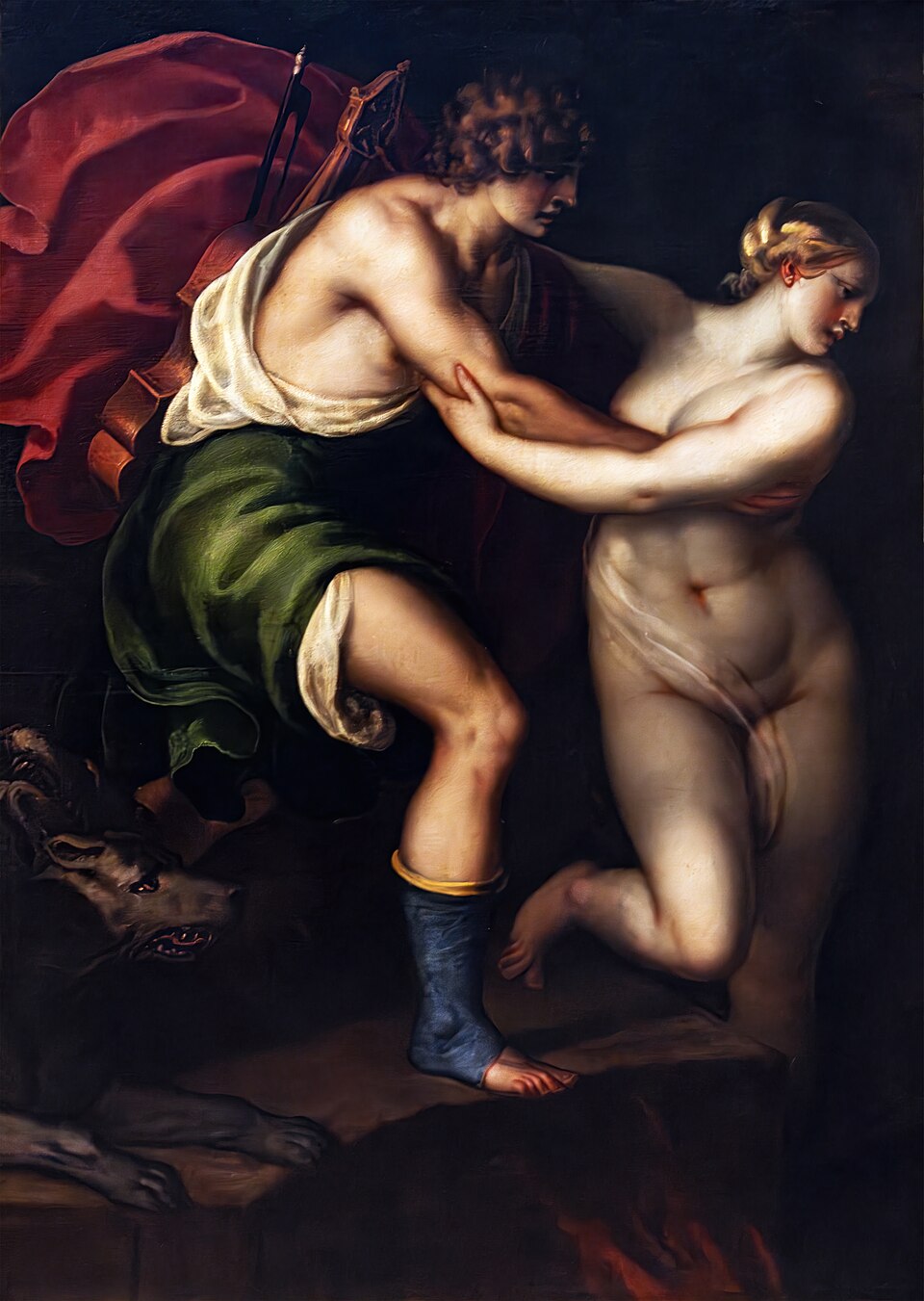
—You stop there. But such a condition is not forgotten. Tell me, Orpheus: what happened on the way back?
I lost her, Jason. One last step before daylight, her step so light behind me that I heard nothing — and doubt seized me. Was she really there? Had they deceived me? I turned around, and I saw her face fade into the shadows, her arms reaching for me but unable to grasp me. A second death, and this one I had caused. You see, in a man's tragedy, fate does not even need an enemy: a single moment of our own weakness suffices. I had charmed Hades himself, and it was I, I alone, who undid everything. That is why I still sing: it is the only way I have to keep holding her close.
Fate does not even need an enemy: a single moment of our own weakness suffices.
—An ordinary man does not descend among the dead and return. Where does that blood come from, Orpheus? Who gave you birth?
My father is Apollo, Jason, the god of light and the arts; my mother, Calliope, the foremost of the Muses. I grew up in Pieria, in the shadow of Olympus, where the very air seems to hum. When one is born of such a father and mother, music is not a talent one learns; it is a mother tongue. But I tell you without pride: this birth is a burden as much as a gift. I am expected to surpass all men, and every time I touch the strings, I feel my father's gaze behind mine. You, son of a dispossessed king, know the weight of an inheritance that must be reconquered every day.
When one is born of such a father, music is not a talent one learns; it is a mother tongue.
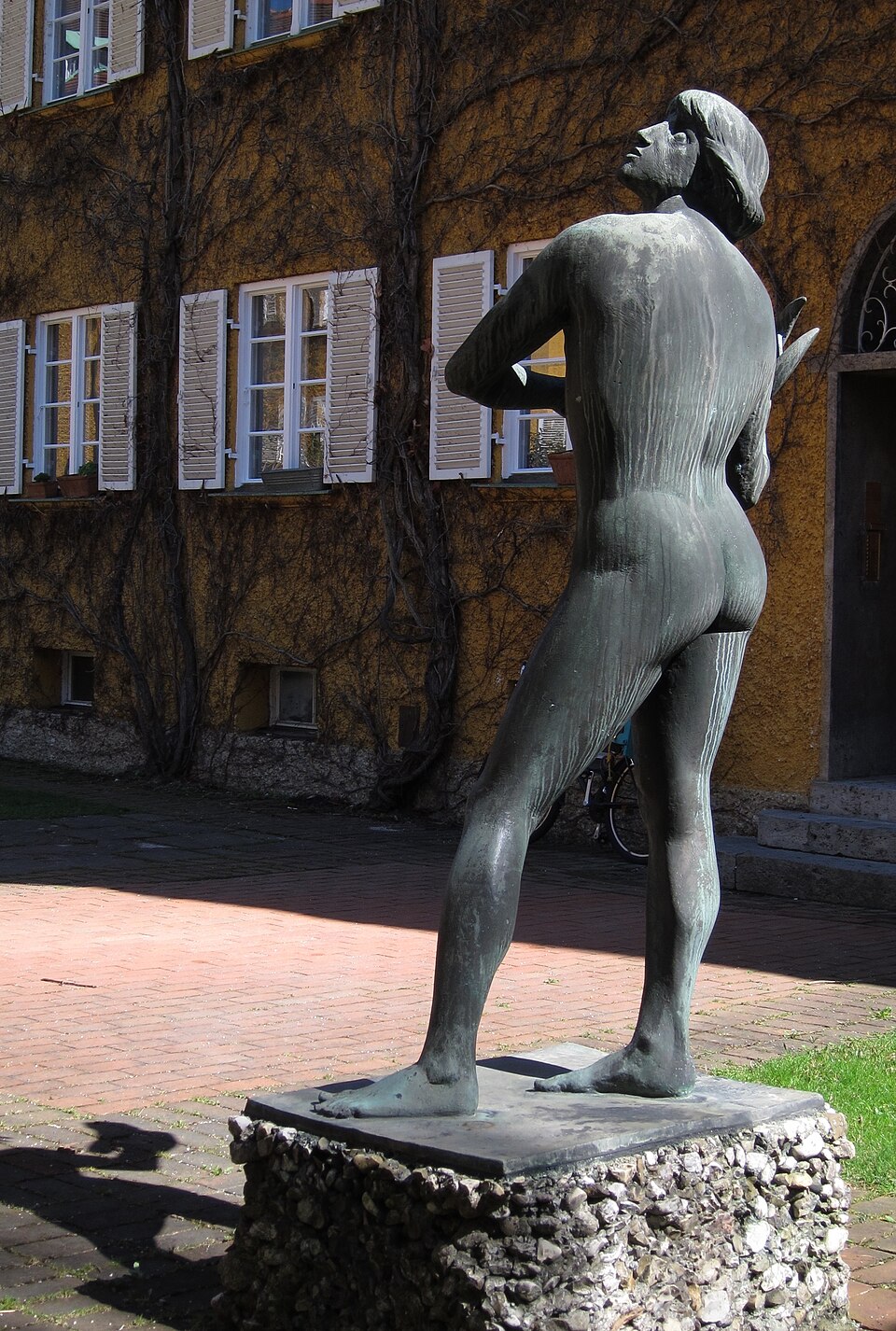
—The Muses, your mother... Do they truly speak to you, Orpheus, or is that just a poet's way of speaking?
They do not speak to me as you speak to me, Jason — they speak through me. When a song comes right, I do not compose it: I listen to it arrive, as one hears water underground before seeing it spring forth. My mother Calliope is the voice of epic; from her comes the breath to sing your deeds, those that men will repeat long after us. A poet, you see, does not entirely invent: he is the threshold through which divinities touch the living. That is why I am respected and a little feared. He who holds that threshold is never quite one of us.
I do not compose the song: I listen to it arrive, as one hears water underground before seeing it spring forth.
—When this ship brings us back, where will you go, Orpheus? You sometimes speak of Thrace as a call greater than music.
I will return to Thrace, Jason, but not only to sing there. I carry rites there, sacred words that I hold from my descent and from my father. Men think I am only a musician; but I have seen what lies beyond the last door, and that I must teach. There are mysteries, purifications, a way of living that prepares the soul for what awaits it after. The lyre opens hearts; these teachings open souls. I want to found a path where the living will no longer have to descend among the dead to understand what awaits them. That will be my true work, more lasting than all songs of war.
Men think I am only a musician; but I have seen what lies beyond the last door.
—You carry these secrets alone. Are you not afraid, Orpheus, that after you all this will be lost, like a broken string?
I have that fear every day, Jason. That is why I keep nothing for myself: I transmit, I sing my hymns, I train those who will carry the path after me. A man dies, but a sacred word, if it passes from mouth to mouth, can cross the centuries like a river crosses kingdoms. They say that even separated from my body, my song would continue to murmur — I do not know if that is true, but I like to believe that music does not entirely die with the one who bears it. You will have the Fleece and the glory of arms. I would like to leave men a way to no longer fear the night. Each his own Fleece, my friend.
A man dies, but a sacred word can cross the centuries like a river crosses kingdoms.
This imaginary interview was generated by artificial intelligence from sources documented in Orpheus's profile. It dramatises what the figure might have said based on what we know about them, but does not constitute attested historical testimony. For primary sources and factual documentation, refer to the full profile.